
TL;DR: DHT blocker pills reduce dihydrotestosterone, the hormone that shrinks hair follicles in androgenetic alopecia. Finasteride (1 mg daily) and dutasteride (0.5 mg daily) are the only FDA-approved or well-evidenced oral options. Finasteride cuts scalp DHT by roughly 70%; dutasteride by up to 90%. Both take 6 to 12 months to show results and must be taken indefinitely or hair loss returns.
What is DHT and why does it cause hair loss?
Dihydrotestosterone (DHT) is a hormone your body makes when the enzyme 5-alpha reductase converts testosterone. It's more potent than testosterone itself, binding to androgen receptors in hair follicles far more tightly. In people genetically predisposed to androgenetic alopecia, that binding gradually miniaturizes follicles: the hair shaft gets thinner, the growth phase (anagen) shortens, and eventually the follicle stops producing visible hair [1].
The process is slow. Most men start noticing a receding hairline or thinning crown in their 20s or 30s, though follicle miniaturization probably began years earlier. Women experience it differently, usually as diffuse thinning over the crown rather than a distinct recession pattern, but the underlying DHT sensitivity is often the same mechanism [2].
Here's why that matters for pills specifically. Topical treatments can improve blood supply to the scalp, but only blocking DHT at the enzymatic source, in the bloodstream, reliably drops DHT levels across all scalp follicles at once. That's the job of oral DHT blockers. They don't regrow hair that's completely gone. They can stop or dramatically slow further loss, and in a meaningful share of users, produce measurable regrowth in follicles that are miniaturized but not yet dead.
If you want the full picture on what causes hair loss, the DHT story is just one piece. It's the piece oral medication targets most directly.
How do DHT blocker pills actually work?
Every legitimate oral DHT blocker targets the 5-alpha reductase enzyme. Block that enzyme and testosterone stays as testosterone instead of converting to DHT, so DHT levels in the blood and scalp drop substantially [3].
There are two isoforms of 5-alpha reductase that matter clinically. Type 1 lives in sebaceous glands and the liver. Type 2 lives mainly in hair follicles and the prostate. Finasteride inhibits Type 2 almost exclusively. Dutasteride inhibits both Type 1 and Type 2. That difference explains why dutasteride achieves greater DHT suppression on paper, though whether that translates into proportionally better hair outcomes is still debated.
These drugs don't damage follicles and don't interfere with the hair growth cycle directly. They change the hormonal environment across your whole body. That's why they take months to show results (the hair cycle itself is slow) and why stopping them lets DHT rebound, usually within months, and hair loss picks back up.
Some supplements get marketed as "natural DHT blockers," mostly saw palmetto, pumpkin seed oil, and green tea extract. They may mildly inhibit 5-alpha reductase, but the clinical evidence for any of them reaching the DHT suppression levels of finasteride or dutasteride is weak. More on that below.
Which DHT blocker pills actually have solid evidence?
Two pharmaceutical options have the strongest evidence.
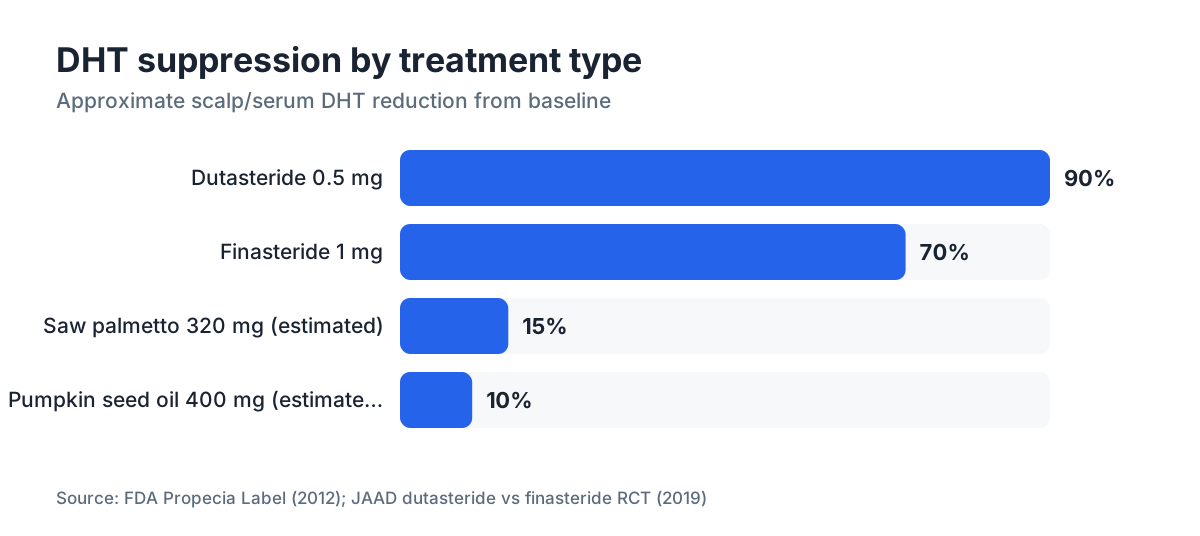
Finasteride 1 mg (Propecia and generics): FDA-approved for male pattern baldness since 1997. The registration trials showed statistically significant hair count increases versus placebo at 1 and 2 years, and 83% of men taking finasteride maintained or improved hair count over 5 years compared to 28% on placebo [3]. Scalp DHT falls by roughly 60 to 70% [3]. It's the most-prescribed oral DHT blocker in the world and the one with the deepest long-term safety dataset.
Dutasteride 0.5 mg (Avodart and generics): FDA-approved for benign prostatic hyperplasia, not for hair loss in the US. South Korea and Japan have approved it for androgenetic alopecia, and several head-to-head trials show better hair count outcomes versus finasteride. A 2019 randomized controlled trial found dutasteride 0.5 mg produced significantly greater increases in hair count than finasteride 1 mg at 24 weeks [4]. Scalp DHT suppression reaches 90% or more with dutasteride [4]. Many dermatologists prescribe it off-label for hair loss, which is legal and common.
What about saw palmetto? Saw palmetto (Serenoa repens) is the most studied natural 5-alpha reductase inhibitor. A 2020 systematic review noted some signal in small trials but concluded evidence was insufficient to recommend it as a clinical treatment [5]. The honest answer: it may do something, but probably not at the level of finasteride. It won't cause the sexual side effects discussed below, which makes it attractive to some people.
Pumpkin seed oil: One small Korean RCT in 2014 found 400 mg daily produced a 40% increase in hair count at 24 weeks versus 10% for placebo [6]. Promising, but that's one small trial. Nobody has replicated it at scale.
For most people choosing between real options: finasteride is the standard first-line oral DHT blocker, dutasteride is the stronger alternative, and the rest are worth knowing about but not proven enough to be a primary strategy.
For more on how finasteride works specifically, that article goes much deeper on dosing, off-label use in women, and what the long-term data actually shows.
How much DHT does each pill actually block?
Here's the real-world comparison based on published pharmacokinetic and clinical data.
| Drug | DHT suppression (serum) | DHT suppression (scalp) | FDA approval for hair loss |
|---|---|---|---|
| Finasteride 1 mg | ~70% | ~60-70% | Yes (men only, 1997) |
| Dutasteride 0.5 mg | ~90-95% | ~90%+ | No (off-label in US) |
| Saw palmetto (variable dose) | Unknown, likely <20% | Unknown | No |
| Pumpkin seed oil 400 mg | Unknown | Unknown | No |
The finasteride numbers come from the original Merck clinical pharmacology data filed with the FDA [3]. Dutasteride's suppression figures come from head-to-head trials comparing it to finasteride in men with androgenetic alopecia [4].
One thing worth saying plainly: 90% DHT suppression does not mean 90% better results than 70% suppression. Hair loss isn't linearly related to absolute DHT levels in that simple a way. The clinical hair count differences between finasteride and dutasteride are real but more modest than the DHT number gap might suggest.
What are the real side effects of DHT blocker pills?
This is the section people search hardest, and the one that deserves the most honesty.
For finasteride and dutasteride, the FDA-required label lists sexual side effects: decreased libido, erectile dysfunction, and decreased ejaculate volume. In the original finasteride trials, these occurred in roughly 3.8% of the treatment group versus 2.1% on placebo, and in most cases resolved when the drug was stopped [3]. That's a real but relatively uncommon rate.
The more contested issue is post-finasteride syndrome, where some men report persistent sexual, neurological, and psychological symptoms after stopping finasteride. The FDA added a label update in 2012 noting that sexual side effects "may continue after stopping" [3]. The actual incidence of persistent symptoms is genuinely disputed in the literature, with estimates varying widely. The Post-Finasteride Syndrome Foundation has collected extensive self-reported cases, but population-level data remains hard to pin down.
Finasteride lowers PSA (prostate-specific antigen) by roughly 50% after 6 months of use. If you're getting PSA screening, tell your doctor you're on finasteride so they can double your result before interpreting it [3].
Dutasteride carries similar sexual side effect risks, plus one added concern: its half-life is about 5 weeks versus finasteride's 6 to 8 hours, so it stays in the system much longer after you stop. Some practitioners treat that as a meaningful difference if side effects show up.
For women, both finasteride and dutasteride are contraindicated in pregnancy. Finasteride is FDA Pregnancy Category X, and dutasteride carries a similar warning, because DHT is necessary for normal male fetal genital development [3]. Women of childbearing potential who take these drugs need reliable contraception. Pregnant women shouldn't even handle the drugs in crushed or broken form.
For the supplements, saw palmetto and pumpkin seed oil don't carry the same hormonal side effect profile. They also lack the rigorous safety datasets that come with FDA-regulated drugs. Mild GI upset is the most commonly reported issue.
How long do DHT blocker pills take to work?
Slower than anyone wants. Here's the honest timeline.
DHT suppression happens within days of your first dose. But hair grows slowly, the anagen phase runs months to years, and a miniaturized follicle needs multiple growth cycles to recover measurably. Most people see no visible change in the first 3 months.
In clinical trials, statistically significant hair count differences versus placebo generally appear at 6 months [3]. Visible cosmetic improvement, the kind you or someone else actually notices, often takes 12 months. The 2-year and 5-year data beat the 1-year data, which means the drug keeps working gradually over time.
A shed warning: some people get temporary increased shedding in the first 6 to 12 weeks. This is a recognized phenomenon, sometimes called a "dread shed," and it likely reflects disrupted hair cycles as follicles transition. It's not universal. It's temporary. And it doesn't predict failure. But it blindsides people who weren't warned.
If you've taken finasteride for 12 months with zero change in hair count or density, that's a reasonable point to reassess with a dermatologist.
Can women take DHT blocker pills for hair loss?
Yes, with important caveats, and the rules change depending on whether a woman is pre- or post-menopausal.
Finasteride at 1 mg isn't FDA-approved for women. The original trials only included men. Off-label use in women with androgenetic alopecia is documented and practiced anyway. A 2012 randomized trial published in the British Journal of Dermatology found finasteride 1 mg produced no statistically significant improvement over placebo in postmenopausal women [7]. Higher doses (2.5 mg or 5 mg) in postmenopausal women have shown more promising results in smaller trials.
For premenopausal women, the contraception requirement is non-negotiable, and many dermatologists are cautious given the fetal risk.
Spironolactone comes up often in women as an anti-androgen for hair loss. It's not a 5-alpha reductase inhibitor, so it isn't technically a DHT blocker by the same mechanism, but it blocks androgen receptors, which gets a similar downstream effect on follicles. It's a common alternative for women who can't take finasteride.
If you're a woman dealing with diffuse thinning, figuring out whether it's truly androgenetic or whether telogen effluvium is driving it matters a lot before starting any hormonal medication.
Are over-the-counter DHT blocker pills worth buying?
I'll be direct: most of them aren't worth the money.
The supplement market is packed with products labeled "DHT blocker" that contain saw palmetto, biotin, zinc, pumpkin seed oil, green tea extract, and various other ingredients at unspecified doses. The evidence base for most of these individually is thin. Stacked together with no clinical trial behind the specific combination, the product is basically asking you to trust the marketing.
Biotin specifically: there's no credible evidence it blocks DHT or reverses hair loss in people who aren't biotin-deficient. The American Academy of Dermatology says biotin deficiency is rare and that biotin supplementation for hair loss isn't supported by evidence in people with normal biotin levels [2].
Saw palmetto is the most defensible OTC option if you want something non-prescription. At doses of 320 mg per day (the dose used in most trials), it has some biological plausibility. Expecting finasteride-level results from it would be a mistake.
For a deeper look at what the supplement evidence actually shows, the hair loss supplements article covers the literature in more detail.
If you're deciding where to spend money before seeing a doctor, put it toward a single dermatology consultation rather than six months of OTC supplements.
How do DHT blocker pills compare to other hair loss treatments?
DHT blockers are one tool. Here's where they sit relative to the other main options.
| Treatment | Mechanism | Evidence strength | Good for |
|---|---|---|---|
| Finasteride 1 mg | Blocks DHT systemically | Strong (RCTs, FDA-approved) | Ongoing loss prevention + some regrowth |
| Dutasteride 0.5 mg | Blocks DHT more fully | Strong (RCTs, off-label) | Same, potentially more regrowth |
| Minoxidil (topical) | Vasodilator, prolongs anagen | Strong (FDA-approved) | Active growth, works on vertex |
| Oral minoxidil (low dose) | Same mechanism, systemic | Growing evidence | People who don't respond to topical |
| Hair transplant | Relocates DHT-resistant follicles | High (surgical outcomes) | Stable loss, areas with no follicles left |
| PRP | Growth factor delivery | Moderate | Adjunct, not standalone |
| Saw palmetto | Mild 5-AR inhibition | Weak | Those avoiding pharmaceuticals |
The combination of finasteride and minoxidil is well-studied and generally beats either drug alone. A 2019 trial found the combination produced greater improvements in hair density than either drug individually [8]. If you're thinking about going beyond a single drug, the finasteride and minoxidil comparison article covers the combination data specifically.
For people with significant loss already, a hair transplant isn't competing with DHT blockers. It usually runs alongside them. Transplanted follicles from the back of the scalp are genetically DHT-resistant, but losing native hair around a transplant without a DHT blocker produces poor long-term cosmetic results.
Worth mentioning here: if you're unsure how much of your hair loss is DHT-related versus something else, the free AI hair analysis at MyHairline can give you a baseline read on your pattern before you start spending money on treatments.
How much do DHT blocker pills cost, and do you need a prescription?
Finasteride requires a prescription in the United States. Generic finasteride 1 mg is widely available and costs roughly $20 to $40 per month through major pharmacies, and sometimes less through GoodRx or online telehealth platforms that prescribe and ship it [3]. Brand-name Propecia runs much higher at $70 to $100 or more monthly, with no meaningful clinical difference from the generic.
Dutasteride also requires a prescription. Generic dutasteride 0.5 mg runs about $30 to $60 per month, though this varies by pharmacy.
OTC supplements marketed as DHT blockers range from about $20 to $60 per month. Because they aren't FDA-regulated drugs, ingredient quality and actual dosing can vary, and you have no regulatory assurance that what's on the label is what's in the capsule.
One practical note on online prescribers: several telehealth platforms now offer finasteride or dutasteride by online consultation for hair loss. This is legal and legitimate. The consultation fee varies, but the drug cost itself is competitive with in-person prescriptions. If cost or access to a dermatologist is a barrier, this is a real option.
A dermatologist visit, where you might get a diagnosis and prescription in one appointment, typically costs $150 to $300 without insurance for a new patient. With insurance covering the visit, out-of-pocket for generic finasteride is often very low.
What happens if you stop taking DHT blocker pills?
Hair loss resumes. This part of the conversation matters more than most people realize before they start.
When you stop finasteride or dutasteride, DHT levels return to baseline within weeks (finasteride) to months (dutasteride, given its long half-life). The follicle miniaturization that was paused or reversed starts up again. Most people notice increased shedding within 3 to 6 months of stopping, and within a year, hair density is typically back to or below where it was before treatment.
This isn't a failure of the drug. It's how the drug works: it suppresses DHT while you take it. Same dynamic as stopping a blood pressure medication and watching blood pressure climb again.
So the implication is straightforward. If you start, you're probably starting for the long term. Weigh that seriously before you begin, given the side effect profile and the ongoing cost. Some people decide the math makes sense. Others don't. Both are reasonable.
If you stop because of side effects rather than by choice, talk to a dermatologist first. Some side effects ease with a dose reduction (especially for finasteride), and there may be alternatives worth trying before you abandon the drug class entirely.
Who is a good candidate for DHT blocker pills?
The best candidates are people with androgenetic alopecia (male or female pattern baldness) in earlier stages of loss, with follicles that are miniaturized but not yet gone. DHT blockers can't revive a follicle that's scarred or dead. The earlier you start, the more you're working to preserve rather than recover.
For men, nearly everyone with a confirmed androgenetic alopecia diagnosis and no contraindications is a reasonable candidate for finasteride. The American Academy of Dermatology includes finasteride in its treatment guidelines for men with pattern hair loss [2].
For women with confirmed androgenetic alopecia, options are narrower. Postmenopausal women have more flexibility with finasteride dosing. Premenopausal women need reliable contraception and a physician willing to prescribe off-label.
People who are not good candidates include men with a history of prostate cancer (talk to a urologist first, since DHT blockers affect PSA levels), pregnant women or women who may become pregnant, and anyone who had severe or persistent adverse effects on a 5-alpha reductase inhibitor before.
If your hair loss pattern looks more like a receding hairline focused at the temples rather than crown thinning, discuss that with a dermatologist. Response to finasteride varies by location. The vertex (crown) tends to respond better than the hairline in the published data.
For a complete picture of your loss pattern, a tool like the MyHairline AI scan can help you understand which Norwood or Ludwig stage you're at before your first appointment.
Sources
- Urology Care Foundation, American Urological Association: Dihydrotestosterone and Hair Loss
- American Academy of Dermatology: Hair Loss Diagnosis and Treatment Guidelines
- National Institutes of Health MedlinePlus: Finasteride for Hair Loss
- Journal of the American Academy of Dermatology: Dutasteride vs finasteride RCT, 2019
- JAMA Dermatology: Systematic review of saw palmetto for androgenetic alopecia, 2020
- Evidence-Based Complementary and Alternative Medicine: Pumpkin seed oil RCT, Kim et al., 2014
- British Journal of Dermatology: Finasteride in postmenopausal women RCT, 2012
- JAMA Dermatology: Combination finasteride and minoxidil trial, 2019
- International Journal of Sport Nutrition and Exercise Metabolism: Creatine and DHT ratio study, van der Merwe et al., 2009