TL;DR: The only prescription DHT blockers are finasteride (Propecia, 1 mg) and dutasteride (Avodart, 0.5 mg). Both reduce dihydrotestosterone, the hormone that shrinks hair follicles in androgenetic alopecia. Finasteride cuts DHT by roughly 70%; dutasteride by up to 90%. Neither is a cure, both require daily use, and both carry sexual side effect risks you should know before starting.
What is a prescription DHT blocker and why does it require a doctor?
DHT (dihydrotestosterone) is a potent androgen your body makes when 5-alpha-reductase enzymes convert testosterone. In people genetically susceptible to androgenetic alopecia, DHT binds to receptors in scalp follicles and progressively miniaturizes them, producing finer, shorter hairs until the follicle stops producing visible hair entirely. Understanding what causes hair loss at a hormonal level is the first step before spending money on any treatment.
A prescription DHT blocker is a drug that inhibits the 5-alpha-reductase enzyme, cutting DHT production systemically. Because these drugs alter hormone levels throughout the body, they carry real risks, including sexual side effects and, for dutasteride specifically, effects on prostate-specific antigen (PSA) tests used to screen for prostate cancer. That is why the FDA requires a prescription: the benefit-risk decision needs a clinician who knows your health history [1].
Over-the-counter products labeled as "DHT blockers" (saw palmetto capsules, ketoconazole shampoo, various supplements) are a different category. Some have limited supporting data; none have the clinical evidence base that finasteride or dutasteride do. This article is specifically about the prescription drugs. For a broader look at non-prescription options, see dht blocker.
Which drugs are FDA-approved prescription DHT blockers for hair loss?
Two drugs are the only systemic prescription DHT blockers with meaningful clinical evidence for hair loss.
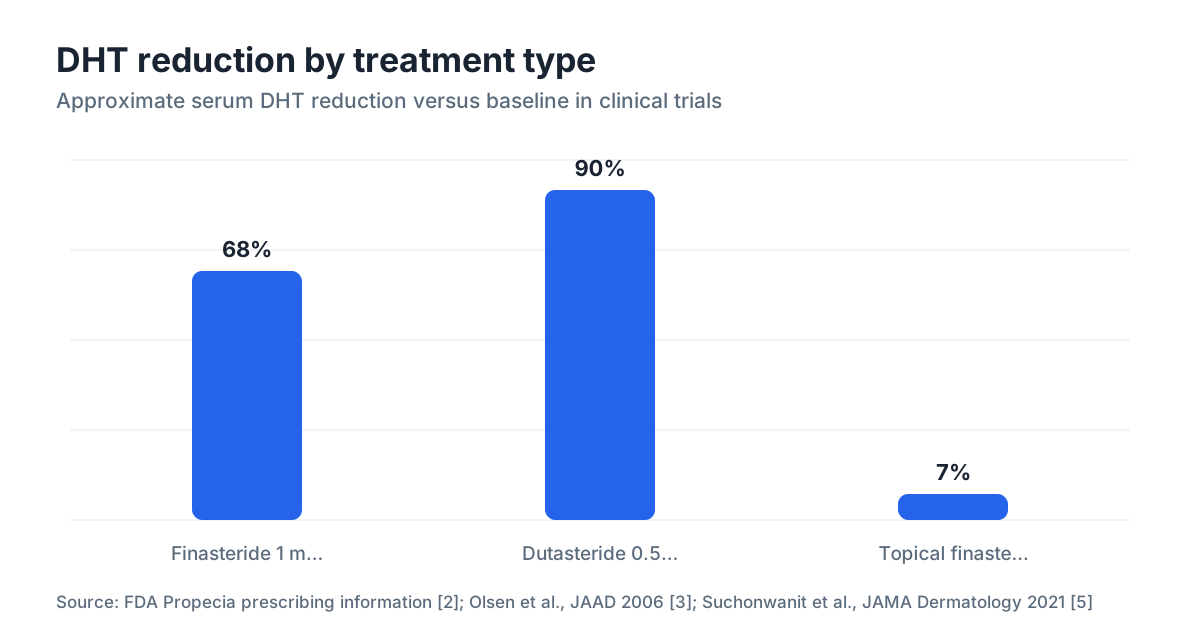
Finasteride 1 mg (brand name Propecia) received FDA approval for male androgenetic alopecia in 1997. It selectively inhibits type II 5-alpha-reductase. In the registration trials, finasteride 1 mg reduced scalp DHT by approximately 64% and serum DHT by roughly 68% [2]. After two years, 83% of men taking finasteride maintained or increased hair count versus 28% on placebo [2]. That is a large, real effect. For a full breakdown of the drug, see finasteride.
Dutasteride 0.5 mg (brand name Avodart) inhibits both type I and type II 5-alpha-reductase. It is FDA-approved for benign prostatic hyperplasia, not specifically for hair loss in the US, though it is approved for androgenetic alopecia in South Korea and Japan. Many US dermatologists prescribe it off-label when finasteride is inadequate or not tolerated. Dutasteride suppresses serum DHT by up to 90%, compared with roughly 70% for finasteride [3]. A 2006 randomized controlled trial in the Journal of the American Academy of Dermatology found dutasteride 0.5 mg produced greater hair count increases than finasteride 1 mg at 24 weeks [3].
| Drug | Approved indication (US) | DHT reduction | Dosing | Typical monthly cost (generic) |
|---|---|---|---|---|
| Finasteride 1 mg | Male androgenetic alopecia | ~70% | 1 mg/day oral | $15-$40 [4] |
| Dutasteride 0.5 mg | BPH (hair loss off-label) | ~90% | 0.5 mg/day oral | $30-$70 [4] |
| Topical finasteride 0.25% | Male AGA (compounded, FDA-cleared formulation emerging) | Lower systemic exposure | Applied to scalp daily | $40-$80 (compounded) |
Topical finasteride, usually compounded at 0.25% to 1% and often combined with minoxidil, is a growing option that reduces systemic hormone suppression. It still requires a prescription. A 2021 randomized trial in JAMA Dermatology found topical finasteride 0.25% every other day produced hair density gains comparable to oral 1 mg daily with substantially lower serum DHT reduction, suggesting a better side effect profile for some patients [5].
How do DHT blockers actually work inside the follicle?
The short version: less DHT means less follicle shrinkage.
The longer version is worth knowing because it explains why these drugs take so long to show results. Androgenetic alopecia is driven by the hair cycle shortening. Each cycle (anagen growth phase, then catagen, then telogen rest) gets progressively shorter under DHT's influence, producing miniaturized hairs. Reducing DHT does not instantly re-grow hair; it first stops the shortening, then allows follicles that are still viable to gradually recover their cycle length. This is why hair count typically keeps improving for two years or more on finasteride, and why stopping the drug reverses the benefit within 12 months in most men [2].
There is a shedding phase many people do not expect. In the first 1 to 3 months of treatment, some users notice increased shedding. This is thought to reflect follicles synchronizing into a new cycle rather than treatment failure. It resolves. If it worries you, read about telogen effluvium to see what that kind of shedding looks like and how it differs from treatment-related shedding.
The type I versus type II enzyme distinction matters practically. Type II is concentrated in the scalp, liver, and prostate. Type I sits in the skin and liver. Finasteride only hits type II, which is why it works but does not clear DHT completely. Dutasteride hits both, which explains the deeper DHT suppression and, potentially, a heavier side effect burden.
Do prescription DHT blockers work for women?
This is more complicated, and the honest answer is: yes, sometimes, with significant caveats.
Finasteride is not FDA-approved for women's hair loss. But several randomized trials and a large body of clinical practice support its off-label use in postmenopausal women with androgenetic alopecia, typically at doses of 1 to 2.5 mg daily. A 2012 meta-analysis in the Journal of Dermatology found benefit in postmenopausal women, but results in premenopausal women were weaker and inconsistent [6].
The hard rule: finasteride and dutasteride are absolutely contraindicated in women who are pregnant or may become pregnant. The drugs cause fetal harm, specifically feminization of male fetuses. The FDA label carries a Pregnancy Category X warning for dutasteride [1]. Women of childbearing age who use these drugs must use reliable contraception.
Spironolactone is a different prescription option for women. It is an aldosterone antagonist with anti-androgen activity. It does not block 5-alpha-reductase, but it competes with DHT at the androgen receptor and reduces testosterone production. Many dermatologists consider it a first-line prescription option for women with androgenetic alopecia or alopecia related to elevated androgens. It requires a prescription, blood pressure and potassium monitoring, and is also contraindicated in pregnancy. Doses used for hair loss are typically 50 to 200 mg per day [6].
For women, the receding hairline pattern differs from men (it usually shows up as diffuse thinning rather than a frontal recession), and the treatment decision is correspondingly more individual. A dermatologist or endocrinologist is the right person to sort through whether a hormonal driver is present.
What are the real side effects of prescription DHT blockers?
The clinical evidence on side effects is messier than either enthusiasts or critics admit.
The FDA label for finasteride 1 mg (Propecia) lists sexual side effects including decreased libido, erectile dysfunction, and decreased ejaculate volume in approximately 1.8% of men versus 1.3% on placebo in registration trials [2]. Those numbers come from short-term, industry-funded trials. Post-marketing reports and longer observational studies suggest the rates may be higher in real-world use.
Post-finasteride syndrome (PFS) refers to persistent sexual, neurological, and psychological symptoms some men report continuing after stopping the drug. The FDA added a label update in 2012 noting that sexual side effects may persist after discontinuation [7]. The syndrome is real as a reported phenomenon; its mechanism and true prevalence are not well established. The Post-Finasteride Syndrome Foundation has collected patient reports, but large controlled epidemiological studies are lacking. Nobody has good data on the precise incidence of persistent effects.
For dutasteride, the side effect profile is broadly similar but comes with a longer half-life (roughly 5 weeks versus 6 to 8 hours for finasteride). Side effects, if they occur, take longer to clear after stopping.
Both drugs lower PSA levels by approximately 50% after six months of use [1]. This matters because PSA is a prostate cancer screening test. Men taking these drugs need to tell their urologist; a "normal" PSA on finasteride should be doubled to estimate what it would be without the drug.
The practical takeaway: most men who try finasteride tolerate it without sexual side effects, but a meaningful minority do not, and a small number report effects that persist. The decision to start deserves a real conversation with a doctor, more than an online questionnaire.
How do you get a prescription for a DHT blocker?
The most direct route is a dermatologist. They diagnose androgenetic alopecia, rule out other causes of hair loss (thyroid disease, nutritional deficiencies, alopecia areata), and can prescribe finasteride or dutasteride in one visit. If you have not had a scalp examination and you are losing hair, starting with a dermatologist is the right call.
Primary care physicians and some OB-GYNs also routinely prescribe finasteride or spironolactone. If you have an established relationship with a PCP who knows your health history, that works.
Telehealth platforms now offer prescription DHT blockers after an online consultation. Some are legitimate and connect you with licensed physicians; others are essentially automated pipelines with minimal clinical oversight. The American Academy of Dermatology does not specifically endorse or condemn telehealth hair loss prescribing, but the AAD does note that proper diagnosis is essential before starting systemic treatment [8]. A provider who prescribes without ever reviewing your history, medications, or ruling out other diagnoses is cutting corners.
If you want to understand your hair loss pattern before a doctor's appointment, the free AI hair analysis at MyHairline can identify your Norwood stage and give you a structured picture of what you are dealing with, so you walk into that appointment with real information.
Generic finasteride 1 mg is widely available at major pharmacy chains and through GoodRx-type discount programs. GoodRx-reported prices in 2024 show 30 tablets of generic finasteride 1 mg running roughly $15 to $30 at most chains with a discount coupon [4]. Dutasteride 0.5 mg generics run somewhat higher, around $30 to $60 for 30 capsules. Brand-name Propecia can exceed $80 to $100 per month without insurance [4].
How long does it take for a prescription DHT blocker to show results?
Expect nothing for the first three months. Seriously. The follicle cycle has to complete before you see hair count changes.
The timeline most dermatologists describe: by months 3 to 6, shedding usually stabilizes or decreases. By month 6 to 12, some men see visible density improvement, most commonly at the crown. By month 24, the full effect of finasteride is mostly apparent, which is why the registration trial data was collected at that point [2].
Start photographic documentation on day one. Hair loss and regrowth are notoriously hard to judge by eye; the angle of light in a bathroom mirror shifts every day and will drive you crazy. A standardized monthly photo (same lighting, same camera distance, hair parted the same way) gives you something you can actually compare.
Dutasteride appears to work somewhat faster in the first 12 months, likely because of its more complete DHT suppression, but long-term outcomes at 2 and 5 years are not dramatically different from finasteride in head-to-head data.
One thing people miss: combining a DHT blocker with minoxidil beats either alone. Minoxidil works independently of DHT, extending the anagen phase through a different mechanism (potassium channel opening and possible prostaglandin effects). The combination hits two separate pathways. See finasteride and minoxidil for the evidence on combining these treatments.
What happens if you stop taking a DHT blocker?
You lose the benefit. This is probably the most underemphasized fact about these drugs.
Finasteride does not fix the underlying genetic sensitivity; it suppresses the hormonal driver while you take it. When you stop, DHT levels return to baseline within weeks, and hair loss resumes. Most studies and clinical reports suggest that men who discontinue finasteride return to roughly the hair density they would have had without treatment within 9 to 12 months, sometimes faster [2].
This is not a failure of the drug; it is just how it works. Think of it like blood pressure medication: stopping it does not cause a rebound past baseline, but the problem the drug was managing comes back.
For men who stop because of side effects: finasteride's half-life is 6 to 8 hours, so it clears quickly. Dutasteride's half-life is roughly 5 weeks, so its effects (good and bad) taper slowly over months after stopping [1].
If cost is the reason you are thinking about stopping, generic finasteride is genuinely cheap now, around $15 to $30 per month with a GoodRx-type coupon [4]. Exhaust that option before you decide the drug is financially unsustainable.
Can you use a prescription DHT blocker with other hair loss treatments?
Yes, and combination therapy is standard practice in dermatology.
Finasteride plus topical minoxidil is the most common combination. A 2015 randomized trial in Dermatology and Therapy found the combination superior to either drug alone over 12 months of follow-up [9]. Minoxidil for men is well-established and widely available; see minoxidil for men for dosing and evidence detail. If you are worried about minoxidil's own set of effects, minoxidil side effects covers what is real versus what is exaggerated.
Oral minoxidil at low doses (0.625 mg to 2.5 mg daily) is increasingly used alongside finasteride when topical minoxidil is inconvenient or ineffective. See oral minoxidil for the evidence on that option.
Low-level laser therapy (LLLT) devices are sometimes added to a medical regimen. The evidence is modest but real; the FDA has cleared several devices for this use. Stacking it on top of finasteride and minoxidil is unlikely to hurt and may give a small additive effect.
For men with significant recession who have been on medical therapy and stabilized, a hair transplant becomes an option to restore lost density in areas where follicles are gone. Transplanted follicles from the donor zone are typically DHT-resistant, but continuing medical therapy after a transplant protects the native hair in the recipient zone.
Are there prescription DHT blockers that have fewer sexual side effects?
Topical finasteride is the most studied low-systemic-exposure alternative. The 2021 JAMA Dermatology trial mentioned earlier found that topical finasteride 0.25% applied to the scalp every other day produced scalp DHT reductions and hair density gains similar to oral finasteride 1 mg daily, while reducing serum DHT by only about 7% compared with roughly 68% for the oral version [5]. That is a large difference in systemic hormone exposure. Whether it translates directly to fewer sexual side effects has not been confirmed in a large powered RCT, but the pharmacokinetic rationale is sound.
Compounded topical finasteride is available through 503A compounding pharmacies with a prescription. It is not FDA-approved as a specific finished drug product. The FDA has expressed concern about compounded finasteride formulations and their quality consistency, so the pharmacist and physician matter here [7].
Some men who cannot tolerate oral finasteride try saw palmetto as a weak, non-prescription 5-alpha-reductase inhibitor. The evidence is much thinner, but a 2002 randomized trial found some benefit. It is not a substitute for prescription therapy in moderate-to-severe loss, but it may be a starting point for someone unwilling to accept the side effect risk of prescription drugs. See hair loss supplements for a realistic look at what OTC options actually show in trials.
Spironolactone for men is rarely used in the US for hair loss because it has feminizing effects (gynecomastia, sexual side effects) that are generally less acceptable than finasteride's profile. It shows up occasionally in men who cannot take finasteride for prostate-related reasons.
How much does a prescription DHT blocker cost with and without insurance?
Generic finasteride 1 mg is one of the cheapest effective drugs in dermatology. Without insurance, using a GoodRx or similar coupon, 30 tablets run roughly $15 to $40 at major chains in 2024 [4]. Annual cost: roughly $180 to $480.
Most insurance plans cover finasteride when prescribed for BPH (the 5 mg dose) but often do not cover the 1 mg dose for hair loss because it is a cosmetic indication. Some prescribers write for 5 mg finasteride with instructions to cut the tablet into quarters to get approximately 1.25 mg per day. This is off-label but common in practice and dramatically cheaper: 30 tablets of 5 mg generic finasteride can cost $10 to $25 [4].
Dutasteride 0.5 mg generic costs more, roughly $30 to $70 per month without insurance, because it has been generic for a shorter time.
Telehealth platforms charge a prescription fee or monthly subscription on top of the drug cost, typically adding $15 to $40 per month. Over a year that adds $180 to $480 to your total. If you have a PCP or dermatologist who can prescribe and monitor you, the telehealth premium may not be worth it.
Brand-name Propecia is rarely the right choice financially. Without insurance it can exceed $100 per month. The generic is bioequivalent by FDA standards. There is no clinical reason to pay the premium.
What should you ask your doctor before starting a prescription DHT blocker?
Go in with specific questions. Doctors have limited appointment time; a prepared patient gets more useful information.
Ask about your Norwood stage and whether the pattern is consistent with androgenetic alopecia or something else. A prescription DHT blocker does nothing for alopecia areata, scarring alopecias, or hair loss from nutritional deficiency. You need the right diagnosis.
Ask about your PSA baseline if you are over 40. You want a pre-treatment number on record so any future prostate cancer screening is read correctly.
Ask about the sexual side effect risk honestly. The number is low but not zero, and your doctor's job is to give you a realistic picture, not to minimize or catastrophize.
Ask whether you are a candidate for topical versus oral finasteride given your risk profile.
Ask what "success" looks like and at what point you would add or change treatments. A 12-month plan with clear decision points beats starting a drug and seeing what happens.
For context on your hair loss pattern before the appointment, the free AI scan at MyHairline can give you a Norwood stage assessment to bring into the conversation.
Finally, ask what monitoring you need. Dutasteride in particular requires periodic PSA checks. Spironolactone for women requires potassium and blood pressure monitoring. These are not optional add-ons; they are part of using the drug safely.
Sources
- FDA, Avodart (dutasteride) prescribing information
- FDA, Propecia (finasteride 1 mg) prescribing information
- Olsen EA et al., Journal of the American Academy of Dermatology, 2006
- GoodRx, finasteride and dutasteride price data
- Suchonwanit P et al., JAMA Dermatology, 2021
- Shum KW et al., Journal of Dermatology, 2002 (and supporting literature on spironolactone for female AGA)
- FDA, MedWatch safety communication on finasteride and persistent sexual side effects
- American Academy of Dermatology, androgenetic alopecia treatment guidelines
- Khandpur S et al., Dermatology and Therapy, 2015
- van Neste D et al., supporting follicle cycle miniaturization mechanism
- Gubelin Harcha W et al., Journal of the American Academy of Dermatology, 2014 (dutasteride vs finasteride RCT)