TL;DR: DHT blocker serums are topical products that aim to reduce dihydrotestosterone activity at the scalp. A few ingredients, notably ketoconazole and saw palmetto, have real (if modest) clinical data. Most serums are lightly formulated and work best as a complement to proven treatments like minoxidil or finasteride, not a replacement.
What is a DHT blocker serum and how does it work?
A DHT blocker serum is any topical product designed to reduce the effect of dihydrotestosterone (DHT) on hair follicles in the scalp. DHT is derived from testosterone by an enzyme called 5-alpha-reductase. In people who are genetically susceptible, DHT binds to androgen receptors in the follicle and progressively miniaturizes it over years, eventually stopping growth entirely. This process is called androgenetic alopecia, the most common cause of hair loss in both men and women. [1]
Serums try to interrupt this at the scalp level, either by blocking 5-alpha-reductase so less DHT is produced locally, or by competing with DHT for the androgen receptor, or by other anti-inflammatory mechanisms that reduce the follicle damage DHT triggers.
The honest limitation is delivery. Skin is a barrier by design. Most active molecules in a serum sit in or near the epidermis and very little of the active ingredient reaches the dermal papilla, which is where androgen receptors on follicle cells actually live. That gap between ingredient and target is the central problem with almost every DHT blocker serum on the market. A few formulations have addressed this with lipid-based carriers or lower molecular weight molecules, but the majority have not.
For a broader look at what's driving your hair loss in the first place, start with what causes hair loss before deciding whether a serum addresses your specific situation.
Which ingredients in DHT blocker serums have actual clinical evidence?
The evidence varies enormously by ingredient. Here's an honest rundown.
Ketoconazole is probably the best-studied topical DHT blocker. It's an antifungal, but it also inhibits 5-alpha-reductase. A 1998 randomized controlled trial published in the Journal of Dermatology found that a 2% ketoconazole shampoo used every 2-4 days improved hair density and follicle size comparably to 2% minoxidil in men with androgenetic alopecia. [2] A 2% concentration requires a prescription in the US; 1% is available over the counter in products like Nizoral. Most serums use far lower concentrations.
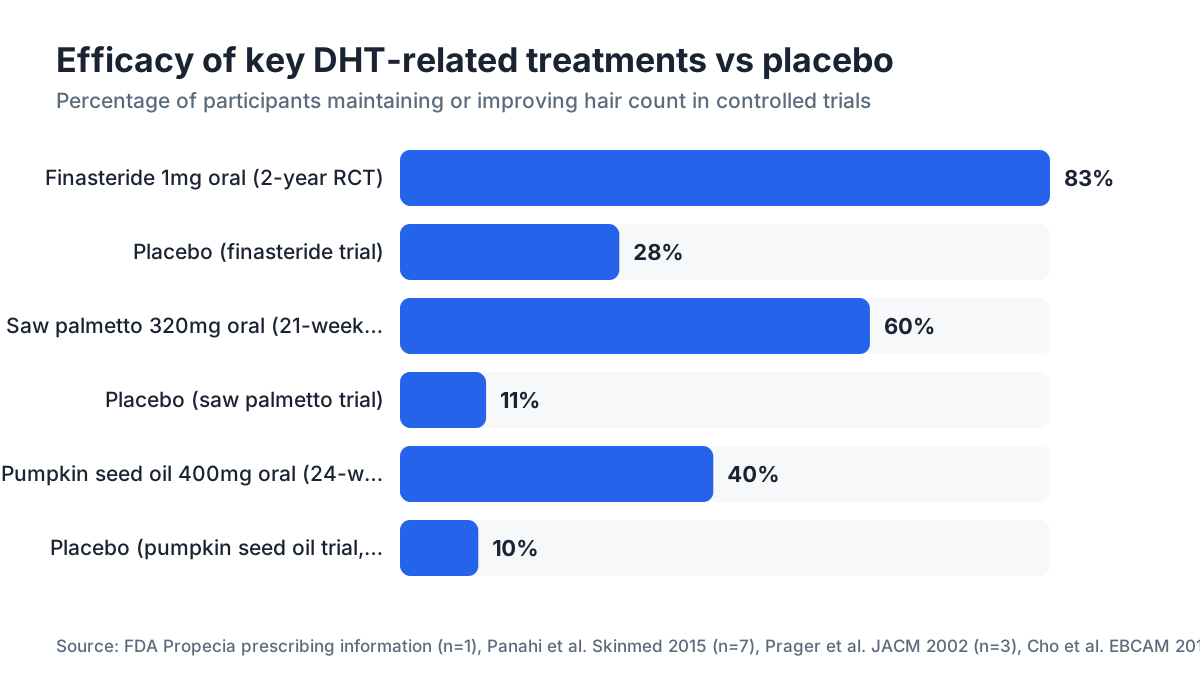
Saw palmetto (Serenoa repens) is a plant extract that inhibits 5-alpha-reductase type 1 and type 2, similar in mechanism to finasteride but weaker. A 2002 pilot study in the Journal of Alternative and Complementary Medicine found that 60% of men taking oral saw palmetto (320 mg/day) showed improvement in androgenetic alopecia versus 11% on placebo. [3] A 2021 systematic review in Dermatology and Therapy concluded saw palmetto shows promise but that most trials are small and short. [4] Topical data is even thinner, because oral absorption is known but scalp penetration from a serum is not well studied.
Caffeine has a smaller but real dataset. A 2007 in vitro study in the International Journal of Dermatology showed caffeine penetrated the hair follicle and countered testosterone-induced suppression of follicle growth. [5] Human randomized trial data is limited; the most cited is a 2014 study showing a caffeine-containing shampoo improved hair root sheath length. In vitro findings don't always translate, so read this category with appropriate skepticism.
Pumpkin seed oil showed a statistically significant result in a 2014 randomized trial: 400 mg/day orally over 24 weeks increased hair count by 40% versus 10.1% in the placebo group in men with androgenetic alopecia, published in Evidence-Based Complementary and Alternative Medicine. [6] That's oral data. Topical penetration is unestablished.
Rosemary oil was compared directly to 2% minoxidil in a 2015 randomized controlled trial in Skinmed, with similar hair count increases at 6 months in both groups, though both produced modest results. [7] The mechanism may involve circulation more than DHT blockade specifically.
Ingredients with essentially no controlled human data in topical form: biotin (a deficiency treatment, not a DHT blocker), zinc pyrithione (antifungal, not meaningfully anti-androgenic), most proprietary peptide blends. A product listing 15 ingredients with no single one at a studied concentration is not the same as a product with evidence.
For a deeper comparison of dht blocker approaches across oral, topical, and supplement forms, that article covers the full spectrum.
How do DHT blocker serums compare to oral DHT blockers like finasteride?
This is the question that matters most for anyone serious about stopping hair loss.
Finasteride at 1 mg/day is a systemic 5-alpha-reductase type II inhibitor. Clinical trials show it reduces serum DHT by roughly 70% and scalp DHT by about 64%. [8] In the registration trials, 83% of men on finasteride maintained or improved hair count over two years versus 28% on placebo. These are large, multicenter, FDA-reviewed trials. The FDA approved finasteride (Propecia) specifically for androgenetic alopecia in 1997.
No topical serum has data anywhere near that quality. The best-performing topical DHT blocker ingredients show modest, localized effects in small trials. The advantage serums offer is the absence of systemic exposure: finasteride's side effect profile, though rare for most users, includes sexual dysfunction reported in roughly 3.8% of participants in registration trials, and post-market reports of persistent symptoms in a small subset. [8] A topical that genuinely blocked DHT only at the scalp, with minimal systemic absorption, would be a real option for people who want to avoid oral medication.
Topical finasteride is the closest thing to that. It's compounded by pharmacies and studied in several small trials. A study of topical 0.005% finasteride solution applied daily found it reduced scalp DHT significantly while keeping serum DHT reduction to about 6%, compared to roughly 65% with the oral version. [9] That's a real difference in systemic exposure. Topical finasteride is not FDA-approved and is available only through compounding pharmacies with a prescription, but it's distinct from the "DHT blocker serums" sold over the counter.
Over-the-counter DHT blocker serums sit well below finasteride in proven efficacy. That's not a reason to avoid them entirely. It's a reason to use them with accurate expectations. They are not a replacement for prescription treatment in someone with meaningful hair loss. They may slow early-stage loss, may work alongside other treatments, and carry almost no meaningful side effect risk.
See the detailed comparison of finasteride and minoxidil for how oral treatments stack up against the standard topical alternative.
What evidence level do most DHT blocker serums actually have?
Most over-the-counter DHT blocker serums have no randomized controlled trial data at all. The product as formulated, at its specific concentrations, in its specific vehicle, applied as directed, has not been tested against a control group. What they have instead:
- Ingredient-level data, often from oral studies at higher doses
- In vitro studies (cell cultures or tissue samples, not people)
- Observational or anecdotal reports
- Studies on a single ingredient, often in a different form or concentration than what's in the serum
This is not fraud. It's a structural feature of the supplement and cosmetic market. The FDA does not require cosmetics to demonstrate efficacy before sale, only safety. [10] A serum making claims like "reduces DHT" or "blocks DHT at the follicle" is technically making a drug claim if it implies physiological action, which is why most brands carefully phrase things as "helps support healthy hair" instead.
If a company shows you a study, check whether the study tested their product or just an ingredient. Check the sample size and duration. Check who funded it. A 12-week, 20-person, industry-funded study of a single serum is very different from a 96-week, 1,500-person, independently replicated trial.
Nobody has good independent data on most serums specifically. The closest thing to an exception is ketoconazole-containing formulations, because the ingredient has enough pharmacy-grade research behind it to give reasonable confidence even without product-specific trials.
Should you use a DHT blocker serum alone or with other treatments?
For early hair loss (Norwood 1-2 or early diffuse thinning), a topical serum with ketoconazole, saw palmetto, or rosemary oil used consistently is a reasonable starting point, especially if you're not ready for prescription medication.
For moderate or advancing hair loss, a serum alone is unlikely to be enough. The evidence strongly supports combining approaches. Minoxidil (2% or 5% topical, or oral) plus a DHT blocker gives you two mechanisms working at the same time: minoxidil prolongs the anagen (growth) phase and improves scalp blood flow, while the DHT blocker addresses the androgen signal that's causing miniaturization. Finasteride plus minoxidil is the combination with the most clinical support. [8]
A serum added on top of that combination is low-risk and may contribute marginal benefit. Think of it as rounding the edges, not doing the heavy lifting.
The stack that makes the most sense for most people with pattern hair loss:
- Oral or topical finasteride (prescription, for DHT blockade at the strongest evidence level)
- Minoxidil topical or oral (for follicle stimulation)
- Ketoconazole shampoo 1-2% (for scalp health and additional local DHT effect)
- A serum with rosemary oil or saw palmetto (optional, low cost, low risk add-on)
If you're exploring minoxidil for men as your primary treatment, a topical DHT blocker serum is the most natural pairing because they target different mechanisms and don't interact.
What results should you realistically expect from a DHT blocker serum?
Realistic expectations depend on your stage of loss, how consistent you are, and what else you're doing.
In someone with early androgenetic alopecia using a well-formulated serum consistently for 6 months, the most likely outcome is slowing of progression, not reversal. Some people see modest density improvement. Many see no obvious change but may be losing hair more slowly than they would have otherwise, which is difficult to perceive without baseline photos.
Hair grows roughly half an inch per month. Even if a treatment is working, you won't see visible results for 3-6 months, and full assessment takes 12 months. This is true of every hair loss treatment, serums most of all.
The rosemary oil vs. minoxidil trial mentioned above found comparable hair count increases at 6 months in both groups, but both groups averaged modest gains in absolute numbers. [7] That trial used 2% minoxidil, the weaker formulation. It suggests rosemary is in the right neighborhood mechanistically but is not a high-powered treatment.
If you haven't taken baseline photos of your hairline and scalp, take them today before you start any treatment. Without a baseline, you cannot assess change. This is one of the most practical things anyone researching hair loss can do. If you want a more objective baseline, a tool like MyHairline's free AI scan (/scan) can map your hair density and give you a starting point to compare against months later.
Photos work too. The point is to have data, not impressions.
What are the side effects and safety profile of DHT blocker serums?
Topical DHT blocker serums have a very low side effect profile compared to oral DHT blockers. The risks that exist are mostly local:
Scalp irritation is the most common issue, especially with serums containing alcohol (used as a penetration enhancer) or higher concentrations of rosemary or peppermint oils. Some people experience itching, redness, or flaking.
Contact dermatitis can occur with botanical ingredients like saw palmetto extract or certain peptides. If you develop a persistent rash or hives, the serum is the likely cause.
Systemic absorption from topical saw palmetto or other 5-alpha-reductase inhibitors is considered very low, but is not fully characterized. People who are pregnant or may become pregnant should avoid serums with concentrated saw palmetto or pumpkin seed oil given the theoretical androgenic risk, the same caution that applies to oral formulations.
Finasteride, the oral prescription DHT blocker, carries FDA warnings about sexual side effects and is absolutely contraindicated in pregnancy. [8] Topical over-the-counter serums are in a completely different safety category. The FDA classifies cosmetics under a different regulatory framework than drugs; they require safety but not efficacy evidence before marketing. [10]
For context on finasteride's side effect profile versus the topical alternatives, see the finasteride deep-explainer.
How do you choose a DHT blocker serum worth buying?
There are hundreds of products on the market. Here's a practical filter.
Look for at least one ingredient with documented human trial data: ketoconazole (1-2%), rosemary oil (studied at 1-2 mL of a diluted solution), saw palmetto extract at a meaningful concentration, or caffeine. If you cannot find concentration percentages listed on the label or website, that's a red flag. Ingredients listed without concentrations might be present at trace levels that do nothing.
Avoid products that:
- List 20 ingredients without concentrations for any of them
- Claim to "reverse" or "cure" hair loss (a drug claim that would require FDA approval the product doesn't have)
- Charge more than $60-80/month for serum-only treatment without any trial data on their formulation
- Use proprietary blends that hide ingredient quantities
Price is not a reliable proxy for quality. Some $25 ketoconazole formulations outperform $90 peptide serums with no human data.
Consistency matters more than brand. A mediocre serum used every day for a year will outperform a great serum used three times a week. Whatever you choose, pick something you'll actually apply daily and stick to a routine.
A useful companion read is hair loss supplements, which applies the same evidence filter to oral supplement options.
Can women use DHT blocker serums for hair loss?
Yes, and they're arguably safer for women than oral DHT blockers, most of which are not FDA-approved for women and carry significant risks in anyone who could become pregnant.
Women with pattern hair loss (female androgenetic alopecia) experience DHT-driven follicle miniaturization by the same mechanism as men, though the pattern differs (diffuse thinning over the crown rather than the classic M-shape recession). [1] Reducing local DHT activity at the scalp is a reasonable goal.
For women, topical serums with ketoconazole, rosemary oil, or saw palmetto are lower-risk options than finasteride, which is FDA-approved for men but not women, or dutasteride, which is approved for men in some countries. Spironolactone, an oral anti-androgen, is sometimes prescribed off-label for women with androgenetic alopecia, but again it's a systemic treatment with its own considerations.
Women experiencing diffuse hair loss should first rule out telogen effluvium, iron deficiency, thyroid dysfunction, and other non-androgenic causes before assuming DHT is the driver. A serum aimed at DHT won't help much if the underlying cause is nutritional deficiency or hormonal imbalance unrelated to androgens.
If hair loss began after significant stress, illness, or a major diet change, telogen effluvium is more likely than pattern loss, especially if the shedding was sudden.
Is a DHT blocker serum useful alongside a hair transplant?
A hair transplant moves follicles that are resistant to DHT (from the back and sides of the scalp) to areas of loss. The transplanted hairs are not affected by DHT and won't miniaturize the same way. The real concern after a transplant is the native follicles still present in the recipient area. Those native follicles continue to be vulnerable to DHT, which means ongoing loss continues without medical treatment.
Most surgeons recommend maintaining medical therapy (finasteride and/or minoxidil) before and after a transplant to protect native follicles and preserve the overall result. A topical DHT blocker serum is a reasonable addition to that regimen, though it isn't a substitute for the stronger systemic or topical prescription options.
Using a serum before a transplant, particularly one with anti-inflammatory ingredients, may also support scalp health leading up to surgery. There's no evidence it improves graft survival specifically.
Anyone considering surgery should read hair transplant first to understand the full picture of what a procedure can and cannot accomplish.
How long do you need to use a DHT blocker serum to see results?
Six months is the minimum evaluation period for any hair loss treatment. Hair follicles cycle through growth (anagen), transition (catagen), and resting (telogen) phases. Even if a treatment successfully shifts follicles toward anagen, you won't see visible hair growth until those follicles have gone through a full cycle, which takes months.
The 2015 rosemary vs. minoxidil trial ran for 6 months. [7] The saw palmetto trial ran for 24 weeks. [3] These weren't arbitrary durations; they reflect how long it takes to see meaningful follicle response.
If you stop using a DHT blocker serum, the DHT signal resumes at its previous level. Hair loss is likely to continue. This is the same dynamic with finasteride and minoxidil. Any treatment that works requires ongoing use to maintain results.
For people who started a serum and are unsure whether it's doing anything, an objective assessment at baseline and again at 6-12 months is the only reliable way to judge. MyHairline's free AI scan at /scan can provide density mapping at both time points so you're comparing data, not impressions.
Patience and consistency are the unsexy but accurate answer to how long this takes.
Sources
- American Academy of Dermatology, Hair Loss: Who Gets It and Causes
- Pierard-Franchimont C et al., Journal of Dermatology 1998; 25(5):312-316. Ketoconazole vs minoxidil RCT.
- Prager N et al., Journal of Alternative and Complementary Medicine 2002; 8(2):143-152. Saw palmetto pilot RCT.
- Evron E et al., Dermatology and Therapy 2020; 10(5):1043-1052. Saw palmetto systematic review.
- Fischer TW et al., International Journal of Dermatology 2007; 46(1):27-35. Caffeine and hair follicle in vitro study.
- Cho YH et al., Evidence-Based Complementary and Alternative Medicine 2014. Pumpkin seed oil RCT.
- Panahi Y et al., Skinmed 2015; 13(1):15-21. Rosemary oil vs 2% minoxidil RCT.
- FDA, Propecia (finasteride) prescribing information
- Caserini M et al., Drug Design, Development and Therapy 2016; 10:1307-1317. Topical finasteride pharmacokinetics study.
- US Food and Drug Administration, Cosmetics regulatory overview
- van der Merwe J et al., Clinical Journal of Sport Medicine 2009; 19(5):399-404. Creatine and DHT.