
TL;DR: Diffuse thinning all over the scalp in women is usually female androgenetic alopecia (FPHL), a hormone-related condition affecting roughly 40% of women by age 50. It rarely causes a receding hairline but thins the crown and part-line first. Minoxidil 2% or 5% is the only FDA-approved topical treatment. No cure exists, but progression can be slowed.
What is diffuse thinning all over the scalp in women?
Diffuse thinning means the density of your hair drops across a broad area rather than falling out in one bald patch. In women, the most common reason this happens is female androgenetic alopecia (FPHL), also called female-pattern hair loss. The follicles miniaturize gradually under the influence of androgens, producing finer, shorter hairs until the scalp shows through them.
This is not sudden shedding from stress or illness. Telogen effluvium causes a rapid, diffuse shed that typically reverses in months. FPHL is slow, progressive, and permanent without treatment. The distinction matters because the treatments are completely different.
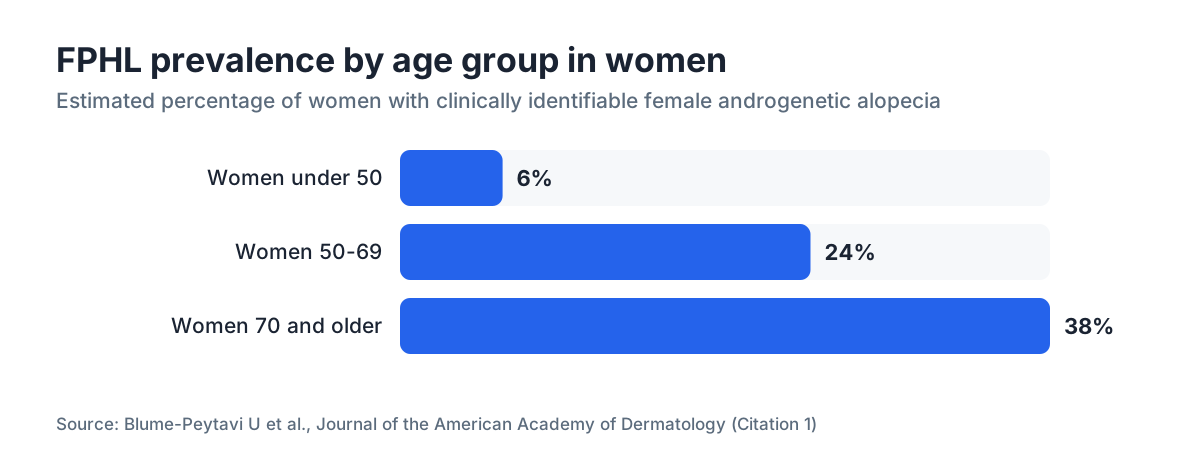
FPHL is more common than most women realize. A widely cited review in the Journal of the American Academy of Dermatology estimated prevalence at roughly 6% in women under 50 and rising to nearly 38% in women over 70 [1]. Many dermatologists put the lifetime risk closer to 40% across all age groups. It often starts in the late 20s or 30s and speeds up around menopause when estrogen levels fall and the androgen-to-estrogen ratio shifts.
How is female androgenetic alopecia different from male-pattern baldness?
The underlying biology is similar but the pattern is very different. Men tend to lose hair at the temples and crown, eventually going fully bald in those zones. Women almost never lose their frontal hairline entirely. Instead, the part widens, the crown thins, and the scalp shows through increasingly fine hair, while a narrow band of hair at the front usually stays intact. That frontal preservation is one of the defining clinical features dermatologists look for.
Androgens, specifically dihydrotestosterone (DHT), drive miniaturization in genetically susceptible follicles in both sexes. But women have lower circulating androgen levels, follicles in the frontal zone that are less sensitive to DHT, and higher local aromatase activity that converts androgens to estrogens inside the scalp. All of that explains the different distribution pattern. What causes hair loss goes deeper into the follicle biology if you want the full picture.
Here's a key difference. Many women with FPHL have completely normal androgen blood levels. The sensitivity is in the follicle itself, not necessarily in a systemic hormone excess. That matters for treatment decisions, because blocking androgens systemically is not always necessary or appropriate.
What are the Ludwig and Sinclair staging systems for women?
Staging FPHL in women needs a different scale than the Norwood scale used for men. Two systems show up in clinics.
Ludwig Scale (1977) is the traditional standard:
| Stage | What you see |
|---|---|
| Ludwig I | Mild thinning at the crown; part-line slightly widened; easily hidden by styling |
| Ludwig II | Significant widening of the part; scalp clearly visible through the thinning zone |
| Ludwig III | Diffuse thinning over the crown; near-complete see-through appearance at top |
Sinclair Scale (2004) uses a 5-point photographic scale based on the width of the central part, which some clinicians find easier to apply consistently in clinical photos and research [2].
Staging guides treatment urgency and helps you track whether your treatment is actually working. A Stage I patient who starts minoxidil early has a far better shot at meaningful regrowth than a Stage III patient trying to reverse years of miniaturization. Catch it early if you can.
How do I know if my thinning is FPHL or something else?
The honest answer: you often cannot tell without a proper workup. Several conditions cause diffuse thinning in women and some overlap in appearance.
FPHL clues: thinning concentrated at the crown and central part, hairline mostly intact, slow progression over years, family history on either parent's side, worsening at or after menopause.
Things that can look similar but aren't FPHL: telogen effluvium (rapid diffuse shed triggered by thyroid disease, iron deficiency, crash dieting, or childbirth), alopecia areata diffusa (an autoimmune process that can mimic FPHL), and frontal fibrosing alopecia (a scarring form with subtle hairline recession in postmenopausal women).
A dermatologist typically orders a set of blood tests: TSH, ferritin, serum iron, complete blood count, DHEAS, free and total testosterone, and sometimes a prolactin level. The right ferritin cutoff in hair loss is debated, but many hair specialists prefer ferritin above 40 ng/mL and some argue above 70 ng/mL before ruling out deficiency as a contributor [3]. That threshold is not universally agreed upon, so talk to your doctor.
A scalp biopsy can confirm the diagnosis definitively when results are ambiguous. It sounds intimidating but it's a tiny punch taken under local anesthetic, and it's sometimes the only way to tell FPHL apart from a scarring process that needs completely different treatment.
Does female androgenetic alopecia run in families?
Yes, strongly. FPHL has a clear polygenic hereditary component, meaning many genes each add small risk rather than one gene flipping a switch. The AR gene on the X chromosome, which codes for the androgen receptor, is one of the most studied, but genome-wide association studies have identified dozens of other loci [4].
The old belief that baldness comes only from your mother's father has been thoroughly disproven. You can inherit the tendency from either parent and any grandparent. If both parents have significant hair thinning, your risk is higher than if only one does. But genetics here is probabilistic, not deterministic. Some women with strong family histories never develop clinically significant FPHL, and some with no family history do.
Genetics also shapes the age of onset and the rate of progression, more than whether you get it at all. Two sisters with the same genes can have very different timelines.
What treatments actually work for FPHL?
Short answer: minoxidil is the most reliably effective option with the most evidence. Everything else has either less data, more restrictions, or both.
Minoxidil (topical): The FDA approved 2% minoxidil solution for women in 1992. The 5% foam was later studied and found more effective than 2% solution in a 48-week randomized controlled trial published in the Journal of the American Academy of Dermatology, showing a higher mean change in target area hair count [5]. The FDA label for the 5% foam says to apply once daily in women; twice daily is used off-label in some practices. Minoxidil works by prolonging the anagen (growth) phase and increasing follicle size. It does not block DHT. You have to keep using it indefinitely or the gained hair sheds within months of stopping.
Before you start, read about minoxidil side effects because facial hypertrichosis (fine hair growth on the cheeks and forehead) affects a meaningful minority of women using 5% formulas, less so with 2%. It usually resolves on stopping but it's worth knowing.
Oral minoxidil: Low-dose oral minoxidil (0.25 to 2.5 mg/day) has become popular off-label for FPHL. A 2020 randomized trial in JAMA Dermatology found 1 mg oral minoxidil was non-inferior to 5% topical minoxidil for women with FPHL, with better tolerability in some patients [6]. It's not FDA-approved for hair loss, so this is a physician-supervised off-label use. Oral minoxidil covers the evidence in detail.
Finasteride: FDA-approved for men only. In premenopausal women it's contraindicated due to the risk of feminizing male fetuses during pregnancy. In postmenopausal women, some dermatologists use it off-label at 1 to 2.5 mg/day. Evidence in women is mixed and weaker than in men. Finasteride has a full breakdown.
Spironolactone: An anti-androgen often used off-label in women with FPHL, particularly those who also have acne or signs of androgen excess. Doses of 100 to 200 mg/day are common. It's not FDA-approved for hair loss, requires monitoring of potassium and blood pressure, and is contraindicated in pregnancy. Observational studies show benefit; large RCT data in FPHL specifically are limited.
DHT blockers more broadly: This category includes finasteride, dutasteride, and spironolactone. Dutasteride is used off-label in postmenopausal women in some practices but has even less published evidence in women than finasteride does.
Platelet-rich plasma (PRP): Multiple small trials show improvement in hair density, but the studies vary wildly in protocol, making them hard to compare. The American Academy of Dermatology lists PRP as a potential treatment option while noting that standardization is lacking [7]. Sessions typically cost $600 to $1,500 each, and three to four sessions are usually recommended upfront. Not covered by insurance.
Low-level laser therapy (LLLT): Several devices are FDA-cleared (not approved, cleared, which means different things). Evidence shows modest improvement in hair density in some patients. It's not a first-line option but it has a low side-effect profile.
Hair transplant: FPHL generally makes women poor candidates for transplant because the donor hair in the back is also susceptible to miniaturization in diffuse-pattern FPHL. A transplant just moves miniaturizing follicles. Some women with stable, localized patterns and healthy donor areas are candidates, but this needs a careful donor assessment. Hair transplant explains who qualifies and what to expect.
Is minoxidil safe for women long-term?
Topical minoxidil has decades of use in women and a well-established safety profile. The main concerns are local: scalp irritation (more common with the propylene glycol-containing solution than the foam), and facial hair growth with the 5% concentration.
Systemic absorption from topical minoxidil is low but not zero. Cardiovascular effects like palpitations or fluid retention are rare at topical doses but reported. Women with known cardiac conditions should discuss this with their cardiologist before starting.
Pregnancy is a firm contraindication. Minoxidil is classified as FDA Pregnancy Category C, and animal studies showed teratogenicity at high doses. If you are pregnant or trying to conceive, stop minoxidil.
For oral minoxidil, the side-effect profile is different. Even at the low doses used for hair loss (0.25 to 2.5 mg), some women get fluid retention, pericardial effusion (rare), or hypertrichosis. Blood pressure monitoring is standard. That's why oral minoxidil has to be prescribed and supervised.
Long-term topical use over years is considered safe by most hair loss specialists, with no evidence of cumulative organ toxicity at the approved doses.
Can diet and supplements slow female-pattern hair loss?
Nutritional deficiencies can worsen any hair loss, including FPHL, but supplements alone will not reverse androgenetic alopecia. That distinction is worth making clearly.
Iron deficiency is the most reliably documented nutritional contributor. Low ferritin correlates with increased shedding in multiple studies, though whether it directly drives FPHL progression or just piles shedding on top of it is debated [3]. If your ferritin is low, correcting it is worth doing regardless.
Vitamin D deficiency is associated with several forms of alopecia in observational data. The mechanism is unclear. Supplementing to normal range is reasonable if you're deficient, but no trial shows it reverses FPHL.
Biotin is almost universally overhyped. Biotin deficiency causes hair loss, but genuine deficiency is rare. Taking high-dose biotin when you're not deficient has no demonstrated effect on hair growth. It also interferes with thyroid and cardiac lab tests, which matters if you're getting blood work done.
Saw palmetto, pumpkin seed oil, and marine collagen peptides all have small, low-quality studies behind them. Read hair loss supplements for a sober look at what the evidence actually shows. Nobody has good long-term RCT data on any of these for FPHL specifically.
A balanced diet with adequate protein (most hair loss guidelines suggest roughly 0.8 to 1.2 g per kg body weight), iron from food sources, and zinc from nuts and meat is the sensible baseline. Beyond correcting deficiencies, no diet change has been shown to halt FPHL.
Does FPHL get worse at menopause?
For many women, yes. Menopause marks a drop in estrogen production from the ovaries. Estrogen partly counters androgens at the scalp. When estrogen falls, the androgen-to-estrogen ratio shifts, and follicles that were borderline sensitive to DHT can tip into miniaturization.
A cross-sectional study found postmenopausal women had significantly higher FPHL prevalence than premenopausal women in every age-matched bracket [1]. Onset can also happen for the first time at perimenopause in women who showed no significant thinning earlier.
Hormone therapy (HT) after menopause is a complex topic. Some estrogen-containing regimens may partly stabilize hair loss, but HT decisions rest on overall health risk-benefit for things like cardiovascular and breast cancer risk, not primarily on hair. If you're considering HT for other reasons, ask your gynecologist whether the specific formulation is hair-neutral or potentially hair-friendly. Progestins vary: some are androgenic and can worsen hair loss (norethindrone acetate, for example), while others are more androgen-neutral or anti-androgenic (drospirenone).
When should I see a dermatologist and what will they do?
See a dermatologist if your part has widened noticeably over one to two years, you can see your scalp clearly through your hair in overhead light, you're losing more than about 100 hairs per day for more than two months (rough rule of thumb, not a precise threshold), or you notice scalp symptoms like burning or itch alongside the thinning.
What to expect at the appointment: a detailed history (medications, diet, recent stressors, menstrual history, family history), a scalp exam possibly with a dermatoscope, and a blood panel. The dermatoscope lets them look at individual follicles and miniaturization patterns at magnification, which is often enough to confirm FPHL without a biopsy.
If the diagnosis is unclear, they may order a scalp biopsy or do trichoscopy with image analysis. If blood tests come back with thyroid or iron issues, they'll address those first.
After diagnosis, a typical first-line recommendation is 5% topical minoxidil once daily. If there are signs of androgen excess or if topical minoxidil isn't enough, they might add spironolactone or low-dose oral minoxidil.
If you want to start tracking your pattern before your appointment, MyHairline's free AI hair scan at myhairline.ai/scan can document your current pattern and stage, which gives you something concrete to show your dermatologist and a baseline to compare against in 6 to 12 months.
What does recovery or regrowth realistically look like?
Honest expectations: you are most likely managing and slowing progression, not reversing it completely. Minoxidil produces meaningful regrowth in roughly 50 to 60% of women in trials [5]. The rest see slowing or stabilization. A smaller group don't respond at all.
The Journal of the American Academy of Dermatology reports that in the main 5% foam trial, women showed a statistically significant increase in target area hair count versus placebo at 24 weeks, with continued improvement at 48 weeks [5]. "Statistically significant" in a trial doesn't always mean visually dramatic, but many responders do notice real density improvement.
Timing matters. Expect minimal visible change for the first three months. Peak benefit from topical minoxidil usually shows at 12 to 18 months of consistent use. Early on (weeks 2 to 8), you may actually see increased shedding, which is normal and represents follicles transitioning cycles. That shedding phase stops on its own.
Photographic documentation helps enormously. Take photos in the same light, from the same angles (top-down at the part, overhead of the crown) every three months. Your own perception is unreliable because you look at your hair every day and the changes are gradual.
Are there newer or emerging treatments for female-pattern hair loss?
A few therapies are actively being studied and show promise, though none have full FDA approval for FPHL yet.
JAK inhibitors: Baricitinib and ritlecitinib are FDA-approved for alopecia areata. They work through a completely different pathway (JAK-STAT signaling, not androgen pathways) and are not approved or typically effective for FPHL. Worth mentioning because patients sometimes ask about them after seeing coverage of alopecia areata breakthroughs.
Topical finasteride: Under investigation. The idea is to block DHT locally without the systemic exposure that creates concerns in women of childbearing age. Early data in men are encouraging. Finasteride and minoxidil covers combination approaches. Women's trials are ongoing.
Bimatoprost: A prostaglandin analog applied topically. Phase II trials showed modest hair density improvement in FPHL. Phase III data is needed.
Melatonin topical solution: Some European trials (particularly a 2004 German study) showed reduced shedding in women with FPHL. The effect size was small, the mechanisms aren't fully understood, and it's not FDA-approved for hair loss.
The honest position: minoxidil is still the anchor treatment for women in 2025. If a cosmetic clinic offers you something billed as a breakthrough, ask for the peer-reviewed phase III data before spending money.
Sources
- Blume-Peytavi U et al., Journal of the American Academy of Dermatology – FPHL prevalence review
- Sinclair R et al., Journal of the American Academy of Dermatology – Sinclair scale for female-pattern hair loss
- Trost LB et al., Journal of the American Academy of Dermatology – The role of iron and low ferritin in diffuse hair loss
- Heilmann-Heimbach S et al., Nature Communications – Genome-wide association study of androgenetic alopecia
- Blume-Peytavi U et al., Journal of the American Academy of Dermatology – 5% minoxidil foam vs 2% minoxidil solution RCT in women
- Rossi A et al., JAMA Dermatology – Oral low-dose minoxidil vs topical minoxidil for FPHL RCT 2020
- American Academy of Dermatology – Hair loss treatment overview
- FDA – Minoxidil 5% Foam drug label (NDA approval history)
- American Academy of Dermatology – Female pattern hair loss diagnosis and treatment
- Olsen EA et al., Journal of the American Academy of Dermatology – Ludwig scale and FPHL staging
- National Institutes of Health MedlinePlus – Androgenetic alopecia genetics overview