

TL;DR: Anesthesia by itself almost never causes hair loss. Surgery does. The stress of an operation (blood loss, fasting, a cortisol spike, inflammation) can shock a large batch of follicles into a resting phase called telogen effluvium. Shedding usually starts 6 to 12 weeks after surgery and clears on its own within 3 to 6 months for most people.
Does anesthesia actually cause hair loss?
Almost certainly not on its own. Anesthesia drugs have never been shown in controlled research to damage hair follicles directly. What surgeons and dermatologists see over and over is hair loss that follows surgery, not the gas or IV agents used to put you under.
The real driver is physiological stress. A major operation hits the body with a cluster of shocks at once: hours of fasting, blood pressure swings, blood loss, inflammation, and a sharp rise in cortisol. Those signals tell a large share of follicles to quit growing and drop into a dormant resting phase (telogen). Two to three months later, all of those follicles shed together. That sudden, diffuse shedding is telogen effluvium.
So when someone finds handfuls of hair in the shower six weeks after a hip replacement, blaming the anesthesia feels intuitive. It's also almost certainly wrong. The anesthesia was one piece of a much bigger physiological event. [1]
There is one anesthesia-adjacent scenario that genuinely injures hair: prolonged pressure on the scalp during surgery. Lie in one position for many hours and the scalp can lose blood flow at the contact point (localized ischemia), and hair falls out right there. That is pressure alopecia, not telogen effluvium, and it looks different. You get a defined bald patch instead of all-over thinning. [2]
What is telogen effluvium and why does surgery trigger it?
Telogen effluvium is a sudden, diffuse shed that happens when a stress event pushes too many follicles into their resting phase at once. Surgery is one of the most reliable triggers. The shed shows up two to three months later because that's how long resting follicles hold before they release the hair.
Hair grows in a cycle. Anagen is active growth, lasting 2 to 7 years. Catagen is a brief transition. Telogen is the resting phase, roughly 3 months, after which the old hair sheds and a new one starts.
At any given moment, about 85 to 90 percent of scalp hairs are in anagen and 10 to 15 percent are in telogen [1]. A major stress can flip a much larger share into telogen all at once. Fever, rapid weight loss, childbirth, thyroid disease, and severe nutritional deficiency do the same thing. Surgery just packs several of those triggers into one week.
The mechanism runs on overlapping signals. Cortisol rises sharply during surgery and suppresses normal follicle cycling. Anemia from blood loss cuts the oxygen and iron follicles need to grow. Fasting before and after the procedure adds a caloric deficit on top. Any one of these might not tip you over. Stacked together, they often do.
Because follicles sit in telogen for about 3 months before shedding, the loss arrives on a delay. Someone who had surgery in January starts shedding in March or April. Miss the delay and the timing feels random. Plenty of patients, and some general practitioners, never link the two.
A study in the Journal of the American Academy of Dermatology named physical trauma, including surgery, as one of the most common identifiable causes of acute telogen effluvium. [3] The shed comes from all over the scalp, not one spot, and it clears on its own in the large majority of cases.
How common is hair loss after surgery?
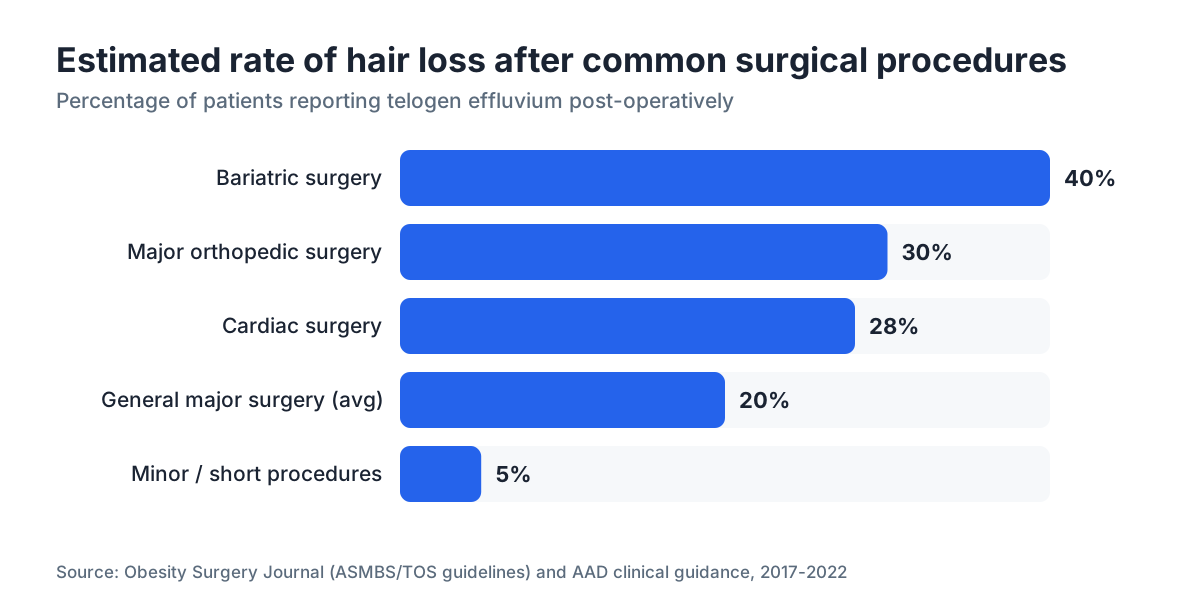
Somewhere between 20 and 50 percent of people who have major surgery notice hair shedding in the weeks that follow, according to dermatology estimates [3]. Firm numbers are hard to pin down because telogen effluvium is underreported. Patients rarely mention it to their surgical team, and it usually resolves before any dermatology follow-up happens.
Procedures with long anesthesia times, heavy blood loss, or big physiological disruption carry the highest risk. Cardiac surgery, bariatric surgery, and major orthopedic surgery lead the list.
Bariatric surgery is the best-studied example. Hair loss after gastric bypass or sleeve gastrectomy is so predictable that surgeons now counsel patients about it in advance. The cause there is the mix of surgical stress and the steep caloric and protein restriction that follows, not the anesthesia. Studies have reported telogen effluvium in 40 percent or more of bariatric patients. [4]
Length of surgery matters too. Operations running past four or five hours raise the odds of pressure alopecia from scalp compression on top of any telogen effluvium. One patient can have both.
How long does hair loss after surgery last?
For most people, temporary. Surgery-triggered telogen effluvium is self-limiting. Shedding peaks 2 to 4 months after the procedure, then slows over the next 2 to 3 months. Most patients see real recovery by 6 months and full regrowth by 9 to 12 months post-surgery, though timelines vary person to person. [1]
The first sign of recovery is not thickness. It's short, bristly regrowth hairs, often half an inch or less, appearing across the scalp. Those are anagen hairs that restarted. They can make a fuzzy halo around the hairline. Looks odd at first. It's a good sign.
Shedding that keeps going past 6 months with no improvement points to something else. Chronic telogen effluvium is a separate and less well-understood condition. Or the surgery may have exposed a preexisting problem, like androgenetic alopecia (genetic hair loss) or a thyroid issue, that was already simmering before you went under. In that case the surgery acted as a trigger that sped up a process already underway.
If the shed runs well past 6 months, or you see a pattern (thinning crown, receding hairline) instead of even all-over loss, book a dermatologist rather than keep waiting.
Does hypothyroidism cause hair loss?
Yes, and it's one of the more commonly missed causes. Thyroid hormones set the pace of cell metabolism, including how fast follicles move through their growth phases. Both hypothyroidism (underactive) and hyperthyroidism (overactive) can disrupt the hair cycle, but hypothyroidism shows up more often in dermatology offices.
The pattern is diffuse thinning across the whole scalp, much like telogen effluvium, because low thyroid hormone pushes too many follicles into rest. Some patients also lose the outer third of their eyebrows, which dermatologists call Hertoghe's sign, though it's neither specific nor universal. Texture often changes first, turning dry, coarse, and brittle before heavy shedding starts. [5]
Hypothyroidism affects roughly 5 percent of the US population, with women over 60 at highest risk, according to the National Institute of Diabetes and Digestive and Kidney Diseases [5]. It can hit any age, and men too. The tricky part: hair loss can be the first symptom, showing up before fatigue, weight gain, and cold intolerance become obvious.
A blood test measuring TSH (thyroid-stimulating hormone) and free T4 makes the diagnosis. If they're abnormal, levothyroxine usually reverses the hair loss over 6 to 12 months, rarely fast. One nuance worth knowing: shedding can briefly get worse in the first few months after starting thyroid replacement as the cycle resets. That temporary bump is not treatment failure.
If you're shedding after surgery and also have thyroid symptoms, get your levels checked early. Surgery itself can shift thyroid function for a stretch, so the two problems overlap more than people expect. [5][11]
What other factors around surgery make hair loss worse?
A handful of compounding factors deepen and drag out post-surgical shedding. Knowing them explains why two people with the same operation end up with very different hair.
Iron deficiency is a big one. Blood loss during surgery drops ferritin (stored iron). Low ferritin tracks consistently with telogen effluvium in dermatology research, even though the exact cutoff where hair suffers is still debated. Most dermatologists flag a ferritin below 30 ng/mL, and some aim for 70 ng/mL as an optimal target for hair. [3] If your iron stores were borderline going into surgery, you're at real risk.
Protein matters too. Hair is mostly keratin, a protein, and healing pulls amino acids toward tissue repair and away from hair. On a restricted post-op diet, especially after bariatric surgery, that protein gap makes follicle stress worse. Eating enough protein during recovery has a plausible benefit for hair, though it hasn't been proven in a rigorous trial.
Zinc and biotin deficiency get blamed for hair loss broadly, but the evidence is mostly observational. Biotin gets recommended everywhere, and the data behind it are thin unless you have a confirmed deficiency. If your levels are normal, biotin is money down the drain. [12]
Preexisting androgenetic alopecia changes everything. If genetic hair loss has already begun, a surgical stress event can drag its appearance forward by a lot. The telogen effluvium resolves, but the genetic loss keeps grinding underneath. These patients need both short-term reassurance and a longer conversation about whether finasteride or minoxidil for men makes sense.
Can you prevent hair loss from surgery?
No protocol guarantees it. But you can reduce the severity by getting a few variables right before and after surgery.
Before surgery, check your ferritin and thyroid levels if you're worried. Correct any iron deficiency ahead of time. Go into the operation well-fed, not on a long crash diet. If you know the surgery will run long, ask the surgical team about scalp padding to cut pressure alopecia risk.
After surgery, hit your protein targets while you heal. General post-surgical guidance recommends 1.2 to 1.5 grams of protein per kilogram of body weight per day, though needs vary. [7] If blood loss was significant, get iron checked 4 to 6 weeks post-op and supplement if it's low.
Minoxidil comes up as a preventive, but there's no strong randomized trial backing it specifically for post-surgical telogen effluvium. What's known is that minoxidil shortens telogen and can nudge follicles back into anagen. Some dermatologists do recommend it for stubborn cases. There's more on how it works and its side effects at minoxidil side effects.
For most patients the honest advice is short: support your health, watch your labs, and wait. The majority of post-surgical hair loss clears with no hair-specific treatment at all.
How is post-surgical hair loss diagnosed?
A dermatologist usually makes the call from history and a scalp exam. Three questions do most of the work: when was the surgery, when did the shedding start, and is the loss diffuse or patterned?
The pull test is the standard bedside tool. The clinician grabs about 50 to 60 hairs, applies gentle traction, and counts how many come free. More than 3 to 4 hairs on a gentle pull counts as positive and suggests active effluvium. [3]
Dermoscopy (a magnifier used on the scalp) shows the ratio of growing to resting hairs and helps rule out alopecia areata or androgenetic alopecia. A small scalp biopsy is sometimes done, but only for cases that stay ambiguous.
Blood work is almost always ordered. A standard panel covers complete blood count (CBC), ferritin, TSH, free T4, and sometimes B12 and zinc. These catch the correctable causes. Thyroid disease and iron deficiency matter most here because they will not resolve on their own no matter how long you wait.
Want a starting point before a clinic visit? The free AI scan at MyHairline helps you document your shedding pattern and check whether the distribution looks like diffuse effluvium or something more patterned. It doesn't replace a clinical diagnosis.
When should you see a doctor about hair loss after surgery?
Most post-surgical hair loss is harmless and temporary. A few patterns still deserve a prompt look.
See a dermatologist if: shedding is still speeding up 3 months after the operation; a bald patch (localized, not diffuse) appeared right after surgery; shedding shows no sign of slowing past the 6-month mark; new symptoms hint at a systemic issue (fatigue, weight changes, temperature sensitivity); or you can see a clear pattern that looks like a receding hairline or thinning crown rather than even all-over loss.
That last point deserves weight. Post-surgical telogen effluvium reveals what genetic hair loss looks like once it's already started. Some patients say their hairline never fully came back after surgery. Look closely and many had early androgenetic alopecia before the operation; the surgery just pulled its arrival forward. If that's the case, the conversation shifts to longer-term management with finasteride and minoxidil instead of simply waiting.
No shame in getting reassurance early. One dermatology visit with a pull test and basic labs tells you whether this fixes itself or needs treatment. Twelve months of anxiety costs more than the office visit.
Comparison: anesthesia vs. other common causes of sudden hair loss
Surgery-triggered telogen effluvium sits alongside several other sudden hair loss causes. The table compares them on timing, pattern, and whether they recover on their own.
| Cause | Shedding onset | Pattern | Spontaneous recovery |
|---|---|---|---|
| Surgery / anesthesia | 6 to 12 weeks post-op | Diffuse | Yes, usually 6 to 12 months [1] |
| Hypothyroidism | Gradual, months | Diffuse + eyebrow thinning | Yes, with treatment [5] |
| Iron deficiency | Gradual, weeks to months | Diffuse | Yes, with iron repletion [3] |
| Childbirth (postpartum) | 3 to 4 months postpartum | Diffuse | Yes, usually 6 to 12 months [1] |
| Rapid weight loss / crash diet | 2 to 4 months after diet | Diffuse | Yes, when nutrition improves |
| Androgenetic alopecia | Gradual, years | Patterned (crown, temples) | No, progressive without treatment |
| Alopecia areata | Sudden, days to weeks | Patchy | Unpredictable [10] |
| Pressure alopecia (surgery) | Immediate post-op | Localized patch | Often yes, over months [2] |
This is why an accurate diagnosis matters. Several of these look identical during the shedding phase but have completely different trajectories and treatments. Understanding what causes hair loss more broadly helps you frame your own case before a doctor visit.
What treatments actually help hair grow back after surgery?
For plain post-surgical telogen effluvium with no underlying deficiency, the evidence-based answer is time and nutritional support. No FDA-approved drug exists specifically for telogen effluvium.
A few interventions have reasonable evidence or at least solid biological logic:
Iron supplementation corrects the deficiency when ferritin is low. This is probably the highest-impact move in iron-deficient patients. A 2017 systematic review in the Journal of the American Academy of Dermatology concluded that iron supplementation improved hair loss in patients with confirmed iron deficiency. [3]
Thyroid hormone replacement is straightforward once hypothyroidism is confirmed. Hair usually recovers within 6 to 12 months of stable treatment.
Topical minoxidil (2% or 5%) gets used off-label to shorten the effluvium by prolonging anagen and pulling follicles out of telogen. The data don't come from large randomized trials in post-surgical patients specifically, but the safety record is well established. [8] More on how it works at minoxidil for men and minoxidil side effects.
Low-dose oral minoxidil (0.25 to 1.25 mg/day for women, 2.5 to 5 mg/day for men) is increasingly prescribed and may reach follicles better than topical. oral minoxidil has a growing evidence base and a different side-effect profile to weigh.
For patients who find underlying androgenetic alopecia after their effluvium, finasteride (for men) is FDA-approved and the most effective drug for slowing genetic hair loss. [9] A DHT blocker like finasteride hits the hormonal driver that surgery didn't cause but may have exposed.
Hair transplants are the wrong answer for telogen effluvium. You have to let the effluvium fully resolve and confirm your baseline first. If genetic loss is present and stable, a hair transplant can be discussed, but that's a year or more out from a typical post-surgical situation.
Sources
- American Academy of Dermatology, Hair Loss Types: Telogen Effluvium Overview
- National Library of Medicine, StatPearls: Pressure Alopecia
- Journal of the American Academy of Dermatology, 2017 systematic review on iron and hair loss
- Obesity Surgery Journal, ASMBS/TOS clinical practice guidelines on nutritional deficiencies after bariatric surgery
- National Institute of Diabetes and Digestive and Kidney Diseases (NIDDK), Hypothyroidism
- Academy of Nutrition and Dietetics, protein needs for surgical recovery
- FDA Drug Label, Minoxidil Topical Solution (Rogaine), DailyMed
- FDA Drug Label, Finasteride 1mg (Propecia), DailyMed
- National Institute of Arthritis and Musculoskeletal and Skin Diseases (NIAMS), Alopecia Areata
- American Thyroid Association, Hypothyroidism
- National Institutes of Health, Office of Dietary Supplements, Biotin Fact Sheet