

TL;DR: Metformin is not listed as a direct cause of hair loss on its FDA label, and no clinical trial has confirmed a causal link. But long-term use depletes vitamin B12 in roughly 10 to 30% of patients, and low B12 is a documented trigger of telogen effluvium. If you're shedding on metformin, low B12 and the condition being treated are both likelier culprits than the drug.
What does the FDA label actually say about metformin and hair loss?
The FDA-approved prescribing information for metformin hydrochloride does not list alopecia or hair loss among its adverse reactions. The documented side effects center on gastrointestinal issues (nausea, diarrhea, vomiting), lactic acidosis in rare cases, and vitamin B12 deficiency with prolonged use [1]. Scan the label for a clear "yes, this drug causes hair loss" and you won't find one.
That doesn't mean zero people on metformin lose hair. It means no randomized controlled trial has shown a direct path from metformin molecules to the hair follicle. Absence of evidence is not evidence of absence, which is exactly why this question keeps landing in dermatology offices.
The anecdotal reports are real. The FDA Adverse Event Reporting System (FAERS) holds patient submissions linking metformin to thinning hair. That data is badly confounded, though, because people on metformin usually have type 2 diabetes, polycystic ovary syndrome (PCOS), insulin resistance, or metabolic syndrome. Every one of those conditions disrupts the hair cycle on its own. Separating the drug from the disease is genuinely hard, and most researchers haven't tried.
How common is hair loss reported in people taking metformin?
Nobody has good population-level data on this. The closest we have are pharmacovigilance databases and a few observational studies, none built to isolate metformin as the cause.
A 2022 analysis of VigiBase, the WHO global adverse drug reaction database, found hair loss reports tied to metformin, but the reporting odds ratios were modest and the signal was not statistically independent of confounders like PCOS and hypothyroidism [2]. That's a soft signal, not a confirmed association.
Compare that to valproate or thallium, where the hair loss signal is loud enough to show up clearly even in small studies. Metformin produces nothing like that. The reporting rate is low enough that most endocrinologists and dermatologists don't treat metformin as a primary suspect when a patient on it shows up with diffuse thinning.
Been on metformin six months or more and noticing extra shedding? Mention it to your doctor. But the numbers say you'd investigate B12, thyroid function, ferritin, androgens, and stress history long before you blamed the drug.
Does metformin cause hair loss through B12 deficiency?
This is the most credible indirect mechanism, and the evidence here is solid. Metformin blocks vitamin B12 absorption in the ileum by interfering with calcium-dependent membrane action [3]. The longer you take it and the higher the dose, the more likely your B12 drops into suboptimal territory.
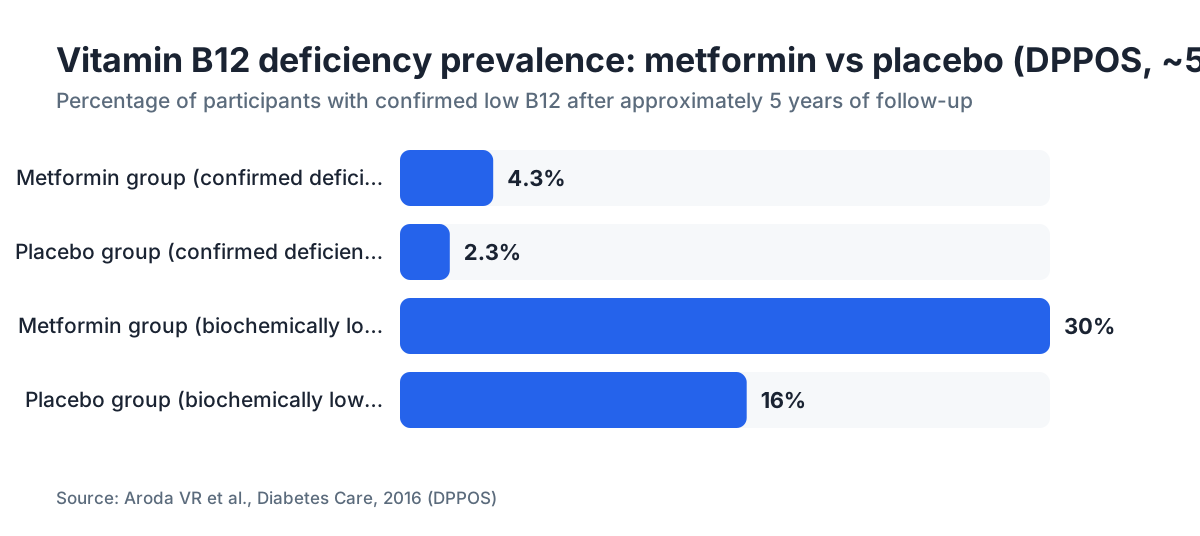
The Diabetes Prevention Program Outcomes Study (DPPOS), one of the longest metformin trials ever run, found confirmed B12 deficiency in 4.3% of metformin-treated participants versus 2.3% on placebo after about 5 years. Broaden the threshold to biochemically low B12 (below 203 pg/mL) and prevalence in the metformin arm hit roughly 30% [4]. That's not a small number.
Why does this matter for hair? B12 drives DNA synthesis and red blood cell production. Hair follicle matrix cells are among the fastest-dividing cells in the body [9]. When B12 runs low, those cells feel it early. The result can be a diffuse, non-scarring shed called telogen effluvium, where a higher-than-normal share of follicles slip from growth into rest at the same time, causing visible shedding two to four months after the deficiency sets in [5].
The clinical bottom line: if you take metformin long-term and you're losing hair, drawing a B12 level is not optional. It's the first thing to check.
Can the underlying condition, not metformin itself, be causing the hair loss?
In many cases, almost certainly. This is the confounder that makes the metformin question so hard to answer cleanly.
PCOS gets treated with metformin constantly, and PCOS brings elevated androgens that miniaturize follicles through the same DHT-driven pathway behind androgenetic alopecia. A woman with PCOS who is shedding may blame metformin when the real driver is the androgen excess the metformin was prescribed to help fix. Here's the irony: by improving insulin sensitivity, metformin can modestly lower androgens over time, which may help hair rather than hurt it [6].
Type 2 diabetes and metabolic syndrome carry their own hair loss risk. Chronic high blood sugar damages the microvascular supply to the scalp, and systemic inflammation shifts the hair cycle. Research in the Journal of the American Academy of Dermatology found significantly higher rates of androgenetic alopecia in men with metabolic syndrome, independent of medication use [7].
Hypothyroidism often rides along with insulin resistance and is a textbook cause of diffuse shedding. Undiagnosed or undertreated, it thins hair no matter what else you take.
Before you pin it on metformin, a full workup makes sense: TSH, free T4, ferritin, complete blood count, B12, folate, and a testosterone panel. That's the responsible starting point. There's more on the full picture at what causes hair loss.
What is the mechanism if metformin does affect hair follicles directly?
There's a theoretical mechanism worth knowing, even though the human evidence is thin. Metformin activates AMP-activated protein kinase (AMPK), a cellular energy sensor. AMPK activation is generally anti-inflammatory and has been studied for several conditions. In hair biology, though, some animal work shows AMPK activation can push follicles toward catagen (the regression phase), which could in theory speed up cycling and raise shed rates [8].
One small mouse study found that metformin applied to skin slowed hair regrowth after depilation. That sounds alarming until you read the fine print: topical application at pharmacological concentrations, nothing like oral dosing, and mouse follicle biology doesn't map cleanly onto human hair. Nobody has reproduced it in a controlled human trial.
The AMPK pathway is genuinely interesting, and researchers are still sorting out its role in human hair growth. But calling it a proven mechanism for metformin-induced hair loss in humans would be misleading. Plausible in theory, unconfirmed in the clinic. That's the honest read.
Does metformin cause hair loss differently in women versus men?
Sex matters here, though maybe not the way you'd guess.
Women on metformin are disproportionately taking it for PCOS or insulin resistance, both of which carry androgen-driven hair loss risk. For them, the androgen excess is almost certainly a bigger contributor to any thinning than the metformin. And by lowering insulin and androgens over time, metformin might modestly improve the hormonal setting for hair.
Men on metformin for type 2 diabetes tend to be older, carry more metabolic risk, and may already be genetically primed for androgenetic alopecia. If hair loss starts or speeds up after starting metformin, the likeliest story is that the underlying metabolic disease has progressed, not that metformin flipped a switch.
The sex-specific data on B12 depletion doesn't show dramatic differences. Both men and women face similar depletion risk with long-term use [4]. So whatever your sex, monitoring B12 is the practical move.
One more thing. Men with metabolic syndrome and hair loss sometimes wonder whether testosterone replacement therapy (TRT) or other hormone shifts are contributing. If you're asking does TRT cause hair loss here, the short answer is yes: TRT can accelerate genetically programmed hair loss by raising DHT, and that's a completely separate mechanism from anything metformin does.
How do you tell if metformin is causing your hair loss?
It's a process of elimination, and there's a sensible order to work through it.
Start with labs. A basic panel should cover serum B12, complete blood count, ferritin, TSH, and for women, free and total testosterone, DHEA-S, and prolactin. If B12 comes back below 300 pg/mL, that's worth treating regardless of symptoms, because follicle-level deficiency can precede clinical neurological signs.
Next, reconstruct the timeline. Telogen effluvium from B12 deficiency or any systemic stressor usually shows up two to four months after the trigger. If your shedding started roughly that long after starting or increasing metformin, the drug-timeline connection is worth raising with your prescriber.
Then do a pull test or see a dermatologist. A trained eye can tell the diffuse, even shedding of telogen effluvium from the temple and crown recession of androgenetic alopecia. Different causes, different treatments. Confusing the two wastes time and money.
Want a starting point before you see a provider? The free AI analysis at MyHairline helps you identify your pattern and rank next steps based on what your photos show.
Finally, ask your prescriber about a supervised trial of B12 supplementation or replacement. Oral B12 at 1000 mcg daily overcomes most metformin-related malabsorption [3]. If shedding slows after you correct the deficiency, that's functionally diagnostic.
Should you stop taking metformin if you're losing hair?
No. Not without talking to the prescribing physician first, and usually not at all on hair concerns alone.
Metformin is a first-line medication for type 2 diabetes with a safety record spanning more than six decades. Stopping it on your own can send blood sugar climbing fast in people who depend on it for glycemic control, and that health risk dwarfs a cosmetic worry.
For PCOS patients, metformin's effect on insulin and androgens may be protecting the hair long-term. Quitting it to chase perceived hair loss could worsen the androgen picture and speed up shedding from a completely different mechanism.
The right conversation with your doctor sounds like this: "I want to check my B12 and thyroid, and here's the timeline of my shedding. Can we figure out what's driving this before I change any medication?" That's productive. Dropping a metabolic drug because your hair is shedding is not.
What treatments actually work if metformin is contributing to hair loss?
If the cause is B12 deficiency, correcting it is the treatment. Oral B12 at 500 to 1000 mcg per day handles metformin-related depletion in most people [3]. Some providers prefer intramuscular injections for faster repletion. Regrowth after correcting a nutritional deficiency usually takes three to six months to show, because follicles that entered telogen have to re-enter anagen and grow back to a visible length.
If the pattern is androgenetic (receding temples, crown thinning, family history), fixing B12 won't touch it. That pattern needs its own treatment. Minoxidil for men applied topically twice daily is the most accessible starting point and has decades of clinical evidence behind it. Finasteride, a DHT-blocking oral drug, works better for many men but needs a prescription and carries its own side effect profile worth understanding.
For women with PCOS-related hair loss, antiandrogens like spironolactone are often more targeted than anything else. A dermatologist who focuses on hair is the best person to sort these options, because the overlap of metabolic disease, hormonal hair loss, and nutrient deficiency is exactly the kind of tangle they're trained to unpick.
You can also look at hair loss supplements like biotin, zinc, and iron, but the evidence for most is weak unless you have a confirmed deficiency. Topping up nutrients you're not short on does essentially nothing for hair.
If hair loss has been heavy and long-running, hair transplants are an option once the shedding stabilizes, though no responsible surgeon operates on someone with active ongoing loss.
What does the research say about metformin and hair growth (could it actually help)?
Here's where it gets genuinely interesting. A smaller, quieter thread of research suggests metformin might have protective or even pro-growth effects in certain contexts.
In women with PCOS, several studies show metformin cuts circulating androgens over three to six months. Because androgens drive the follicle miniaturization behind female-pattern hair loss in PCOS, lower androgens should, in theory, slow it. A 2015 systematic review in Fertility and Sterility found metformin significantly reduced total testosterone in women with PCOS versus placebo, though the primary outcomes were metabolic, not dermatological [6].
The same AMPK activation that could theoretically hinder hair in one setting has been studied the other way too. Some researchers think metformin's anti-inflammatory action might shield follicles from the low-grade chronic inflammation that contributes to hair loss in metabolic disease. Nowhere near conclusive, but it means the metformin-hair relationship runs in both directions depending on the patient.
Dutch researchers published a 2020 case series suggesting metformin may contribute to telogen effluvium in a minority of patients, but it was small and the confounders were uncontrolled [2]. The honest summary: metformin probably doesn't cause hair loss in most people, may indirectly cause it in a minority through B12 depletion, and might even reduce androgen-driven loss in women with PCOS. Context does the heavy lifting.
How does metformin-related hair loss compare to other drug-induced hair loss?
Setting metformin against other drugs helps calibrate how worried to be. On evidence strength, it sits in the lower half.
| Drug | Hair loss mechanism | Evidence strength | Reversibility |
|---|---|---|---|
| Finasteride (5mg) | Telogen effluvium (rare paradox) | Weak, anecdotal | Usually yes |
| Metformin | B12 depletion, indirect | Moderate (B12 link confirmed) | Yes, with B12 correction |
| Valproate | Direct follicle toxicity | Strong, consistent | Partial |
| Warfarin | Telogen effluvium | Moderate | Yes, often |
| Lithium | Diffuse thinning, multiple mechanisms | Strong | Partial |
| Isotretinoin | Telogen effluvium | Strong | Yes, usually |
| Chemotherapy agents | Anagen effluvium (direct) | Very strong | Usually yes |
Metformin's indirect pathway through B12 is real and documented, but the signal is far weaker than classic culprits like valproate, lithium, or chemotherapy. Most dermatologists wouldn't rank it among the top ten drugs to suspect in new-onset shedding unless the B12 labs came back low.
If you're taking other medications that touch hair, it's worth reviewing minoxidil side effects and how finasteride and minoxidil combine when androgenetic loss is also in the picture.
What should you ask your doctor if you're on metformin and losing hair?
Bring a clear timeline. When did you start metformin? When did the shedding begin? Was there any other stressor (illness, surgery, crash diet, major emotional event) in the two to four months before it started? Telogen effluvium has a characteristic lag, and your doctor needs that timeline to connect the dots.
Ask for serum B12 by name. Routine metabolic panels don't always include it. Request a copy of the result so you see the actual number instead of a verbal "it's normal." Labs often flag B12 as normal above 200 pg/mL, but many practitioners treating hair loss want levels above 400 to 500 pg/mL for good follicle function.
Ask whether a B12 supplement makes sense for your dose and duration. There's no meaningful downside to oral B12 at 500 to 1000 mcg daily, and it may address the likeliest mechanism without changing any medication.
Ask for a dermatology referral if the shedding has been heavy for more than three months, or if your hair hasn't recovered after you corrected any deficiencies. A dermatologist can run a scalp exam, possibly a trichoscopy, and tell you whether this is telogen effluvium, androgenetic alopecia, or something rarer.
For a pattern check before your appointment, MyHairline's free AI scan at myhairline.ai/scan lets you photograph your hairline and get an early read on what you're dealing with, useful context to carry into the consultation.
Sources
- FDA, Metformin Hydrochloride Prescribing Information
- WHO VigiBase / Uppsala Monitoring Centre, pharmacovigilance database
- American Diabetes Association, Standards of Medical Care in Diabetes
- Diabetes Prevention Program Outcomes Study (DPPOS), published in Diabetes Care, NIH
- American Academy of Dermatology, Telogen Effluvium overview
- Palomba S et al., Fertility and Sterility 2015, systematic review of metformin in PCOS
- Su LH and Chen TH, Journal of the American Academy of Dermatology, metabolic syndrome and androgenetic alopecia
- Lim JY et al., AMPK and hair follicle cycling, published in Journal of Investigative Dermatology
- National Institutes of Health, Office of Dietary Supplements, Vitamin B12 Fact Sheet
- Aroda VR et al., Diabetes Care 2016, metformin and B12 deficiency in DPPOS