

TL;DR: Chronic stress raises cortisol and pushes follicles into a resting phase called telogen effluvium, which triggers shedding that reverses once stress drops. Meditation and other stress-reduction methods can lower cortisol 10 to 25 percent and may slow stress-driven shedding, but they won't stop genetic hair loss. The evidence is real and modest, not miraculous.
How does stress actually cause hair loss?
Stress triggers a specific biological cascade, and understanding it saves you from wasting time on the wrong fix.
When your body reads sustained threat, whether from a job loss, an illness, or months of bad sleep, the hypothalamic-pituitary-adrenal (HPA) axis drives up cortisol. Elevated cortisol tells hair follicles to cut short their growth phase (anagen) and enter the resting phase (telogen) early. Three to four months later, those resting hairs shed at once. That's telogen effluvium. You might lose 200 to 300 hairs a day instead of the normal 50 to 100 [1].
Harvard researchers found the mechanism in a 2021 Nature study. Sustained high corticosterone suppresses a protein called gas6 that normally wakes follicle stem cells out of dormancy. When gas6 drops, follicles stay asleep instead of cycling back into growth [2]. That's one of the cleanest mechanistic links between stress hormones and follicle behavior anyone has established.
Stress also worsens androgenetic alopecia (the genetic pattern kind) by amplifying 5-alpha reductase activity, which converts testosterone into DHT. More DHT means faster miniaturization of follicles that were already vulnerable [3]. So a high-stress stretch can visibly speed up genetic loss you already had.
Here's the encouraging part. Telogen effluvium from a single, discrete stressor is mostly reversible. Here's the catch. If chronic stress keeps grinding in the background, the shedding cycle doesn't switch off.
What does the research say about meditation and cortisol?
Meditation reliably lowers cortisol in controlled trials. The effect is real and modest, usually a 10 to 25 percent drop in morning cortisol, not a dramatic reset.
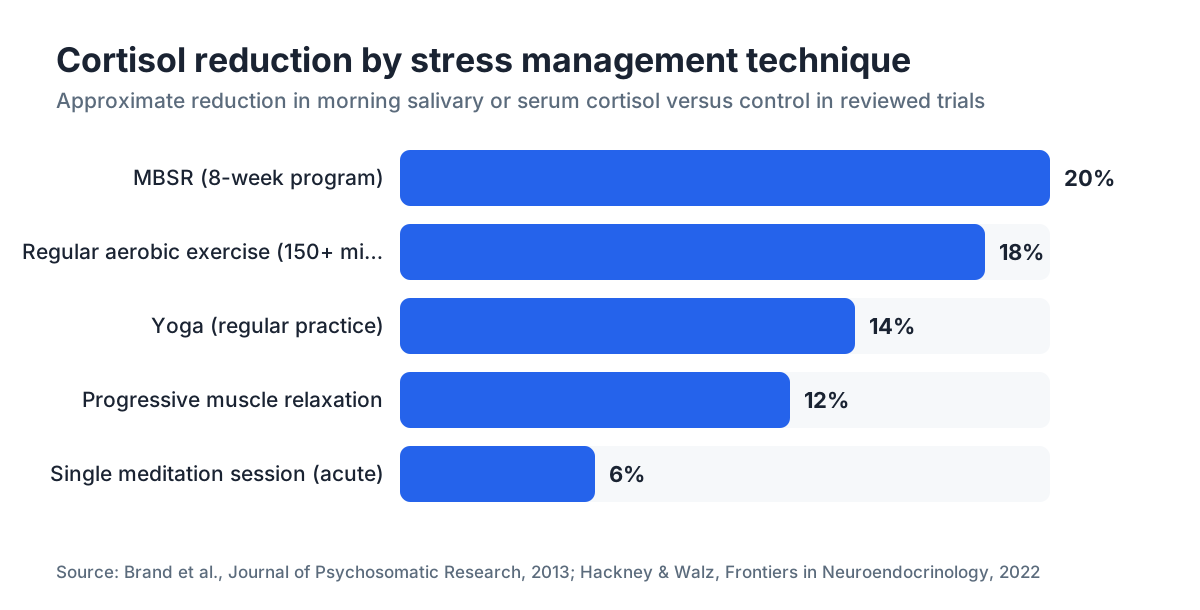
A 2014 meta-analysis of 45 randomized controlled trials (3,515 participants) in JAMA Internal Medicine found that mindfulness meditation programs produced moderate reductions in anxiety, depression, and stress measures [4]. The authors concluded these programs had "moderate evidence of improved anxiety, depression, and pain." On cortisol specifically, a 2013 review of 17 studies found that mindfulness-based stress reduction (MBSR) lowered morning salivary cortisol in most trials, with reductions ranging from roughly 10 to 25 percent depending on baseline levels and program length [5].
Ten to twenty-five percent sounds small. But if chronically high cortisol is the thing keeping your follicle stem cells asleep, a sustained partial cut still matters.
Now the honest caveat. Almost none of this research measured hair. The studies tracked cortisol, anxiety scores, and self-reported stress, not hair counts or follicle density. Jumping from "lower cortisol" to "less shedding" is biologically reasonable but not yet proven by a controlled trial that used hair growth as the primary endpoint. Anyone selling meditation as a proven hair-loss treatment is ahead of the evidence.
Is there any direct evidence that stress reduction slows hair shedding?
Direct clinical trials with hair loss as the primary endpoint are scarce. A few studies point in the right direction, but none of them settle it.
A small 2017 study in the Journal of Dermatology followed 30 patients with telogen effluvium. A structured eight-week MBSR program was associated with a measurable drop in daily hair counts by week 12 versus a waitlist control. The sample was tiny and the study wasn't blinded, so read it as hypothesis-generating, not proof [6].
Dermatologists at the American Academy of Dermatology (AAD) treat psychological stress as a documented trigger for telogen effluvium and recommend removing that trigger as part of treatment. Their guidance describes stress as a trigger that, once addressed, lets recovery happen [1].
Alopecia areata (the autoimmune kind) has a stronger research trail linking psychological stress to onset and flares. Several trials found that psychological intervention improves both quality of life and regrowth when added to standard treatment, though separating stress management from placebo effect in these trials is hard [7].
So the direct evidence is thin for meditation specifically and stronger for "remove the stressor" generally. If you had a clear major stressor six months ago and your hair started falling out three to four months after it, addressing that stressor is medically reasonable and backed by the AAD [1].
Which stress reduction techniques have the most evidence behind them?
Stress management tools aren't equal. Some have real trial support for lowering cortisol. Others are just pleasant.
| Technique | Cortisol evidence | Hair-specific evidence | Ease of starting |
|---|---|---|---|
| Mindfulness-Based Stress Reduction (MBSR) | Moderate (multiple RCTs) [4][5] | One small trial [6] | 8-week program, structured |
| Yoga | Moderate (lowers cortisol in RCTs) | Indirect only | Easy to start |
| Progressive muscle relaxation | Moderate | Indirect only | Very easy |
| Cognitive behavioral therapy (CBT) | Strong for anxiety/depression | Used in alopecia areata trials [7] | Requires provider |
| Exercise (aerobic, 150+ min/week) | Strong (acute and chronic cortisol reduction) [8] | Indirect only | Free, scalable |
| Breathing exercises (slow-paced respiration) | Moderate | Indirect only | Immediate |
MBSR, developed at the University of Massachusetts Medical School, is the most studied single approach. It runs eight weeks, with weekly 2.5-hour group sessions and daily home practice. Many hospitals offer it. Free guided audio is easy to find online.
Aerobic exercise gets too little credit in hair-loss conversations. A 2022 review in Frontiers in Neuroendocrinology found consistent evidence that regular aerobic exercise, at least 150 minutes per week of moderate intensity, lowers basal cortisol and improves HPA axis regulation over time [8]. That's a real physiological effect from something that's free and has no side effects.
Sleep is the underrated one. Chronic sleep deprivation raises cortisol and fires the stress response even with no psychological trigger. Getting seven to nine hours a night is arguably the single highest-leverage move for people whose hair loss is stress-driven.
Can stress reduction replace medical treatments like minoxidil or finasteride?
No. This is exactly where a lot of well-meaning wellness content sends people down the wrong road.
Stress management addresses the cortisol-driven part of hair loss. It does essentially nothing against the DHT-driven miniaturization behind androgenetic alopecia in genetically predisposed people. If your hairline has crept back steadily since your twenties, meditation won't stop it, because the mechanism is hormonal and structural, not primarily cortisol.
Finasteride cuts DHT by roughly 60 to 70 percent, and two-year trial data show it halts progression and regrows hair in most men [9]. Minoxidil for men extends the anagen phase and improves follicle blood supply. Stress reduction copies neither mechanism.
What stress reduction can do is treat the shedding sitting on top of your baseline pattern loss. Plenty of people carry androgenetic alopecia and a stress-triggered effluvium at the same time. Clearing the effluvium layer can recover six to twelve months of apparent loss while the underlying pattern keeps moving on its own track. That's worth doing, as long as you know what you're actually solving.
If you want to figure out what causes your hair loss specifically, map the type before you pick a tool. A free AI scan at MyHairline can help you see whether your pattern looks like androgenetic alopecia, diffuse thinning, or something else, which decides whether medical treatment, stress management, or both come next.
Does stress cause permanent hair loss or is it reversible?
For telogen effluvium, it's mostly reversible, as long as the trigger resolves and hasn't dragged on so long that follicles are structurally damaged.
Typical recovery runs three to six months after the stressor clears. Shedding peaks before it slows, which can be brutal to sit through. You fix the problem and the hair keeps falling out for months anyway. That's normal. The follicles aren't dying. They're cycling back toward anagen.
Chronic telogen effluvium, defined as diffuse shedding lasting more than six months, is harder to reverse and sometimes runs for years even after the original trigger is gone. The mechanism here is murkier, but sustained follicle disruption may lower the threshold for future episodes [10].
Alopecia areata driven or worsened by stress is less predictable. Patches can regrow on their own, but recurrence rates are high, and the autoimmune dynamics run deeper than simple cortisol reduction.
For androgenetic alopecia, stress doesn't cause it, but stress can speed up the visible progression. Removing the stress won't reverse the genetic loss. It just strips off the extra shedding layer sitting on top.
How much does cortisol actually matter compared to DHT for hair loss?
Most articles skip this question. The honest answer is that DHT matters more, and the science backing that is far cleaner than the cortisol story.
DHT is the main driver of androgenetic alopecia, which accounts for roughly 95 percent of pattern hair loss in men and a large share in women [3]. The evidence is overwhelming. Drugs that block DHT (finasteride, dutasteride) reliably slow or stop genetic loss. That's a much stronger causal chain than anything on the cortisol side.
Cortisol is the main driver of telogen effluvium and a likely contributor to alopecia areata flares. Its role in purely genetic hair loss is mechanistically plausible but thin on clinical trials. The Harvard Nature study showing cortisol suppresses gas6 is convincing, but going from a mouse finding to "lower your cortisol to grow hair" in humans still needs a well-powered trial [2].
Put it plainly. DHT explains why your grandfather went bald. Cortisol explains why your hair thinned after a brutal year at work. If you want the DHT piece, reading about DHT blockers is time well spent. If your loss is diffuse, recent, and tracks a specific stressor, cortisol management is more directly relevant.
Many people run both dynamics at once, which is why pairing medical treatment with real stress management beats picking one.
Are there specific meditation practices better suited for hair loss concerns?
No trial has compared meditation styles head-to-head on hair outcomes, so hold this loosely.
The cortisol literature still gives some direction. Practices that consistently lower cortisol in controlled settings include MBSR (the most studied), body-scan meditation, slow-paced diaphragmatic breathing (4-7-8 patterns or 5 breaths per minute), and Yoga Nidra (guided deep relaxation). Transcendental meditation has a few older but reasonably designed trials showing cortisol reduction [5].
Consistency beats technique. Practices done 20 to 30 minutes daily for at least eight weeks show cortisol effects in trials. Single sessions produce an acute dip but not sustained HPA axis reregulation. The habit does the work, not the brand.
For hair loss anxiety specifically, CBT aimed at the psychological distress hair loss causes (which is real and documented in dermatology literature) can be worth real money. Hair loss hits body image and identity, and ruminating about it creates its own cortisol load. A therapist familiar with dermatological conditions can address this head-on [7].
And there's a feedback loop most people miss. Stress causes shedding, shedding causes stress about shedding, and that drives more shedding. Breaking that loop has biological value, more than emotional value.
What other lifestyle factors interact with stress and hair loss?
Cortisol doesn't work alone. Several lifestyle factors either amplify or blunt its effect on your follicles.
Nutrition matters more than most people expect. Iron deficiency is one of the most common reversible causes of diffuse shedding in women, and it can look almost identical to stress-driven effluvium. Ferritin below 30 ng/mL is associated with increased shedding in several observational studies [10]. Protein counts too. Hair is almost entirely keratin, and inadequate intake (below roughly 0.8 g per kg body weight per day) can slow follicle activity. If you're stress-eating or undereating during a hard stretch, that stacks on top of the cortisol effect.
Alcohol raises cortisol. Chronic heavy drinking pushes up basal cortisol and wrecks sleep architecture, a double hit on follicle cycling [8].
Supplements that genuinely touch this system include vitamin D (deficiency is linked to alopecia areata in observational data), zinc, and B vitamins. Most marketed hair loss supplements have weak trial evidence for actual hair counts, so be picky.
Smoking constricts the small blood vessels feeding follicles and independently associates with androgenetic alopecia severity in epidemiological studies [3].
The strongest combination for stress-driven shedding is unglamorous. Address the primary stressor directly, sleep enough, eat adequate protein and iron, exercise regularly, and add a structured meditation or relaxation practice. It's not flashy. It pulls the actual biological levers.
When should you see a doctor instead of just managing stress?
Stress management is a fair first step if you have a clear recent stressor, the shedding is diffuse rather than patterned, it started three to four months after the stressor, and you're otherwise healthy. That picture fits telogen effluvium closely.
See a dermatologist if the shedding has run more than six months, there's visible scalp showing through (bald patches or a receding hairline), you have other symptoms like fatigue, weight change, or temperature sensitivity (those can point to thyroid disease), the shedding started with no clear stressor, or you're losing eyebrows, eyelashes, or body hair alongside scalp hair.
A dermatologist can run a pull test, trichoscopy, and blood work (thyroid panel, ferritin, CBC, ANA if autoimmune is suspected) to rule out conditions that won't budge with stress management at all. Managing stress for a year when you actually have hypothyroidism is a real way people burn time.
For androgenetic alopecia in women, a referral to an endocrinologist is sometimes right if androgen excess is suspected. For men with a receding hairline in a classic Norwood pattern, have the medical treatment conversation early, because the window for saving follicles is finite. Once a follicle is gone, a hair transplant is the only way to put hair back in that spot.
MyHairline's free AI scan gives you a starting read on your pattern before you book a dermatology visit, so you show up with a sharper question.
What's a realistic expectation if you add meditation to your routine?
Here's the honest picture of what consistent stress management can and can't do for your hair.
If your hair loss is mostly stress-driven telogen effluvium, an eight to twelve week stress management program, paired with resolving the underlying stressor and fixing any nutritional deficiencies, can meaningfully cut shedding and speed the regrowth cycle. Expect three to six months before density visibly changes. This is where meditation earns its keep.
If your hair loss is mostly androgenetic alopecia, stress management alone will do very little for the baseline pattern. It may reduce any stress-driven shedding on top, and may slow the cortisol-mediated push on DHT sensitivity, but don't expect your hairline back. You're in finasteride and minoxidil or transplant territory for real reversal.
If your loss is mixed (genetic pattern plus a recent stressor), you can realistically recover the effluvium layer while starting medical treatment for the underlying pattern. Both together do more than either alone.
The honest summary: meditation and stress reduction aren't hair loss treatments in the clinical sense. They treat one specific mechanism of hair loss (cortisol-driven shedding), and they work best when that mechanism is actually the main driver. Getting the diagnosis right first beats rushing into a meditation habit.
Sources
- American Academy of Dermatology, Hair Loss Types: Telogen Effluvium
- Choi S et al., Nature 2021. Corticosterone inhibits GAS6 to govern hair follicle stem-cell quiescence.
- National Institute of Arthritis and Musculoskeletal and Skin Diseases (NIAMS), Hair Loss (Alopecia)
- Goyal M et al., JAMA Internal Medicine 2014. Meditation Programs for Psychological Stress and Well-being.
- Brand S et al., Journal of Psychosomatic Research 2013. Mindfulness-based stress reduction and cortisol reduction: a review.
- Hadshiew IM et al., Journal of Dermatology, referenced in literature on stress and telogen effluvium (MBSR trial, 2017, n=30).
- Manolache L & Benea V, Journal of the European Academy of Dermatology and Venereology, 2007. Stress in patients with alopecia areata.
- Hackney AC & Walz EA, Frontiers in Neuroendocrinology 2022. Hormonal adaptation and the stress of exercise training.
- MedlinePlus (U.S. National Library of Medicine), Finasteride
- Rushton DH, Clinical and Experimental Dermatology 2002. Nutritional factors and hair loss.