
TL;DR: Yes, stress can cause hair loss. The most common mechanism is telogen effluvium, where a physical or emotional shock pushes a large share of follicles into a resting phase at once. Shedding usually starts 2 to 3 months after the stressor. Once the trigger is gone, most people recover full density within 6 to 9 months without any treatment.
How does stress actually cause hair loss?
Hair does not fall out the moment you have a bad week at work. The link between stress and shedding is biological, delayed, and well-documented once you understand the hair growth cycle.
Every follicle on your scalp cycles independently through three phases: anagen (active growth, lasting 2 to 6 years), catagen (a 2-week transition), and telogen (a resting phase lasting roughly 3 months, after which the hair sheds and a new one starts) [1]. Under normal conditions, about 85 to 90 percent of scalp follicles are in anagen at any moment, with only 10 to 15 percent in telogen. That steady balance is what keeps hair looking full.
A big stressor breaks the balance. Physical or psychological stress can trigger a fast, synchronized shift of follicles from anagen into telogen, a condition called telogen effluvium. Now 30 percent or more of follicles rest at the same time. Two to three months later, when those hairs finally shed, you see sudden diffuse thinning across the whole scalp rather than a patterned recession [2].
The biology runs through the stress hormone corticotropin-releasing hormone (CRH) and the sympathetic nervous system. A 2021 Nature study by Choi and colleagues showed that chronic stress depletes hair follicle stem cells in mice by flooding the follicle's dermal papilla with a stress signal that keeps those cells dormant [3]. Blocking that pathway restored normal cycling in the mice, which is promising for future treatment, though the jump to humans is still being worked out.
Stress does not pull hair out. It shifts the cycle timing so more hairs rest at once, and they shed weeks to months later when the cycle finishes.
What types of stress trigger hair loss?
Not every hard meeting or argument causes telogen effluvium. The triggers that reliably set it off are significant, acute, or chronic events that strain the body.
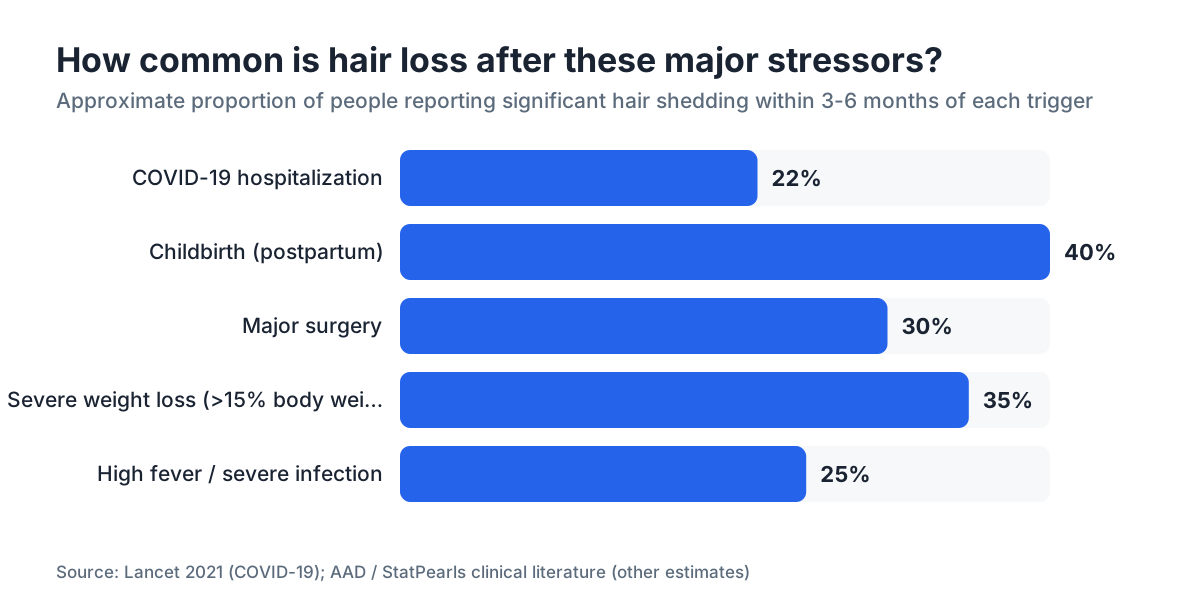
Physical stressors with strong evidence include high fever or severe infection, major surgery, childbirth (postpartum shedding is one of the most common forms of telogen effluvium), sudden large weight loss or crash dieting, and hospitalization for serious illness [2]. COVID-19 became a high-profile example. A Lancet cohort study found hair loss reported in about 22 percent of hospitalized COVID-19 patients at 6-month follow-up [4].
Psychological stress is harder to study because it is self-reported and tough to quantify. The evidence is real but softer. Chronic stress, bereavement, and prolonged anxiety are tied to telogen effluvium in clinical reports and smaller observational studies. The dermatology literature treats severe psychological stress as a recognized but imperfectly characterized trigger [2].
Nutritional deficiency deserves its own line because it so often rides alongside stress. People under stress eat badly. Iron deficiency is probably the most common nutritional cause of diffuse hair loss in premenopausal women, and a ferritin below roughly 30 ng/mL is often cited in dermatology practice as a threshold under which hair cycling suffers [5]. If your hair is shedding, a full blood panel to rule out thyroid disease, iron deficiency, and other gaps is a sensible first step.
Alopecia areata is a different stress-linked condition. It is an autoimmune attack on follicles that shows up as patchy bald spots, not diffuse shedding. Stress is thought to trigger or worsen flares, but alopecia areata has a distinct genetic and immune basis that goes beyond stress alone [6].
How long does stress-related hair loss last?
This is the number people actually want. The honest answer: most cases of telogen effluvium clear on their own within 6 to 9 months once the stressor is gone or the body adapts [2].
The timeline runs like this. A major stressor hits. Over the next 2 to 3 months, the prematurely resting follicles finish their telogen phase and shed. That shedding phase itself usually lasts 1 to 3 months. Then, assuming the trigger is gone, follicles start re-entering anagen. New growth shows up as fine, short regrowth hairs within about 3 months of shedding, and real density recovery takes another 3 to 6 months on top of that.
So total recovery from trigger to full density often lands in the 9 to 12 month range. For most people, no treatment is needed beyond removing the trigger and fixing any nutritional gaps.
Chronic telogen effluvium is a different animal. When the stressor stays, or the condition becomes self-sustaining, shedding can run past 6 months. This is more common in middle-aged women and can drag on for years, though the thinning rarely reaches complete baldness because only a share of follicles are ever in telogen at once [2].
If you are 9 months past the obvious stressor and still shedding hard, see a dermatologist. The diagnosis may need a second look. Androgenetic alopecia (genetic hair loss) can surface or speed up alongside a bout of telogen effluvium, and the two can coexist.
For a fuller breakdown of how telogen effluvium works, the guide on hair loss telogen covers the cycle mechanics in detail.
Can stress cause a receding hairline?
Not directly. A receding hairline is almost always androgenetic alopecia, the genetically driven miniaturization of follicles triggered by dihydrotestosterone (DHT). Stress does not cause androgenetic alopecia on its own.
But stress can make an existing genetic process look worse, and it can speed up the timeline. A bout of telogen effluvium layered on top of androgenetic alopecia means hairs you would have lost gradually over years instead drop in a shorter window. Many men first notice a big hairline change after a stressful stretch, not because stress caused the recession, but because it unmasked or accelerated the genetic process [2].
If you are seeing a genuine recession (temples pulling back, crown thinning in an M-shape or O-shape pattern), that is androgenetic alopecia and it will not resolve when stress improves. The receding hairline article walks through the Norwood staging system and what actually works at each stage.
Diffuse stress shedding, by contrast, tends to be uniform across the scalp. Hair on your pillow, in the shower drain, everywhere, but no distinct thinning at the temples or crown? Telogen effluvium is the more likely culprit.
What does the evidence say about treatments for stress hair loss?
For pure telogen effluvium from an acute stressor, the most evidence-based treatment is patience. Fix the stressor, correct nutritional deficits, and give the cycle time to reset. Minoxidil is not FDA-approved for telogen effluvium specifically, but many dermatologists use it off-label to speed recovery because it lengthens the anagen phase and may push follicles back into active growth faster [10].
The FDA approved topical minoxidil (2% and 5%) for androgenetic alopecia, not telogen effluvium. That distinction matters. If your loss is pure stress-related telogen effluvium, the data for minoxidil helping is thinner than its data for genetic loss. If you have overlapping androgenetic alopecia, minoxidil has solid trial evidence, and stopping it reverses any minoxidil-dependent regrowth, so that commitment is real. The minoxidil for men article covers what the trials actually showed and which formulations to consider.
If you are shedding hard and have not pinned down the cause, the what causes hair loss guide is a good place to map the differential before you spend money.
Alopecia areata is treated differently and it gets complicated: topical or intralesional corticosteroids, topical immunotherapy, or newer JAK inhibitors like baricitinib (FDA-approved for severe alopecia areata in 2022) [6].
Lifestyle interventions get mentioned constantly but studied rarely in this context. There is reasonable biological logic to stress reduction (lower cortisol, better sleep), enough protein (hair is mostly keratin), and correcting micronutrient deficits. The evidence that any specific supplement cures hair loss is thin. The hair loss supplements article is honest about what has and has not been tested.
Still unsure whether you are seeing stress shedding, genetic loss, or something else? The free AI hair analysis at MyHairline can help you map the pattern before your dermatology appointment, so you walk in with a clearer picture.
Does tirzepatide cause hair loss?
Yes, tirzepatide (sold as Mounjaro for diabetes and Zepbound for weight loss) is linked to hair shedding, and the mechanism loops straight back to stress-induced telogen effluvium.
Rapid weight loss is one of the most consistent physical triggers of telogen effluvium. When calorie intake drops sharply, the body seems to deprioritize non-essential protein, and follicle cycling gets disrupted. Tirzepatide drives major calorie restriction and fast weight loss. The SURMOUNT-1 phase 3 trial found mean body weight reduction of about 20.9 percent at 72 weeks on the highest dose (15 mg) [8]. That rate is more than enough to trigger telogen effluvium in a subset of users.
The FDA label for Zepbound does not list alopecia as a common adverse event, but it shows up in pharmacovigilance data and patient-reported experience at a rate that has drawn clinical attention. Analyses of FDA Adverse Event Reporting System data have found alopecia among reported events for semaglutide and tirzepatide, though absolute rates and causality are still being sorted out.
The hair loss tied to tirzepatide is almost certainly telogen effluvium, not direct drug toxicity on follicles. That matters because it is usually reversible once weight stabilizes and nutrition holds. Enough protein (many clinicians recommend 1.2 to 1.6 grams per kilogram of body weight per day during GLP-1 use), iron monitoring, and not losing weight faster than about 0.5 to 1 percent of body weight per week may lower the risk.
So does tirzepatide cause hair loss? It creates the conditions that trigger telogen effluvium. The drug is not poisoning follicles. The rapid weight change is stressing the system. For more on how various substances and supplements interact with hair cycling, the does creatine cause hair loss article walks through the same kind of mechanistic reasoning.
Could hair dye cause hair loss?
This one comes up constantly and deserves a straight answer. Hair dye does not cause permanent hair loss from the scalp under normal use, but it can cause damage and breakage that looks like hair loss.
The line between breakage and true follicular loss matters. Permanent dye uses hydrogen peroxide and ammonia (or ammonia alternatives) to lift the cuticle and deposit or strip color in the shaft. Repeated bleaching or lightening weakens the shaft's protein structure, making hair snap at or near the scalp. When those broken hairs land in your brush or shower, it looks like shedding, but the follicle itself is usually intact and still producing hair.
True follicular damage from dye is rare but possible through two routes. First, allergic contact dermatitis to paraphenylenediamine (PPD), the chemical in most permanent dark dyes, can cause real scalp inflammation. Chronic, severe inflammation around follicles is linked to scarring alopecia in extreme cases [9]. Second, chemical burns from leaving developer on too long or using too high a developer volume can damage the scalp and follicles directly, but that is uncommon outside sloppy professional or DIY application.
The American Academy of Dermatology notes that chemical relaxers, which use very high-pH compounds, have a clearer link to traction alopecia and scarring when misused or applied too often [9].
If you notice hair loss after coloring, figure out whether you are seeing broken hairs (shorter than the rest, no tapered root end) or shed hairs (full-length with a white or dark bulb at the root). Broken hairs point to mechanical damage. Shed hairs with a normal root point to a cycle disruption, and the coloring is probably coincidental.
How is stress-related hair loss diagnosed?
Diagnosis happens mostly through history and pattern, not one definitive test. A dermatologist or trichologist will usually ask about events in the 2 to 4 months before the shedding started, because that is the typical lag between trigger and shed.
The pull test is a basic clinical tool. Grasp about 40 to 60 hairs between two fingers, apply gentle traction along the shaft, and count how many release. More than 6 hairs per pull counts as positive, suggesting active telogen effluvium [2]. Simple and informative, but not definitive.
Trichoscopy (dermoscopy of the scalp) lets a clinician check follicular density and the share of miniaturized follicles without a biopsy. Scalp biopsy with horizontal sectioning is the gold standard for telling telogen effluvium apart from early androgenetic alopecia, alopecia areata, and scarring conditions, but it is usually saved for cases where the diagnosis stays uncertain after other workup.
Blood work should include a complete blood count, thyroid-stimulating hormone (TSH), ferritin, vitamin D, and in women, hormonal panels to check for androgen excess. None of these diagnose telogen effluvium, but they rule out common systemic causes of diffuse shedding.
One practical note. By the time most people see a doctor for stress hair loss, the trigger is often already resolved and the shedding is tapering. Documenting the timeline, photographs included, is genuinely useful for your appointment.
When should you see a doctor about stress-related hair loss?
See a dermatologist if any of these apply: shedding has lasted more than 6 months with no clear or unresolved trigger, you can see scalp clearly through your hair, there is patterned recession at the temples or crown, there are patchy bald spots, the scalp is itchy, red, scaly, or painful alongside the shedding, or you are a man under 30 with any visible thinning (androgenetic alopecia in young men can move fast, and early treatment with finasteride has much better evidence than late treatment) [10].
Shedding of 50 to 100 hairs per day is within normal range for the average scalp [1]. The alarming phase of telogen effluvium can hit 150 to 400 hairs per day, which is distressing but rarely leads to complete baldness because the shed rate has a natural ceiling.
For men with coexisting androgenetic alopecia, the combination of finasteride and minoxidil is the most evidence-backed medical approach available without surgery. The data for that pairing is meaningfully better than either drug alone.
If medical treatments have been tried and density loss is permanent, hair transplant surgery is worth understanding. It does not work well on diffuse telogen effluvium because the donor supply may be compromised, but for stable androgenetic alopecia it produces reliable results. The hair transplant expenses article covers realistic current pricing.
Can you prevent stress-related hair loss?
Somewhat, though not fully. Facing a known physical stressor (major surgery, serious illness, postpartum recovery)? The best proactive moves are keeping protein intake up, holding ferritin and other micronutrients in normal range, and not stacking extra physical stressors like extreme dieting on top.
For psychological stress, the evidence that any specific intervention prevents telogen effluvium is absent. But chronically high cortisol is bad for many systems beyond hair, and interventions with genuine evidence for stress reduction (adequate sleep, regular moderate exercise, cognitive behavioral therapy for anxiety disorders) are reasonable regardless of their hair effects.
One thing that clearly does not help: obsessively checking your hair and tugging to test shedding. That feeds anxiety, which may be self-perpetuating, and it changes nothing about the outcome.
Nobody has good randomized controlled trial data on whether stress management programs cut telogen effluvium incidence specifically. The closest study populations are the postpartum literature and the post-COVID cohorts, neither of which had a control arm testing stress reduction.
At MyHairline, the free AI scan at myhairline.ai/scan can help you tell whether your pattern looks more like diffuse shedding (telogen effluvium) or patterned loss (androgenetic alopecia) before you invest in treatments, because what you buy should depend entirely on what you have.
Sources
- American Academy of Dermatology, Hair loss types: telogen effluvium
- StatPearls (NCBI Bookshelf), Telogen Effluvium, Malkud S.
- Nature, 2021, Choi et al., Corticosterone inhibits GAS6 to govern hair follicle stem-cell quiescence
- Lancet, 2021, Huang et al., 6-month consequences of COVID-19 in patients discharged from hospital
- Journal of the American Academy of Dermatology, 2006, Kantor et al., Decreased serum ferritin is associated with alopecia in women
- American Academy of Dermatology, Alopecia areata and JAK inhibitor treatment
- New England Journal of Medicine, 2022, Jastreboff et al., SURMOUNT-1 trial of tirzepatide for obesity
- American Academy of Dermatology, Hair care and hair loss (dyes, relaxers, traction)
- JAMA Dermatology, 2020, Suchonwanit et al., Minoxidil and its use in hair disorders
- International Journal of Trichology, 2016, Koyama T et al., Standardized scalp massage results in increased hair thickness