

TL;DR: Chronic stress raises cortisol, which can bend the hormonal system that regulates DHT, but the link isn't a clean one-to-one spike. The more direct effect: high cortisol pushes hair follicles into a resting phase, causing telogen effluvium. Both effects are real. Both are treatable. They just run through different mechanisms.
What does cortisol actually do to your hormones?
Cortisol is your body's main stress hormone. It's made in the adrenal glands and released in response to anything your brain reads as a threat, whether that's a work deadline, a car accident, or six months of poor sleep. In short bursts, cortisol is fine. Chronic elevation is the problem. That's when it starts bending your hormonal system in directions that affect hair.
The clearest path runs through the HPA axis, which stands for the hypothalamic-pituitary-adrenal axis. When cortisol is chronically elevated, it suppresses the gonadotropin-releasing hormone (GnRH) signal from the hypothalamus. That suppression reduces LH (luteinizing hormone) output from the pituitary, which in turn lowers testosterone production in the testes [1]. Less free testosterone sounds like it should mean less DHT, but the picture gets messier from here.
Here's the part most articles skip. Chronically elevated cortisol also shifts steroid hormone production toward androgens in the adrenal glands, a process called adrenal androgen excess. Under prolonged stress, the adrenals can produce more DHEA-S (dehydroepiandrosterone sulfate), which converts downstream into androstenedione, then testosterone, and finally DHT [2]. So you might see testicular testosterone fall while adrenal-derived androgens creep up. The net effect on DHT depends on which pathway wins, and that varies person to person.
The honest answer: chronic stress doesn't reliably spike DHT the way a testosterone injection does. The effect is subtler and more indirect. But subtle doesn't mean irrelevant, especially if your follicles are already sensitive to DHT.
Does cortisol directly raise DHT levels?
Not directly, no. Cortisol doesn't convert to DHT, and it doesn't switch on 5-alpha reductase (the enzyme that converts testosterone to DHT) in any straightforward way. So if you've read that stress "spikes DHT," that's an oversimplification.
What chronic cortisol elevation does do is shift the hormonal environment in ways that can increase DHT exposure at the follicle level. A 2021 review in Dermatologic Therapy noted that psychological stress activates the peripheral corticotropin-releasing hormone (CRH) system in skin and scalp tissue, which can raise androgen receptor sensitivity locally. The follicle reacts more strongly to the same amount of DHT that used to be harmless [3]. That's a real distinction. The problem isn't always more DHT in the blood. It's a more reactive follicle.
Then there's the adrenal pathway. A 2016 study found that men with chronic psychosocial stress had measurably higher DHEA-S levels than low-stress controls, and DHEA-S is a direct precursor to androgens including DHT [2]. The elevation wasn't dramatic, but over years of chronic stress, even modest adrenal androgen excess adds up.
Want to know your actual DHT level? A serum DHT blood test measures it directly. Normal male ranges typically run from about 10 to 90 ng/dL, though labs vary [4]. If yours is elevated and you're under chronic stress, the adrenal androgen pathway is worth taking to an endocrinologist, more than a general "stress is bad" chat.
For a wider look at what's driving your hair loss beyond hormones, see our explainer on what causes hair loss.
How does stress cause hair loss if not through DHT?
This is actually the more important question for most people, because the dominant stress-related hair loss mechanism has nothing to do with DHT at all. It's called telogen effluvium.
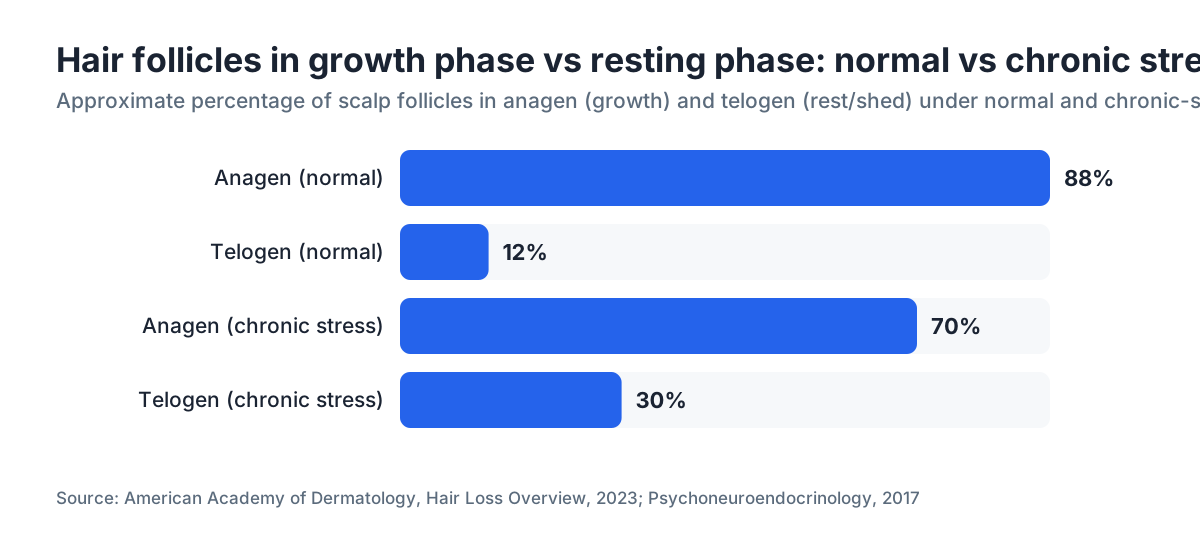
Hair follicles cycle through three phases: anagen (growth), catagen (transition), and telogen (resting/shedding). Under normal conditions, about 85 to 90% of your scalp follicles sit in anagen at any given time [5]. A significant physical or psychological stressor can shock a large batch of follicles into telogen at once. Two to three months later, those hairs fall out in a wave. You notice clumps in the shower, on your pillow, on your brush.
A widely cited 2021 Nature paper by Choi et al. showed exactly how this works at the cellular level. Chronic stress-elevated corticosterone (the rodent version of cortisol) suppressed the GAS6 signaling molecule in dermal papilla cells, the molecule that normally tells hair follicle stem cells to re-enter the growth phase [6]. Put plainly: chronic stress keeps your follicles stuck in rest mode. The study was in mice, so we can't map the numbers straight onto humans, but the mechanism matches what dermatologists have watched in the clinic for decades.
Stress-driven telogen effluvium is usually reversible. Once the stressor resolves and cortisol normalizes, most follicles return to anagen and hair regrows within 6 to 12 months. The catch: if you also have androgenetic alopecia (genetic hair loss driven by DHT sensitivity), the effluvium can expose thinning that was already building under the surface, making it look worse than the stress alone caused.
That overlap between effluvium and androgenetic alopecia is why some people swear stress "caused" their permanent hair loss. It probably didn't cause it. It accelerated the reveal.
What's the difference between stress-related shedding and DHT-driven hair loss?
They look similar but behave differently, and the distinction matters because the treatments are nothing alike.
| Feature | Telogen Effluvium (stress shedding) | Androgenetic Alopecia (DHT-driven) |
|---|---|---|
| Pattern | Diffuse, all over scalp | Patterned: temples, crown, hairline |
| Onset after trigger | 2-3 months post-stressor | Gradual over years |
| Reversibility | Usually fully reversible | Progressive without treatment |
| Hair miniaturization | No | Yes |
| Pull test result | Often positive (many loose hairs) | Usually negative in early stages |
| Primary driver | Cortisol/HPA disruption | DHT + genetic follicle sensitivity |
Hair miniaturization is the key diagnostic tell. DHT slowly shrinks follicles over time, producing finer and shorter hairs before they stop growing altogether. You can sometimes see this on close inspection or under a dermatoscope. Stress shedding doesn't miniaturize follicles. It just pauses their growth cycle. If your shed hairs have a small white bulb at the root and are full-diameter, that points to effluvium. If you're seeing short, wispy, thin hairs in areas that used to be thick, DHT is more likely in play.
A trichoscopy (scalp dermoscopy) at a dermatologist's office can usually tell the two apart in a single appointment. Bloodwork including serum DHT, free testosterone, DHEA-S, TSH, ferritin, and CBC is worth running if you're shedding heavily, because thyroid problems and iron deficiency mimic stress shedding almost perfectly.
Does reducing stress actually stop or reverse hair loss?
For pure telogen effluvium, yes. Remove the stressor, normalize cortisol, and the follicle cycling corrects itself. Most people see shedding slow within one to three months of the stressor resolving, with meaningful regrowth visible by six months [5]. It's not instant. And watching your hair shed while you're trying to calm down is its own cruel loop.
For DHT-driven androgenetic alopecia, stress reduction alone won't reverse anything. The follicle miniaturization driven by DHT is structural. You need either a 5-alpha reductase inhibitor like finasteride to block DHT production, or a vasodilator like minoxidil for men to extend the anagen phase, or both. Plenty of people run both at once, and the evidence says the combination beats either one alone [7]. Managing stress on top of those treatments still helps, because the effluvium component is genuinely reversible.
The honest nuance: nobody has strong long-term controlled trial data showing that stress-reduction interventions (meditation, exercise, therapy) measurably reduce DHT-related hair loss in humans. The mechanism is plausible, the pathway exists on paper, but we're short on randomized controlled trials with hair density as the primary endpoint. The closest data comes from studies showing that exercise reduces cortisol and DHEA-S in chronically stressed people, which in theory reduces adrenal androgen excess [2]. That hasn't been carried into a formal hair loss trial yet.
Still, cutting chronic stress is good medicine regardless. The downside of trying is zero.
What does the research actually say about stress hormones and hair follicles?
The most cited piece of basic science here is the 2021 Nature study from Harvard (Choi et al.), which found that chronically elevated corticosterone in mice suppressed the GAS6 protein in dermal papilla cells, blocking hair follicle stem cells from activating. The paper's stated conclusion: "Chronic stress impairs hair follicle stem cell activation, resulting in prolonged rest" [6]. That's a direct demonstration of a mechanism, in vivo, though again it's mice.
Human clinical data is thinner. A 2017 study in Psychoneuroendocrinology measured salivary cortisol and telogen hair rates in 118 women and found a modest but statistically significant correlation between perceived stress scores and the percentage of hairs in the telogen phase (resting/shedding) [8]. The correlation wasn't huge, which fits the idea that cortisol is one input among several, not an on/off switch.
On the DHT and adrenal androgen side, the evidence is more circumstantial. We know DHEA-S rises under chronic psychosocial stress [2]. We know DHEA-S is a DHT precursor. We don't have a clean human trial showing that chronic stress measurably raises scalp-level DHT in men with androgenetic alopecia. That study hasn't been done at scale. So anyone who tells you stress definitively spikes DHT and causes pattern baldness is running ahead of the data.
What we do know: DHT sensitivity in follicles is genetically set. If you carry the androgen receptor variants that make your follicles vulnerable, anything that nudges androgens upward, including adrenal stress androgens, could matter more for you than for someone without that background. That's where AI-assisted pattern analysis helps you understand what type of loss you're actually facing. MyHairline's free AI scan at myhairline.ai/scan can identify your loss pattern and suggest whether the DHT or effluvium track is more likely, so you're not guessing.
Can a DHT blocker help if stress is driving your hair loss?
It depends entirely on which mechanism is dominant for you.
If your hair loss is pure telogen effluvium triggered by a stressor, a DHT blocker like finasteride won't do much. You're not losing hair because DHT is attacking your follicles. You're losing hair because your follicle cycling is temporarily off. Adding finasteride there means taking a drug with real potential side effects (sexual dysfunction, depression, post-finasteride syndrome reports, though the incidence is debated) with no clear target.
If your loss shows the pattern of androgenetic alopecia, especially a receding hairline or crown thinning with miniaturization, a DHT blocker is worth a serious conversation with a dermatologist or hair specialist. Finasteride (1 mg daily) reduces serum DHT by roughly 70% in most men [9], and the FDA approved it for male androgenetic alopecia in 1997 based on two-year trial data showing hair count increases versus placebo. The trials didn't specifically study men with high-stress lifestyles, so there's no subgroup data on whether stress-elevated adrenal androgens blunt finasteride's effect. Logically, finasteride only blocks the 5-alpha reductase conversion step, so if adrenal DHEA-S is feeding DHT through alternate pathways, the drop might come in somewhat under the classic 70% figure.
The cleanest approach: get a diagnosis first. Know whether you're dealing with effluvium, androgenetic alopecia, or both. Then decide on treatment. Jumping straight to medication without knowing what you're treating is expensive and often pointless.
Are there other hormonal pathways connecting stress to hair loss?
Yes, a few worth knowing.
Thyroid disruption is a big one. Chronic stress can suppress thyroid hormone conversion (T4 to T3), and hypothyroidism is a well-established cause of diffuse hair shedding that looks exactly like stress-related effluvium [5]. If you're shedding diffusely and under chronic stress, always check TSH and free T3/T4 before assuming cortisol is the sole culprit.
Insulin and blood sugar matter too. Chronic stress raises cortisol, which raises blood glucose, which raises insulin. Hyperinsulinemia increases ovarian androgen production in women and can raise free testosterone broadly by lowering sex hormone-binding globulin (SHBG) [10]. Less SHBG means more free testosterone available for conversion to DHT. This pathway shows up especially in women with PCOS, where stress, insulin resistance, and androgen excess tend to cluster.
Prolactin is another one. Psychological stress can raise prolactin, and chronically high prolactin suppresses sex hormone production while also being linked to hair shedding in some case reports. It's less studied than the cortisol-adrenal pathway, but worth putting on the bloodwork if you're doing a full hormonal workup.
Oxidative stress rounds it out. High cortisol increases reactive oxygen species in scalp tissue, and oxidative damage to follicle cells is increasingly recognized as a factor in both effluvium and androgenetic progression [3]. That's one reason some clinicians recommend antioxidant-forward hair loss supplements, though the trial evidence for supplements in androgenetic alopecia stays modest.
What can you actually do about stress-related hair loss right now?
Let's be practical.
Step one is figuring out which type you have. If you've had a clearly identifiable major stressor in the last two to four months and your shedding is diffuse (not patterned), there's a good chance you're dealing with effluvium, and the main treatment is time plus fixing the stressor. Dermatologists sometimes prescribe minoxidil during recovery to help follicles reactivate, though the evidence for minoxidil in effluvium specifically is thinner than its evidence base for androgenetic alopecia. Read up on minoxidil side effects before you decide whether to add it.
If your loss is patterned, see a dermatologist. Early intervention with finasteride and/or minoxidil genuinely works, and the sooner you start, the more follicles you keep. The combination of finasteride and minoxidil has a stronger evidence base than either alone.
On cortisol specifically, the interventions with the best evidence for actually lowering it long-term aren't supplements. They're behavioral. Regular aerobic exercise (150+ minutes per week at moderate intensity, per CDC guidelines), consistent sleep timing, and evidence-based psychotherapy (particularly cognitive behavioral therapy for stress and anxiety) all have measurable effects on HPA axis regulation [1][11]. Ashwagandha (KSM-66 extract) is the one adaptogen with a reasonable double-blind trial showing cortisol reduction [12], though the hair-loss-specific application is extrapolated, not directly studied.
For women, if stress-related hair loss comes with irregular periods, acne, or weight gain around the midsection, that hormonal picture calls for a PCOS or adrenal workup before you blame generic stress.
Want a quick read on your current loss pattern before booking an appointment? MyHairline's free AI scan can give you a baseline picture of whether your thinning looks more like effluvium or androgenetic alopecia based on your photos.
When should you see a doctor about stress and hair loss?
See a dermatologist or trichologist sooner rather than later if your shedding has lasted more than six months without resolving, the loss is clearly patterned (not diffuse), you can see scalp through your hair in areas that used to be thick, or you're a woman losing hair in a male-patterned distribution.
Urgent bloodwork makes sense if your shedding is sudden and severe. The American Academy of Dermatology recommends ruling out thyroid disease, iron deficiency anemia, and other systemic conditions before diagnosing any form of hair loss [5]. Ferritin below 30 ng/mL (some specialists use 70 ng/mL as a functional threshold for hair) is associated with effluvium, and iron supplementation in that context often helps.
A hair transplant is only relevant if you have stable androgenetic alopecia with significant permanent loss. Transplanting during active effluvium, or before stabilizing DHT-driven loss with medication, is generally a bad idea. The transplanted follicles can stay healthy while the native follicles keep miniaturizing around them.
One practical note: photos help enormously. Take consistent photos every two to three months under the same lighting and you and your doctor can track real change instead of relying on memory. Hair loss feels faster and worse than it usually is. Photos give you objective data.
Sources
- National Institute of Mental Health, Understanding the Stress Response
- Psychoneuroendocrinology, 2016, Nijm et al., chronic psychosocial stress and DHEA-S elevation in men
- Dermatologic Therapy, 2021, review on stress and skin/scalp androgen receptor sensitivity
- Labcorp, DHT reference ranges for adult males
- American Academy of Dermatology, Hair Loss: Overview and Diagnosis
- Nature, 2021, Choi et al., Corticosterone inhibits GAS6 to govern hair follicle stem cell quiescence
- Journal of the American Academy of Dermatology, 2022, combination finasteride and minoxidil trial
- Psychoneuroendocrinology, 2017, salivary cortisol and telogen rate correlation study in women
- FDA, Propecia (finasteride 1mg) prescribing information
- Endocrinology and Metabolism Clinics of North America, PCOS, SHBG, and androgen excess review
- CDC, Physical Activity Guidelines for Americans
- Indian Journal of Psychological Medicine, 2012, KSM-66 ashwagandha cortisol RCT