

TL;DR: Yes. Radiation therapy causes hair loss (radiation-induced alopecia) when the treatment field includes the scalp or head. Hair falls out about 2-3 weeks after treatment starts. Whether it grows back depends on dose: below roughly 25 Gy, regrowth is likely within 3-6 months. Above 45 Gy, permanent loss is common. Dose, fractionation schedule, and scalp-sparing technique all shape the outcome.
How does radiation cause hair loss?
Radiation kills fast-dividing cells. That is what makes it work against tumors, and that is why it wrecks hair follicles in the same breath.
The hair follicle matrix, the cluster of cells at the base of each follicle, divides faster than almost any tissue in the body. When ionizing radiation passes through the scalp, it snaps DNA strands in those matrix cells. The cells that push the hair shaft upward stop dividing. The shaft falls out.
This is not the mechanism behind androgenetic alopecia (pattern baldness), where DHT miniaturizes follicles slowly over years. Radiation injury is acute. The follicle is physically damaged, not hormonally suppressed. That difference decides treatment, because a drug like finasteride that blocks DHT does nothing for radiation-induced hair loss.
The clinical term is radiation-induced alopecia (RIA). It sits inside the broader map of what causes hair loss, on the branch of direct cellular injury rather than hormonal or autoimmune pathways [1].
When does hair fall out after radiation, and does it grow back?
Hair usually starts falling out 2-3 weeks after radiation begins, once the damaged matrix cells quit producing the shaft and the existing hair sheds [1]. People notice it in the shower or on the pillow. The loss stays inside the treatment field. Radiation only affects scalp where the beam actually passes.
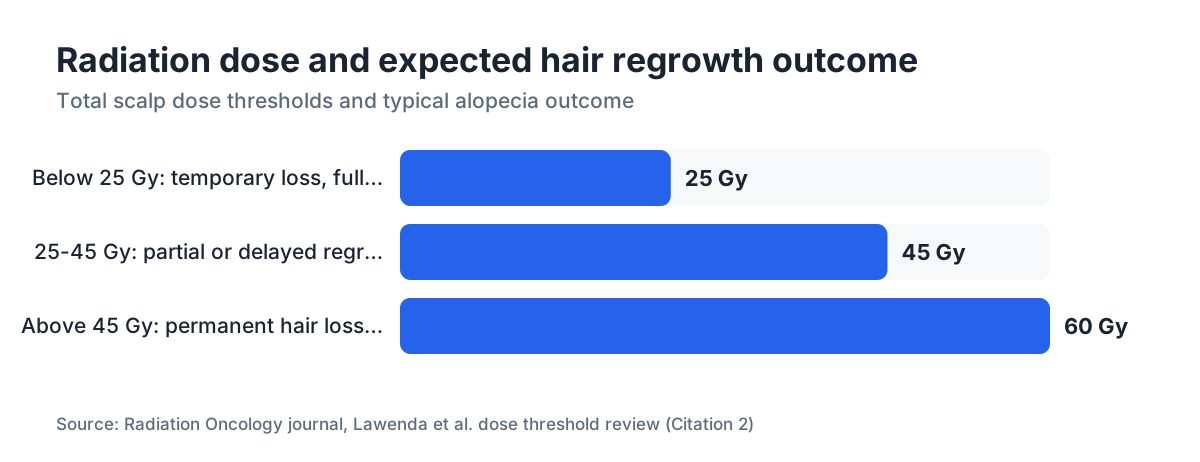
Regrowth tracks almost entirely with the total dose delivered to the scalp:
| Total dose to scalp | Expected outcome |
|---|---|
| Under 25 Gy | Temporary loss; regrowth likely within 2-6 months |
| 25-45 Gy | Partial or delayed regrowth; some permanent thinning likely |
| Over 45 Gy | Permanent hair loss is the expected outcome |
| Single high-dose (radiosurgery, e.g. Gamma Knife) | Dose-dependent; lower rates of alopecia than fractionated at equivalent total dose |
These thresholds come from a 2018 review in Radiation Oncology that pooled data across multiple clinical studies [2]. The exact number moves between studies partly because the fractionation schedule (how the dose is split across sessions) matters as much as the total. A dose given in small daily fractions leaves the scalp more time to repair between sessions than one large single fraction.
When hair does come back, texture and color sometimes shift. Regrown hair may be finer, curlier, or a different shade, at least at first. Most people see texture normalize over 12-18 months, though genuine uncertainty remains about permanent color change [2].
Which radiation treatments cause scalp hair loss and which do not?
Only radiation aimed at or through the head causes scalp hair loss. Radiation for breast cancer, prostate cancer, or abdominal tumors leaves scalp follicles untouched.
Treatments that commonly cause scalp hair loss:
- Whole-brain radiation therapy (WBRT), used for brain metastases or primary brain tumors
- Partial-brain radiation for glioblastoma, meningioma, or other intracranial tumors
- Craniospinal irradiation for medulloblastoma (affects both scalp and spine field)
- Radiation for head and neck cancers when the beam path crosses the scalp or occiput
- Total body irradiation (TBI) before bone marrow transplant
Stereotactic radiosurgery (Gamma Knife, CyberKnife) hits a small intracranial volume with high precision. Because the beams enter the scalp from many angles, the dose at any single scalp point stays low. Rates of clinically significant hair loss run lower than with conventional fractionated WBRT at an equivalent tumor dose [3].
Breast cancer radiation does occasionally thin a small patch of hair in the axilla (armpit), but that is body hair, not scalp hair. People worry about this more than they need to.
Is radiation-induced hair loss permanent?
It can be, and the dose is the main predictor. Permanent radiation-induced alopecia (PRIA) is defined as hair loss lasting beyond 6 months after treatment ends [4].
A 2021 study in the Journal of the American Academy of Dermatology looked at 100 patients who received whole-brain radiation and found 40% had persistent alopecia at 12 months, with higher rates among those given more than 40 Gy total [4].
The biology is blunt: above a certain dose, stem cells in the follicle bulge region are destroyed for good. Without those stem cells, the follicle cannot regenerate. No topical treatment reverses this.
Some patients with PRIA do well cosmetically with hair systems, scalp micropigmentation, or in selected cases hair transplant surgery, though transplanting into irradiated tissue takes careful patient selection because the blood supply to the scalp may be compromised.
Minoxidil has been studied as an add-on to stretch the anagen phase and prop up follicles that are not fully destroyed. Results are modest and not consistently replicated. If you want the risk-benefit picture on minoxidil for men here, the main caveat is that it treats a different mechanism than radiation injury.
Can scalp cooling prevent radiation hair loss?
Scalp cooling is well proven for chemotherapy-induced hair loss. For radiation, it is a different story.
With chemo, cooling the scalp shrinks blood flow to the follicles and limits how much drug reaches them. That logic does not carry over to radiation. Radiation travels through tissue no matter the temperature, and the injury comes from DNA damage, not drug delivery.
Some centers pilot scalp-sparing radiation instead of physical cooling. These use intensity-modulated radiation therapy (IMRT) or helical tomotherapy to cut scalp dose on purpose while holding the tumor dose steady [5]. A 2020 study in Radiotherapy and Oncology found scalp-sparing WBRT dropped grade 2 or higher alopecia from 93% to 62% versus conventional technique, though tumor coverage goals limit how much scalp you can spare [5].
Ask your radiation oncologist directly whether a scalp-sparing technique fits your tumor type and location. Not every tumor allows it. It is worth the conversation anyway.
How is radiation hair loss different from chemotherapy hair loss?
Both damage follicles, but the pattern and the permanence part ways.
Chemotherapy-induced alopecia is diffuse and hits the whole scalp (and often body hair) because the drug moves through the bloodstream. It is almost always temporary. Most patients see full regrowth within 3-6 months of finishing chemo [6].
Radiation-induced alopecia stays local to the treated field. A patient getting partial-brain radiation may lose hair only on one side of the head. That patchwork pattern can feel more conspicuous in some ways and less in others.
The risk of permanence is far higher with radiation. Chemotherapy rarely causes permanent loss (high-dose alkylating agents are the exception). Radiation above 45 Gy regularly does.
Chemo is also where telogen effluvium shows up as a second mechanism: the shock of systemic toxicity can shove resting follicles into a shedding phase weeks to months after treatment ends. Radiation does not usually trigger classic telogen effluvium because the injury is local, not systemic.
Some patients get radiation and chemo at the same time. In those cases, hair loss can be severe and the odds of permanent loss climb above either treatment alone.
Does the type of cancer matter for hair loss risk?
The cancer type does not decide hair loss. Where the radiation is aimed decides it.
Brain tumors (glioblastoma, meningioma, astrocytoma, brain metastases from breast, lung, or melanoma primaries) need radiation to the head, so scalp hair loss is expected. Leukemia and lymphoma patients who get total body irradiation lose scalp hair too.
Head and neck cancers land in a grayer zone. A nasopharyngeal tumor may need beams that cross the posterior scalp, causing focal loss at the entry and exit points. An oral cavity tumor treated with anterior beams may spare the scalp completely.
Prostate, breast, lung, and colorectal cancers treated with radiation to the chest or pelvis do not cause scalp hair loss. Full stop. If someone you know lost scalp hair during treatment for one of those cancers, chemotherapy (or rarely a targeted therapy) is the likelier cause, not the radiation.
For hair changes from any cause, figuring out the mechanism first beats jumping to a treatment. The what causes hair loss guide walks through the major pathways.
What actually helps: treatments and management options
Honest answer: no drug reliably prevents or reverses radiation-induced hair loss once it happens. There is a short list of things with modest evidence and a longer list of things people try on hope.
Minoxidil (topical 2% or 5%) sometimes gets used after radiation to speed up or improve regrowth in follicles that survive. A small randomized trial found topical minoxidil shortened the duration of chemotherapy-induced alopecia, and some oncologists carry that over to radiation cases [7]. The minoxidil side effects profile is mild enough to make it a reasonable try, but keep expectations honest. It will not rebuild follicles that are destroyed.
Scalp-sparing radiation, described above, has the clearest evidence for cutting the severity of initial loss [5].
Platelet-rich plasma (PRP) has been tested in small case series for PRIA with a few positive signals, but no large randomized trial exists. The evidence quality is low.
Hair systems, wigs, and scalp micropigmentation work regardless of follicle biology. Many patients find these more dependable than medical options once the loss is permanent.
Hair transplant surgery is possible in some PRIA patients, but only after a careful read on scalp vascularity. Irradiated tissue can carry a compromised blood supply, which drags down graft survival. A hair transplant consult with a surgeon who has handled post-radiation patients is a must before anything gets scheduled.
Psychological support earns less credit than it deserves. Hair loss during cancer treatment is tied to measurable distress and lower quality of life in the published literature [8]. If you or someone you love is struggling with this, that distress is legitimate and worth addressing head-on.
What about other drugs that cause hair loss, including semaglutide?
Radiation sits at one extreme of the hair-loss spectrum: direct, local, dose-dependent tissue injury. Plenty of other medical causes run through completely different machinery.
Semaglutide (Ozempic, Wegovy) has been tied to hair loss in a real share of users. The mechanism is almost certainly telogen effluvium from rapid weight loss, not direct follicle toxicity from the drug [9]. The FDA label for Wegovy lists alopecia as an adverse event in about 3% of patients in clinical trials at weight-loss doses [9]. That is temporary shedding from metabolic stress, a world away from the structural damage of ionizing radiation.
So does semaglutide cause hair loss? Yes, in a subset of users, usually 3-6 months after starting, and usually temporary. Different beast from radiation.
Other common drug causes: chemotherapy (covered above), anticoagulants like warfarin, retinoids, some antidepressants, thyroid medication at the wrong dose, and certain blood pressure drugs. If you are shedding and taking any medication, check whether alopecia is a listed side effect.
Want to see how your own pattern lines up against the standard staging systems? MyHairline's free AI scan (/scan) reads photos and maps them against Norwood stages, a useful step before a dermatologist appointment.
For medication-related loss that is not radiation, the telogen effluvium article breaks down the shedding cycle in detail.
Questions to ask your oncology or dermatology team
The answers to these questions tell you more about your own risk than any general article can.
For your radiation oncologist:
- What is the total planned dose to the scalp, and will any of it top 25 Gy?
- Is a scalp-sparing or hair-follicle-sparing IMRT technique feasible for my tumor?
- Will I be getting concurrent chemotherapy, and does that change the permanence risk?
For your dermatologist:
- Is there a role for topical minoxidil during or after my radiation course?
- How long should I wait after radiation ends before calling the loss permanent?
- Am I a candidate for PRP or other procedural options for permanent loss?
For a hair restoration surgeon (only if the loss is permanent and you want a transplant):
- Do you have experience with post-irradiation cases specifically?
- Can you evaluate scalp vascularity before committing to a procedure?
The American Academy of Dermatology publishes clinical guidance on radiation-induced alopecia that your dermatologist can reference [10]. The National Cancer Institute keeps patient-facing information on hair loss during cancer treatment too [11].
The psychological side: why hair loss from radiation hits differently
Hair loss from radiation lands in a hard emotional spot. It happens during cancer treatment, when someone is already processing a diagnosis and juggling side effects. The loss is visible, external, a standing reminder of illness to the person and to everyone around them.
A 2019 systematic review in Psycho-Oncology found alopecia was consistently rated among the top distress-causing side effects of cancer treatment, often ranking above nausea and pain in patient-reported outcome studies [8]. That runs against how medical teams focused on survival sometimes brush it off.
For patients with permanent radiation-induced alopecia, the adjustment can stretch well past the end of treatment. Grief over permanent hair loss is real. It does not signal weakness or misplaced priorities.
In practice, oncology social workers, patient advocacy groups, and peer support specific to the cancer type often help more than any medical intervention. The American Cancer Society's "Look Good Feel Better" program runs free workshops for people managing the cosmetic effects of cancer treatment, hair loss included [12].
If you are further into recovery and looking at what comes next for hair health, the full map of what causes hair loss and how different causes answer to different treatments is a good orientation. And for anyone tracking changes over time, MyHairline's AI scan (/scan) is a low-barrier way to document and follow hair density.
Sources
- National Cancer Institute, Hair Loss (Alopecia) and Cancer Treatment
- Radiation Oncology (journal), Lawenda et al., dose thresholds for radiation-induced alopecia
- International Journal of Radiation Oncology Biology Physics, stereotactic radiosurgery and alopecia
- Journal of the American Academy of Dermatology, permanent radiation-induced alopecia after whole-brain radiation
- Radiotherapy and Oncology (journal), scalp-sparing WBRT technique
- National Cancer Institute, Chemotherapy and Hair Loss
- Journal of Clinical Oncology, Duvic et al., minoxidil for chemotherapy-induced alopecia
- Psycho-Oncology (journal), systematic review of alopecia and patient distress
- FDA prescribing information, Wegovy (semaglutide injection) label
- American Academy of Dermatology, clinical guidance on alopecia management
- National Cancer Institute, patient-facing hair loss information