TL;DR: Rosemary oil does not block DHT the way finasteride does. No human scalp trial has shown it inhibits 5-alpha reductase. What it does have is one solid randomized controlled trial where it matched minoxidil 2% for hair count at six months, probably by improving scalp circulation. It's a reasonable add-on. It's not a replacement for proven treatments.
What does 'blocking DHT' actually mean?
DHT (dihydrotestosterone) is the hormone that shrinks hair follicles in people with androgenetic alopecia, the genetic hair loss behind receding hairlines and crown thinning. It forms when an enzyme called 5-alpha reductase converts testosterone into DHT inside the follicle and the scalp's sebaceous glands. [1]
To actually block DHT, you have to do one of two things: shut down that enzyme, or block the androgen receptor the DHT binds to. Finasteride does the first, targeting Type II 5-alpha reductase. Dutasteride blocks both Type I and Type II. Both have measurable numbers behind them. Finasteride lowers serum DHT by roughly 65 to 70%. Dutasteride cuts it by over 90%. [2]
A topical ingredient claiming to "block DHT" would need to show that same enzyme inhibition in a real trial. That's a high bar. Most plant extracts that carry the label earned it in a cell dish, not on a human scalp. The gap between those two things is enormous. Understanding the full DHT blocker landscape puts rosemary's place in it in context.
Does rosemary oil actually inhibit 5-alpha reductase?
The honest answer: the human evidence for rosemary oil as a 5-alpha reductase inhibitor is thin. In-vitro studies show that carnosic acid and ursolic acid, two compounds in rosemary, can inhibit 5-alpha reductase activity in isolated enzyme preparations and cell cultures. [3] That's real pharmacology. But a compound doing something in a lab dish is a long way from doing it meaningfully on your scalp.
No published human trial has measured scalp or serum DHT before and after rosemary oil and found a significant drop. If that trial exists, it hadn't reached peer-reviewed dermatology literature as of mid-2025.
So here's where it lands. Rosemary oil may have weak 5-alpha reductase activity based on its constituent compounds. There is no clinical proof it reduces DHT on a living human scalp. Anyone telling you it "blocks DHT" is extrapolating from cell-culture data. Extrapolation isn't evidence.
What does the best rosemary oil trial actually show?
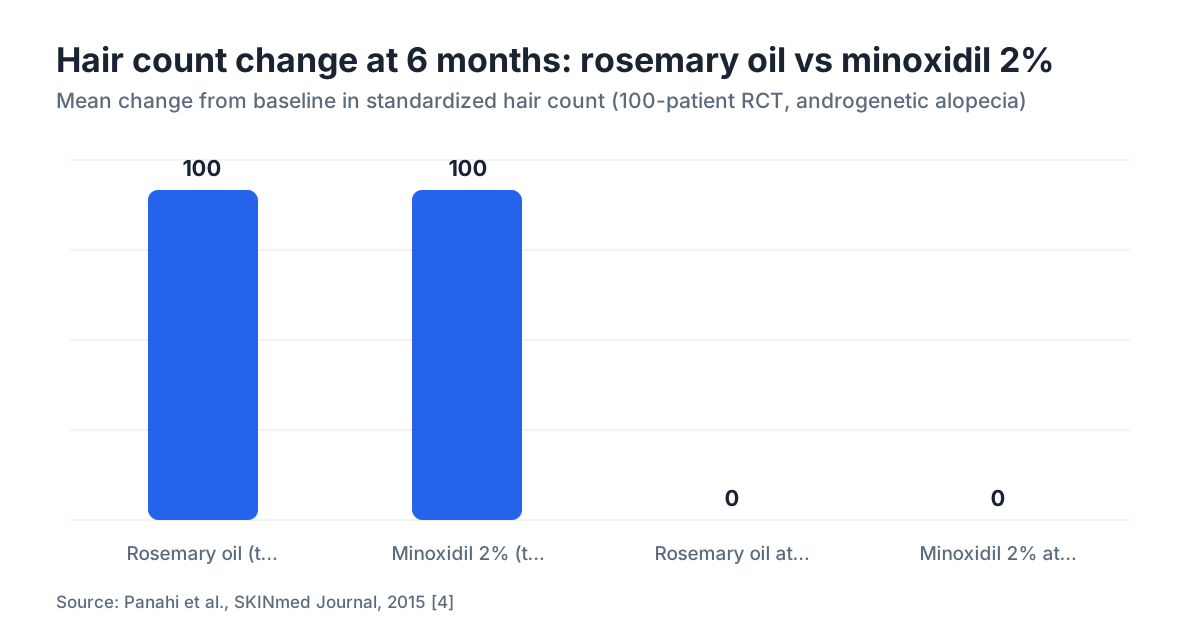
The study everyone cites is a 2015 randomized controlled trial in SKINmed by Panahi and colleagues. It compared rosemary oil to minoxidil 2% solution in 100 patients with androgenetic alopecia over six months. Both groups applied their treatment twice daily. [4]
At three months, neither group had improved. At six months, both showed statistically significant hair count increases over baseline, and the difference between the two groups was not statistically significant. The stated conclusion: "Rosemary oil as well as minoxidil 2% can be used for the treatment of androgenetic alopecia."
That's a real result. It matters. Now read it carefully.
The comparison is to minoxidil 2%, not minoxidil 5%. Most men now use 5% or the foam. The bar the trial measured against sits below what most people actually do. The sample was 50 per group, which is small, and a small trial can miss a real difference between two treatments even when one is genuinely better. And there was no placebo arm. Both groups improved, but you can't rule out that the twice-daily scalp massage each group did to apply the product drove some of the gain on its own.
None of this makes the result fake. It makes it one good-quality signal, not settled science. That's still more than almost any other botanical can claim.
How might rosemary oil help hair if it doesn't block DHT?
The Panahi trial also measured scalp blood flow and found rosemary oil improved it. That points to the more believable mechanism. Rosemary contains 1,8-cineole and camphor, compounds with vasodilatory and anti-inflammatory activity. [3] Better circulation means more oxygen and nutrients reaching the follicle. That's the same broad mechanism people attribute to minoxidil, which is a vasodilator at its core. [5]
Rosemary also has documented antimicrobial and anti-inflammatory effects. Chronic low-grade scalp inflammation is linked to follicle miniaturization in androgenetic alopecia, so calming it could slow progression without touching DHT at all. [6]
The working theory, then, is simple. Rosemary oil is a mild vasodilator and anti-inflammatory that may support the follicle environment while never touching the DHT pathway. "DHT blocker" is the wrong label for a benefit that might be real.
Does batana oil block DHT?
Batana oil, pressed from the fruit of the American oil palm (Elaeis oleifera), has picked up the same DHT-blocking claims on social media. The evidence is even thinner than rosemary's.
Batana oil is rich in oleic acid, tocopherols (vitamin E), and carotenoids, some of which have antioxidant activity that could in theory support a healthy scalp. [7] But there's no published randomized controlled trial on batana oil for hair loss. No human DHT measurement study. No in-vitro 5-alpha reductase paper of any quality I'd point you to with confidence.
The DHT-blocking claims for batana oil come from marketing, not research. That doesn't make it harmful. It means you have no evidence it does what the label implies. Use it as a scalp conditioner if you like. Bank on it to stop androgenetic alopecia and you're relying on hope.
For a wider look at what the research says about supplements and oils sold for hair loss, see this guide on hair loss supplements.
How does rosemary oil compare to proven DHT blockers?
Here I'll be direct. If you have confirmed androgenetic alopecia and you want to keep your hair, the clinical hierarchy looks like this:
| Treatment | Mechanism | Human RCT evidence | DHT reduction |
|---|---|---|---|
| Finasteride 1mg oral | 5-alpha reductase inhibitor (Type II) | Multiple large RCTs | ~65-70% serum DHT [2] |
| Dutasteride 0.5mg oral | 5-alpha reductase inhibitor (Type I + II) | Multiple RCTs | >90% serum DHT [2] |
| Minoxidil 5% topical | Vasodilator / potassium channel opener | Multiple large RCTs | None |
| Minoxidil 2% topical | Vasodilator | RCTs | None |
| Rosemary oil | Likely vasodilatory / anti-inflammatory | 1 small RCT (n=100) | Not measured / unlikely |
| Batana oil | Unknown | None | None |
Finasteride and dutasteride are the only treatments with proven DHT reduction and strong multi-year hair-count evidence. [2] Minoxidil is the other well-proven option, working through a completely different route with no DHT involvement. Rosemary sits below both tiers: real but limited evidence, no confirmed DHT action.
Generic finasteride runs about $15 to $30 a month. Rosemary oil is cheaper still. But cheap and possibly helpful isn't the same as proven. Compare them in detail at finasteride and minoxidil for men.
Can you use rosemary oil with minoxidil or finasteride?
Yes, and this is probably where rosemary oil earns its keep. There's no known pharmacological interaction between rosemary oil and either minoxidil or finasteride. Adding rosemary oil to a proven medical therapy doesn't undercut the therapy.
In practice: apply your minoxidil first and let it dry (about four hours for liquids, less for foam), then add rosemary oil if you want. Some people mix rosemary oil into a carrier like jojoba and use it as a pre-shampoo scalp massage. That timing keeps it from washing out your minoxidil.
The combination makes sense. Proven medical therapy does the heavy lifting; rosemary offers possible circulation support with almost no downside. What doesn't make sense is using rosemary oil instead of finasteride or minoxidil while your hair keeps miniaturizing.
For people weighing both drugs together, the finasteride and minoxidil combination is where the evidence for maximum regrowth tends to land.
How do you use rosemary oil for hair loss correctly?
A few things are worth knowing before you try it.
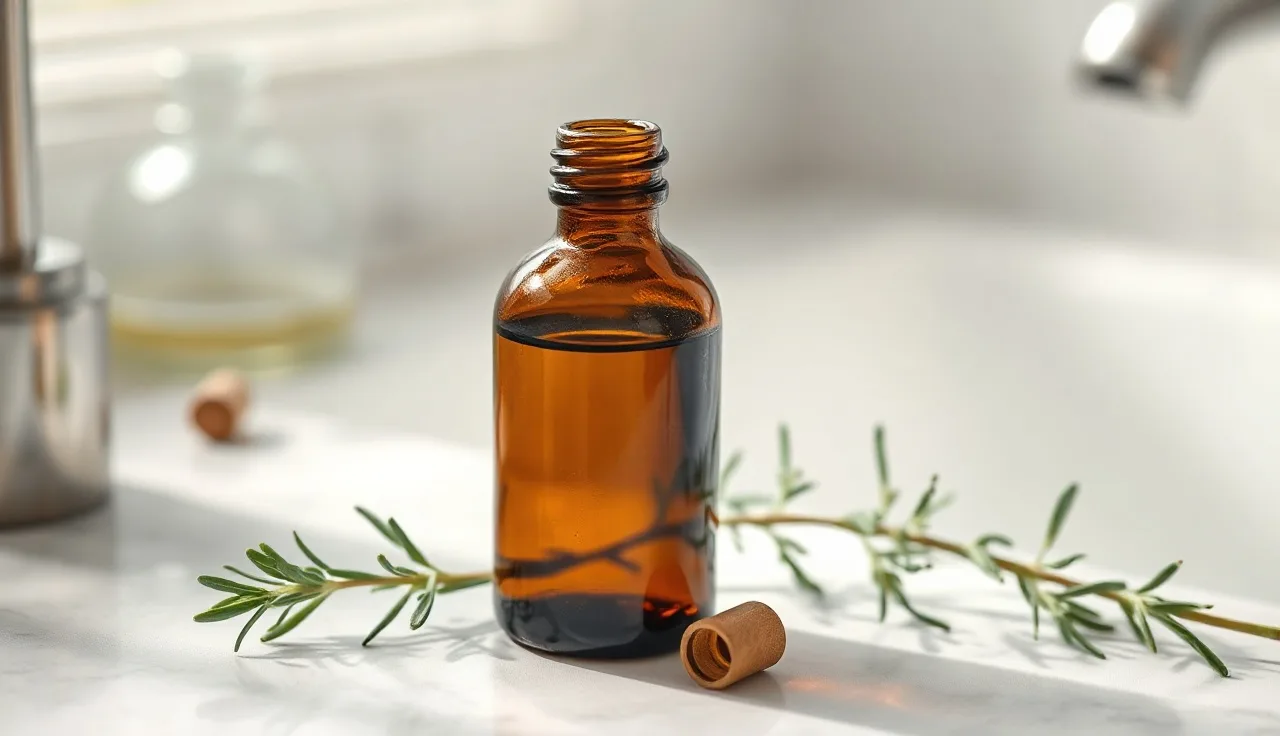
Concentration matters. The Panahi trial used a specific rosemary preparation, not undiluted essential oil poured straight from the bottle. Undiluted rosemary essential oil can cause contact dermatitis, especially on a sensitive scalp. The standard dilution is 2 to 3% in a carrier oil (jojoba, argan, and coconut all work), which comes out to roughly 6 to 9 drops per tablespoon of carrier. [8]
Consistency matters too. The trial ran six months with twice-daily use. Three weeks on and off tells you nothing. If you're going to test it, commit to four to six months.
Watch for irritation. Redness, itching, or scaling means stop. Scalp inflammation from a topical reaction can actually worsen shedding, the same kind of reactive shedding you see with telogen effluvium. A small patch test behind the ear before you go scalp-wide is worth the day it takes.
And keep your expectations honest. You're looking for stability or a modest bump, not a reversal of years of loss.
What does scalp DHT have to do with your pattern of hair loss?
What causes hair loss comes down to how sensitive your follicles are to DHT, more than how much DHT you have. Two people with identical serum DHT can end up with very different outcomes depending on how many androgen receptors their follicles express and how reactive those receptors are. That's why some people thin out with average DHT levels while some men carry high DHT and keep most of their hair. [1]
It also explains why a topical that trims scalp DHT by, say, 15% may or may not slow miniaturization for a given person. Finasteride's 65 to 70% serum reduction clears the threshold for most men. A weak inhibitor nudging the dial 10 to 15% may fall below the point where your particular follicles notice.
Want to know where your hairline stands? An AI hair analysis tool like the one at MyHairline tracks changes over time and maps your progression against Norwood stages, giving you a baseline before you pick a treatment tier.
If you have a receding hairline, pinning down your Norwood stage is the first practical move, because treatment response shifts with how far progression has gone.
Is rosemary oil FDA-approved for hair loss?
No. Rosemary oil is not FDA-approved for any hair loss indication. The only FDA-approved topical treatment for androgenetic alopecia is minoxidil, sold over the counter. [9] Oral finasteride is FDA-approved for male pattern hair loss. Dutasteride is approved for benign prostatic hyperplasia and used off-label for hair loss by many dermatologists.
Rosemary oil sold as a cosmetic or supplement falls under much looser rules. The FDA does not review cosmetics for efficacy before they hit shelves. Per the FDA's cosmetics guidance, manufacturers are responsible for making sure their products are safe and properly labeled, but pre-market approval isn't required. [9]
So a rosemary oil product can say "supports healthy hair" without proving anything. It cannot legally claim to "treat" or "cure" hair loss without crossing into drug-claim territory that would demand approval. Watch for that line when you read a label.
What if rosemary oil doesn't work for you?
If you've given rosemary oil a real six-month trial with consistent application and you're still losing hair, that's useful information. It tells you your follicles need a stronger intervention.
The next step is a conversation with a dermatologist, ideally one who focuses on hair loss. They can confirm what type of hair loss you have (not all hair loss is androgenetic, and treating the wrong type with DHT-focused strategies does nothing), check your hormone levels, and talk through whether finasteride, topical minoxidil, or oral minoxidil fits your profile.
For people who've lost enough hair that medicine alone won't restore density, a hair transplant consultation is worth understanding even if you're not ready to book one. Knowing the full picture leads to a better decision.
Sudden or diffuse shedding, rather than a gradual pattern, may be telogen effluvium instead of androgenetic alopecia, and the treatment is completely different. Rosemary oil, DHT blockers, and most pattern-loss treatments do nothing for acute shedding from stress, illness, or a nutritional deficiency.
The MyHairline free AI scan (/scan) is one way to track your hairline with standardized photos, so you can see whether anything is actually changing before you escalate treatment.
Sources
- StatPearls (NCBI Bookshelf) - Androgenetic Alopecia
- American Academy of Dermatology - Hair Loss: Who Gets It and Causes
- Phytotherapy Research, Murata et al. 2013, rosemary constituents and 5-alpha reductase inhibition
- SKINmed Journal - Panahi et al. 2015, Rosemary oil vs minoxidil 2% RCT
- MedlinePlus (NIH) - Minoxidil Topical
- Journal of Investigative Dermatology - perifollicular inflammation and androgenetic alopecia
- USDA Agricultural Research Service
- National Association for Holistic Aromatherapy - Safety and Dilution Guidelines
- FDA - Cosmetics
- Evidence-Based Complementary and Alternative Medicine - Cho et al. 2014, pumpkin seed oil RCT
- Clinical and Experimental Dermatology - Sinclair, female pattern hair loss and DHT
- British Journal of Sports Medicine - van der Merwe et al. 2009, creatine and DHT ratio