

TL;DR: Selenium deficiency can cause diffuse hair shedding and brittleness because selenium builds the selenoproteins that shield fast-dividing follicle cells from oxidative damage. A whole-blood selenium below roughly 70 mcg/L signals deficiency. Too much selenium causes the same hair loss. Most people in the US and Europe are not deficient. A blood test, not a hunch, should drive any supplement decision.
What does selenium actually do for hair follicles?
Selenium is a trace mineral, and your body spends it building a family of proteins called selenoproteins. More than 25 of these exist in humans [1]. Several, including glutathione peroxidases and thioredoxin reductases, work as antioxidant enzymes inside cells that divide quickly [9]. Hair follicles divide about as fast as any tissue in the body, which makes them unusually touchy about oxidative stress.
When selenium supply drops, those defenses weaken. Follicle cells build up reactive oxygen species, DNA repair slows, and the follicle can shift early from its active growth phase (anagen) into shedding (telogen). What you see is diffuse shedding that looks like telogen effluvium, not the patterned thinning of androgenetic alopecia.
Selenium also runs your thyroid math. The enzyme that converts thyroxine (T4) into active triiodothyronine (T3) is a selenoprotein, iodothyronine deiodinase [1]. Thyroid hormones set the pace of the hair cycle, so a selenium shortage can drag on hair growth through the thyroid even when a standard thyroid panel reads normal.
One more mechanism worth knowing. Selenoprotein P, the main transport form in blood, sends selenium first to the brain and testes when supply runs short, leaving skin and hair at the back of the line [2]. Mild deficiency can hit follicles before it shows up anywhere else. Mouse studies back this up: knocking out follicle selenoprotein synthesis causes alopecia and abnormal hair shafts [10].
What does the research say about selenium deficiency and hair loss?
The clearest human evidence comes from extreme situations: patients on long-term total parenteral nutrition (TPN) with no added selenium, people in regions with badly selenium-depleted soil (parts of China, New Zealand before fortification, central Africa), and some cancer patients on chemotherapy.
A 1979 report in the American Journal of Clinical Nutrition documented hair loss and nail changes in TPN patients who got no selenium, and the hair loss reversed once selenium was added back [3]. Later adult TPN cases showed the same pattern. These are severe deficiency scenarios, far from the mild dip a healthy person eating a varied diet might have.
For everyone else, the picture blurs. A 2019 review in Nutrients on vitamins, minerals, and hair loss recommends testing before supplementing and finds weak support for routine supplementation in people who aren't deficient [4]. That honesty matters: the data doesn't justify buying selenium if your levels are already fine.
The toxicity side is just as clear. A 2008 US outbreak tied to a liquid selenium product caused hair loss, nail damage, fatigue, and neurological symptoms in people taking far too much [5]. Too much selenium and too little selenium produce the same headline symptom. That single fact makes self-diagnosis and self-dosing genuinely risky.
So the literature lands here. Deficiency-driven hair loss is real and it reverses. Supplementing when you're not deficient does nothing for your hair and can hurt it.
How much selenium do you actually need?
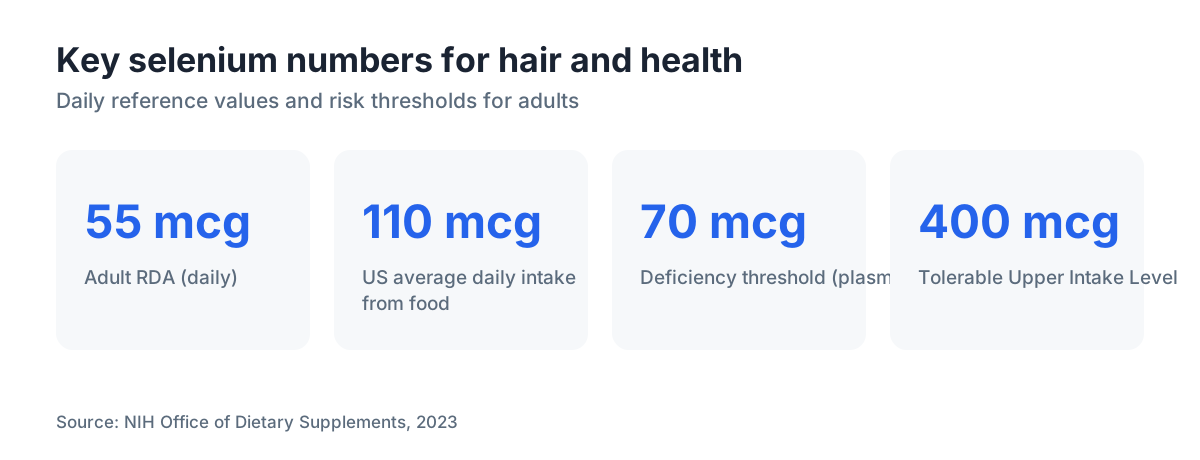
The US National Institutes of Health Office of Dietary Supplements sets the Recommended Dietary Allowance for selenium at 55 mcg/day for adults, 60 mcg/day in pregnancy, and 70 mcg/day during lactation [6]. The Tolerable Upper Intake Level is 400 mcg/day for adults. Most selenium supplements come in 100 to 200 mcg doses, which sits below the upper limit but still hands you two to four times the RDA. That gap exists. It isn't endless.
Average US selenium intake runs about 93 to 134 mcg/day from food alone, so most Americans clear the RDA on diet without trying [6]. People in the UK and much of Europe run lower, closer to 40 to 70 mcg/day, because European soils hold less selenium than North American ones. That geography is why deficiency rates jump around between studies.
A single Brazil nut (Bertholletia excelsa) holds anywhere from 68 to 91 mcg of selenium depending on where it grew, which meets or beats the daily RDA in one bite [6]. Selenium also stacks up in organ meats, tuna, sardines, shrimp, and eggs. Hitting 55 mcg/day on a mixed diet is easy.
Your real deficiency risk hangs on three things: where your food comes from, how restricted your diet is, and whether you have a condition that blocks absorption. Crohn's disease, celiac disease, and gastric bypass surgery are the main ones.
How do you test for selenium deficiency?
There are three ways to measure selenium status, and they measure different windows of time. A standard blood draw covers most of what you need.
Plasma or serum selenium is the test doctors order most. It reflects recent intake over days to a few weeks. Reference ranges shift slightly by lab, but most flag values below 70 to 89 mcg/L as deficient or marginal. No special prep, just a blood draw.
Whole-blood selenium captures selenium in both red cells and plasma, so it shows your status over the past two to three months (roughly the lifespan of a red blood cell). It's the better long-term marker and the one research studies lean on. Below 70 mcg/L reads as deficient [2].
Selenoprotein P (SELENOP) in plasma is the most sensitive functional marker. When selenium runs short, SELENOP production falls before other markers do, so it flags trouble earliest. It's the research gold standard but rarely available outside academic centers.
Urinary selenium tracks very recent intake and shows up mostly in population surveys, not individual workups.
To get tested, ask your primary care doctor or a dermatologist. Insurance usually covers it when there's a clinical reason like unexplained hair loss, malabsorption, or long-term TPN. Through a direct-to-consumer lab, a plasma selenium panel runs roughly $30 to $80. Quest Diagnostics and LabCorp both offer selenium testing [7].
One practical note. Because levels swing with recent diet, eat normally in the days before the test. Don't load up on Brazil nuts the night before. You want a number that reflects your real baseline, not last night's snack.
What selenium level on a blood test means you might be losing hair?
No single cutoff has been validated specifically for hair loss, and that's worth saying out loud. Most clinical guidelines put the deficiency line at plasma selenium below 70 mcg/L, with some labs flagging the low end of normal, below 80 to 89 mcg/L [2][6].
In the TPN and soil-depletion cases where hair loss was documented, levels were often deep in the basement, sometimes under 30 mcg/L [3]. Whether a mild dip in the 50 to 70 mcg/L range causes noticeable shedding in an otherwise healthy person is genuinely not settled. Nobody has run a rigorous randomized trial measuring hair density against selenium status across that borderline zone.
Come back below 70 mcg/L with diffuse shedding, and deficiency is a reasonable suspect. Land in the normal range, and selenium is almost certainly not your problem, so chasing it with pills wastes your money and your time.
Test these alongside selenium: ferritin (iron stores), TSH plus free T3 and T4 (thyroid), zinc, vitamin D, and a complete blood count. Diffuse shedding rarely traces to one cause, and what causes hair loss is usually a stack of factors rather than a single gap. A dermatologist can order the whole panel in one draw.
Can too much selenium cause hair loss?
Yes. This is the most overlooked fact in the whole selenium and hair conversation.
Selenosis, the clinical name for selenium toxicity, lists hair loss as a signature symptom, alongside brittle nails, garlic breath, fatigue, and in bad cases neurological problems. The 2008 US outbreak involved a liquid supplement with selenium up to 200 times the labeled amount [5]. The FDA warned about it and the product was recalled. Most affected people lost significant hair, and recovery took months after they stopped.
The upper limit is 400 mcg/day for adults [6]. That looks far from a 200 mcg capsule until you notice how people stack doses without realizing it: a multivitamin with 55 mcg, a dedicated selenium pill with 200 mcg, a protein powder with selenium added. Those numbers add up fast and hide in plain sight.
Chronic mild excess, a bit over the upper limit for months, shows up quieter. Hair turns dry, brittle, and slow-growing rather than falling out in clumps. That's easy to blame on something else.
Taking selenium now and watching your hair get worse instead of better? Rule this out first. Stop the supplement, wait six to eight weeks, retest.
Who is actually at risk for selenium deficiency?
For most people eating a varied diet in North America, true selenium deficiency is uncommon. The genuinely elevated-risk groups are specific.
Malabsorption is the biggest category. Crohn's disease, celiac disease, short bowel syndrome, and anyone who has had gastric bypass or another bariatric procedure absorbs selenium less efficiently [6]. In this group, with hair loss, selenium (plus zinc and iron) deserves testing.
Long-term TPN patients without selenium in the solution sit at high risk, which is exactly what the early case literature captured. Modern US TPN formulas now include selenium partly because of those documented deficiencies.
People whose food comes entirely from severely selenium-depleted regions are another group. Parts of Keshan province in China have soil so low in selenium that a deficiency cardiomyopathy, Keshan disease, became endemic there [1]. Parts of Finland, New Zealand (historically), and central Africa share depleted soils.
Vegans and vegetarians get flagged sometimes, but the evidence that they run systematically low is mixed. Plant selenium swings wildly with soil, so a vegan in the US Midwest eating crops from selenium-rich ground may run higher than an omnivore in rural Europe.
Kidney dialysis patients lose selenium through the process and often run low [2].
Outside these groups, routine selenium supplementation is unlikely to help your hair and adds a toxicity risk you don't need.
Should you take a selenium supplement for hair loss?
Only if a blood test confirms you're deficient. That's the whole answer.
The evidence does not support selenium supplements for hair loss in people with normal levels. The 2019 Nutrients review says supplementation in non-deficient people lacks evidence of benefit [4]. No large randomized trial shows that pushing selenium from normal to high-normal grows more hair or slows shedding.
If you are deficient, fix it through food first: Brazil nuts, tuna, eggs, enriched grains. If diet can't get you there or levels won't budge, a 100 to 200 mcg supplement is generally safe and should restore levels within a few months.
Regrowth after correction is not fast. The follicle cycle means three to six months of steady normal selenium before you see meaningful new density. Shedding usually eases within six to eight weeks.
If your loss has a shape to it (receding temples, thinning crown, a changing hairline), that points at androgenetic alopecia, not a nutrient gap. Minoxidil for men and finasteride treat that cause. Selenium won't touch it.
Before you spend anything, the hair loss supplements comparison covers which ingredients actually have evidence. Most single-nutrient supplements disappoint when the deficiency was never confirmed in the first place.
How does selenium deficiency hair loss differ from other types of hair loss?
This distinction changes the treatment completely, so it's worth getting right.
Selenium deficiency hair loss is diffuse. You shed roughly evenly across the scalp instead of in a pattern, and the hairline holds. You notice it in the shower, on the pillow, or as a slightly wider part, but there's no clear front-to-back or crown-heavy pattern. That's the signature of telogen effluvium, where follicles get pushed early into rest. Telogen effluvium has plenty of triggers beyond selenium: crash dieting, major surgery, illness, postpartum hormone shifts, thyroid disease.
Androgenetic alopecia, the most common type in men and women, follows a pattern. In men it's the Norwood progression: temple recession, crown thinning. In women it's more diffuse but concentrates at the central part while the frontal hairline stays. A selenium test reads normal here because the driver is DHT sensitivity in the follicle, not a nutrient gap. If that's what you're seeing, DHT blocker options and a dermatologist visit make more sense than a micronutrient panel.
Alopecia areata makes patchy, well-defined round bald spots. Traction alopecia follows tight styling or pulling. Tinea capitis, a fungal infection, leaves scaly patches. None of these tie back to selenium.
Can't tell which one you're dealing with? A free AI-based scalp scan from MyHairline can give you a starting classification before you book a dermatologist. It won't replace a blood test or a clinical diagnosis, but it helps you sort diffuse from patterned. The table below lays out the differences.
Selenium deficiency vs other hair loss causes: a quick comparison
| Feature | Selenium deficiency | Androgenetic alopecia | Telogen effluvium (other causes) | Alopecia areata |
|---|---|---|---|---|
| Pattern | Diffuse, even | Patterned (temples, crown) | Diffuse, even | Patchy, circular |
| Onset | Gradual over months | Gradual over years | Often rapid (weeks) | Can be rapid |
| Scalp appearance | Normal | Normal, miniaturized follicles | Normal | Smooth bald patches |
| Blood test finding | Low selenium (<70 mcg/L) | Normal; elevated DHT sensitivity | Varies by cause | Often normal |
| Reversal with cause removed | Yes, within 3-6 months | No (permanent without treatment) | Yes, typically | Variable |
| Selenium supplement helps | Yes (if deficient) | No | Only if deficient | No |
Selenium deficiency and other telogen effluvium triggers overlap constantly, which is the whole reason testing the full panel beats guessing. Someone with low ferritin, low selenium, and a recent illness can be carrying three stacked triggers at once, and treating only one of them leaves the other two doing damage.
What's the step-by-step process to figure out if selenium is your problem?
Here's how I'd work through it if it were my hair.
Step one: map the pattern. Photograph your scalp in good light from the top, front, and sides. Diffuse or patterned? If it's patterned, skip the selenium rabbit hole and see a dermatologist about androgenetic alopecia.
Step two: weigh your risk factors. Any malabsorption condition? A restrictive diet? Time on TPN? If none of those fit and you eat a varied diet in North America, your odds of selenium deficiency are low before you even test.
Step three: get the blood test. Ask for plasma or whole-blood selenium plus ferritin, TSH, free T4, zinc, vitamin D, and a complete blood count. That covers the major nutritional and thyroid causes of diffuse shedding in one draw, and most of it is cheap with insurance.
Step four: read it with your doctor. Below 70 mcg/L plasma selenium supports dietary correction or a supplement. Normal range means move on to other explanations.
Step five: if you supplement, retest. Recheck at three months to confirm you corrected the gap without overshooting. Keep total intake from all sources well under 400 mcg/day.
Step six: be patient. Hair grows about 1 cm per month. Even after the deficiency clears and shedding stops, visible density won't return until three to six months in. People who quit at six weeks assume it failed when the cycle simply hadn't turned over yet.
A free MyHairline AI scan run alongside this can track whether your loss pattern is shifting over time, which reads slow improvement better than eyeballing photos on your own.
Are selenium shampoos or topical products worth trying?
Selenium sulfide shampoo is a completely different animal from dietary selenium. Products like Selsun Blue use selenium sulfide as an antifungal, and they're FDA-approved for seborrheic dermatitis and dandruff [8]. They work by slowing Malassezia, the yeast behind those scalp conditions. They do not correct systemic selenium deficiency and do not meaningfully raise blood selenium.
If you have a flaky, itchy scalp along with hair loss, a selenium sulfide shampoo may calm the inflammation feeding the shedding. But that's treating the dandruff, not the deficiency.
No credible evidence shows topical selenium products raise hair density or reverse deficiency-related loss. The mechanism needs enough selenium reaching follicle cells through the blood via selenoproteins, not soaking in from the surface. Skip the specialty topical selenium serums. Nothing in the dermatology literature backs them.
If scalp inflammation or seborrheic dermatitis is genuinely part of your picture, treat that on its own track. What causes hair loss covers that angle in more detail.
Sources
- NIH Office of Dietary Supplements, Selenium Fact Sheet for Health Professionals
- Rayman MP, Selenium and human health, The Lancet, 2012
- Van Rij AM et al., Selenium deficiency in total parenteral nutrition, American Journal of Clinical Nutrition, 1979
- Almohanna HM et al., The Role of Vitamins and Minerals in Hair Loss, Nutrients, 2019
- MacFarquhar JK et al., Acute selenium toxicity associated with a dietary supplement, Archives of Internal Medicine, 2010
- NIH Office of Dietary Supplements, Selenium Fact Sheet for Consumers
- Quest Diagnostics, Selenium testing menu
- FDA, Drug Facts for selenium sulfide shampoo (Selsun Blue label)
- Steinbrenner H and Sies H, Protection against reactive oxygen species by selenoproteins, Biochimica et Biophysica Acta, 2009
- Sengupta A et al., Selenoproteins and the thioredoxin system in hair follicle biology, Experimental Dermatology, 2010