

TL;DR: Collagen supplements may modestly improve hair thickness and reduce shedding in some people, but the evidence is thin. A 2023 randomized trial found a statistically significant increase in hair diameter after 6 months of daily collagen peptides. Collagen won't reverse androgenetic alopecia. It's a low-risk addition to a routine, not a replacement for proven treatments like minoxidil or finasteride.
What does collagen actually do for your hair?
Collagen is a structural protein. It makes up a large portion of the dermis, the layer of skin where your hair follicles are anchored. The follicle itself isn't made of collagen, but the connective tissue sheath surrounding it is, and that sheath matters for follicle geometry and structural support [1].
As you age, collagen production in the dermis drops steadily, starting somewhere in your mid-to-late twenties and declining roughly 1% per year after that [1]. Thinner, less dense dermis means follicles can sit less firmly in the scalp, which some researchers believe contributes to the miniaturization pattern you see in early androgenetic alopecia, though this is not fully established.
Collagen also supplies amino acids, especially glycine, proline, and hydroxyproline, that the body can theoretically use as raw material for keratin synthesis. Hair is about 95% keratin, and keratin production is amino acid dependent [2]. The argument for collagen supplements is partly a substrate argument: give your body more building blocks and it may build more or thicker hair.
That logic isn't wrong, but it's also not the whole story. Your body digests collagen peptides into amino acids the same way it digests any protein. There's no guarantee those amino acids go to your scalp rather than your liver, muscles, or anywhere else. Whether supplemental collagen actually ends up benefiting hair specifically is an empirical question, and the trials trying to answer it are still catching up.
What does the research actually show?
The honest answer is: promising but limited. The trials that exist are small, mostly industry-funded, and vary in methodology.
A 2023 randomized, double-blind, placebo-controlled trial published in the Journal of Cosmetic Dermatology enrolled 44 women with self-perceived thinning hair. Participants took either 2.5 grams of collagen peptides twice daily or placebo for 24 weeks. The collagen group showed a statistically significant increase in hair shaft diameter and self-reported improvements in hair fullness compared to placebo [3]. That's a meaningful result, but 44 subjects is a small sample, and the trial was funded by a collagen ingredient supplier.
A separate 2019 study in the Journal of Drugs in Dermatology looked at a multi-ingredient supplement containing collagen alongside biotin, zinc, and other nutrients. Hair count and thickness improved significantly after 90 and 180 days compared to baseline [4]. The problem is you can't isolate collagen's contribution when six other ingredients are in the formula.
Another angle comes from basic science. A 2020 study in Nature found that glycine, the dominant amino acid in collagen, helps protect hair follicle stem cells from reactive oxygen species, the oxidative stress byproducts that accumulate with age and may contribute to follicle aging [5]. This is cell-culture and mouse data, not a human clinical trial, but it gives a plausible biological mechanism.
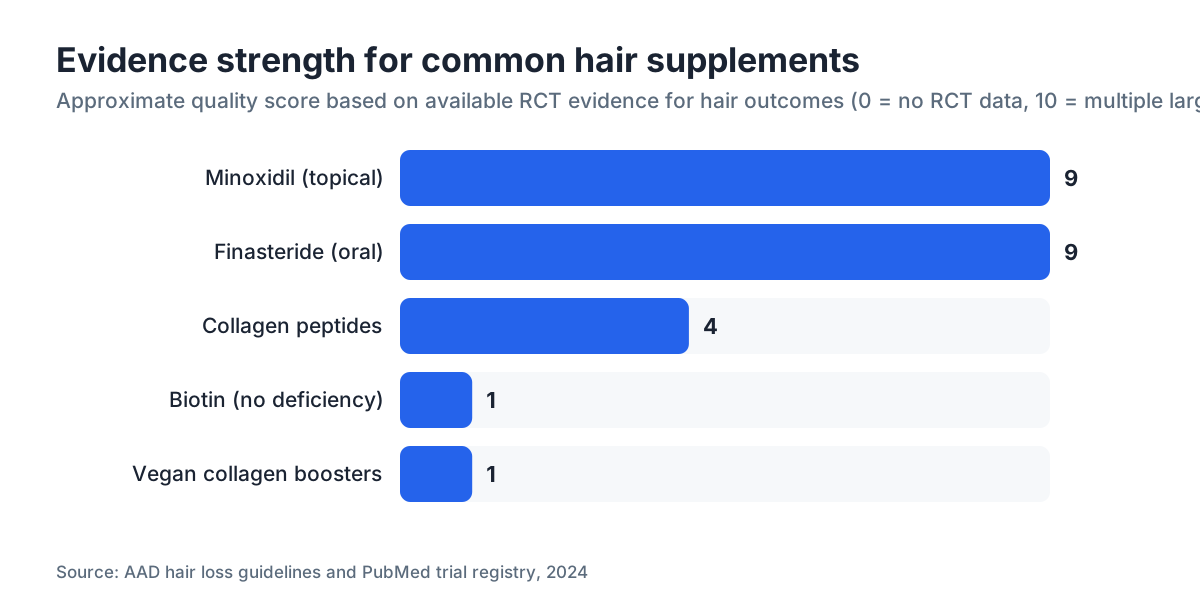
What the research does not show: any trial demonstrating collagen reverses miniaturization driven by DHT, regrows hair in established bald patches, or outperforms minoxidil or finasteride. If that's your goal, collagen isn't the tool for the job.
| Trial | Year | Design | Duration | Key finding |
|---|---|---|---|---|
| Journal of Cosmetic Dermatology [3] | 2023 | RCT, double-blind, n=44 | 24 weeks | Significant increase in hair shaft diameter |
| Journal of Drugs in Dermatology [4] | 2019 | Open-label, n=120 | 180 days | Improved hair count and thickness (multi-ingredient) |
| Nature (Matsumura et al.) [5] | 2020 | In vitro + mouse model | N/A | Collagen protects follicle stem cells from oxidative damage |
Does collagen help with hair thickness specifically?
Thickness is where collagen has the most plausible case. Hair shaft diameter is determined partly by follicle size, and follicle size is influenced by the surrounding dermal environment including the extracellular matrix, which collagen helps form [1].
The 2023 RCT specifically measured hair shaft diameter using phototrichogram technology, a standardized, validated tool for measuring individual hair width. The collagen group's average diameter increased significantly over 24 weeks; the placebo group's did not [3]. That's a concrete, measurable finding, not a subjective questionnaire.
The effect size was modest. We're talking about changes on the order of a few microns in hair diameter, which isn't visible in the mirror day-to-day but can cumulatively affect how your hair looks and feels at the scalp level. Hair that is uniformly slightly thicker creates more volume.
For people with diffuse thinning rather than classic pattern baldness, particularly women with fine hair, collagen supplementation is a reasonable low-cost experiment. The same cannot be said for someone with a Norwood 5 pattern and a clearly receding hairline, where the dominant driver is DHT-mediated follicle miniaturization, not collagen deficit.
Does collagen help with hair growth or shedding?
Growth and shedding are related but different mechanisms. Hair growth rate is largely determined by genetics and nutrition. Shedding cycles (the telogen phase) are influenced by stress, hormones, iron levels, thyroid function, and more.
There is some evidence that collagen may reduce the proportion of hairs in telogen, meaning fewer hairs in the resting/shedding phase at any given time. The 2023 trial reported that the collagen group had a higher anagen-to-telogen ratio at 24 weeks compared to placebo, though the margin was modest [3].
For people experiencing telogen effluvium, the condition where a stressor like illness, crash dieting, or major surgery pushes a large percentage of follicles into telogen at once, the amino acid substrate argument is most relevant. Collagen supplements could, in theory, support follicle recovery during the regrowth phase, though no large trial has tested this specifically in telogen effluvium patients.
Collagen supplements are not going to meaningfully accelerate hair growth speed. Human hair grows about 6 inches per year on average regardless of diet in well-nourished people. The follicle's growth rate ceiling is genetic. What collagen might do at the margins is keep more follicles in the growth phase longer, which increases density and perceived thickness over time.
Which type of collagen is best for hair?
Not all collagen supplements are the same. Types I, II, and III are the most common in supplements. For skin and hair applications, Type I and Type III are the most relevant because these are the dominant collagen types in the dermis [1].
Hydrolyzed collagen peptides, also called collagen hydrolysate, are broken into smaller fragments that are more bioavailable than native collagen protein. Several absorption studies have shown that specific collagen peptides (particularly those from Peptan and Verisol, trademarked ingredient forms studied in clinical trials) reach the bloodstream and accumulate in skin tissue [6]. Whether this translates to clinically meaningful hair outcomes specifically is less certain.
Marine collagen (from fish) and bovine collagen (from cattle) are the two most studied sources. Marine collagen is primarily Type I and tends to have good bioavailability. Bovine contains a mix of Types I and III. There's no published head-to-head trial comparing marine versus bovine collagen specifically for hair outcomes.
Vegan collagen boosters are not actual collagen. They're typically vitamin C plus amino acid precursors intended to stimulate your body's own collagen synthesis. The evidence base for these in hair specifically is essentially zero.
Dosing in trials has typically ranged from 2.5 grams to 10 grams of hydrolyzed collagen peptides per day. The 2023 RCT used 2.5 grams twice daily (5 grams total), which is a common commercially available dose [3].
How long does collagen take to affect hair?
Patience is required. Hair has a slow turnover cycle. The anagen (growth) phase for scalp hair lasts 2 to 7 years, and you're not going to see structural changes in new hair growth in a few weeks.
In the trials that showed positive results, the duration was at least 90 days, and the most compelling data comes from the 24-week mark [3][4]. Six months is a fair minimum trial period before deciding whether collagen supplementation is doing anything useful for your hair.
The timeline is similar to what you'd expect with minoxidil for men: dermatologists routinely tell patients to wait 3 to 6 months before evaluating results. The difference is that minoxidil has far more trial evidence and a defined mechanism of action (vasodilation, prolonging anagen), while collagen is working through softer, more indirect pathways.
If you're evaluating whether collagen is working, take consistent photos under the same lighting every 8 weeks. Subjective impressions of hair fullness are notoriously unreliable.
Can collagen actually replace proven hair loss treatments?
No. This is the most important distinction in this article.
Androgenetic alopecia, the most common cause of hair loss in both men and women, is driven primarily by dihydrotestosterone (DHT) binding to androgen receptors in follicles and progressively miniaturizing them [7]. Collagen has no effect on DHT levels, androgen receptor sensitivity, or the miniaturization process. If your hair loss follows a recognizable pattern, especially a receding hairline or vertex thinning, collagen is not addressing the root cause.
The treatments with actual controlled trial evidence for androgenetic alopecia are finasteride (a 5-alpha reductase inhibitor that blocks DHT conversion), minoxidil (a vasodilator that also extends the anagen phase), and hair transplant surgery for the right candidates. A DHT blocker like finasteride reduced hair loss in roughly 83% of men in the 5-year trial published in the Journal of the American Academy of Dermatology [8]. That is a different category of evidence than any collagen supplement trial has produced.
Using collagen alongside proven treatments? Reasonable. Using collagen instead of them because it feels more natural? That's a decision that costs time you may not have if you're in the early stages of pattern loss.
For a broader look at what's in the supplement aisle and what actually has evidence, the hair loss supplements breakdown is worth reading before you spend money.
Is collagen safe, and are there any side effects?
Collagen peptides have a strong safety profile. They're a food-derived protein, and the FDA categorizes collagen hydrolysate from bovine and marine sources as Generally Recognized As Safe (GRAS) [9].
Common mild side effects reported in trials and post-market surveillance include digestive discomfort, particularly a feeling of fullness or mild nausea if taken on an empty stomach. Some people report a slightly fishy taste with marine collagen.
Collagen supplements are not regulated by the FDA as drugs, only as dietary supplements. The FDA does not verify supplement claims before products reach shelves, and potency can vary significantly between brands [9]. If you buy one, look for products that have been third-party tested (NSF International, USP, or Informed Sport certification are reliable markers).
Allergies are a real consideration. Marine collagen is contraindicated for people with fish or shellfish allergies. Bovine collagen is inappropriate for people avoiding beef for religious or other reasons.
Drug interactions are not a known concern with collagen peptides. Unlike finasteride, which has documented sexual side effects in a subset of users (see finasteride for the full breakdown), or minoxidil, which has its own minoxidil side effects profile, collagen supplements don't carry meaningful systemic risks for most people.
Who is most likely to benefit from collagen for hair?
The people who have the most realistic shot at seeing something from collagen supplementation are:
Women with diffuse thinning and fine hair who are not experiencing classic androgenetic alopecia. If your follicles are still present and functioning, improving the dermal environment around them has more upside than if follicles have already miniaturized significantly.
People who are mildly protein-deficient. If your overall diet is low in protein, adding collagen (which is essentially a protein supplement) may help through basic nutritional support. This is less about collagen's unique properties and more about adequacy.
People in their thirties and forties who are noticing early changes in hair texture and thickness as part of general aging, before significant follicle loss has occurred. Preventive support of the dermal matrix is a more plausible use case than reversal of established damage.
People who are already on an effective hair loss treatment and want to add something low-risk to support overall hair quality. Collagen won't interfere with finasteride and minoxidil and may complement them.
If you're unsure where your hair loss falls on the spectrum, a scalp analysis can help clarify the pattern. MyHairline's free AI hair scan at myhairline.ai/scan gives you a baseline assessment of your hairline and thinning pattern, which is a useful starting point before deciding which interventions make sense.
People who are unlikely to benefit much: men with Norwood 3 or higher pattern loss, anyone who's had a significant bald patch for more than a few years (follicles are likely gone), people with alopecia areata (an autoimmune condition collagen doesn't address).
What does collagen cost and how does it compare to other hair supplements?
Collagen peptide supplements typically run $25 to $60 per month depending on the brand and dose. At 5 grams per day (the dose used in the 2023 RCT), a 300-gram tub lasts about 60 days, putting daily cost around $0.40 to $1.00 [3].
For comparison, generic minoxidil topical solution runs roughly $15 to $30 per month. Generic finasteride (1 mg daily) costs roughly $15 to $40 per month depending on pharmacy and whether you use a prescription discount card. A hair transplant procedure in the US ranges from about $4,000 to $15,000 depending on graft count and clinic, a one-time cost but a much larger one.
Collagen is cheap relative to most interventions. That lowers the stakes of trying it. But cheap and worth trying are not the same as proven and worth relying on. The distinction matters if you're making budget decisions about where to prioritize.
Biotin supplements, a popular hair supplement with even weaker hair-specific evidence than collagen, cost similarly. Iron and zinc, relevant for people with documented deficiencies that cause hair loss, are cheaper still and have clearer mechanistic links to shedding. Before spending on collagen, it's worth getting a blood panel to rule out what causes hair loss through nutritional deficiency.
Should you take collagen for hair loss? An honest take
Here's the straight answer: collagen supplementation is one of the more scientifically plausible hair supplements on the market, which isn't a high bar, but it clears it. The 2023 RCT is a real randomized controlled trial with a measurable, objective outcome (hair shaft diameter), more than a survey. That matters.
But the evidence is not strong enough to call it a treatment. It's a supplement with modest, preliminary support for improving hair thickness in people with fine or thinning hair, particularly women, over at least 6 months.
If you have pattern hair loss and you're not yet on finasteride or minoxidil, starting collagen first is backwards. Those treatments have decades of data behind them. If you're already using proven treatments and want to add something low-risk, collagen at 5 grams per day from a quality source is a reasonable addition.
For men worried about other supplements potentially affecting hair, the does creatine cause hair loss question comes up often and is worth separating from the collagen discussion.
If you're weighing a fuller plan for hair loss, including whether your pattern is addressable with topical or oral treatments or would benefit from a consultation about a hair transplant, MyHairline's AI scan (myhairline.ai/scan) is a free starting point for mapping out your situation before you commit to any spending.
Collagen won't hurt. It probably won't transform your hair. For a specific subset of people, it may help at the margins, and that's an honest summary of where the science stands.
Sources
- Shuster S et al., British Journal of Dermatology, 1975, Age-related changes in skin collagen
- Robbins CR, Chemical and Physical Behavior of Human Hair, Springer, hair keratin composition
- Raia N et al., Journal of Cosmetic Dermatology, 2023, Randomized trial of collagen peptides for hair
- Ablon G, Journal of Drugs in Dermatology, 2019, Multi-ingredient supplement for hair
- Matsumura H et al., Nature, 2020, Collagen and follicle stem cell protection
- Ichikawa S et al., Journal of Agricultural and Food Chemistry, 2010, Collagen peptide absorption and tissue accumulation
- American Academy of Dermatology, Hair Loss, androgenetic alopecia overview
- Kaufman KD et al., Journal of the American Academy of Dermatology, 1998, 5-year finasteride trial
- FDA, Dietary Supplement Overview, regulation of supplements under DSHEA
- Proksch E et al., Skin Pharmacology and Physiology, 2014, Verisol collagen peptide skin trial