
TL;DR: Yes. Ferritin, the protein that stores iron in your cells, can drive real hair shedding even when your hemoglobin is normal and you're not technically anemic. Most dermatology researchers treat a ferritin below 30 ng/mL as a likely contributor to telogen effluvium. Getting ferritin above 70 ng/mL appears to help regrowth, though the evidence is observational, not from large randomized trials.
What is ferritin, and why is it different from anemia?
Ferritin is your body's iron warehouse. It's a protein that holds iron safely inside your cells until something needs it. The blood test that screens for anemia measures hemoglobin and red blood cell count, not ferritin. Two separate numbers. They can drift apart in ways that matter a lot for your hair.
Here's the practical difference. You can have a hemoglobin of 13 g/dL, which most labs call normal, while your ferritin sits at 9 ng/mL, meaning your stores are nearly empty. You won't feel the classic anemia symptoms. No pale skin, no breathlessness. But your follicles are already getting rationed.
Iron drives DNA synthesis and cell division [1]. Hair follicles are among the fastest-dividing tissues in the body, which makes them sensitive to any shortage of the raw materials cell division needs. When ferritin drops, the body quietly triages, and non-essential tissue loses first. Hair is non-essential.
A standard CBC with hemoglobin tells you almost nothing about this. You have to ask your doctor for a serum ferritin test by name.
How low does ferritin have to be to cause hair loss?
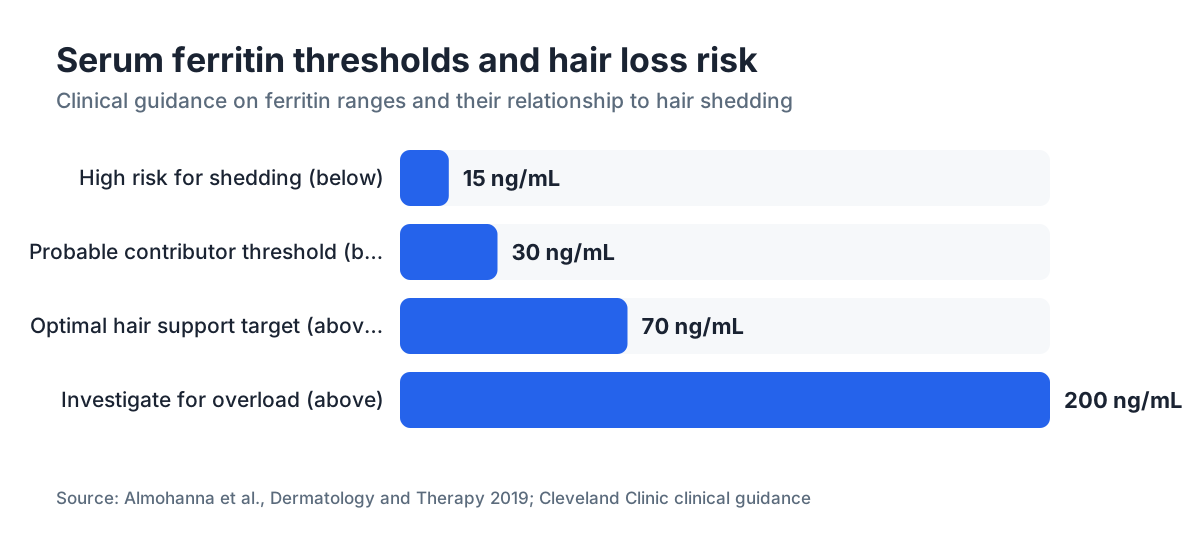
Nobody has a perfectly clean number, but the clinical picture is consistent enough to act on. Most hair specialists treat 30 ng/mL as the working threshold: below it, ferritin becomes a probable contributor to shedding. A 2003 study by Kantor and colleagues in the Journal of Investigative Dermatology found women with telogen effluvium and female pattern hair loss had significantly lower serum ferritin than controls, and flagged ferritin below 10 to 15 ng/mL as a clear problem [2].
Many hair clinics aim higher than the bare minimum. Some clinicians, including guidance from Cleveland Clinic, target ferritin above 70 ng/mL for hair follicle support, though that upper number comes from clinical experience more than controlled trials [3].
Here's how ferritin ranges map to hair loss risk under current clinical guidance:
| Ferritin level (ng/mL) | Lab interpretation | Hair loss relevance |
|---|---|---|
| < 10 | Deficient | High risk; tied to significant shedding in multiple studies |
| 10 to 30 | Low-normal | Probable contributor; most hair specialists treat this as suboptimal |
| 30 to 70 | Normal | Borderline adequate; some people still shed in this range |
| > 70 | Replete | Linked to better regrowth outcomes in observational data |
| > 200 | High | Can itself cause hair loss; needs investigation |
Two things to watch. Lab reference ranges vary by lab and by sex, so a ferritin of 12 ng/mL might print as "normal" for a woman with nothing flagged on the page, even though most hair-focused clinicians see that as a problem. And very high ferritin (above 200 ng/mL, especially above 500) can signal inflammation or hemochromatosis and cause hair loss of its own. Supplementing without testing is how people walk into that trap.
What does the research actually show about ferritin and hair shedding?
The clearest link is between ferritin deficiency and telogen effluvium, the shedding pattern where large numbers of hairs shift from the growing phase into the resting phase at once and fall out a few months later [4]. The Kantor 2003 study found lower ferritin in both telogen effluvium and female pattern hair loss groups against controls, though it was cross-sectional, meaning it shows association, not cause [2].
A 2019 review by Almohanna and colleagues in Dermatology and Therapy examined vitamins and minerals in hair loss and found consistent evidence that ferritin deficiency tracks with telogen effluvium and possibly female pattern hair loss, with weaker evidence for androgenetic alopecia overall [5].
For men, the picture is murkier. Male pattern baldness runs on DHT sensitivity in genetically susceptible follicles, and there's no strong evidence that low ferritin causes androgenetic alopecia. But low ferritin can stack extra shedding on top of pattern loss, making the hair look worse than genetics alone would explain. Fix the ferritin and the excess shedding can settle down, even while the pattern loss keeps going.
One honest caveat. There are no large, high-quality randomized trials proving iron supplements reverse hair loss in non-anemic women with low ferritin. The Cochrane Collaboration reviewed the trials and concluded the evidence was insufficient to support or refute iron supplementation for hair loss [6]. That doesn't make the relationship fake. It means these trials are hard to fund and run. The biology is solid and the clinical consensus is real.
Who is most at risk for low ferritin and hair loss?
Women of reproductive age, by a wide margin. Monthly menstrual blood loss plus inadequate dietary iron is the most common cause of low ferritin worldwide. Pregnancy drains stores further, and postpartum hair loss, which shows up commonly 3 to 6 months after delivery, often has a ferritin component riding on top of the hormonal shift [4].
Vegetarians and vegans carry real risk. Plant-based iron (non-heme) absorbs at roughly 2 to 20% efficiency compared to 15 to 35% for heme iron from meat, according to the NIH Office of Dietary Supplements [7]. You can eat iron-rich plant foods every day and still run low if your absorption sits at the bottom of that range.
People with GI conditions like celiac disease, Crohn's, or a history of bariatric surgery often absorb iron poorly no matter what they eat. Frequent blood donors are an easy group to overlook. Endurance athletes can lose iron through foot-strike hemolysis and sweat.
Men rarely have ferritin as the main driver of their hair loss, but it's worth ruling out in any man with unexplained diffuse shedding, especially with dietary restrictions or gut symptoms.
Can you test your ferritin at home, or do you need a doctor?
You need a blood draw. There's no reliable at-home ferritin test as of mid-2025. Finger-prick kits exist, but their accuracy is inconsistent enough that most clinicians won't make treatment decisions off them.
A serum ferritin test is cheap and everywhere. Many primary care doctors will order it if you mention hair shedding. If yours won't, you can order it through direct-to-consumer lab services like LabCorp or Quest without a prescription in most U.S. states.
When the result comes back, look at the actual number, more than whether it's flagged in or out of range. A ferritin of 14 ng/mL sits inside some labs' reference range but is almost certainly too low to support healthy hair cycling. Bring the number itself to your doctor or dermatologist.
A reasonable baseline panel for a hair loss workup also includes a complete blood count, thyroid-stimulating hormone (TSH), vitamin D, and zinc. Thyroid dysfunction and vitamin D deficiency are two other common, fixable causes of diffuse shedding. Treating ferritin while ignoring a TSH of 7 mIU/L gets you nowhere.
How do you raise ferritin without supplementing recklessly?
If a blood test confirms low ferritin, you have two routes: diet and supplements.
Dietary iron comes in two forms. Heme iron from red meat, poultry, and fish absorbs efficiently and is the fastest way to build stores from food. Non-heme iron from legumes, fortified cereals, tofu, and leafy greens absorbs less efficiently but still counts, especially paired with vitamin C, which converts ferric iron into the ferrous form your gut can take up [7].
Iron supplements work, but they come with a real side effect profile. Constipation, nausea, and dark stools are common at standard doses (325 mg ferrous sulfate, which delivers 65 mg elemental iron). Taking iron every other day instead of daily has been shown to improve fractional absorption while cutting GI side effects, because daily dosing spikes hepcidin, a hormone that temporarily blocks gut iron uptake [8]. Enteric-coated tablets ease the stomach but reduce absorption, so many dietitians prefer standard tablets taken with food.
Don't supplement without testing. Iron overload is genuinely dangerous. Hemochromatosis, a genetic condition where iron piles up in organs, affects roughly 1 in 200 to 1 in 400 people of Northern European descent, and unneeded supplementation can speed organ damage [9]. Swallowing iron because you read something online, without confirming your ferritin is actually low, is one of the truly risky things people do to their bodies chasing better hair.
For hair-focused supplements sold as iron-containing hair vitamins, read the label. Many carry doses far below therapeutic, which is probably safe but won't budge a ferritin that's meaningfully depleted.
How long does it take for ferritin restoration to improve hair loss?
Slow. That's the honest answer.
Raising ferritin itself takes weeks to months, depending on how depleted you are and how well you absorb. And even after stores refill, the hair cycle has to catch up. Low-ferritin telogen effluvium means follicles have already flipped into the resting phase. Removing the trigger doesn't send them straight back to growth. You're waiting for each follicle to cycle through on its own clock.
Most dermatologists tell patients to expect 3 to 6 months before shedding meaningfully slows after ferritin is normalized, then another 3 to 6 months before new growth is visible. From correction to a real density improvement, that's often 9 to 12 months [4].
That timeline frustrates people who are shedding now and want an answer today. It's also why tracking helps. Monthly photos in the same lighting, or a pull test count, give you something to measure instead of panicking at the drain after every shower.
If you want a baseline picture of what your hair is doing right now, the free AI scan at MyHairline gives you a starting point for tracking density and hairline changes, which actually matters when you're waiting out a months-long recovery.
Does low ferritin make androgenetic (pattern) hair loss worse?
Probably yes, even though it doesn't cause pattern baldness. Androgenetic alopecia, whether a receding hairline or diffuse crown thinning, runs on dihydrotestosterone (DHT) binding to follicles that are genetically sensitive to it [10]. Ferritin doesn't touch that process.
But pattern loss and nutritional gaps often show up together, and the combination looks worse than either alone. Someone with early androgenetic alopecia and a ferritin of 12 ng/mL may be shedding far more than their genetics would produce on their own. Correct the ferritin and the net shedding rate can drop hard, even while the underlying pattern loss keeps advancing.
This matters for treatment. If someone is deciding whether to start finasteride or minoxidil for men and hasn't had their ferritin checked, they may be treating only the hormonal half of a two-part problem. Finasteride blocks DHT conversion and minoxidil extends the anagen growth phase, but neither one touches iron stores. Fixing ferritin first, or at the same time, gives those drugs a better environment to work in.
For finasteride and minoxidil users who aren't getting the response they expected, low ferritin is one of the first nutritional factors worth checking.
Are there other nutrients that affect hair loss the same way ferritin does?
Yes, several. The ferritin story is real, but it isn't the only one.
Vitamin D deficiency is linked to alopecia areata and telogen effluvium in observational studies. The vitamin D receptor sits in hair follicles, and its signaling seems to affect follicle cycling [5]. Most labs call serum vitamin D above 20 ng/mL normal, though some researchers push for above 30 ng/mL when hair is the concern.
Zinc deficiency causes diffuse shedding. Zinc feeds hair follicle matrix cell division and the androgen receptor pathway. But too much zinc also causes hair loss by blocking copper absorption, so once again: test, don't guess.
Biotin deficiency causes hair loss, but true biotin deficiency is rare in anyone eating a normal diet. The huge biotin supplement market is built largely on a problem most buyers don't have. Worth knowing: biotin at high doses can throw off thyroid and troponin lab tests, which matters if you're taking it and getting bloodwork [11].
Protein deficiency is probably underrated. Hair is basically keratin, a structural protein. Very low-calorie diets or protein intake below roughly 0.8 g/kg of body weight can trigger diffuse shedding months after the restriction starts. It shows up often after bariatric surgery and crash diets. Looking at what causes hair loss across all these factors at once gives you a clearer picture than fixating on any single one.
What should you tell your doctor to get the right tests ordered?
Be specific. Walk in saying "I'm losing hair" and a busy primary care doctor may check your thyroid and call it a day. Say "I'm having diffuse hair shedding and I want a full nutritional panel including serum ferritin, vitamin D, zinc, a complete blood count, and TSH," and you'll get the tests that actually matter.
For ferritin, ask for the numerical result, more than the flag. If your ferritin comes back at 18 ng/mL against a lab range of 12 to 150 ng/mL, it prints as "normal." It isn't, for hair. You want the number.
If your primary care doctor waves off the ferritin connection, ask for a referral to a dermatologist who treats hair loss. Board-certified dermatologists who see these patients regularly know this relationship well. The American Academy of Dermatology's clinical guidelines include a nutritional workup as part of the evaluation for non-scarring hair loss [12].
One more thing to flag: if you're on proton pump inhibitors (like omeprazole), antacids, or certain antibiotics, they can interfere with iron absorption. Your doctor should factor that in when reading your ferritin.
When is low ferritin not the explanation, and what else should you consider?
Low ferritin explains a lot of diffuse shedding. It doesn't explain everything. If your ferritin is above 70 ng/mL, your thyroid is normal, and you're still losing real hair, look elsewhere.
For men with a receding hairline or a thinning crown, androgenetic alopecia driven by DHT is the likeliest answer, and ferritin is probably not the main factor. A DHT blocker like finasteride is the first-line prescription there, not iron.
Alopecia areata is an autoimmune condition that causes patchy loss and won't respond to iron correction. Traction alopecia from tight hairstyles, scalp conditions like seborrheic dermatitis, and certain medications (chemotherapy, anticoagulants, retinoids) all cause hair loss through routes unrelated to ferritin.
Some people research edge cases like does creatine cause hair loss. The DHT connection there is mechanistically plausible, but for most people it's a far smaller factor than the foundations: iron stores, thyroid function, protein intake.
If your ferritin is fine and you're still shedding, the next stop is a dermatologist for a scalp exam, and possibly a scalp biopsy to pin down the type of hair loss. Treatment only works when it's aimed at the right target. Tracking your pattern over time with consistent photos, and using a tool like MyHairline's free AI scan to document changes objectively, is a practical way to gather what a dermatologist will want to see.
Sources
- NIH National Library of Medicine (PubMed): iron and DNA synthesis in rapidly dividing cells
- Kantor J et al., Journal of Investigative Dermatology, 2003, Iron deficiency and hair loss
- Cleveland Clinic Health Library, Ferritin blood test and hair loss guidance
- American Academy of Dermatology, Telogen effluvium (hair shedding) overview
- Almohanna HM et al., Dermatology and Therapy, 2019, Role of vitamins and minerals in hair loss
- Cochrane Database of Systematic Reviews, Iron supplementation for hair loss
- NIH Office of Dietary Supplements, Iron Fact Sheet for Health Professionals
- Stoffel NU et al., Lancet Haematology, 2017, Alternate-day iron supplementation and hepcidin
- NIH National Institute of Diabetes and Digestive and Kidney Diseases, Hemochromatosis
- American Hair Loss Association, Androgenetic Alopecia overview
- U.S. Food and Drug Administration, Safety communication on biotin interference with lab tests
- American Academy of Dermatology, Clinical guidelines for evaluation of non-scarring hair loss