
TL;DR: As of 2025, three drugs are FDA-approved specifically for alopecia areata: baricitinib (Olumiant), ritlecitinib (Litfulo), and deuruxolitinib (Leqselvi). All are JAK inhibitors taken as daily oral pills. In phase 3 trials, 30 to 40% of patients on the top dose recovered near-complete scalp coverage. None are cures. List prices run $20,000 to $25,000 per year without insurance.
What is alopecia areata and why does it need its own treatments?
Alopecia areata is an autoimmune condition where the immune system attacks hair follicles. The follicles go dormant but usually survive intact, which is why regrowth is possible once the immune attack calms down. Hair loss shows up in patches on the scalp. In severe cases the entire scalp (alopecia totalis) or the whole body (alopecia universalis) goes bare.
This matters for treatment because alopecia areata is a different disease from androgenetic alopecia, the common pattern baldness that finasteride and minoxidil address. Pattern baldness involves DHT shrinking follicles over years. Alopecia areata involves immune cells, specifically CD8+ T cells, releasing signals that halt the growth phase. Different problem, different drugs.
Alopecia areata affects about 2% of people globally, roughly 6.8 million Americans at any given time, according to the American Academy of Dermatology [1]. About half of those with mild patchy disease see spontaneous regrowth within a year. The other half, especially people with extensive or long-standing disease, historically had almost nothing proven to offer them. That changed in 2022.
Mild cases are sometimes managed with intralesional corticosteroid injections, topical steroids, or topical minoxidil as supportive care. None of those were ever FDA-approved specifically for alopecia areata, and none work for severe disease. The three JAK inhibitors covered here are the only treatments FDA-approved with that exact indication.
Which drugs are FDA approved for alopecia areata right now?
Three oral JAK (Janus kinase) inhibitors carry FDA approval specifically for severe alopecia areata as of 2025. Here's the comparison:
| Drug | Brand | Approved | Approved for | Mechanism | Trial response rate |
|---|---|---|---|---|---|
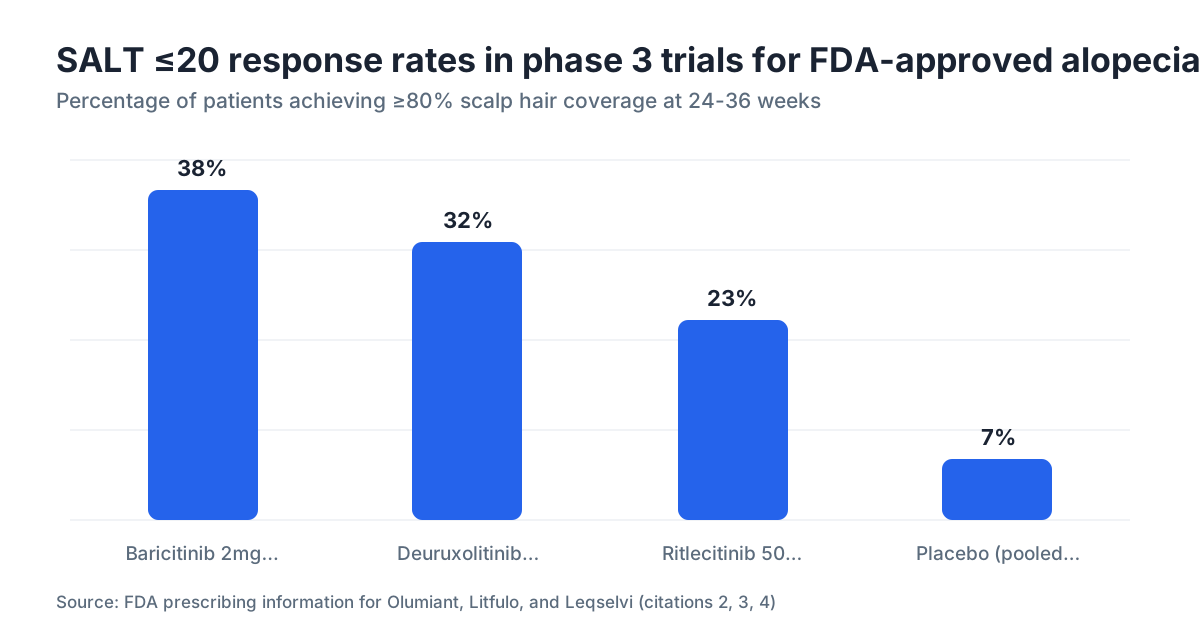
| Baricitinib | Olumiant | June 2022 | Adults with severe AA | JAK1/JAK2 inhibitor | ~38% SALT ≤20 at 2mg; ~35% at 4mg in BRAVE-AA [2] |
| Ritlecitinib | Litfulo | June 2023 | Adults and adolescents ≥12 with severe AA | JAK3/TEC inhibitor | ~23% SALT ≤20 at 50mg (ALLEGRO trial) [3] |
| Deuruxolitinib | Leqselvi | July 2024 | Adults with severe AA | JAK1/JAK2 inhibitor | ~32% SALT ≤20 at 8mg BID (THRIVE-AA trials) [4] |
All three carry an approved indication for severe disease, generally a SALT score of 50 or higher (meaning at least 50% scalp hair loss). SALT stands for Severity of Alopecia Tool, a scoring system where 100 means total scalp hair loss and 0 means none.
Baricitinib (Olumiant) was already on the market for rheumatoid arthritis before it picked up the alopecia areata indication, so there's more long-term real-world safety data on it than on the two newer drugs. Ritlecitinib is the only one approved down to age 12, which matters clinically because alopecia areata often starts in childhood or the teen years. Deuruxolitinib is the newest and the only one dosed twice a day.
None of these are topical or injectable. All three are oral pills taken daily, and you take them continuously. Stop, and hair loss usually returns within a few months.
How do JAK inhibitors work for alopecia areata?
JAK inhibitors block enzymes called Janus kinases. Those enzymes sit inside the signaling pathway that tells immune cells to attack hair follicles. In alopecia areata, follicles lose their "immune privilege," a property that normally hides them from immune surveillance. JAK signaling, mostly through the interferon-gamma pathway, drives the attack.
Block JAK1 or JAK3 and you quiet the cytokine signals that recruit CD8+ T cells to the follicle. With those signals down, the follicle can leave dormancy and re-enter the anagen (growth) phase. That's why regrowth happens even after years of loss in some patients. The follicle was asleep, not dead.
The split between JAK1/2 inhibitors (baricitinib, deuruxolitinib) and JAK3/TEC inhibitors (ritlecitinib) matters somewhat for side effects. JAK3 and TEC are more confined to immune cells, so ritlecitinib may cause slightly less broad immune suppression in theory. Nobody has run a head-to-head trial comparing the three drugs directly, so that stays theory for now.
These are systemic immunosuppressants. They don't only switch off the anti-follicle attack. They lower immune activity across the board. That's where the real risks come from, and I get into those below.
What do the clinical trials actually show?
The phase 3 BRAVE-AA1 and BRAVE-AA2 trials for baricitinib enrolled about 1,200 adults with severe alopecia areata (SALT ≥50). By week 36, roughly 38% of patients on the 2mg dose and a similar share on 4mg reached a SALT score of 20 or less, meaning they recovered at least 80% of scalp coverage [2]. That's a real result for a disease that had zero approved systemic therapy before. The FDA label for Olumiant states efficacy was established in two randomized, double-blind, placebo-controlled trials.
The ALLEGRO phase 2b/3 trial for ritlecitinib tested doses from 10mg to 50mg. The 50mg dose did best: about 23% of patients hit SALT ≤20 at 24 weeks [3]. That's below baricitinib's headline number, but the trial populations and timelines differed, so the comparison is indirect, not head-to-head.
Deuruxolitinib's THRIVE-AA1 and THRIVE-AA2 trials reported about 32% of patients reaching SALT ≤20 at 24 weeks on the 8mg twice-daily dose [4]. The FDA approved it in July 2024.
A few honest caveats. Trial patients tend to be healthier and more consistent than real-world patients. Response tracks with disease duration: shorter duration, better odds. And "SALT ≤20" doesn't mean nobody can tell you had alopecia areata. It means substantial coverage came back, not every strand. Roughly 10 to 15% of trial patients reached near-complete coverage (SALT ≤10).
Nobody has solid long-term data past 3 to 4 years yet. Alopecia areata can also improve on its own, which is why placebo response rates (usually 5 to 10% reaching SALT ≤20) are worth keeping in view.
Who qualifies for FDA-approved alopecia areata treatment?
The approvals target adults with severe alopecia areata, generally SALT ≥50. Ritlecitinib extends that down to age 12. Severe is the word that gates everything: someone with two small stable patches won't meet the indication, and most insurers demand documented SALT scores and a dermatologist's assessment.
Past the severity threshold, your doctor screens for contraindications. JAK inhibitors are avoided if you have an active serious infection, a history of certain cancers (lymphoma in particular), significant cardiovascular risk, or you're pregnant or trying to become pregnant. You'll need baseline labs first: a complete blood count, liver function tests, a lipid panel, and screening for latent tuberculosis.
Age sets the practical lanes. Baricitinib is adults only (18+). Ritlecitinib covers 12 and up. Deuruxolitinib is adults only.
Insurance is a mixed bag. Most commercial insurers and many Medicaid plans now cover at least one of the three, but prior authorization is nearly universal. Expect to supply proof of disease severity (photos, SALT score), documentation of inadequate response to at least one other therapy, and sometimes a letter of medical necessity. Manufacturer assistance programs exist for all three and can matter a lot for uninsured patients. Eli Lilly runs one for Olumiant, Pfizer for Litfulo, and Sun Pharma for Leqselvi. Check them if cost is the wall you're hitting.
What are the side effects and safety risks of these drugs?
Because JAK inhibitors suppress immune function, the safety picture is more serious than anything you'd see with a topical hair treatment. The FDA requires a boxed warning, its strongest, on all three drugs. The warning covers serious infections, cancer, major cardiovascular events, and blood clots [2].
The boxed warning language on the baricitinib label reads: "Serious infections leading to hospitalization or death, including tuberculosis, have occurred in patients receiving OLUMIANT" [2]. That isn't hypothetical. It's documented across broader JAK inhibitor use in rheumatoid arthritis populations.
In the alopecia areata trials themselves, serious adverse events were uncommon but real. The most common side effects across the three drugs were upper respiratory infections, headache, acne (especially with baricitinib), urinary tract infections, and higher lipid levels. Infections serious enough to stop the drug happened in roughly 1 to 2% of trial participants.
The cardiovascular and cancer risk is drawn partly from older JAK inhibitor studies in rheumatoid arthritis patients, who skew older and carry more baseline heart risk than the typical alopecia areata patient. Whether the risk is lower in younger, otherwise healthy alopecia areata patients is an open research question. The honest answer is nobody fully knows yet.
Shingles (herpes zoster) reactivation is a specific risk worth naming. The FDA recommends patients be up to date on vaccines before starting, and Shingrix is recommended for eligible patients.
You'll get regular blood tests (CBC, lipids, liver enzymes) every few months on these drugs. That monitoring isn't optional. It's standard.
How much do FDA-approved alopecia areata treatments cost?
List prices are high. Baricitinib (Olumiant) for alopecia areata runs about $20,000 to $25,000 per year at retail [5]. Ritlecitinib (Litfulo) sits in the same band, roughly $22,000 a year at list price. Deuruxolitinib (Leqselvi) launched at a similar tier.
With insurance, your out-of-pocket cost rides entirely on your plan's specialty drug tier. Plenty of patients land at $0 to $50 a month with good commercial coverage plus a manufacturer copay card. Without insurance, these drugs are out of reach for most people unless an assistance program steps in.
Medicare Part D is more complicated because federal law restricts certain manufacturer copay assistance for Medicare beneficiaries. The Part D out-of-pocket cap has improved that math under recent legislation.
For scale: a hair transplant for extensive alopecia areata, which is generally not recommended for active autoimmune disease, costs $5,000 to $15,000 as a one-time procedure and does nothing about the underlying immune attack. Learn more about hair transplant options. JAK inhibitors need continuous use, so the cost is annual and ongoing, not one and done.
How is alopecia areata different from other types of hair loss, and does that change treatment?
Yes, completely. This is probably the single most useful thing to understand before you spend a dollar on hair loss treatment.
Androgenetic alopecia (male and female pattern hair loss) comes from DHT slowly miniaturizing genetically susceptible follicles over years. Treatments like finasteride (a DHT blocker) and minoxidil go after that pathway. They do nothing for alopecia areata, because alopecia areata has nothing to do with DHT.
Telogen effluvium is a stress or nutritional trigger that pushes follicles into a resting phase. It usually resolves once the trigger clears. Different mechanism again.
Alopecia areata is autoimmune. Handing an alopecia areata patient finasteride is like handing them a blood pressure pill for a broken arm. It's not a little off. It's the wrong target entirely.
Doctors sometimes add topical minoxidil alongside JAK inhibitors for alopecia areata, not to treat the autoimmune cause but to help regrowth once the attack is under control. That use is off-label. Some patients with mild patchy disease also get intralesional corticosteroid injections every 4 to 6 weeks, which work well for limited patches but don't scale to widespread loss.
If you're not sure which type of hair loss you have, get a diagnosis before you spend money on treatment. A dermatologist or trichologist can often tell from clinical exam, dermoscopy, or a scalp biopsy. For a preliminary read on your pattern, MyHairline's free AI hair scan can help you understand what you're looking at before your appointment.
What about off-label treatments for alopecia areata?
Several treatments get used off-label for alopecia areata, meaning the FDA approved them for other conditions but not this one. They still matter, especially for patients who don't clear the severity threshold for JAK inhibitors or can't afford them.
Contact immunotherapy (diphenylcyclopropenone, or DPCP) is a topical that provokes a controlled allergic reaction on the scalp, which may pull the immune response away from the follicle. Response rates run wide in small studies, roughly 30 to 70% for patchy disease. It's not FDA-approved, needs specialized compounding, requires monthly office visits, and it deliberately irritates your scalp.
Systemic corticosteroids (prednisone, methylprednisolone) can trigger regrowth, but the hair almost always falls out again once you stop, and long-term steroid side effects are serious enough that most dermatologists keep courses short.
Topical JAK inhibitors (ruxolitinib cream, tofacitinib) have been tested in small trials with modest results in limited patchy disease. Ruxolitinib cream (Opzelura) is FDA-approved for vitiligo and atopic dermatitis, not alopecia areata. Some dermatologists reach for it off-label in mild cases.
Anthralin, topical steroids, and topical minoxidil often fill out a supportive routine for mild disease, particularly while you wait to see whether spontaneous remission shows up. None are FDA-approved for alopecia areata, but their safety profiles are gentle enough that using them under monitoring is reasonable.
Will the hair grow back completely, and what happens if you stop the medication?
Complete regrowth happens, but it's the exception in trial data, not the rule. In the BRAVE-AA trials, about 10 to 15% of patients reached SALT ≤10 (essentially complete or near-complete coverage) by week 36. More patients get partial regrowth that still changes how they look and feel.
Disease duration before treatment predicts response. Patients with hair loss under 4 years did better than those with decade-long disease in trial subgroup analyses. Alopecia universalis (complete body hair loss) tends to respond less fully than scalp-only disease.
Stopping is where it gets hard. Alopecia areata is chronic. The JAK inhibitors control it, they don't cure it. In extension studies and real-world reports, most patients who stop see hair loss come back within months. Baricitinib extension data showed patients who discontinued generally relapsed, though a few held their response temporarily [6].
So starting a JAK inhibitor is effectively a decision to take a systemic immunosuppressant indefinitely, or at least for many years. That's a heavy calculation for someone in their 20s. A few dermatologists are testing intermittent dosing or step-down strategies, but there's no standard protocol yet. Be skeptical of anyone promising a fixed course that ends in permanent remission. The evidence doesn't back that claim right now.
Is alopecia areata treatment covered by insurance?
For most people with commercial insurance and documented severe disease, yes, at least one of the three approved drugs is covered. But covered and affordable aren't the same thing.
Prior authorization is almost always required. The insurer usually wants a dermatologist's diagnosis, a SALT score of 50 or higher, photos or records, and often documentation of prior treatment failure (though for alopecia areata, there aren't many evidence-based prior therapies to fail first). The process runs 2 to 6 weeks and can be appealed if denied.
Medicare coverage depends on the plan. Part D covers specialty drugs, but formulary placement sets your cost. The Inflation Reduction Act's $2,000 out-of-pocket cap for Part D, effective 2025, helps, though the mechanics still ride on your specific plan.
Medicaid coverage is state by state. Some states cover JAK inhibitors for alopecia areata outright. Others add steps or route prior authorization through a specialist.
All three manufacturers run patient support programs. Eli Lilly for Olumiant, Pfizer for Litfulo, Sun Pharma for Leqselvi. Each can cut or erase costs for commercially insured patients who qualify, and uninsured patients can apply for free drug through the patient assistance side.
A dermatologist's office or specialty pharmacy will usually help you work the prior authorization. Ask the prescriber which of the three approved drugs their practice has had the easiest time getting covered by your specific insurer, since formulary preferences move around.
Are there any new alopecia areata treatments in the pipeline?
The pipeline is busy now, after decades of almost nothing. Several more JAK inhibitors and related biologics are in phase 2 and phase 3 trials as of 2025.
Abrocitinib, already FDA-approved for atopic dermatitis (Cibinqo, Pfizer), is in trials for alopecia areata. So is upadacitinib (Rinvoq, AbbVie), approved for several inflammatory conditions. Both are JAK1-selective.
Beyond JAK inhibitors, IL-13 pathway inhibitors and other biologics are in early trials. The idea is that more targeted immune suppression might hold safety steadier while keeping efficacy.
Topical JAK inhibitor research keeps going too. A topical formulation with good follicle penetration could offer efficacy for moderate disease with fewer systemic risks. Current topical JAK inhibitors show modest results in patchy disease and haven't matched the oral drugs in phase 3.
Researchers are also asking whether combinations (a JAK inhibitor plus an adjunct like topical minoxidil or PRP) push complete-response rates past what either does alone. Those studies are early.
To track what's enrolling, ClinicalTrials.gov lists every active alopecia areata study and is free to search [7]. Enter "alopecia areata" as the condition and filter for "recruiting" to see current options.
Should you consider a hair transplant for alopecia areata?
Generally no, not while the disease is active. Most honest transplant surgeons will tell you this upfront: transplanting follicles into a scalp where the immune system is actively attacking hair is likely to lose those transplanted follicles too. The autoimmune attack doesn't spare donor hair just because it came from another part of your scalp.
There are rare cases where patients with very long-standing, fully stable alopecia areata totalis, in documented remission for several years, have had transplants with reasonable outcomes in small case series. Those are exceptions reported in small retrospective studies, not the norm.
If you're weighing a hair transplant and you have alopecia areata, the right order is: get the autoimmune disease into stable remission first, hold that stability for at least 1 to 2 years, then talk to a surgeon who has specific experience with autoimmune hair loss. Any surgeon who eagerly books an alopecia areata patient without walking through this is a surgeon to walk away from.
For most alopecia areata patients, the approved JAK inhibitors are the better route to hair recovery than surgery.
Sources
- American Academy of Dermatology, Alopecia Areata overview
- FDA, Olumiant (baricitinib) Prescribing Information (accessed via Drugs@FDA), BRAVE-AA trial data and boxed warning
- FDA, Litfulo (ritlecitinib) Prescribing Information (accessed via Drugs@FDA), ALLEGRO trial results
- FDA, Leqselvi (deuruxolitinib) Prescribing Information (accessed via Drugs@FDA), THRIVE-AA trial results
- FDA Drug Approvals and Databases
- Journal of the American Academy of Dermatology, baricitinib long-term extension data
- ClinicalTrials.gov, alopecia areata studies registry
- National Alopecia Areata Foundation, disease overview
- National Institute of Arthritis and Musculoskeletal and Skin Diseases, alopecia areata overview
- American Academy of Dermatology