TL;DR: Finasteride 5 mg is FDA-approved to treat benign prostatic hyperplasia (BPH). Doctors also prescribe it off-label for androgenetic alopecia, usually split or cut to approximate the 1 mg hair-loss dose. It blocks the enzyme 5-alpha reductase, cutting DHT production by roughly 70%, which shrinks the prostate and slows hormone-driven hair loss in both men and some women.
What is finasteride 5 mg and what is it approved for?
Finasteride 5 mg is an oral prescription drug sold under the brand name Proscar, among generics. The FDA approved it in 1992 specifically to treat benign prostatic hyperplasia, the non-cancerous prostate enlargement that makes urination difficult for millions of men over 50 [1].
There is also a 1 mg formulation, brand name Propecia, approved in 1997 for androgenetic alopecia in men [2]. Same molecule, different dose, different labeled indication. That distinction matters because if your doctor hands you a Proscar prescription to treat hair loss, you are getting the drug off-label, which is legal and common but means you are responsible for understanding the dose difference.
The drug belongs to a class called 5-alpha reductase inhibitors. It works on one enzyme (5-alpha reductase type II) that converts testosterone into dihydrotestosterone, or DHT. DHT is the androgen that causes prostate tissue to grow and that miniaturizes hair follicles in people with androgenetic alopecia. Block the enzyme, lower the DHT, and both problems slow down.
For more background on how DHT drives hair loss, see our full guide on dht blocker.
How does finasteride 5 mg actually work in the body?
After you swallow a tablet, finasteride is absorbed from the gut, reaches peak blood levels in roughly one to two hours, and binds to 5-alpha reductase type II in the prostate, liver, skin, and hair follicles [1]. It does not bind to androgen receptors directly. It simply removes DHT from the equation by cutting off its production at the enzyme step.
In clinical trials for BPH, finasteride 5 mg reduced serum DHT levels by about 70% within 24 hours [1]. For the prostate, that drop in DHT causes the gland to shrink by roughly 20 to 30% over six to twelve months, which improves urine flow and lowers the risk of acute urinary retention.
For hair follicles, the mechanism is identical. DHT binds to receptors in genetically sensitive follicles and shortens the anagen (growth) phase until the follicle miniaturizes and stops producing visible hair. Lowering DHT by 70% slows that process a lot. The 1 mg dose achieves a similar percentage reduction in scalp DHT, which is why some doctors consider cutting 5 mg tablets into quarters or fifths a cheap strategy, though tablet uniformity is never guaranteed when you cut pills.
Finasteride does not cure androgenetic alopecia. It slows or stops progression while you keep taking it. Stop taking it, and DHT rebounds within weeks. Hair loss typically resumes within six to twelve months [2].
To understand what drives hair loss in the first place, see what causes hair loss.
Can finasteride 5 mg be used to treat hair loss?
Yes, but it is off-label at 5 mg, and it is a dose five times higher than the labeled hair-loss dose. The FDA-approved hair-loss dose is 1 mg per day (Propecia) [2]. Proscar 5 mg is approved only for BPH.
That said, plenty of dermatologists and urologists prescribe finasteride 5 mg for hair loss, often telling patients to cut the tablet. The reasoning is money. A Proscar 5 mg generic tablet frequently costs less than a Propecia 1 mg generic tablet per milligram of active drug, sometimes by 60 to 80%, depending on pharmacy and country. A 30-count bottle of generic finasteride 5 mg can cost under $15 at many US pharmacies with discount cards, versus $30 to $60 for 30 tablets of generic finasteride 1 mg [3].
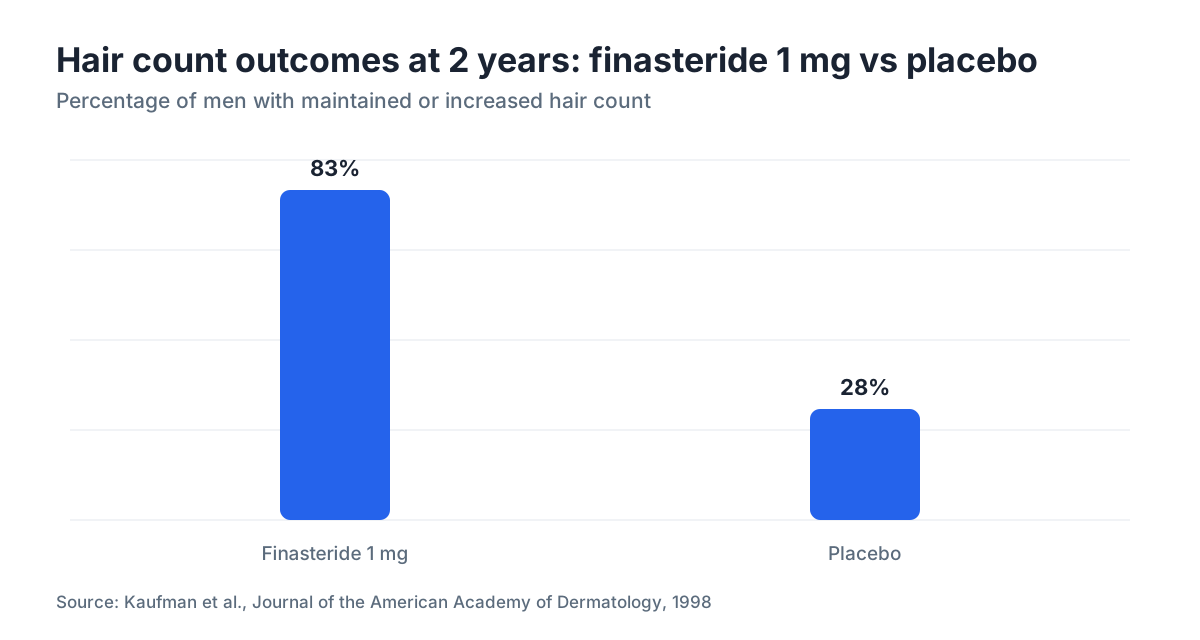
The clinical evidence for finasteride at 1 mg is strong. A two-year randomized controlled trial published in the Journal of the American Academy of Dermatology found that 83% of men taking finasteride 1 mg maintained or increased hair count, compared with 28% in the placebo group [4]. Studies using the 5 mg dose for hair loss are fewer, but the pharmacology and the DHT suppression data suggest similar efficacy at the cost of a modestly higher side-effect exposure.
For women, finasteride 5 mg is used off-label for female pattern hair loss and for hirsutism (excess facial or body hair) in women who cannot become pregnant, because the drug causes genital birth defects in male fetuses [1]. Pregnant women should not handle crushed or broken finasteride tablets.
For a fuller look at how finasteride compares to other treatments in a combined regimen, see finasteride and minoxidil.
What is the correct dose of finasteride 5 mg for hair loss versus BPH?
For BPH, the labeled dose is one 5 mg tablet once daily, with or without food. Most men see symptom improvement in three to six months, with maximum prostate volume reduction at twelve months or beyond [1].
For androgenetic alopecia in men, the evidence base is built on 1 mg daily. Some doctors prescribe 1.25 mg (a quarter of a 5 mg tablet) as a practical compromise given pill-splitting imprecision, and some prescribe 5 mg daily for hair loss outright, arguing the extra DHT suppression might help severe cases, though head-to-head trial data at that level are thin.
For women with pattern hair loss, doses reported in the literature range from 1 mg to 5 mg daily, with a 2020 review in the Journal of the American Academy of Dermatology noting that doses of 2.5 mg to 5 mg are often used in postmenopausal women where pregnancy risk is absent [5].
One practical point: finasteride is absorbed the same way whether you take it with a meal or not. Consistent daily timing matters more than the exact hour. Missing an occasional dose is not a disaster given the drug's half-life of roughly six hours and its long-lasting enzyme inhibition, but skipping weeks will cut efficacy.
| Indication | Approved dose | Off-label range | Time to effect |
|---|---|---|---|
| BPH (prostate) | 5 mg/day | N/A | 3-6 months for symptoms, 12 months for volume |
| Male androgenetic alopecia | 1 mg/day (Propecia) | 1-5 mg/day | 6-12 months |
| Female pattern hair loss | Not FDA-approved | 1-5 mg/day | 6-12 months |
| Female hirsutism | Not FDA-approved | 2.5-5 mg/day | 3-6 months |
What are the real side effects of finasteride 5 mg?
The FDA label lists sexual side effects as the main concern: decreased libido, erectile dysfunction, and decreased ejaculate volume each occurred in roughly 1 to 4% of men in the main BPH trials, compared to 0.5 to 1.5% in the placebo group [1]. Those numbers are from the 5 mg dose. In the 1 mg hair-loss trials, rates were slightly lower but still present.
A minority of men report that sexual side effects persist after stopping the drug. The FDA added a label update in 2012 acknowledging reports of persistent sexual dysfunction after discontinuation, sometimes called post-finasteride syndrome (PFS) [2]. The scientific literature on PFS is contested. The prevalence is genuinely uncertain. The closest large study, a 2017 paper in PeerJ, estimated persistent symptoms in somewhere between 1 and 5% of users who reported side effects during treatment, but methodological limits make any precise figure unreliable. Anyone considering the drug should know this possibility exists, even if its frequency stays debated.
Breast changes, specifically breast tenderness or gynecomastia, occur in less than 1% of men at 5 mg [1]. Allergic reactions are rare.
Finasteride also lowers PSA (prostate-specific antigen) levels by roughly 50% after six months at the 5 mg dose [1]. If you are screened for prostate cancer while on finasteride, your doctor needs to double your measured PSA to read it accurately. Miss that adjustment and an elevated PSA can look normal, hiding a result that should trigger further investigation.
For context on another commonly combined hair-loss drug and its own risk profile, see minoxidil side effects.
Does finasteride 5 mg affect PSA and prostate cancer risk?
This is one of the most misunderstood corners of finasteride pharmacology. The drug reliably drops PSA by about half at the 5 mg dose [1]. That is not dangerous by itself, but it does change how the number should be read. The Prostate Cancer Prevention Trial (PCPT), an 18,882-man randomized trial published in the New England Journal of Medicine in 2003, found that finasteride 5 mg over seven years reduced the overall prevalence of prostate cancer by 24.8% [6].
That same trial found a higher proportion of high-grade (Gleason 7-10) tumors in the finasteride group compared to placebo: 6.4% vs 5.1%. Later analyses suggested this was likely a detection artifact, because shrinking the prostate improves biopsy sampling sensitivity, making high-grade tumors more detectable rather than more common. The FDA reviewed the issue and in 2011 concluded the data did not support a causal link between finasteride use and high-grade prostate cancer, though the label was updated to mention the finding for transparency [7].
The practical takeaway: men on finasteride 5 mg for BPH should tell every doctor they see that they take it, so PSA results get read correctly. Stopping finasteride two weeks before a PSA test, as some men do, gives a partial rebound that can be even harder to interpret than a stable suppressed value.
How is finasteride 5 mg different from finasteride 1 mg?
Same active ingredient, same mechanism, same half-life. The only difference is the amount per tablet.
For DHT suppression in serum, both doses reach roughly 65 to 70% reduction [1][2]. The dose-response curve for 5-alpha reductase inhibition is steep at low doses and flattens out. You get most of the DHT-lowering effect even at 1 mg, which is why the hair-loss indication uses the lower dose. Going to 5 mg does not double the DHT suppression. It might move you from 68% to 72%, roughly.
Where 5 mg differs meaningfully is in prostate tissue, where higher local concentration may produce greater reduction in prostate volume, which is why BPH treatment requires the full 5 mg dose.
The cost difference is real. Generic finasteride 5 mg (90 tablets) often costs $10 to $30 at US pharmacies with GoodRx or similar discount programs, whereas generic finasteride 1 mg (90 tablets) often costs $25 to $60 for the same supply period [3]. Some people using the 5 mg tablet for hair loss cut it into quarters, paying roughly $0.08 to $0.30 per dose. The tradeoff is pill-splitting inaccuracy. You cannot guarantee a perfect 1.25 mg from a manual cut.
For everything else about finasteride as a category, the main finasteride guide covers the full picture.
Who should not take finasteride 5 mg?
Women who are pregnant or may become pregnant must not take finasteride or handle crushed tablets. The drug causes abnormalities of external male genitalia in male fetuses exposed in utero. This is a Category X contraindication in pregnancy [1].
Children and adolescents should not use it. The drug is studied and labeled only for adults.
Men with liver disease need caution because finasteride is metabolized in the liver. The label does not specify a dose adjustment but notes that exposure rises with impaired liver function.
Anyone with a history of hypersensitivity to finasteride or any component of the tablet should avoid it.
Men worried about prostate cancer detection should discuss the PSA adjustment issue with their urologist before starting.
Finasteride does interact with a few drugs. Strong CYP3A4 inducers like rifampin can lower finasteride exposure modestly, though this rarely requires dose adjustment in practice. Alpha-blockers (tamsulosin, doxazosin) are often combined with finasteride for BPH treatment. That combination is well-studied and generally safe but carries added risk of dizziness and low blood pressure.
If you're trying to work out whether your hair loss is even DHT-driven or something else like telogen effluvium, getting that diagnosis right before starting finasteride matters a lot.
How long does it take for finasteride 5 mg to show results?
For BPH, most men notice urinary symptom improvement within three to six months. Maximum prostate size reduction typically takes twelve months or more [1].
For hair loss, six months is the earliest you should expect visible change, and twelve months is a more honest timeframe for a real assessment. Some men keep improving at twenty-four months. The JAAD two-year trial showed hair count still climbing through the full study period without plateauing [4].
There is a shedding phase some people hit in the first two to three months. It happens because DHT suppression disrupts the hair cycle timing and pushes follicles into a synchronized reset. It looks alarming but usually resolves. It is not universal and is not a sign the drug is failing.
If you want to document where you are before starting, MyHairline can give you a baseline photo analysis that makes tracking change far easier than memory alone.
For people combining finasteride with topical treatments, see our guide on minoxidil for men for how to build a complete protocol.
Is finasteride 5 mg available over the counter or does it require a prescription?
In the United States, finasteride at any dose requires a prescription [9]. There is no OTC version. The same rule applies in most of Europe, Canada, and Australia.
Some online telehealth platforms prescribe finasteride after a virtual consultation, which is legal and legitimate in most US states. Others run gray markets with no real medical oversight, which carries obvious risks. If you are getting finasteride online, make sure the prescribing physician is licensed in your state and that the pharmacy is verified by the National Association of Boards of Pharmacy (NABP).
Generic finasteride is cheap enough now that the prescription hassle is often the bigger barrier than the drug cost itself. Many telehealth services bundle the consultation and prescription together for $20 to $50 per month including medication.
Countries with different regulatory structures (Mexico, parts of Southeast Asia, India) sometimes sell finasteride OTC at pharmacies. If you travel and buy it abroad, you are taking on the quality-control and customs risk, and you lose the benefit of medical supervision for side-effect monitoring.
For hair loss specifically, a receding hairline in its earlier stages responds better to medical treatment than an advanced one. If you want to know where you stand before starting, our receding hairline guide explains the Norwood staging that doctors use.
What happens if you stop taking finasteride 5 mg?
For BPH: urinary symptoms typically return toward baseline within six to twelve months of stopping. Prostate volume rebounds as DHT recovers. The drug leaves no lasting structural change to the gland.
For hair loss: DHT rebounds quickly, usually within weeks of the last dose. Hair loss resumes at roughly the rate it would have progressed without treatment. Most men who stop see noticeable thinning within six to twelve months. Any hair regrown while on finasteride typically sheds over that same window.
There is no taper required. You can stop abruptly without physiological harm, though the symptom rebound is real. Some men choose to stop during a planned pregnancy attempt with a partner, though the drug clears the system within a week or two and does not cause infertility.
The only ongoing benefit from finasteride exists while you are taking it. That is not unique to this drug, but it is worth stating plainly: stopping is a conscious choice to let hair loss resume. Some men decide at a certain Norwood stage that hair transplant surgery is a better long-term path. See our guide to hair transplant for an honest look at what that involves and costs.
Can finasteride 5 mg be combined with other hair loss treatments?
Yes, and combination treatment beats either drug alone for most people. The most studied pairing is finasteride plus topical minoxidil. A 2015 randomized trial in Dermatologic Therapy found the combination produced significantly greater hair density increases than either treatment alone over 12 months [8].
The logic holds up mechanistically. Finasteride addresses the root hormonal cause (DHT) while minoxidil acts on follicle blood flow and growth cycle timing. They do not interact pharmacologically in a problematic way.
Oral minoxidil is an emerging option that some dermatologists now prefer for compliance reasons. See oral minoxidil for the current evidence.
Some people also add supplements marketed for hair health: biotin, saw palmetto, zinc. The evidence for most of these is thin. Saw palmetto has mild DHT-inhibiting activity in vitro but no well-powered clinical trial comparing it to finasteride exists. For an honest read on what supplements actually have evidence behind them, see hair loss supplements.
If you have noticed hair loss after starting creatine and wonder if that is making things worse, see does creatine cause hair loss for what the research actually says.
At more advanced stages of loss (Norwood 5 to 7), medical treatment slows further loss but cannot restore areas that have been bald for years. At that point, the honest conversation shifts toward whether the remaining hair is worth protecting medically, whether a transplant makes sense, or both.
If you want a baseline picture of your current hair density and pattern before committing to any treatment, MyHairline's free AI scan can analyze your hairline from photos and give you a starting reference point.
Sources
- FDA Proscar (finasteride 5 mg) prescribing information
- FDA Propecia (finasteride 1 mg) prescribing information
- GoodRx - finasteride pricing
- Kaufman KD et al., Journal of the American Academy of Dermatology, 1998 - Finasteride 1 mg 2-year RCT
- Fertig RM et al., Journal of the American Academy of Dermatology, 2020 - Finasteride in female pattern hair loss
- Thompson IM et al., New England Journal of Medicine, 2003 - Prostate Cancer Prevention Trial (PCPT)
- FDA Drug Safety Communication - 5-alpha reductase inhibitors and prostate cancer
- Hu R et al., Dermatologic Therapy, 2015 - Combination finasteride and minoxidil RCT
- NIH MedlinePlus - Finasteride drug information
- McConnell JD et al., New England Journal of Medicine, 2003 - MTOPS trial