

TL;DR: No natural remedy cures alopecia areata, an autoimmune disease where the immune system attacks hair follicles. Three have small clinical trials behind them: onion juice, an essential oil blend, and garlic gel. The effects are modest and the studies are mostly tiny and unblinded. Dermatologists treat these as add-ons, never as replacements for medical care. Here's what the evidence shows.
What is alopecia areata and why does it matter for treatment choices?
Alopecia areata is an autoimmune disease. The immune system mistakes hair follicles for threats and attacks them, and hair falls out in round or oval patches. It affects roughly 2% of people worldwide at some point in their lives, an estimated 6.8 million people in the United States [1]. Stress, diet, and scalp hygiene don't cause it, though they can shape how bad a flare gets.
The cause is immune-driven, not follicle damage. So most people with alopecia areata still have intact follicles sitting dormant under the scalp. That's why spontaneous regrowth happens in about 50% of mild cases within a year with no treatment at all [2]. It also means anything that genuinely calms the immune attack, or the inflammation around the follicle, has a plausible reason to work.
Why does this matter before you look at a single remedy? The 50% spontaneous recovery rate makes every uncontrolled anecdote worthless. Apply onion juice for three months, watch your hair come back, and you still can't tell whether the onion did anything or your body would have recovered anyway. You need placebo-controlled trials. For natural remedies in alopecia areata, there are almost none.
Not sure whether you have alopecia areata or a different kind of hair loss? Understanding what causes hair loss first is worth your time. Alopecia areata looks nothing like telogen effluvium, androgenetic alopecia, or scarring alopecia, and treatments that work for one do almost nothing for the others.
What does the clinical evidence say about natural remedies for alopecia areata?
The honest answer: limited, mostly small, often uncontrolled. The research on natural remedies for alopecia areata is thin next to the medical treatment literature. That doesn't mean nothing works. It means we don't have enough good data to be confident about much.
The American Academy of Dermatology does not list any natural remedy as a first-line treatment for alopecia areata [3]. Its guidance centers on corticosteroid injections, topical immunotherapy (diphenylcyclopropenone or squaric acid dibutylester), and, since 2022, JAK inhibitors like baricitinib for severe disease [3]. Natural remedies show up only under patient interest or adjunctive use.
The table below covers the remedies with at least one published human trial, and how good that trial is.
| Remedy | Best trial design | Participants | Reported outcome | Evidence quality |
|---|---|---|---|---|
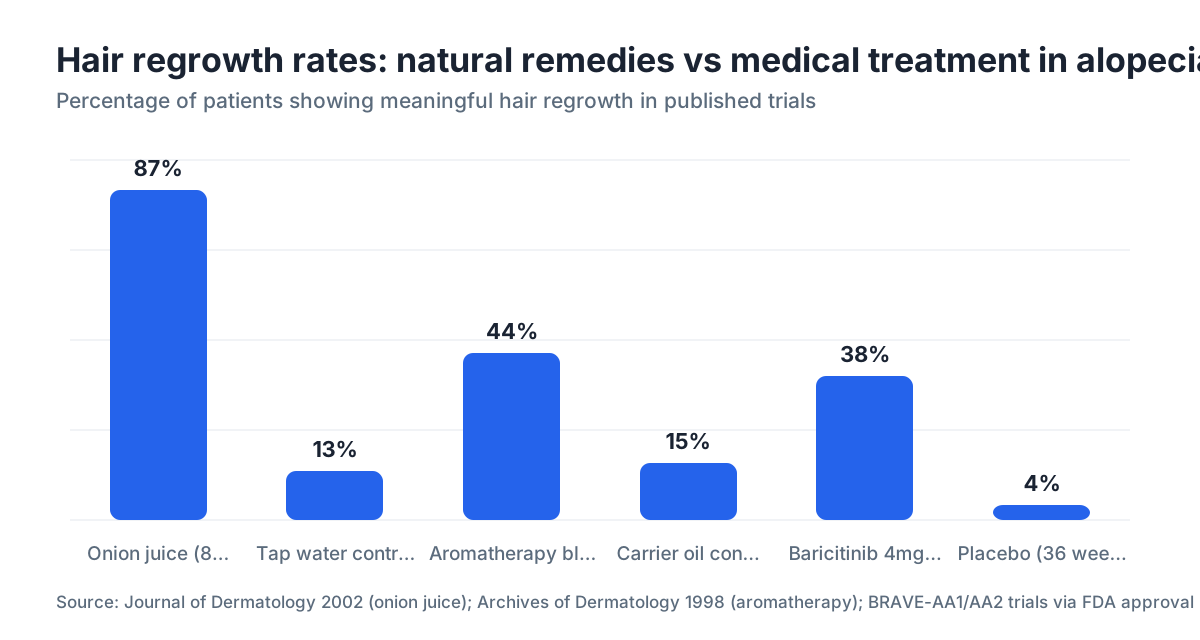
| Onion juice | Randomized, controlled | 38 | 86.9% regrowth vs 13% tap water control | Low (single small study) |
| Garlic gel + betamethasone | RCT adjunct | 40 | Added benefit over steroid alone | Low (small, unblinded) |
| Rosemary oil | RCT vs minoxidil 2% | 100 | Equivalent to minoxidil at 6 months (androgenetic, not AA) | Low, different condition |
| Aromatherapy blend | RCT | 86 | 44% improvement vs 15% placebo | Moderate for complementary use |
| Zinc supplementation | Observational | Variable | Lower serum zinc in AA patients | No intervention RCT in AA |
| Vitamin D | Cross-sectional | Variable | Deficiency common in AA | No intervention RCT in AA |
That rosemary oil trial [4] gets cited everywhere online. It was done in androgenetic alopecia, not alopecia areata. The mechanisms are completely different. Using it as evidence for alopecia areata is a category error, and it shows up constantly in wellness content.
The aromatherapy RCT from Archives of Dermatology in 1998 is one of the better-designed studies here [5]. Eighty-six patients were randomized to nightly scalp massage with a blend of thyme, rosemary, lavender, and cedarwood oils in carrier oils, or carrier oils alone. Investigators scored regrowth at seven months. 44% of the active group improved versus 15% of the control group, a statistically significant gap. The authors concluded that "aromatherapy is a safe and effective treatment for alopecia areata." That's a real quote from a real paper. But the absolute numbers stay modest, and this was a single trial from more than 25 years ago that hasn't been replicated at scale [5].
Does onion juice actually help with alopecia areata?
Onion juice has the most direct evidence of any natural remedy specific to alopecia areata. A randomized controlled trial in the Journal of Dermatology in 2002 assigned 38 patients to apply onion juice or tap water twice daily for two months [6]. By six weeks, 73.9% of the onion juice group showed regrowth. By eight weeks, 86.9%. In the tap water group, only 13.3% regrew.
That sounds dramatic. Hold on before you raid the kitchen.
The trial had 38 people. Tiny. It wasn't blinded, so patients knew what they were applying and the people scoring outcomes may have known too. Patients with alopecia totalis and universalis (complete scalp or body hair loss) were excluded, so this only speaks to patchy disease. And everyone had patchy alopecia areata of less than two years' duration, which already carries a high spontaneous remission rate.
Onion juice is high in quercetin, a flavonoid with anti-inflammatory and antioxidant activity in lab settings. It may improve blood flow and has some antimicrobial properties. None of that directly touches the T-cell attack that drives alopecia areata. So even if the effect is real, it probably isn't hitting the root cause.
My read on onion juice: worth trying if you can stand the smell and the twice-daily routine. It's cheap, safe, and has the best head-to-head data of any natural remedy in alopecia areata specifically. Don't expect a miracle.
What about essential oils and scalp massage for alopecia areata?
The 1998 aromatherapy RCT is the main evidence for essential oils in alopecia areata [5]. The active blend used thyme (2 drops), rosemary (3 drops), lavender (3 drops), and cedarwood (2 drops), mixed into jojoba and grapeseed carrier oils. Patients massaged it in nightly, covered the scalp with a warm towel, and rinsed in the morning. 44% improved versus 15% on carrier oil alone.
Scalp massage on its own may do something apart from the oils. A small Japanese study published in ePlasty in 2016 found that standardized scalp massage over 24 weeks increased hair thickness in healthy men, possibly through mechanical stretching of dermal papilla cells [7]. That study wasn't in alopecia areata, but the idea that better blood flow and less local tension might help has biological plausibility.
Rosemary oil contains rosmarinic acid and ursolic acid, which have anti-inflammatory effects in vitro. The minoxidil-comparison trial people keep citing was real, published in Skinmed in 2015 [4], and again, it was androgenetic alopecia. Minoxidil works by widening blood vessels around follicles, which has nothing to do with suppressing an autoimmune attack. So that comparison tells you nothing useful about rosemary oil in alopecia areata.
Want to try essential oils? Use the 1998 protocol, the one with actual trial data. Stick to the dilution ratios they tested. Putting undiluted essential oil straight on skin risks irritation and hasn't been shown to work better.
Do nutritional deficiencies make alopecia areata worse?
This is where the science gets genuinely interesting, even without intervention-trial proof.
Vitamin D deficiency comes up again and again in alopecia areata research. Multiple cross-sectional studies find lower serum 25-hydroxyvitamin D in patients than in controls, and a 2014 meta-analysis plus several individual studies show the same association [8]. Vitamin D receptors sit in hair follicles, and vitamin D has immune-modulating effects, so the link isn't far-fetched. Association isn't causation, though, and no large randomized trial shows that fixing a deficiency improves alopecia areata. Get your level checked and correct a real deficiency. It's reasonable and low-risk. Don't expect it to reverse patchy disease.
Zinc runs the same way. Multiple observational studies find lower serum zinc in people with alopecia areata, summarized in a 2016 review [9]. Zinc has roles in immune regulation and hair follicle cycling. Still, no intervention RCT has tested zinc alone as a treatment for the disease. If you're deficient, fix it. Supplementing above normal has no good evidence and carries toxicity risk at high doses.
Iron deficiency can cause hair loss too, usually telogen effluvium rather than alopecia areata, but low ferritin can make any hair loss slower to recover from. If you've never had ferritin tested, do it.
For a wider look at which supplements have real hair loss evidence, the guide to hair loss supplements maps the landscape.
Is garlic gel effective for alopecia areata?
Garlic contains allicin, which has anti-inflammatory and antimicrobial properties. A small randomized trial in Dermatology Online Journal found that adding garlic gel to betamethasone valerate cream improved outcomes in alopecia areata compared with the steroid alone [10]. Forty patients, three months, and the garlic gel group scored higher on regrowth.
The catch matches onion juice: small, not well blinded, and the benefit may just reflect better drug penetration or better adherence in the group applying an extra product. Garlic gel alone, without the corticosteroid, was never tested.
In gel form at low concentration, garlic is unlikely to harm you. Raw garlic rubbed onto skin is a different story and can cause chemical burns. If you experiment, use a formulated product or a well-diluted gel, never raw cloves.
What about stress reduction and lifestyle changes?
Alopecia areata is autoimmune, and stress is a known immune modulator. Many patients report that flares follow a stretch of heavy physical or psychological stress. The link between stress and autoimmune disease is real in the literature, though the causality runs in complicated directions, and stress rarely sets off disease in someone without an underlying immune predisposition.
No randomized trial shows that a specific stress reduction protocol prevents or reverses alopecia areata. The indirect case is still strong. Chronically high cortisol impairs immune regulation and pushes the body toward a pro-inflammatory state. Consistent sleep, resistance exercise, and mindfulness-based stress reduction all have documented effects on inflammatory markers.
This isn't empty wellness advice. If you're sleep-deprived and chronically stressed while your immune system is attacking your follicles, removing one driver of systemic inflammation is worth doing whether or not it fixes the alopecia. And you won't know if it helps without trying.
The diet evidence is similarly indirect. A Mediterranean-pattern diet lowers systemic inflammation across several trials. No alopecia-specific dietary trial exists. The fairest thing to say: eating in a way that reduces systemic inflammation does no harm and has a plausible, unproven, benefit for an inflammatory autoimmune disease.
How do natural remedies compare with medical treatments for alopecia areata?
Here's the honest comparison, because plenty of people reading this are choosing between natural options and conventional care.
For mild patchy alopecia areata (one to three patches, under 50% scalp involvement), intralesional corticosteroid injections are the usual first-line medical treatment. Observational series report response rates of 60 to 80% [3]. They need a dermatologist, they hurt, and they don't stop new patches forming elsewhere. But they work far better than anything natural.
For severe alopecia areata (more than 50% scalp loss), or alopecia totalis and universalis, JAK inhibitors are the biggest shift in years. The FDA approved baricitinib (Olumiant) for severe alopecia areata in June 2022, the first systemic drug ever approved specifically for this condition [11]. In the BRAVE-AA1 and BRAVE-AA2 trials, 36 to 40% of patients on the 4mg dose reached a SALT score of 20 or better (80% or more scalp coverage) at 36 weeks, versus 3 to 5% on placebo [11]. Real numbers from real phase 3 trials.
No natural remedy has come close to that effect size in any trial. If your alopecia areata is severe, spreading fast, or has lasted more than a year, the honest advice is short: see a board-certified dermatologist. Natural remedies are fine alongside medical care, and fine to try first for a short window in mild disease. They're not a substitute for treatment when disease is severe.
Most natural remedies here work through anti-inflammatory or blood-flow mechanisms, not immune suppression. The disease is immune-driven. That's the fundamental limit.
Are there any risks or side effects from natural remedies for alopecia areata?
Most natural remedies for alopecia areata are low-risk used correctly. A few specific cautions.
Onion juice can trigger contact dermatitis in sensitive skin. The smell is strong and doesn't rinse out easily. Some people can't stand it. Patch test first.
Essential oils need diluting in carrier oils before they touch skin. Undiluted rosemary, thyme, or cedarwood can cause irritation, burns, or allergic reactions. The 1998 protocol used 2 to 3 drops of each essential oil in about 3ml of carrier oil, which gives you a sense of the right dilution.
Raw garlic on skin is a genuine burn risk. Chemical burns from prolonged raw garlic contact are documented in the literature. Use a formulated gel if you're testing this.
Zinc above the tolerable upper intake level (40mg per day for adults, per the NIH Office of Dietary Supplements) can cause nausea, immune suppression at high doses, and copper deficiency [9]. Don't megadose.
Vitamin D toxicity is possible with very high supplementation (generally above 4,000 IU per day long-term in adults without a deficiency). Test your level before supplementing aggressively.
The biggest risk isn't a direct side effect. It's opportunity cost: delaying effective treatment while a progressive disease keeps advancing. If patches are spreading or merging, don't spend months on onion juice.
When should you see a dermatologist instead of trying natural remedies?
A few clear signals that you need a dermatologist, not a kitchen remedy.
Your patches are spreading fast, or new ones appear while you're watching. Rapid progression can lead to alopecia totalis within weeks or months. Early medical intervention matters.
You've lost more than 25 to 30% of your scalp hair. At that point spontaneous remission gets less likely without treatment, and natural remedies have no meaningful evidence.
Your eyebrows, eyelashes, or beard are affected along with your scalp. This pattern (alopecia universalis when complete) has lower spontaneous remission rates and usually needs systemic treatment.
You've used a topical remedy consistently for three months with no change. Three months is long enough to see early signs of response with most interventions. Nothing happening means escalate.
You're in real psychological distress. Alopecia areata has documented effects on quality of life, anxiety, and depression. That's a medical problem in its own right, more than a cosmetic one.
Still not sure whether your hair loss is alopecia areata, androgenetic alopecia, or something else? An easy first step is tracking how your hairline and part look over time. The free AI hair analysis at MyHairline can help you document your pattern and see whether it reads as patchy alopecia or a receding hairline, before your appointment.
Once a dermatologist confirms alopecia areata and grades severity, you can have an informed talk about where natural add-ons fit your case.
What natural approaches do dermatologists actually accept as reasonable adjuncts?
Most dermatologists treating alopecia areata won't dismiss natural approaches outright. They'll frame them carefully.
Correct any documented nutritional deficiency. Standard advice. Low vitamin D, low ferritin, low zinc all have enough associative evidence that fixing them makes sense regardless.
Scalp massage is low risk with some plausibility behind it. It takes 10 to 20 minutes a day and costs nothing. The 2016 ePlasty study on mechanical stimulation of follicles [7] gives a bit of biological rationale, even though it wasn't done in alopecia areata patients.
The aromatherapy blend from the 1998 RCT [5] is the natural topical with the best evidence for alopecia areata specifically. Several dermatology-adjacent resources list it as a reasonable option for patients who want something low-risk.
Don't smoke. Observational evidence links smoking to more severe alopecia areata, with a plausible mechanism through oxidative stress and reduced blood flow to follicles.
The one thing dermatologists push back on hard is using natural remedies as an excuse to skip treatment in severe or fast-moving disease. That's where the opportunity cost argument bites hardest.
For how topical treatments work in hair loss more broadly, the article on minoxidil for men explains the blood-flow mechanism clearly, even though minoxidil isn't approved for alopecia areata.
Can minoxidil help with alopecia areata?
Minoxidil deserves a mention because many people trying natural remedies eventually settle on it as a middle ground. It's over the counter, well-studied, and much cheaper than prescription treatments.
Minoxidil is not FDA-approved for alopecia areata. It's approved for androgenetic alopecia, pattern hair loss [12]. Dermatologists do sometimes use it off-label for alopecia areata as an add-on, to help push regrowth once the immune attack is suppressed. It won't stop the attack on its own.
Small observational studies and case series suggest minoxidil may help some alopecia areata patients when paired with corticosteroids or other immune-modulating treatments. As a standalone in active disease, the evidence is weak.
If you're considering it, the minoxidil side effects article covers what to expect honestly, and oral minoxidil explains the lower-dose oral option some dermatologists now use. Neither is a natural remedy, but they sit between kitchen treatments and heavy immunosuppression, which is where a lot of people land.
For completeness: minoxidil and finasteride together are a standard combination for androgenetic alopecia but have no established role in alopecia areata, since the mechanism is entirely different. Finasteride and minoxidil work by blocking DHT and improving follicle blood flow, neither of which touches an autoimmune attack.
Sources
- National Alopecia Areata Foundation, Disease Overview
- American Academy of Dermatology, Alopecia Areata: Diagnosis and Treatment
- American Academy of Dermatology, Clinical Guidelines: Alopecia Areata
- Skinmed Journal, 2015: Rosemary oil vs minoxidil 2% for hair growth
- Archives of Dermatology, 1998: Aromatherapy in the treatment of alopecia areata
- Journal of Dermatology, 2002: Onion juice in alopecia areata
- ePlasty, 2016: Standardized scalp massage results in increased hair thickness
- Dermatology and Therapy, 2017: Vitamin D and alopecia areata
- NIH Office of Dietary Supplements, Zinc Fact Sheet for Health Professionals
- Dermatology Online Journal, 2009: Garlic gel and betamethasone in alopecia areata
- U.S. Food and Drug Administration, FDA approval of Olumiant (baricitinib) for alopecia areata, 2022
- FDA Drug Label: Minoxidil Topical Solution