
TL;DR: Finasteride 5 mg tablets are FDA-approved for benign prostatic hyperplasia (BPH), not hair loss. The approved hair-loss dose is 1 mg daily. Some doctors prescribe 5 mg off-label for hair loss, often cut into quarters, because it's cheaper. Clinical trials show the 5 mg dose produces similar scalp DHT suppression to 1 mg, but side-effect risk may be modestly higher.
What is finasteride 5 mg and what is it actually approved for?
Finasteride is a type II and type III 5-alpha reductase inhibitor. It blocks the enzyme that converts testosterone into dihydrotestosterone (DHT), the androgen most responsible for shrinking hair follicles in genetically susceptible men and for enlarging the prostate in older men. [1]
The 5 mg tablet is sold under the brand name Proscar in the United States and is FDA-approved specifically for benign prostatic hyperplasia (BPH). The FDA approval covers two uses: monotherapy for BPH, and combination therapy alongside doxazosin to reduce the risk of symptom progression. [1]
Finasteride 1 mg, sold as Propecia, is the dose the FDA approved in 1997 for androgenetic alopecia (male pattern hair loss) in men only. [2] That distinction matters. When a doctor prescribes you a finasteride 5 mg tablet for your hairline, they are prescribing it off-label. Off-label prescribing is legal and extremely common in medicine, but it does mean the formal regulatory approval is for a different indication at a different dose.
The drug itself is the same molecule regardless of tablet strength. What differs is how much you take and what condition it's targeting.
Why do some doctors prescribe finasteride 5 mg for hair loss instead of 1 mg?
Straightforward economics. A 30-day supply of generic finasteride 1 mg typically costs $30 to $70 at most US pharmacies without insurance, while a 30-day supply of generic finasteride 5 mg often runs $15 to $35 for the same number of tablets. [3] When a patient cuts each 5 mg tablet into four pieces, they get roughly 1.25 mg per dose and pay somewhere between one-quarter and one-half the price of the 1 mg formulation.
This pill-splitting approach is common enough that many pharmacists will score or advise on it, and many prescribing physicians actively recommend it to lower a patient's cost.
Two caveats are worth knowing. Finasteride tablets are not scored for splitting at every line, so your four pieces will not be perfectly equal in dose every time. The variation is generally considered clinically insignificant given the broad plateau of the dose-response curve (more on that below). Second, Proscar's label carries a warning that women who are or may become pregnant should not handle crushed or broken finasteride tablets because of the risk of fetal harm, specifically feminization of a male fetus. [1] That warning applies to 5 mg tablets being split just as much as it does to intact tablets.
Some dermatologists and hair-loss clinics also prescribe the 5 mg dose intact for hair loss in patients who haven't responded to 1 mg, or for women with androgenetic alopecia, though evidence for the latter is still limited and the drug is not FDA-approved for hair loss in women at any dose.
Does 5 mg finasteride work better for hair loss than 1 mg?
Probably not meaningfully better, and the reason is rooted in pharmacology rather than opinion.
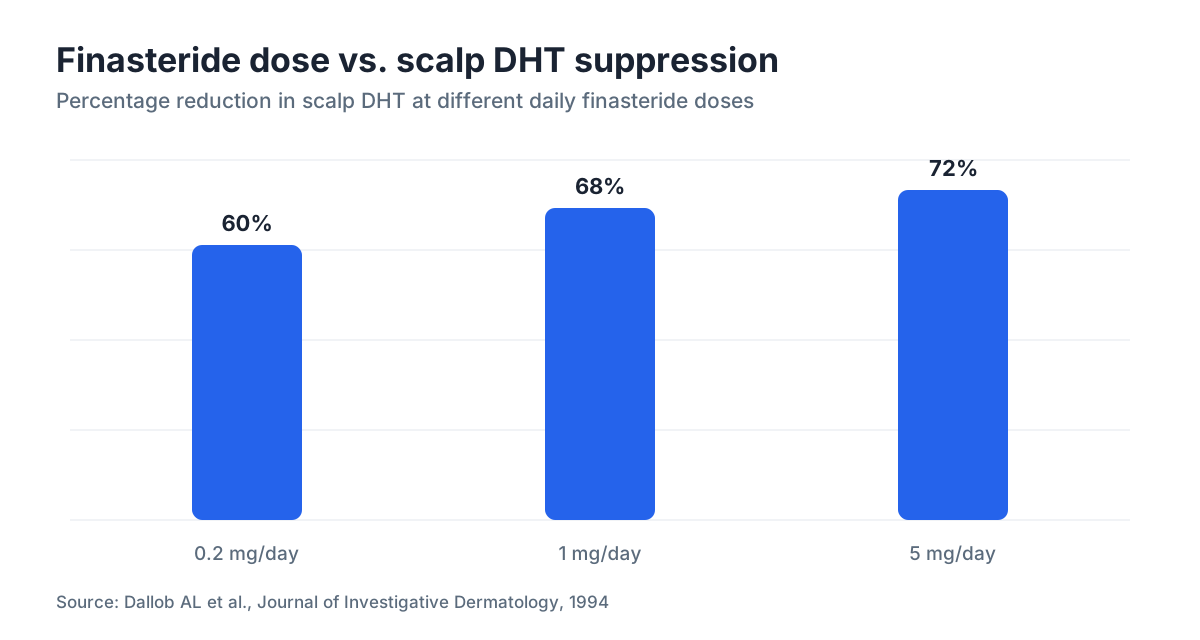
A study published in the Journal of Investigative Dermatology compared scalp DHT suppression across doses. Finasteride 0.2 mg daily reduced scalp DHT by roughly 60%, 1 mg by about 68%, and 5 mg by about 72%. [4] Those numbers show a plateau: quintupling the dose from 1 mg to 5 mg moves scalp DHT by only 4 percentage points.
The registration trials that established finasteride 1 mg as effective for hair loss showed that after two years, roughly 83% of men maintained or increased hair count versus baseline, compared to 28% on placebo. [2] No large randomized controlled trial has replicated that work at the 5 mg dose specifically for androgenetic alopecia, which is part of why the FDA dose stayed at 1 mg.
For most men, the difference between 1 mg and 5 mg in hair retention is unlikely to be clinically detectable. If you're already on 1 mg and it's working, there's little reason to switch upward. If cost is a barrier and your doctor agrees, splitting a 5 mg tablet is a reasonable approach that lands you in a similar therapeutic window.
For a broader look at how finasteride compares to other treatments and what the evidence base actually looks like, that overview is worth reading alongside this one.
How does finasteride 5 mg affect DHT levels?
DHT is the downstream product that matters most in androgenetic alopecia. In the scalp, DHT binds to androgen receptors in follicle dermal papilla cells, triggering miniaturization over successive growth cycles. In the prostate, elevated DHT contributes to tissue overgrowth.
Finasteride at 5 mg daily suppresses serum DHT by approximately 70% compared to baseline, according to the Proscar prescribing information. [1] Scalp tissue DHT is suppressed more, around 60 to 70%, as noted above. [4]
Serum testosterone rises somewhat as a compensatory effect, typically by 10 to 15%, because less testosterone is being converted downstream. [8] That rise is generally not clinically significant for most men but is worth flagging to your doctor if you're monitoring hormone levels.
For a deeper look at how DHT blockers work mechanistically and what distinguishes different drug classes, that article goes further into the receptor-level biology.
One thing the data shows clearly: DHT suppression is necessary but not sufficient for hair regrowth. The follicle also has to keep the biological capacity to respond. Men further along in loss (Norwood 5 and above) have more follicles that are permanently miniaturized, which is why finasteride works better when started earlier.
What are the side effects of finasteride 5 mg?
The side effect profile of finasteride at 5 mg looks similar to 1 mg but may be higher for some sexual adverse effects, given the dose difference.
The Proscar (5 mg) prescribing label lists the following sexual adverse effects from its BPH clinical trials: decreased libido in 6.4% of patients versus 3.4% on placebo; ejaculation disorder in 3.7% versus 1.0%; erectile dysfunction in 8.1% versus 3.7%. [1] These numbers come from a BPH population (typically older men), so they're not a clean read for a 30-year-old taking 5 mg for hair loss.
The 1 mg Propecia label reports sexual adverse effects at somewhat lower absolute rates, likely a combination of the lower dose and a younger trial population.
Post-market experience has produced reports of persistent sexual side effects that continue after stopping finasteride, a syndrome some researchers call post-finasteride syndrome (PFS). The FDA added a label update in 2012 to reflect reports of libido disorders, ejaculation disorders, and orgasm disorders that persisted after discontinuation. [2] The prevalence of persistent symptoms remains genuinely contested; good epidemiological data on long-duration persistence is thin. The honest answer is that nobody has a precise number here, and the closest placebo-controlled data suggests the discontinuation rate due to sexual side effects in trials was around 1 to 2%.
Non-sexual side effects reported with 5 mg include breast tenderness or enlargement (gynecomastia) in a small percentage of users, and the Proscar label notes that finasteride alters PSA values, which matters if you're being screened for prostate cancer. PSA values are roughly halved in men on finasteride 5 mg, so a doctor interpreting PSA results needs to know you're on the drug. [1]
Depression has been raised as a possible association in post-market reports and some observational studies, though causality is not established. If you notice mood changes after starting finasteride at any dose, that's worth discussing with your prescriber rather than waiting out.
Is finasteride 5 mg safe for long-term use?
The BPH clinical program gives the longest safety data. The PLESS study (Proscar Long-term Efficacy and Safety Study) followed men for four years and found no new or unexpected safety signals beyond what appeared in shorter trials. [5]
Prostate cancer risk was a real early concern given that finasteride suppresses DHT, which the prostate depends on. The Prostate Cancer Prevention Trial (PCPT), a large NCI-funded study, found that finasteride 5 mg taken for seven years reduced the overall detection of prostate cancer by 24.8%, but among men who did develop cancer, there was a higher rate of high-grade (Gleason 7 to 10) tumors in the finasteride arm. [6] Later re-analysis suggested the high-grade finding may partly reflect a detection artifact (smaller prostates make needle biopsies more likely to sample tumor tissue), and the FDA has not added a prostate cancer risk warning to the hair-loss dose, but it is listed as a consideration in the Proscar labeling for the BPH indication. [1] [10]
For men using finasteride for hair loss over years, the key practical safety points are simple: tell your doctor you're on it before any PSA testing, and flag any mood or sexual changes early rather than assuming they'll pass.
Long-term cardiovascular and metabolic outcomes have not shown worrying signals in available data, but the average hair-loss patient hasn't been followed for 20-plus years in a randomized trial.
How should finasteride 5 mg tablets be taken?
For BPH, the standard dose is one 5 mg tablet once daily, with or without food. Finasteride is not affected meaningfully by meals. [1]
For men splitting 5 mg tablets to approximate a 1 mg hair-loss dose, the practical approach is to cut the tablet into roughly equal quarters and take one piece daily. A pill cutter (available at any pharmacy for a few dollars) gives cleaner splits than a knife.
Timing matters less with finasteride than with some drugs. Its half-life is around five to six hours, but serum DHT suppression at therapeutic doses is sustained over 24 hours, so you don't need to obsess about a precise daily window. [9]
If you miss a dose, take it when you remember. If it's close to the next day's dose, skip the missed one. Don't double up.
Finasteride tablets should be stored at room temperature, away from moisture. The bathroom cabinet where most people keep medications is actually a poor choice because humidity degrades tablets over time. A bedroom drawer or a kitchen cabinet away from the stove is better.
How long does it take for finasteride to work?
Slow. This is the part people underestimate most.
DHT suppression begins within hours of the first dose, but the hair follicle cycle means you won't see visible results for months. In the finasteride 1 mg clinical trials, statistically significant improvements in hair count were detectable at three months, while cosmetically visible results typically appeared between six and twelve months. [2]
Some men go through a shedding phase in the first one to three months as hairs already in a shortened telogen phase fall out and make way for new growth. This is normal and not a sign the drug is causing harm, but it alarms a lot of patients. If you're shedding heavily and want to understand the mechanism, telogen effluvium explains the hair cycle in more detail.
Peak benefit in the clinical trials showed up at around two years of continuous use. Men who stopped taking finasteride lost most of the hair gains within twelve months, which confirms that the drug manages the condition rather than curing it. [2]
If you've been on finasteride for twelve or more months and see no slowing of loss at all, that's a conversation worth having with a dermatologist. Non-response does happen, and the explanation may involve the degree of androgen sensitivity in your specific follicles or an alternative underlying cause of hair loss.
Can women take finasteride 5 mg for hair loss?
This is a genuinely complicated area, and the short answer is: not without specialist guidance, and never in women who are or might become pregnant.
Finasteride is not FDA-approved for hair loss in women at any dose. The drug is teratogenic, meaning it can cause abnormal development of the external genitalia in male fetuses exposed to it in utero. The FDA pregnancy category was X (risk clearly outweighs any possible benefit), now described under the 2015 labeling update system as contraindicated in pregnancy. [1]
For postmenopausal women with androgenetic alopecia, some dermatologists do prescribe finasteride off-label, typically at 1 mg to 2.5 mg. A handful of small studies have shown modest benefit in this population, but the evidence is weaker than for men and the studies are small. The American Academy of Dermatology's 2017 hair loss guidelines describe finasteride as having evidence for use in postmenopausal women, but note the evidence quality is lower. [7]
The 5 mg dose for women specifically has even less studied support, and the concern about being near a pregnancy (or handling broken tablets) is real. If you're a woman exploring this, the conversation has to happen with a dermatologist who specializes in hair loss, not a general prescription.
For men wondering whether combining finasteride with topical minoxidil improves outcomes, finasteride and minoxidil covers what the combination data actually shows.
How does finasteride 5 mg compare to other hair loss treatments?
Below is a plain comparison of the major options:
| Treatment | FDA-approved for hair loss | Mechanism | Typical monthly cost (US, no insurance) | Evidence strength |
|---|---|---|---|---|
| Finasteride 1 mg | Yes (men) | Oral DHT blocker | $30-$70 | High (2-year RCTs) |
| Finasteride 5 mg split | Off-label | Oral DHT blocker | $15-$35 | Extrapolated from 1 mg data |
| Minoxidil topical 5% | Yes (men and women) | Vasodilator/hair cycle extender | $10-$25 | High |
| Oral minoxidil 2.5-5 mg | Off-label | Same | $10-$30 | Growing; multiple RCTs since 2021 |
| Hair transplant | N/A (surgical) | Redistributes permanent follicles | $4,000-$15,000 (one-time) | High for coverage; doesn't stop ongoing loss |
Finasteride works upstream of the problem by suppressing the androgen signal. Minoxidil for men works downstream by extending the growth phase and improving follicle blood supply. The two mechanisms are different enough that combining them is genuinely additive for many patients.
If you're further along in hair loss and considering surgery, understand that finasteride still matters post-transplant because it slows loss in the native (non-transplanted) hair. A hair transplant addresses coverage but doesn't stop the underlying androgen-driven miniaturization in surrounding follicles.
For men earlier in the process with a receding hairline and no other scalp pathology, finasteride at 1 mg (or a split 5 mg tablet) plus topical minoxidil is what most evidence-based dermatologists would reach for first.
What should you tell your doctor before starting finasteride 5 mg?
A few things matter here beyond the standard medication history.
Tell them about any liver disease. Finasteride is metabolized hepatically, and significantly impaired liver function can affect drug clearance, though there is no specific dose adjustment guideline for mild impairment in the current labeling. [1]
Mention any history of prostate cancer or elevated PSA. Finasteride suppresses PSA values by roughly 50% at the 5 mg dose. [1] The American Urological Association has recommended that PSA values in men on finasteride be doubled when comparing to reference ranges for prostate cancer screening. [11] If your doctor doesn't know you're on the drug, a suppressed PSA could falsely reassure both of you.
Be honest about your mental health history. While causality between finasteride and depression remains unproven, the FDA label does include depression as a listed adverse reaction based on post-market reports. [2] If you have a history of depression or anxiety, you and your doctor should have a clear plan for monitoring and a threshold for stopping if you notice changes.
If you're taking any medications that also affect androgen metabolism or that are CYP3A4 substrates or inducers, that's worth flagging, though finasteride has relatively few serious drug interactions in practice.
Myhairline's free AI scan at /scan can help you understand what stage of hair loss you're dealing with before that doctor's appointment, so you walk in with more context about what you're actually trying to treat.
Is finasteride 5 mg worth it, and who should consider it?
Worth it for whom, doing what, is the real question.
For men with BPH, finasteride 5 mg has a strong evidence base and a clear approved indication. The PLESS trial showed significant symptom improvement and reduced risk of acute urinary retention and surgical intervention over four years. [5] If you have BPH and your urologist recommends Proscar, the risk-benefit calculation is well-established.
For men using finasteride 5 mg split as a cost-saving substitute for 1 mg daily for hair loss, the pharmacological rationale is reasonable and many dermatologists endorse this approach. The trade-off is less precise dosing from imperfect tablet splitting, but the flat dose-response curve in the therapeutic range makes this less consequential than it would be for a drug with a steeper curve.
For men who aren't responding to 1 mg and are considering escalating to 5 mg intact, the evidence that 5 mg is meaningfully better for hair is thin. It might make sense in consultation with a specialist who has other clinical reasons to try the higher dose.
For women, particularly premenopausal women, finasteride is generally not appropriate. Postmenopausal women should only consider it under specialist supervision.
If you're trying to understand what causes hair loss in your specific case before deciding on any medication, that background is worth having, because finasteride addresses androgen-driven loss specifically. Diffuse thinning from iron deficiency, thyroid disease, or other causes won't respond to a DHT blocker.
Sources
- FDA, Proscar (finasteride 5 mg) prescribing information
- FDA, Propecia (finasteride 1 mg) prescribing information
- GoodRx, finasteride price comparison
- Dallob AL et al., Journal of Investigative Dermatology, 1994
- McConnell JD et al. (PLESS Study Group), New England Journal of Medicine, 1998
- Thompson IM et al. (PCPT), New England Journal of Medicine, 2003
- American Academy of Dermatology, Guidelines of care for androgenetic alopecia, 2017
- Merck & Co., Proscar BPH clinical trial safety data (prescribing label)
- van Steensel MAM et al., Journal of the American Academy of Dermatology, finasteride half-life and pharmacokinetics
- NCI, Prostate Cancer Prevention Trial (PCPT) summary
- American Urological Association, PSA testing guidance for men on 5-alpha reductase inhibitors