
TL;DR: Finasteride 5mg is FDA-approved for benign prostatic hyperplasia. For hair loss, doctors often prescribe it off-label, with patients cutting tablets into quarters to approximate the standard 1mg hair loss dose. Both doses block DHT, the hormone that shrinks hair follicles. Hair results take 6-12 months to judge. Sexual side effects affect roughly 3-4% of users.
What is finasteride 5mg and what is it approved for?
Finasteride 5mg is an oral prescription drug approved by the FDA in 1992 under the brand name Proscar for benign prostatic hyperplasia (BPH), the clinical term for an enlarged prostate [1]. A lower-dose version, 1mg under the brand name Propecia, was approved separately in 1997 for androgenetic alopecia, which is male pattern hair loss [2].
The molecule is a 5-alpha reductase inhibitor. It blocks the enzyme that converts testosterone into dihydrotestosterone (DHT), the androgen most responsible for shrinking hair follicles in people with a genetic sensitivity to it. If you want the full mechanism explained, the dht blocker article covers it in detail.
So why does a prostate drug matter to someone worried about their hairline? Two reasons. First, the mechanism is the same at both doses. Second, generic 5mg tablets are often dramatically cheaper than 1mg tablets, so many doctors prescribe 5mg with instructions to split each tablet into roughly four pieces, giving an approximate 1.25mg dose per day. Not perfectly precise, but close enough that most clinicians consider it acceptable.
Finasteride is not a cure. It slows or stops hair loss in most men who respond to it, and some regrowth happens, but it only works while you keep taking it. Stop the drug and DHT rises back to baseline within about two weeks. Hair loss resumes.
How does finasteride 5mg differ from finasteride 1mg?
The active ingredient is identical. The only difference is the amount in each tablet.
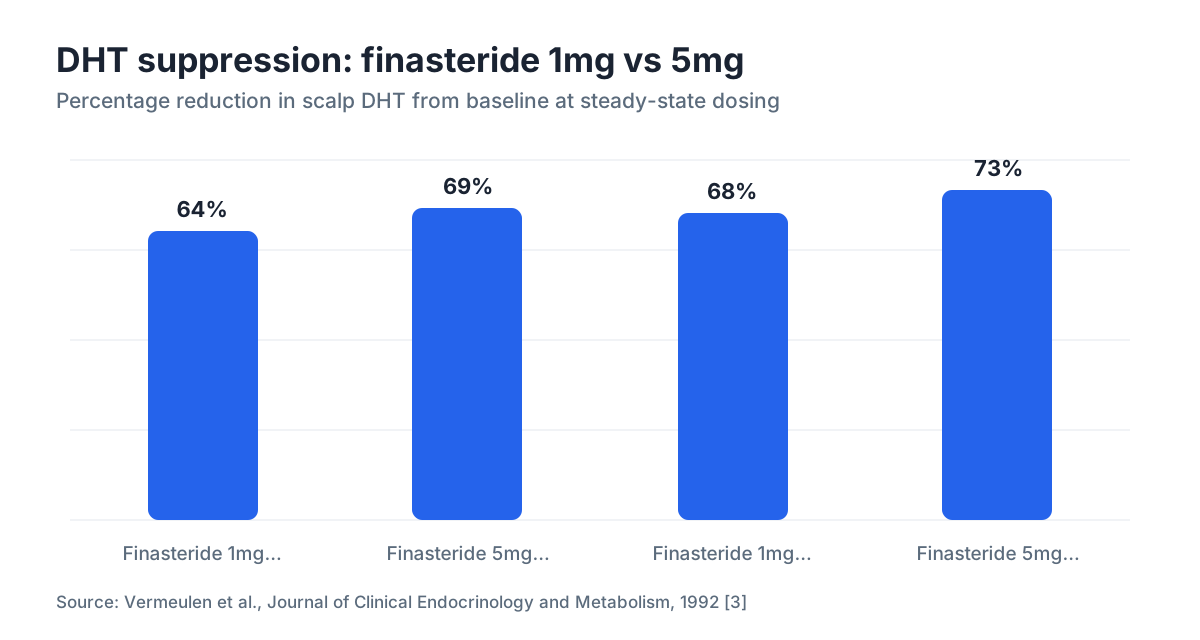
The dose-response relationship is not linear, and that's the thing to understand here. A 1992 study in the Journal of Clinical Endocrinology and Metabolism found that a 1mg daily dose suppressed scalp DHT by about 64%, while a 5mg dose suppressed it by roughly 69% [3]. Five times the drug buys you about 5 extra percentage points of DHT suppression. That's why the FDA approved 1mg for hair loss rather than 5mg. Efficacy plateaus at very low doses, but side-effect exposure scales more with dose.
| Metric | Finasteride 1mg (Propecia/generic) | Finasteride 5mg (Proscar/generic) |
|---|---|---|
| FDA indication | Male pattern hair loss | Benign prostatic hyperplasia |
| FDA approval year | 1997 | 1992 |
| Scalp DHT suppression | ~64% | ~69% |
| Serum DHT suppression | ~65-70% | ~70-75% |
| Typical retail price (30-day) | $15-$80 generic | $10-$40 generic (then split) |
| Tablet splitting common? | No | Yes, for hair loss use |
The practical upshot: if cost is a constraint, 5mg tablets split into quarters are a common, physician-guided workaround. If you'd rather not fuss with a pill splitter, 1mg generics are widely available and cheap enough on their own.
For a broader look at how finasteride fits alongside other options, see the finasteride overview.
Does finasteride 5mg work for hair loss?
Yes, with caveats. The clinical evidence for finasteride at hair-loss doses is strong. The original trials for 1mg finasteride showed that about 83% of men on the drug maintained or increased their hair count over two years, versus 28% on placebo [2]. Data from a five-year open-label extension showed the drug kept working over that period, while the placebo group kept losing hair, so the gap widened over time.
The 5mg dose was studied mainly for BPH, not hair loss, but the DHT suppression numbers are close enough that most dermatologists treat the evidence as transferable, particularly for the off-label split-tablet approach.
The American Academy of Dermatology lists finasteride as a first-line drug for androgenetic alopecia in men [4]. Not many hair loss interventions get that kind of backing from a major dermatology body.
Who responds best? Men with early to moderate hair loss, roughly Norwood stages 2 through 5. Finasteride tends to work better at the crown than the frontal hairline, though some frontal improvement does occur. Men with complete baldness in an area for many years are unlikely to recover those follicles, because the follicles have fully miniaturized. If you're unsure where you fall on the Norwood scale, a receding hairline guide can help you orient.
Women are a separate conversation. Finasteride is not FDA-approved for hair loss in women, and it is absolutely contraindicated in women who are or could become pregnant, because of the risk of feminizing a male fetus [1]. Some physicians do prescribe it off-label for postmenopausal women with androgenetic alopecia, but that's outside the scope of this article.
Results take time. Most men don't see visible improvement until month 6 at the earliest. The standard guidance is 12 months before you decide it isn't working. Quitting at month three is the most common mistake there is.
What are the real side effects of finasteride 5mg?
This is where most people's anxiety lives, and fairly so. Let's go through the actual data rather than forum anecdotes.
The most commonly cited side effects are sexual: lower libido, erectile dysfunction, reduced ejaculate volume. In the original FDA clinical trials for 1mg finasteride, these occurred in about 3.8% of men on the drug versus 2.1% on placebo [2]. A real but modest difference. At 5mg, the original BPH trials reported a similar range, with sexual adverse effects in around 3.7% of users [1].
For most men who get these effects, they resolve when the drug is stopped and often improve even with continued use after the first few months.
Post-finasteride syndrome (PFS) is a more serious concern some men and researchers raise: a cluster of persistent sexual, neurological, and psychological symptoms that allegedly continue after stopping finasteride. The Post-Finasteride Syndrome Foundation argues it's real and underreported. The problem is that good epidemiological data is thin. A 2023 review in JAMA Dermatology acknowledged reports of persistent effects but noted that establishing causality is hard, given the high background rate of sexual dysfunction and depression in men of the relevant ages [5]. Nobody has good data on this. The closest we have are case series and survey data, which can't prove finasteride caused the symptoms.
Other labeled side effects worth knowing:
- Breast tenderness or enlargement (gynecomastia): rare, roughly 0.4% in trials
- Skin rash: uncommon
- Testicular pain: very rare
- PSA (prostate-specific antigen) suppression: finasteride reduces PSA by about 50%, which matters a lot if you're being monitored for prostate cancer [1]. Men on finasteride need to tell their urologist so PSA values get read correctly.
Depression and mood changes appear on the label as post-marketing reports, meaning they came from spontaneous reporting after approval rather than controlled trials. The FDA updated the label in 2012 to include them [1]. The link between finasteride and depression is plausible mechanistically (neurosteroids are affected by 5-alpha reductase activity) but not proven in clinical data.
Bottom line: for most men, finasteride is well tolerated. The documented risk is real but lower than most people fear after reading forums. Forums are selection-bias machines. People with problems post. People without problems don't.
How long does finasteride 5mg take to show results?
Slower than most people want.
DHT suppression starts within 24 hours of the first dose, but hair follicles run on a slow biological clock. Each follicle cycles through growth (anagen), transition (catagen), and rest (telogen) over months. Finasteride has to halt the ongoing miniaturization and let follicles in telogen reenter anagen as thicker hairs.
Most clinical trial protocols used 12 months as the minimum evaluation window, which matches what most dermatologists recommend in practice. In the original Propecia trials, statistically significant gains in hair count showed up at 12 months and kept improving through 24 months [2].
Some men see a shed in the first 1-3 months, where hair falls out faster than before. The mechanism isn't fully settled, but the leading explanation is that finasteride pushes resting follicles back into an active phase, so the old hair sheds before the new growth arrives. It's generally temporary. If you're seeing unexplained shedding, reading about telogen effluvium may help you tell whether it's the drug working or something else.
A reasonable timeline:
- Month 1-3: possibly a shed, no visible regrowth yet
- Month 4-6: loss may stabilize, some early fuzz for responders
- Month 9-12: visible density improvement for men who respond
- Year 2+: gradual improvement, then plateau
If you've hit 12-18 months with no change in rate of loss or density, the honest answer is that you may be a non-responder. Roughly 15-20% of men don't get meaningful benefit, for reasons that likely involve receptor variations but aren't fully mapped out.
How do you get a finasteride 5mg prescription?
Finasteride is not a controlled substance in the United States, so it has no scheduling restrictions, but you still need a prescription to get it legally [9]. Here are the practical ways to get one.
Primary care doctor or dermatologist: the traditional route. A dermatologist is the right specialist for hair loss, and the American Academy of Dermatology is the professional body setting guidance here [4]. A primary care physician can also prescribe it. If you want 5mg tablets to split, ask your doctor directly. Most are familiar with the practice.
Telehealth platforms: a big share of finasteride prescriptions now flow through online services like Keeps, Hims, and Roman. They run physician consultations by video or questionnaire and can send a prescription to a pharmacy or mail the medication to you. The convenience is real, but the depth of the medical review varies, so if you have existing health conditions (especially any prostate history), see a physician in person first.
Generic availability: finasteride 5mg is generic and stocked at major pharmacy chains. GoodRx and similar services often show prices in the $10-$40 range for 30 tablets, which if split gives you roughly 120 days of a 1.25mg dose [6]. The 1mg generic is also reasonably priced but usually costs more per dose than the split-5mg route.
There's no legitimate way to buy finasteride without a prescription in the US. Anyone selling it without one is operating outside the law. Since finasteride interacts with PSA testing and has real contraindications, skipping the medical review is a genuinely bad idea, and not merely a legal technicality.
If you're working out which treatment fits your pattern and severity, a free AI hair scan at MyHairline can give you a clearer picture before you talk to a doctor.
Can you combine finasteride 5mg with minoxidil?
Yes, and the combination beats either drug alone.
Finasteride and minoxidil work through completely different mechanisms. Finasteride cuts DHT, slowing the hormonal signal that miniaturizes follicles. Minoxidil is a vasodilator that appears to extend the anagen (growth) phase and has some direct effect on follicle size. Because the mechanisms don't overlap, they add up rather than compete.
A 2021 randomized controlled trial in the Journal of the American Academy of Dermatology found that oral minoxidil plus finasteride produced significantly greater hair count improvements than either drug alone in men with androgenetic alopecia [7]. The combined effect is real, not theoretical.
The finasteride and minoxidil article goes deep on using both together, including dosing and what to watch for. If you're already researching finasteride, adding topical or oral minoxidil is worth considering, particularly for men with moderate to advanced loss. The minoxidil for men guide is a good companion read.
The combination does add a little monitoring. Oral minoxidil carries its own side effects, most notably fluid retention and extra body hair, so that's a separate risk-benefit call. See oral minoxidil for specifics.
Is finasteride 5mg safe for long-term use?
The longest continuous clinical dataset we have runs about five years, from the extended Proscar trials in BPH patients [1]. In those studies, the side effect profile didn't meaningfully worsen over time, and the drug was generally well tolerated through the trial period.
For hair loss specifically, many dermatologists have patients who've been on 1mg or split-5mg doses for a decade or more without documented harm. The clinical experience is reassuring, even though randomized controlled trial data beyond five years doesn't exist.
The PSA interaction is the most clinically significant long-term concern. Finasteride suppresses PSA by roughly 50%, and PSA is a screening marker for prostate cancer. Any man over 50, or any man with a prostate cancer family history, needs his physicians to know he's on finasteride so they can read PSA results correctly, usually by doubling the measured value for comparison against age-appropriate norms [1]. Fail to account for this and you risk delayed detection of prostate cancer.
One finding from long-term prostate trial data: the Prostate Cancer Prevention Trial found that finasteride reduced the incidence of prostate cancer by about 25% but was tied to a slightly higher rate of high-grade tumors in those who did develop cancer [8]. That finding is still debated, and the FDA added a mention to the label. For most men taking finasteride for hair loss at 1-1.25mg per day, the significance of prostate cancer findings from 5mg BPH trials is probably limited, but it's worth knowing.
Bottom line on long-term safety: reasonable for most healthy men, requires ongoing PSA awareness, and should be discussed with a physician rather than self-managed forever.
What happens if you stop taking finasteride 5mg?
Hair loss resumes. That's the direct answer.
Finasteride doesn't cure anything. It suppresses DHT while you take it. Stop, and DHT returns to pretreatment levels within about one to two weeks. The follicles that had miniaturized then pick up where they left off. Most men who quit after years of use return to roughly where they'd have been had they never started, within about 6-12 months.
This is one of the most important things to understand before you start. Finasteride is an ongoing commitment, not a course with a defined endpoint. If you're 28 and start finasteride, you're potentially looking at taking it into your 50s or 60s to hold the benefit.
That doesn't mean it isn't worth it. But the mental model of "I'll take this for a couple of years" usually doesn't match the biology.
If someone stops because of side effects, those effects typically clear within weeks to a few months. For men who report persistent effects, the picture is murkier, and there's no established medical protocol for managing post-finasteride syndrome, because the syndrome itself is still contested in the literature [5].
For men who want something more permanent than indefinite medication, a hair transplant is the other realistic option, though it doesn't stop future native hair loss, so finasteride often stays relevant even after a transplant.
How does finasteride compare to other hair loss treatments?
Finasteride is one of only two FDA-approved treatments for male pattern hair loss. The other is topical minoxidil. Everything else is either off-label or not FDA-approved.
| Treatment | FDA approved for hair loss | Mechanism | Evidence quality | Monthly cost (approximate) |
|---|---|---|---|---|
| Finasteride 1mg oral | Yes (men) | DHT inhibition | Strong (first-line, AAD) | $15-$40 |
| Minoxidil topical 5% | Yes (men) | Vasodilation, follicle extension | Strong (first-line, AAD) | $10-$25 |
| Oral minoxidil (off-label) | No | Same as topical | Growing RCT evidence | $10-$30 |
| Topical finasteride | No (off-label) | DHT inhibition, lower systemic absorption | Moderate | $40-$80 |
| Dutasteride (off-label) | No | Broader DHT inhibition | Moderate, approved in some countries | $20-$60 |
| Hair transplant | N/A (surgery) | Relocates DHT-resistant follicles | High for right candidates | $4,000-$15,000 one-time |
| Supplements, laser, PRP | No | Varies | Weak to moderate | Varies |
For men worried that finasteride isn't enough alone, the research supports combining it with minoxidil. For men who want to understand other DHT-blocking options, the dht blocker article lays out the full landscape including dutasteride.
Considering supplements? A realistic read of the evidence is at hair loss supplements. The short version: the evidence for most supplements is much thinner than for finasteride.
If you're still early in figuring out what causes hair loss for you specifically, rule out other causes before committing to finasteride long-term. Thyroid issues, iron deficiency, and telogen effluvium from stress can all mimic or speed up androgenetic alopecia, and finasteride won't touch those.
If you take creatine and have wondered about hair loss, there's a separate question worth reading: does creatine cause hair loss.
Want a baseline before you choose a path? MyHairline's free AI hair scan can read your current stage.
What should you know before starting finasteride 5mg?
A few practical things that don't always get mentioned.
Tell your doctor about all other medications. Finasteride is metabolized by the liver enzyme CYP3A4. Drugs that inhibit or induce this enzyme can shift finasteride levels in your blood, though clinically significant interactions are uncommon at hair-loss doses.
Get a baseline PSA if you're over 40. Since finasteride suppresses PSA by about 50%, a value before you start gives your doctor a real comparison point for any future prostate monitoring.
Photograph your hair before you start. Same lighting, same position, same day of the week. This sounds obsessive but it's genuinely useful. It's hard to perceive gradual change over 12 months without a reference point, and plenty of men who quit thinking the drug failed would have seen improvement had they compared photos.
Don't crush or break tablets if you're pregnant or handling them near someone who is. The FDA label warns that women who are pregnant must not handle crushed or broken finasteride tablets because of the risk of absorbing the drug through the skin, which could affect fetal development [1]. Whole tablets are coated and safer to handle.
Expect nothing for months. The single biggest reason men stop early is impatience. Set a 12-month reminder and take a consistent daily dose before you draw any conclusions. Skipping doses, especially in the first year, makes it harder to know whether the drug is working.
Sources
- FDA, Proscar (finasteride 5mg) prescribing information, accessed via Drugs@FDA
- FDA, Propecia (finasteride 1mg) prescribing information, accessed via Drugs@FDA
- Vermeulen et al., Journal of Clinical Endocrinology and Metabolism, 1992
- American Academy of Dermatology, clinical guidelines section
- JAMA Dermatology, 2023 review of post-finasteride syndrome
- GoodRx, finasteride pricing data
- Randolph and Bhatt, JAAD, 2021: low-dose oral minoxidil and finasteride RCT
- Thompson et al., New England Journal of Medicine, Prostate Cancer Prevention Trial, 2003
- NIH MedlinePlus, finasteride drug information
- FDA, Drugs@FDA database, Proscar NDA 020180