

TL;DR: DHT blockers run from prescription finasteride (sexual side effects in roughly 3-8% of men, rare persistent cases) to topical ketoconazole shampoos (minimal systemic risk) and herbal supplements with thin evidence. The side effect profile depends almost entirely on which DHT blocker you mean. This article breaks each one down by the actual trial data.
What is a DHT blocker and why does it matter for side effects?
DHT stands for dihydrotestosterone, a hormone converted from testosterone by an enzyme called 5-alpha-reductase. In genetically susceptible follicles, DHT slowly shrinks hair over years, which is the core mechanism behind androgenetic alopecia. Blocking that conversion, or blocking DHT from binding to follicle receptors, is how most hair-loss drugs work.
Here's the thing to understand before you read any side effect list: "DHT blocker" is not one drug. It's a category. It covers oral prescription medications (finasteride, dutasteride), topical prescription formulas, antifungal shampoos (ketoconazole), and a long list of herbal supplements (saw palmetto, pumpkin seed oil, green tea extract). Their side effect profiles are almost completely different because their systemic absorption is almost completely different.
A pill that lowers serum DHT by 70% [1] is doing something fundamentally different from a shampoo you rinse off in two minutes. Confuse the two and you end up with either unnecessary fear or misplaced confidence. The sections below treat each class on its own. If you want the wider picture of how these drugs fit into hair loss treatment, the dht blocker overview is a good starting point.
What are the side effects of finasteride, the most-studied DHT blocker?
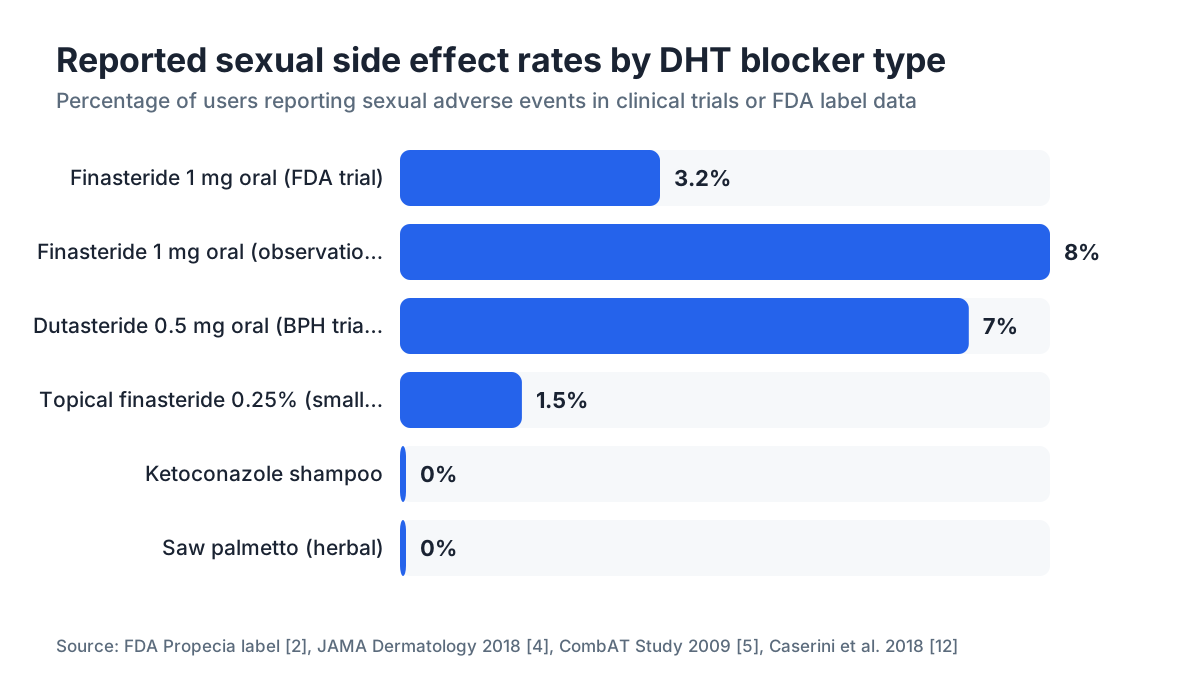
Finasteride 1 mg (Propecia) is the oral DHT blocker with the most clinical data behind it. The FDA-approved label lists these sexual adverse events from the main 1,553-patient trial: decreased libido in 1.8% of the finasteride group vs 1.3% on placebo, erectile dysfunction in 1.3% vs 0.7%, and ejaculation disorder in 1.2% vs 0.7% [2]. Those numbers look modest, but they come from one trial population over a one-year window.
Real-world observational data tends to run higher. A 2011 study in the Journal of Sexual Medicine reported sexual dysfunction in roughly 3.8-8% of long-term finasteride users, with some surveys higher depending on how the questions were asked [3]. The honest answer is that nobody has a single clean number. The range shifts with study design, patient age, how side effects were solicited (spontaneous report vs direct questionnaire), and length of follow-up.
The more serious and contested issue is post-finasteride syndrome (PFS), where some men report persistent sexual, neurological, or psychological symptoms that continue after they stop the drug. The FDA added a label update in 2012 noting that libido disorders, ejaculation disorders, and orgasm disorders continued after discontinuation in some patients [2]. The Post-Finasteride Syndrome Foundation has documented case series, but no large randomized trial has quantified the true prevalence of persistent symptoms. The honest position: PFS appears real in a subset of patients, its prevalence is genuinely unknown, and anyone with a history of depression or anxiety should raise it with a prescriber before starting.
Other finasteride side effects in the label or post-marketing reports include breast tenderness or gynecomastia (rare, under 1%), hypersensitivity reactions like rash and swelling, and testicular pain. A 2018 JAMA Dermatology study found a small but statistically significant association between finasteride use and depression risk, though causality is debated [4].
For a full rundown of how finasteride works and its complete evidence base, see the finasteride article.
How do dutasteride's side effects compare to finasteride?
Dutasteride blocks both type I and type II 5-alpha-reductase. Finasteride only blocks type II. That means dutasteride suppresses serum DHT by roughly 90-95% compared to finasteride's 65-70% [1]. More suppression, more effect in some trials, but a broader side effect footprint and a much longer half-life (roughly 5 weeks vs 5-7 hours for finasteride).
Dutasteride is approved for benign prostatic hyperplasia (BPH), not hair loss, in the United States, though it's prescribed off-label and is approved for androgenetic alopecia in South Korea and Japan. Its sexual side effect rates in BPH trials (at the 0.5 mg dose, the same dose sometimes used off-label for hair) ran around 5-9% for decreased libido and 4-7% for erectile dysfunction in the CombAT study [5].
Because of the long half-life, if you develop a side effect and stop, it doesn't clear your system fast. That's a real clinical consideration finasteride doesn't carry to the same degree.
What are the side effects of DHT blocker shampoos like ketoconazole?
Ketoconazole shampoo (2% prescription, 1% over the counter) is the most evidence-backed topical anti-DHT option. It's an antifungal with anti-androgenic properties at the follicle. A frequently cited 1998 study in Dermatology found ketoconazole 2% shampoo produced hair density improvements comparable to 2% minoxidil over 6 months [6], though this was a small trial that hasn't been replicated at scale.
Shampoo side effects are generally mild and local. The most common are scalp irritation, dryness, oiliness, or a change in hair texture. Allergic contact dermatitis is possible but uncommon. The 2% prescription version occasionally causes hair discoloration or texture changes with repeated use.
Systemic absorption from a rinse-off shampoo is minimal. A scalp left in contact with ketoconazole for the recommended 3-5 minutes and then rinsed absorbs a tiny fraction of what an oral dose delivers. There's no meaningful evidence that ketoconazole shampoo causes sexual side effects, hormonal disruption, or any of the systemic concerns tied to oral finasteride.
Shampoo side effects also depend on inactive ingredients. Some products marketed as DHT-blocking contain saw palmetto, biotin, caffeine, or zinc pyrithione alongside or instead of ketoconazole. Side effects from those formulas come from those ingredients (mostly scalp irritation), not from any systemic DHT blockade. The marketing tends to oversell the mechanism. If a shampoo claims it "blocks DHT" and the active is a botanical extract at an unstated concentration, the clinical evidence for that claim is essentially nonexistent.
What are the DHT blocker side effects on females?
This is where the risk math changes completely. Finasteride is Category X in pregnancy, meaning it causes birth defects in male fetuses exposed during gestation. The FDA label states that finasteride tablets are coated and need not be handled by women who are or may be pregnant, but crushed or broken tablets pose an absorption risk [2]. Women of childbearing potential who do use finasteride (occasionally prescribed off-label for female pattern hair loss) must use reliable contraception.
The data on finasteride for women outside pregnancy is thinner than for men. A randomized trial published in JAMA Dermatology found finasteride 1 mg did not beat placebo in postmenopausal women with androgenetic alopecia [7]. Some studies using higher doses (2.5 mg or 5 mg) in premenopausal women with hyperandrogenism have shown benefit, but these are off-label uses with different risk profiles.
For premenopausal women, the standard approach in the United States is usually spironolactone (an aldosterone antagonist with anti-androgen properties) rather than finasteride, partly because spironolactone doesn't carry the same teratogenic concern and has a longer track record in women. Spironolactone's common side effects include menstrual irregularity, breast tenderness, and the need for potassium monitoring.
DHT blocker side effects on females from shampoos (ketoconazole) match those in men: mostly local irritation. There's no credible evidence that rinsing with ketoconazole shampoo disrupts hormones in women.
Herbal DHT blockers (saw palmetto, pumpkin seed oil) are widely used by women because they're sold without a prescription, but their safety in pregnancy hasn't been studied rigorously. The American Academy of Dermatology (AAD) does not list these as evidence-based treatments for female pattern hair loss [8].
Do natural DHT blockers like saw palmetto have side effects?
Saw palmetto (Serenoa repens) is the most popular herbal DHT blocker, and it does carry some evidence. A small 2002 study in the Journal of Alternative and Complementary Medicine found improvements in hair density [9], though it was a single small trial without strong replication.
Side effect reports for saw palmetto are mostly mild: gastrointestinal upset (nausea, diarrhea, stomach pain), especially when taken without food, headache, and occasional dizziness. Case reports link saw palmetto to bleeding risk through anti-platelet effects, which matters before surgery. A very small number of case reports have tied it to hepatotoxicity or pancreatitis, though causality is hard to pin down in supplement case reports.
Pumpkin seed oil has a single randomized trial behind it. A 2014 study in Evidence-Based Complementary and Alternative Medicine found 400 mg daily produced a 40% increase in hair count vs 10% in the placebo group after 24 weeks in men with androgenetic alopecia [10]. Side effects in that trial were not significantly different from placebo. The mechanism may involve 5-alpha-reductase inhibition, but it's one small trial and it hasn't been independently replicated.
The bigger issue with herbal supplements is regulatory. In the United States, the FDA does not evaluate supplements for safety or efficacy before they reach the market [11]. You're trusting the manufacturer's quality control. Contamination, mislabeling, and dose inaccuracy are real, and FDA analyses have found some hair-loss supplements spiked with unlisted pharmaceutical ingredients.
What side effects do topical DHT blockers cause?
Topical finasteride (typically a 0.25% solution applied to the scalp) is a newer approach built to get drug to the follicle while limiting systemic absorption. A 2018 study in the Journal of the European Academy of Dermatology and Venereology found topical finasteride 0.25% daily produced hair count improvements similar to oral 1 mg, with much lower serum DHT suppression (scalp follicle DHT dropped sharply, serum DHT dropped by roughly 42% vs 68% for oral) [12].
That lower systemic absorption is the whole selling point. Sexual side effects were reported less often in topical trials than oral ones, though none of the existing trials are large enough to rule out PFS risk or to give precise incidence numbers. Topical finasteride is not FDA-approved as a standalone product in the United States as of mid-2025, but compounding pharmacies prepare it and some prescribers favor it for patients worried about systemic exposure.
Scalp-level side effects of topical finasteride include irritation, redness, and sometimes a temporary jump in shedding (the same telogen effluvium-type response seen with minoxidil). If you're seeing unusual shedding after starting any new topical, the telogen effluvium article explains why it happens and what to expect.
How do DHT blocker side effects compare across different types?
The table below sums up the side effect profiles by category, drawn from the studies and FDA label information cited in this article.
| DHT Blocker Type | Common Side Effects | Systemic Risk | Sexual SE Rate (Men) | Evidence Quality |
|---|---|---|---|---|
| Finasteride 1 mg oral | Sexual dysfunction, decreased libido, rare gynecomastia | High (whole-body DHT reduction) | 1.8-8% depending on study | Strong (FDA-approved, large RCTs) |
| Dutasteride 0.5 mg oral | Similar to finasteride, longer duration | High | ~5-9% in BPH trials | Moderate for hair (approved in some countries) |
| Topical finasteride 0.25% | Scalp irritation, temporary shedding | Lower (but not zero) | Lower in small trials, unknown at scale | Emerging |
| Ketoconazole 2% shampoo | Scalp dryness, texture change | Very low (rinse-off) | Not reported | Moderate |
| Saw palmetto (oral) | GI upset, possible bleeding risk | Low-moderate | Not established | Weak |
| Pumpkin seed oil | Minimal reported | Low | None documented | Weak (1 trial) |
| Spironolactone (women) | Menstrual irregularity, breast tenderness, hyperkalemia | Moderate | N/A | Moderate |
If you're comparing finasteride and minoxidil as a combination, those two drugs have distinct side effect profiles that don't simply stack. The finasteride and minoxidil article covers that in detail, and minoxidil side effects is worth reading on its own before you start either drug.
Can DHT blockers cause hair loss or make shedding worse?
Yes, temporarily, and it confuses a lot of people. When you start finasteride or any treatment that shifts follicles from a resting to a growing phase, you may see more shedding in the first 2-4 months. This is not the drug failing. Dormant follicles wake into an active cycle, and old hairs shed before new ones come in.
This initial shed also shows up with topical finasteride and, more famously, with minoxidil. It usually resolves by month 3-4. The problem is that many users read the shed as the drug making things worse and quit exactly when it's starting to work.
If shedding starts after the 6-month mark, or comes with scalp irritation or redness, take it to a dermatologist rather than writing it off as normal transition shedding. Understanding what causes hair loss more broadly helps you figure out whether what you're seeing is treatment-related or a separate process.
Should you be worried about DHT blockers and mental health?
This is a genuinely unsettled area. The concern sharpened in 2018 when a JAMA Dermatology analysis of insurance claims data found that finasteride users had a higher incidence of depression diagnoses than controls [4]. The study was observational and couldn't prove causation, but it added weight to reports from patients and PFS advocates.
The FDA label was updated to include depression as a post-marketing side effect. The hypothesized mechanism involves neuroactive steroids: DHT and its metabolites interact with GABA receptors in the brain, and reducing them systemically could shift mood in susceptible people. This is active research, not settled science.
In practice: if you have a history of depression, anxiety, or mood disorders, raise it with your prescriber before starting finasteride. That doesn't mean you can't use it, but it's relevant clinical information. Some practitioners in that situation prefer topical finasteride to cut systemic exposure, or switch to non-hormonal approaches.
If you're trying to work out whether your hair loss even warrants treatment before worrying about drug side effects, a good first step is understanding your pattern. The free AI hair analysis at MyHairline can help you gauge your Norwood stage and whether androgenetic alopecia is what you're actually dealing with, which changes the whole treatment conversation.
How long do DHT blocker side effects last if you stop?
For finasteride, most sexual side effects resolve within weeks to months of stopping. The FDA label states that libido and ejaculation disorders continued after discontinuation in some users, which is the basis of the PFS discussion. The share of users who get persistent symptoms isn't known with precision. The Post-Finasteride Syndrome Foundation patient registry is the main data source, but it's self-selected and likely skews toward severe cases.
For dutasteride, the long half-life means it takes much longer to clear (roughly 5-6 weeks after stopping to reach half the initial serum level, and several months to clear fully). Side effects that started on dutasteride may linger longer after stopping than they would with finasteride.
Ketoconazole shampoo side effects (scalp irritation, texture change) resolve fast after stopping, usually within days.
Saw palmetto and other supplement side effects typically resolve within days to a couple of weeks, given their short half-lives.
One practical note: stopping finasteride means hair loss will resume. In most patients, whatever hair was kept or regrown is lost again within 12 months of stopping [2]. That's not a side effect of the drug, but it's a real consequence of the decision to stop.
What does the AAD recommend for managing DHT blocker side effects?
The American Academy of Dermatology's clinical guidelines on androgenetic alopecia recommend finasteride 1 mg daily for men as a Level A evidence treatment and note that sexual side effects, while real, affect a minority of users [8]. The AAD doesn't endorse a specific management protocol for finasteride side effects beyond discussing them with a physician.
For women, the AAD guidelines don't list finasteride as a first-line treatment and flag the teratogenic risk prominently [8]. Topical minoxidil is the only FDA-approved topical treatment for female pattern hair loss.
If you're getting side effects on finasteride, the standard dermatology response is to talk through dose reduction (some practitioners try 0.5 mg or 0.25 mg on alternate days, though data on whether that preserves efficacy is limited), switching to topical finasteride, or moving to a different treatment path. A hair transplant involves no hormonal manipulation at all, so it's sometimes the right call for patients who can't tolerate systemic DHT blockers. The hair transplant article covers who's actually a good candidate.
For men who want to avoid all hormonal manipulation, the honest answer is that the non-drug options (PRP, low-level laser therapy, certain supplements) have much weaker evidence but also much lower side effect profiles. The hair loss supplements article lays out that evidence honestly.
Sources
- FDA, Avodart (dutasteride) Prescribing Information
- FDA, Propecia (finasteride 1 mg) Prescribing Information
- Irwig MS, Kolukula S. Persistent sexual side effects of finasteride for male pattern hair loss. Journal of Sexual Medicine. 2011
- Dyson TE et al. Association of Finasteride Use with Depression. JAMA Dermatology. 2018
- Roehrborn CG et al. The effects of dutasteride, tamsulosin, and combination therapy on lower urinary tract symptoms in men (CombAT study). European Urology. 2009
- Pierard-Franchimont C et al. Ketoconazole shampoo: effect of long-term use in androgenic alopecia. Dermatology. 1998
- Price VH et al. Lack of efficacy of finasteride in postmenopausal women with androgenetic alopecia. JAMA Dermatology. 2000
- American Academy of Dermatology, Hair Loss Treatment Guidelines
- Prager N et al. A randomized, double-blind, placebo-controlled trial to determine the effectiveness of botanically derived inhibitors of 5-alpha-reductase in the treatment of androgenetic alopecia. Journal of Alternative and Complementary Medicine. 2002
- Cho YH et al. Effect of pumpkin seed oil on hair growth in men with androgenetic alopecia. Evidence-Based Complementary and Alternative Medicine. 2014
- FDA, Dietary Supplements Overview
- Caserini M et al. Effects of a novel finasteride 0.25% topical solution on scalp and serum dihydrotestosterone in healthy men. Journal of the European Academy of Dermatology and Venereology. 2018