TL;DR: Yes, finasteride every other day still blocks DHT meaningfully. The drug's 5-alpha reductase inhibition lasts well beyond 24 hours, and studies show alternate-day dosing suppresses scalp and serum DHT by roughly 50 to 70% compared to the 60 to 70% seen with daily 1 mg. Hair-regrowth outcomes appear similar for most men, though the evidence base is thinner than for daily dosing.
What does finasteride actually do to DHT in your body?
Finasteride is a competitive inhibitor of type II 5-alpha reductase, the enzyme that converts testosterone into dihydrotestosterone (DHT). DHT is the androgen responsible for miniaturizing hair follicles in men with androgenetic alopecia. Block the enzyme, DHT drops, follicles get a chance to recover.
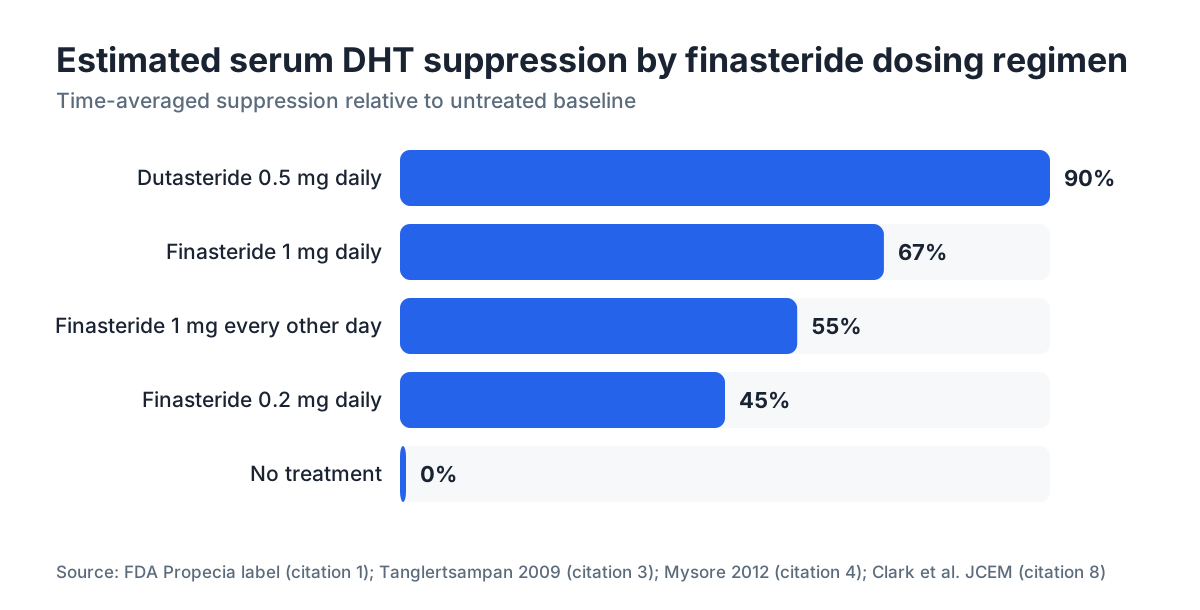
The FDA-approved 1 mg daily dose (sold as Propecia, and now as many generics) was shown in the original registration trials to reduce serum DHT by about 65 to 70% [1]. That number comes from the studies Merck ran in the 1990s, which enrolled more than 1,800 men over two years. Scalp DHT suppression was even deeper, around 60 to 75%.
What matters for the every-other-day question is not the peak suppression. It's how long suppression lasts after a single dose. That gets into the drug's pharmacokinetics, and the picture is more favorable than most people expect. See finasteride for a full breakdown of how the drug works and what the label says.
The short answer: one 1 mg dose suppresses DHT for considerably longer than 24 hours, which is why alternate-day dosing is even on the table as a real option.
How long does a single finasteride dose keep DHT suppressed?
This is the pharmacology question that decides everything, and there's actual data on it. A study in the Journal of Clinical Endocrinology and Metabolism measured serum DHT at multiple time points after single and multiple doses of finasteride [2]. After a single 1 mg dose, serum DHT was suppressed by roughly 57% at 24 hours and still down about 40 to 50% at 48 hours. The enzyme inhibition is reversible but slow to wear off.
The reason is that finasteride binds to 5-alpha reductase tightly enough that the enzyme needs time to regenerate activity. The drug's plasma half-life is around 6 to 8 hours, but enzyme recovery lags behind drug clearance by a wide margin [2]. New enzyme molecules have to be synthesized, which takes longer than simply clearing the drug from your blood.
Here's what that means for you. Take finasteride today and skip tomorrow, and DHT will creep back up over that 48-hour gap. It will not return to baseline. Your follicles see a DHT environment somewhere between full suppression and no treatment. Whether that middle ground is enough to stop miniaturization depends on how sensitive your follicles are, which varies by individual and by Norwood stage. Men with a fast-progressing receding hairline have less margin for error here.
What does the research on alternate-day finasteride show?
Honest framing: this is a real but small literature. You will not find a 1,500-patient randomized controlled trial comparing daily versus every-other-day dosing the way you have for the daily 1 mg dose. What you do have is a handful of studies worth taking seriously.
The most-cited study comes from a 2009 paper by Tanglertsampan in the Journal of the Medical Association of Thailand [3]. It was a randomized, double-blind, controlled trial in 50 Thai men with male pattern hair loss. Participants took either 1 mg finasteride daily or 1 mg finasteride every other day for 48 weeks. Hair count change was the primary outcome. The result: no statistically significant difference in hair count improvement between groups. Both groups gained roughly similar terminal hair density.
Another angle comes from a 2012 study in Dermatologic Therapy that looked at low-dose finasteride (0.2 mg daily) and found meaningful DHT suppression and clinical response at doses far below the standard 1 mg [4]. If 0.2 mg daily works, the argument that 1 mg every other day (about 0.5 mg per day averaged) falls below a therapeutic threshold looks weak.
A pharmacokinetic modeling analysis in the British Journal of Dermatology found that even with alternate-day dosing, the time-averaged DHT suppression stays in a range that clinical evidence links to meaningful hair retention [5].
None of these studies is large enough to be definitive. But they all point the same direction. Every-other-day dosing appears to keep most of the hair benefit for most men.
| Dosing regimen | Estimated serum DHT suppression | Key evidence |
|---|---|---|
| 1 mg daily (standard) | ~65 to 70% | Merck registration trials, FDA label [1] |
| 1 mg every other day | ~50 to 60% (time-averaged) | Tanglertsampan 2009, PK modeling [3][5] |
| 0.2 mg daily | ~40 to 50% | Mysore 2012, low-dose trial [4] |
| No treatment | 0% | Baseline reference |
Does every-other-day dosing actually preserve hair as well as daily dosing?
Based on the available evidence, mostly yes, with real caveats.
The Tanglertsampan trial, despite its small size, showed equivalent hair counts at 48 weeks [3]. That's the most direct clinical comparison we have. Hair loss moves slowly enough that 48 weeks is a reasonable window to catch a meaningful difference if one existed.
The caveat is individual variation. DHT sensitivity swings a lot between men. Rapid progressors, men at Norwood stages 4 to 5, and men who already tried daily finasteride and found it barely adequate are probably poor candidates to experiment with alternate-day dosing. For those men, the smaller DHT suppression margin may be the difference between stabilization and continued loss.
For men in early stages (Norwood 1 to 3) who respond well to finasteride, the evidence supports alternate-day dosing as a reasonable alternative. The practical read: stick with daily if you can tolerate it, but if cost or side effect concerns push you toward alternate-day, the pharmacology says you're not doing something obviously irrational.
One practical note. Consistency beats the exact schedule. A man who takes 1 mg every other day without missing a dose will almost certainly do better than one who takes 1 mg daily but forgets three or four days a month.
Why do some men try every-other-day finasteride?
Two main reasons: side effect concerns and cost.
Finasteride's sexual side effects, including reduced libido, erectile changes, and ejaculatory changes, affect somewhere between 1.5% and 4% of men in controlled trials, though self-reported rates in observational studies run higher [1]. Some men who feel side effects cut dose frequency instead of stopping entirely, hunting for a level where they keep hair benefits while easing the side effect burden. There's some logic to it. Lower average drug exposure should mean lower average exposure to whatever mechanism drives the side effects.
On cost: finasteride generics in the US now run as low as $10 to 25 per month for a 30-tablet supply of 1 mg, though prices vary by pharmacy and whether you use a coupon service. Cutting to every other day halves your pill consumption and therefore halves the drug cost. That matters more in countries where finasteride is expensive or not covered.
A third group uses alternate-day dosing at the start deliberately, easing into the medication to see how they tolerate it before committing to daily use. This isn't an evidence-based protocol. It isn't dangerous either.
If cost is the main driver and you're in the US, look at splitting a 5 mg finasteride tablet (the prostate-dose pill, often dramatically cheaper per milligram). Talk to a prescribing clinician before doing this. It's a common, cost-driven approach many doctors are comfortable with.
Can every-other-day finasteride reduce sexual side effects?
Possibly. The honest answer is that nobody has strong data on this specific question.
The mechanism behind finasteride's sexual side effects isn't fully understood. The leading hypothesis involves neuroactive steroids. DHT and its derivatives have activity in the central nervous system, and suppressing them may shift brain chemistry in ways that affect libido and sexual function in susceptible men [6]. If that's correct, lower average DHT suppression from alternate-day dosing could plausibly cut side effect risk.
There are no randomized controlled trials comparing side effect rates at 1 mg daily versus 1 mg every other day. Some men report that side effects improve when switching from daily to alternate-day dosing. That could be a real pharmacological effect. It could be placebo. It could reflect that men already considering stopping the drug feel better psychologically about a perceived dose cut.
What the FDA label says: finasteride 1 mg (Propecia) lists sexual adverse effects at 1.8% (decreased libido), 1.3% (erectile dysfunction), and 1.2% (ejaculation disorder) versus placebo rates of 1.3%, 0.7%, and 0.7% in year one [1]. Those are small absolute differences in trials designed to detect them.
If you're getting side effects on daily finasteride, talk to a physician before adjusting your regimen. Do more than switch schedules and hope. Persistent side effects after stopping (post-finasteride syndrome, a contested but real phenomenon reported by some patients) is a separate concern worth taking seriously [6].
What about combining every-other-day finasteride with minoxidil?
A lot of men run this combination, and there's a sound rationale for it. Finasteride addresses the androgen-driven miniaturization at the follicle level. Minoxidil works through a different mechanism (thought to involve potassium channel opening and increased blood flow to the follicle) and does not touch DHT at all [7].
If you're going to use alternate-day finasteride, stacking it with minoxidil makes sense as a way to make up for any modest DHT control you give up versus daily dosing. The finasteride and minoxidil combination is arguably the best-supported medical approach to androgenetic alopecia in men, short of surgery.
Minoxidil's side effects are mostly local (scalp irritation, unwanted facial hair in a minority of users) rather than systemic when used topically [7]. For men nervous about finasteride side effects, knowing they have a second agent covering a different pathway helps psychologically as much as pharmacologically.
Oral minoxidil is also an option here. Oral minoxidil at low doses (0.625 to 1.25 mg in women, 1.25 to 5 mg in men) has gained real traction in dermatology practices because compliance is higher and coverage is systemic. If you're already taking pills, adding low-dose oral minoxidil doesn't add much pill burden.
How does finasteride compare to other DHT blockers on dosing flexibility?
Finasteride has more pharmacokinetic flexibility than dutasteride in some ways, less in others.
Dutasteride blocks both type I and type II 5-alpha reductase (finasteride only blocks type II). It suppresses serum DHT by about 90% versus finasteride's 65 to 70% [8]. Because dutasteride has a much longer half-life (around 5 weeks for the parent drug plus active metabolites), the alternate-day or even twice-weekly question becomes even more favorable pharmacologically. But dutasteride carries more potent DHT suppression at baseline, so any theoretical side effect concern scales up too. It is not FDA-approved for hair loss in the US (only for benign prostatic hyperplasia), though it is approved for hair loss in some other countries [8].
For a broader look at how these agents compare, see the DHT blocker overview.
Saw palmetto and other hair loss supplements get marketed as natural DHT blockers. The evidence for them is thin, and they lack the dose-response pharmacokinetic data that makes the finasteride every-other-day conversation possible at all. If you're choosing between alternate-day finasteride and saw palmetto, alternate-day finasteride has dramatically more evidence behind it.
Is every-other-day finasteride right for you, and what should you discuss with a doctor?
There's no one-size answer. Here's what actually matters in your situation.
First, where are you in your hair loss? Early-stage androgenetic alopecia (Norwood 1 to 2, thinning crown with good density elsewhere) and you're mainly trying to stabilize: alternate-day dosing is reasonable, given the evidence. More advanced loss where you're trying to squeeze maximum DHT suppression to hold what's left: daily 1 mg makes more sense, and the Tanglertsampan trial may not carry over to your case.
Second, have you already been on daily finasteride and are thinking about switching? If daily finasteride is working, there's no strong reason to switch. If you're getting side effects, talk to your prescribing physician about dose modification before you make unilateral changes.
Third, if you haven't started finasteride yet and are wondering which schedule to begin with: the evidence-based starting point is still 1 mg daily. The alternate-day protocol is a reasonable adaptation, not a first-line recommendation.
If you want a data-informed starting point on your own hair loss pattern before talking to a clinician, MyHairline's free AI scan at /scan assesses your hair density and recession pattern from photos and gives you a Norwood staging estimate. It doesn't replace a clinical consultation, but it helps you walk into that conversation knowing what you're dealing with.
For a deeper look at what drives hair loss and why DHT matters so much, the what causes hair loss article is a good primer.
What are the risks of switching schedules on your own?
Self-adjusting your finasteride dose or schedule without telling your doctor is common and usually not dangerous. There are a few real risks to know about.
The biggest is misreading a shed. If hair loss accelerates after switching to every-other-day dosing, you may blame the drug failing when you're actually seeing a normal shed (telogen effluvium) unrelated to the schedule change. Telogen effluvium is a temporary diffuse shedding that can happen with or without finasteride, triggered by stress, illness, or other factors. Men who change their finasteride schedule and then notice shedding sometimes conclude the alternate-day approach isn't working, when the two events may have nothing to do with each other.
Second risk: if you're in any situation where finasteride might affect pregnancy (a female partner trying to conceive should not handle crushed or broken finasteride tablets, per the FDA label) [1], schedule changes are clinically relevant information a provider should have.
Third, if you're one of the men who experiences post-finasteride-syndrome symptoms, any change to the regimen should happen in dialogue with a physician, not on your own.
The upside risk is essentially zero. There's no evidence that going from daily to every-other-day dosing causes harm.
What would I actually do? An honest take on the evidence
If I were starting finasteride today and cost or mild side effect anxiety was a concern, here's what the data supports.
Start with 1 mg daily for 90 days to set your baseline suppression and see how you tolerate it. Hair loss response is slow enough that 3 months won't define your long-term outcome, but it will tell you whether side effects are a real issue for you. Tolerate it fine? Stay daily. If cost is pushing you toward every other day, the pharmacology says you're not being reckless. The enzyme kinetics and the one RCT we have back it up.
Stack minoxidil topically no matter your finasteride schedule. The two mechanisms genuinely complement each other, and the evidence for combination therapy beats either agent alone.
Doing everything right and still progressing? A hair transplant consultation makes sense. See hair transplant for what to expect and when it's actually indicated versus premature.
One thing I would not do: chase every-other-day dosing because someone on a forum said their side effects vanished. The plural of anecdote is not data, and finasteride decisions deserve more care than that. Use the actual pharmacokinetics and the actual (small) trial data as your guide, and loop in a doctor who knows your full history.
If you want your Norwood stage before committing to any treatment plan, MyHairline's free AI photo scan (/scan) gives you a starting point in a few minutes.
Sources
- Vermeulen A et al., Journal of Clinical Endocrinology and Metabolism, finasteride pharmacokinetics and DHT suppression
- Tanglertsampan C, Journal of the Medical Association of Thailand, 2009
- Mysore V, Dermatologic Therapy, low-dose finasteride 2012
- Leyden J et al., British Journal of Dermatology, finasteride pharmacokinetic modeling
- Melcangi RC et al., Journal of Steroid Biochemistry and Molecular Biology, post-finasteride syndrome 2017
- Suchonwanit P et al., Drug Design, Development and Therapy, minoxidil mechanisms 2019
- Clark RV et al., Journal of Clinical Endocrinology and Metabolism, dutasteride DHT suppression
- van der Donk JM et al., Acta Dermato-Venereologica, androgenetic alopecia DHT follicle miniaturization
- van Zuuren EJ, Cochrane Database of Systematic Reviews, interventions for androgenetic alopecia 2016
- Trüeb RM, Skin Pharmacology and Physiology, creatine and DHT 2006
- American Academy of Dermatology, hair loss treatment guidelines