TL;DR: Finasteride (1 mg daily) stops hair loss and regrows some hair in most men with male-pattern baldness. In the two-year FDA-approval trials, 66% of men showed measurable regrowth. Results take 6 to 12 months to become visible. Stop the drug and the gains reverse within 12 months.
What does finasteride actually do to your hair?
Finasteride blocks 5-alpha reductase type II, the enzyme that converts testosterone into dihydrotestosterone (DHT). DHT is the hormone that shrinks follicles in genetically susceptible men, eventually stopping them from producing a visible hair shaft. Oral finasteride at 1 mg per day reduces scalp DHT by roughly 60 to 70% [1]. When that hormonal pressure lifts, follicles that were miniaturized but not yet dead can recover some of their original diameter and cycle length.
That's the mechanism in plain language. The follicle doesn't get replaced. It gets rescued, if it still has enough living cells to respond. That matters a lot for reading before-and-after results. A follicle that has been dormant for a year or two has a reasonable chance of recovery. One that has been gone for a decade probably does not. This is why early treatment produces bigger transformations than late treatment, and why most dermatologists tell you to start as soon as you notice thinning rather than waiting to see how bad it gets.
For a deeper look at the hormone itself, see our article on DHT blockers.
What do the clinical trial results actually show?
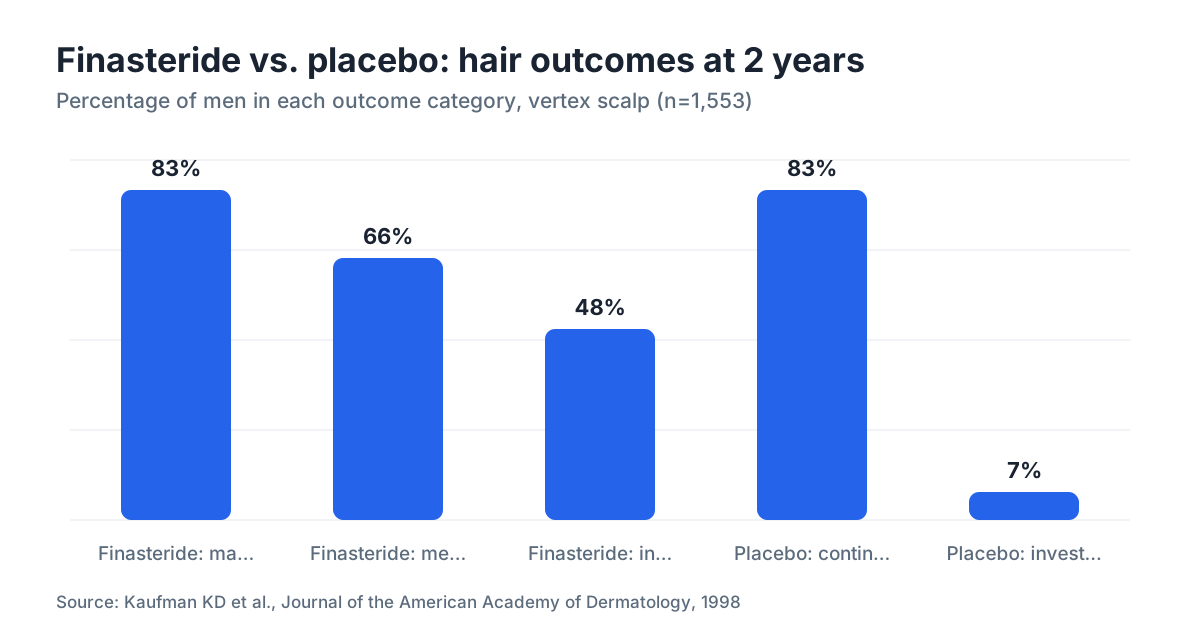
The FDA approved finasteride 1 mg (brand name Propecia) for male-pattern hair loss in 1997 based on several randomized controlled trials. The largest was a two-year, double-blind, placebo-controlled study of 1,553 men aged 18 to 41 with mild to moderate vertex and frontal thinning. It found that 66% of men taking finasteride showed measurable hair count increases at the vertex scalp compared to baseline, while 83% maintained or improved hair count. In the placebo group, 83% of men kept losing hair [2].
Those numbers are real, but they need context. The "measurable increase" threshold in that trial came from macrophotography of a 1-square-centimeter target area, which is far more sensitive than a mirror. Some men in the "regrowth" category noticed it. Others didn't. Hair count is also not the same thing as hair density or coverage.
The study also reported physician global assessments. After two years, investigators rated 48% of finasteride users as improved versus 7% of placebo users. Patient self-assessment was similar: 42% of finasteride users said they had improved compared to 13% on placebo [2].
A five-year open-label extension of one of those trials found that men who stayed on finasteride held their gains. Those who stopped saw their hair count return to baseline within 12 months of quitting [3].
Here's the honest read on the data. Finasteride works for the majority of men, but "works" covers a wide span, from dramatic regrowth to simply stopping the slide. It is not a guaranteed transformation for everyone.
Month-by-month: what changes and when?
The timeline frustrates men because the first few months can look worse before they look better.
Months 1 to 3: DHT suppression starts within days of the first dose. But follicles don't immediately snap out of miniaturization. Many men notice nothing. A smaller number notice what looks like increased shedding. This is real. As follicles reset their cycles, some hairs locked in a prolonged resting phase shed to make room for a new, thicker shaft. People call this a finasteride shed, and it's temporary. If you want the background on why shedding happens at all, the telogen effluvium article explains the mechanics.
Months 3 to 6: The real question is whether the shed is slowing and whether any new vellus (thin, fine) hairs are appearing at the temples or crown. Many men see loss slow in this window. Regrowth usually isn't visible yet.
Months 6 to 12: This is when most responders start to see something. New terminal hairs at the hairline, thicker density at the crown, less scalp showing through wet hair. The FDA trial photographs typically used 12-month images as the first comparison point [2].
Months 12 to 24: Finasteride keeps working past the first year. Hair count and density keep improving through month 24 in most responders, and some men improve slightly into year three [3].
After 2 years: Results plateau. The goal shifts from regrowth to maintenance. If you're still on the drug and your hair looks stable, that's a win, even if it doesn't look dramatically different from month 18.
One number worth knowing. In the two-year trial, the average hair count in the 1 cm² target area rose by about 107 hairs in finasteride users, while placebo users lost about 50 hairs, a gap of roughly 157 hairs [2]. In a single square centimeter. That's meaningful, but it isn't a full restoration.
What do before and after photos actually show (and what gets hidden)?
Before-and-after finasteride photos are everywhere online, from manufacturer marketing to Reddit threads to clinical papers. They are not all equal.
The best evidence comes from clinical trial macrophotography under fixed lighting, magnification, and angle. Those images are hard to fake and hard for non-specialists to read. What you see is a denser field of hairs in a small target zone, not a full hairline restoration.
Consumer photos on forums lean toward the most dramatic results, because men with impressive transformations post far more often than men who got modest results or none. That's survivorship bias. A Reddit thread with 2,000 upvotes showing temple regrowth at 18 months is real, but it says nothing about how many men in that same community saw no change.
Things that make a before photo look worse and an after look better include lighting angle, hair length, wet versus dry hair, and whether the subject is leaning forward or sitting upright. None of that means every photo lies. It means you should look at a large sample and stay skeptical of any single image.
For a sense of realistic outcomes at different stages of loss, our receding hairline article breaks down the Norwood scale, the framework most researchers use to categorize who responds best.
Here's the summary. Vertex (crown) photos tend to show the biggest finasteride results, because the light hits that area in a way that makes density differences obvious. Frontal hairline improvement does happen but is usually smaller, and complete hairline restoration from a badly receded position is rare without adding minoxidil or a hair transplant.
Who responds best to finasteride?
Age and stage of loss are the biggest predictors. Men in their 20s and early 30s with recent thinning at the vertex (Norwood II to IV) tend to see the strongest results. This makes biological sense. Their follicles have been under hormonal stress for a shorter time, and more of them still have the cellular machinery to recover.
Men with advanced loss (Norwood V to VII), especially those with long-established bald patches at the crown, tend to see maintenance rather than real regrowth. The follicles in a truly bald area have fibrosed and can't be rescued with drugs alone. That's not a finasteride failure. It's a physical limit of the biology.
Response to 5-alpha reductase inhibition varies with genetics. A 2018 review in the Journal of the American Academy of Dermatology noted that androgen receptor gene polymorphisms may influence clinical response, though the authors called the predictive value of genetic testing limited at current evidence levels [4]. Genetic hair loss tests are on the market, but no major guideline recommends them to guide finasteride dosing.
DHT sensitivity varies too. Some men lose hair aggressively even at normal DHT levels. Others keep their hair at elevated DHT. This is why two men with identical lab values can respond very differently to the same dose. If you want to understand what's driving your own hair loss before committing to treatment, tools like the free AI analysis at MyHairline can help you map your pattern and think through timing.
The American Academy of Dermatology guidelines list finasteride as a first-line treatment for androgenetic alopecia in men, noting it works best for vertex thinning and less predictably for frontal hairline recession [5].
How does combining finasteride with minoxidil change results?
Most men who ask about finasteride before-and-after results eventually ask this: do you get better photos using both drugs? The evidence says yes.
A randomized trial published in JAMA Dermatology compared finasteride alone, minoxidil alone, and the combination in men with androgenetic alopecia. The combination group showed greater hair count increases than either drug alone [6]. Separate work using oral minoxidil plus finasteride has found similar additive benefit.
The mechanism explains it. The two drugs work differently. Finasteride addresses the hormonal driver (DHT). Minoxidil, a vasodilator, extends the anagen (growth) phase of the hair cycle independent of DHT. Stacking them hits two pathways at once.
The tradeoff is added side effect risk and cost. Both drugs have their own profiles and both need ongoing use. Our article on finasteride and minoxidil combined covers the combination in detail, including dosing, side effect considerations, and what to expect.
For a conservative start, most dermatologists recommend beginning with finasteride alone, waiting 12 months to assess response, then adding minoxidil if the result is incomplete. Others start both at once to maximize the early response window. Neither is wrong. It depends on how aggressively you want to treat and how comfortable you are running two drugs.
What are the real side effect risks?
Any honest before-and-after article has to cover side effects, because some men get them and they can decide whether you stay on the drug long enough to see results.
The FDA label for finasteride 1 mg lists sexual side effects as the most commonly reported: decreased libido, erectile dysfunction, and decreased ejaculate volume, each occurring in 1.4 to 3.8% of men in the clinical trials versus 0.9 to 2.3% on placebo [1]. Most of these resolved in men who stopped the drug.
Post-finasteride syndrome (PFS) is a disputed condition that some men describe as persistent sexual, neurological, and psychological symptoms continuing after they stop the drug. The FDA updated the label in 2012 to note reports of persistent sexual dysfunction after discontinuation [1]. The mechanism isn't established, the true prevalence is unknown, and PFS has no validated diagnostic test. Advocacy groups have documented cases, but epidemiological studies large enough to pin down the risk don't yet exist. This is genuine scientific uncertainty, and it's reasonable to weigh it in your decision.
Depression and mood changes have also been reported. A 2020 pharmacovigilance study in JAMA Dermatology found a small but statistically significant signal for depression-related adverse events in finasteride users compared to a matched control group, though causality wasn't established [7].
Breast tenderness (gynecomastia) occurs in under 1% of users per the label [1].
The practical framing. For most men finasteride is well tolerated, and the side effect rate in blinded trials is low. But it's a real drug with real risks, and the decision to start should involve a physician, not a pharmacy app alone.
What happens to your hair if you stop taking finasteride?
This is one of the most common questions men ask, and the answer is simple but often underplayed. Stop the drug and you lose the hair back.
When you stop finasteride, DHT levels return to baseline within about two weeks [3]. Follicles that recovered under DHT suppression face the hormonal signal that miniaturized them in the first place. Hair loss resumes.
In the five-year clinical data, men who stopped finasteride after two years returned to roughly their pre-treatment hair count within 12 months of quitting [3]. The hair you gained does not stay. You don't end up worse than if you'd never started, but you do return to the trajectory you were on.
This is the thing to understand before you begin. Finasteride is not a course of treatment. It's ongoing medication. Before you take your "before" photo, ask whether you're ready to take the drug indefinitely. If the answer is shaky, talk it through with your doctor before you start, not after two years when stopping feels like a loss.
Some men do stop by choice and accept the return of loss. Others stay on it for years. Some move to a hair transplant after finasteride has stabilized their donor area, then keep taking it post-surgery to protect non-transplanted hair.
Does finasteride work for women?
Finasteride 1 mg is not FDA-approved for women, and it is absolutely contraindicated in pregnant women because of the risk of genital birth defects in male fetuses [1]. The FDA label carries a Category X pregnancy warning for this reason.
That said, finasteride is used off-label in postmenopausal women with androgenetic alopecia. A 2020 randomized trial in postmenopausal women found that 1 mg per day produced modest but statistically significant improvements in hair density after 12 months compared to placebo [8]. The results are generally smaller than in men, partly because female-pattern hair loss involves a more complicated hormonal picture and DHT is a weaker driver in women.
Premenopausal women who might get pregnant are usually not candidates. Those who do use it need reliable contraception. Any woman considering finasteride should have this conversation with a dermatologist or gynecologist, not decide off a general article.
For women dealing with hair loss, the full set of causes is covered in what causes hair loss, which includes conditions like telogen effluvium and alopecia areata that respond to completely different treatments.
Finasteride vs. other hair loss options: where does it fit?
Before-and-after results don't happen in a vacuum. Most men with meaningful hair loss end up weighing finasteride against at least one other option. Here's how it compares.
| Treatment | Mechanism | Avg. response rate | Monthly cost (approx.) | Requires prescription? |
|---|---|---|---|---|
| Finasteride 1 mg (oral) | DHT reduction | ~66% maintain/improve at 2 years [2] | $20-60 (generic) | Yes |
| Minoxidil 5% (topical) | Prolongs anagen phase | ~40-50% show regrowth at 1 year [9] | $10-30 | No |
| Oral minoxidil 2.5-5 mg | Same as topical, systemic | Similar or slightly higher than topical | $15-40 | Yes |
| Hair transplant (FUE/FUT) | Relocates permanent follicles | High for transplanted area | $4,000-15,000 (one-time) | No (procedure) |
| Low-level laser therapy | Unclear; may stimulate follicles | Mixed; modest in best RCTs | $200-3,000 (device) | No |
Finasteride is the only oral medication FDA-approved specifically for male-pattern hair loss. It's the only option that targets the underlying DHT mechanism. Hair transplants produce the most visually dramatic short-term before-and-after results, but they work best on men who've already stabilized their loss, which finasteride can help do.
The oral minoxidil article is worth reading if you're weighing systemic minoxidil as an alternative or addition.
For context on supplements and alternatives that don't have the same evidence base, see hair loss supplements.
How to take finasteride to give yourself the best chance of good results
Consistency is the whole game. Finasteride has a half-life of roughly 6 to 8 hours, but its effect on DHT lasts about 24 hours, so once-daily dosing is well established [1]. Missing a day here and there won't ruin your results. Inconsistent use over months will.
Take it at the same time each day if that helps you remember. Food doesn't matter. Don't crush or handle the tablets if you're a woman who is or might be pregnant. The drug absorbs through skin.
Get a baseline. Take a set of photos before you start: the top of your head under consistent overhead light, your hairline from the front, and both temples. Write down the date. Set a reminder for 12 months out and shoot the same photos under the same conditions. This is the only way to judge whether the drug is working, because hair change is slow enough that memory lies.
Blood tests aren't required before starting, but your prescriber may want a baseline DHT level or PSA if you're older, since finasteride lowers PSA by about 50%, which matters for prostate cancer screening [1].
Give it at least 12 months before deciding it's a dud. Quitting at three or six months because you don't see results is one of the most common reasons men stop for no good reason. The timeline is real.
If you want a structured way to track progress and compare your pattern to clinical benchmarks, the free AI scan at MyHairline can generate a baseline assessment useful for later comparison.
Sources
- FDA, Propecia (finasteride) prescribing information (Drugs@FDA database)
- Kaufman KD et al., Journal of the American Academy of Dermatology (1998), finasteride 1 mg two-year RCT
- Finasteride Male Pattern Hair Loss Study Group, five-year longitudinal data, published in the Journal of the American Academy of Dermatology
- Piraccini BM et al., Journal of the American Academy of Dermatology (2018), androgen receptor polymorphisms review
- American Academy of Dermatology, clinical guidelines section
- Hu R et al., JAMA Dermatology, finasteride vs minoxidil vs combination RCT
- Dyson TE et al., JAMA Dermatology (2020), pharmacovigilance study of finasteride and depression
- Iorizzo M et al., randomized trial of finasteride in postmenopausal women, British Journal of Dermatology (2020)
- Olsen EA et al., Journal of the American Academy of Dermatology (2002), minoxidil 5% efficacy review
- van der Merwe J et al., creatine and DHT study, Clinical Journal of Sport Medicine (2009)
- FDA, Drug Safety and Availability, finasteride label safety changes (2012)