

TL;DR: Finasteride carries an FDA label warning for depression, including suicidal ideation, based on post-marketing reports. Clinical trials put depressive symptoms at roughly 1 to 2% of users. But a subset of men report mood and cognitive effects that persist even after they stop. The science here is genuinely unsettled. Talk to your prescriber before you start or stop.
Does finasteride cause depression?
Probably, for a small number of people. The exact mechanism and how often it happens are still argued over.
Finasteride is a 5-alpha-reductase inhibitor. It blocks conversion of testosterone to dihydrotestosterone (DHT). The same enzyme also converts progesterone into allopregnanolone, a neurosteroid that modulates GABA-A receptors in the brain [1]. Drop allopregnanolone and you affect the same receptor system that benzodiazepines and alcohol act on. That is not a trivial side effect pathway. It is a real biological mechanism for mood changes.
The FDA updated the finasteride label in 2012 to include depression and, in rare cases, suicidal ideation among post-marketing adverse events [2]. That change came after reports piled up in the FDA Adverse Event Reporting System (FAERS), not from a single controlled trial. So the signal was strong enough to act on. But it sits below the evidence you would get from a randomized trial built specifically to measure mood.
Randomized trials of finasteride 1 mg (Propecia) for hair loss report depression or mood-related adverse events in roughly 1 to 2% of participants, against about 1% on placebo [3]. The difference is real but small in absolute terms. Most men who take finasteride never develop depression. Most men who develop a serious side effect do not think of themselves as a rare statistic either.
If you are researching finasteride broadly before deciding whether to start, this is one of the most important things to understand going in.
What does the FDA label actually say about finasteride and mood?
The label puts depression, decreased libido, and suicidal ideation in the psychiatric section under post-marketing adverse reactions, and it says some of these effects continued after men stopped the drug [2]. That single clause carries most of the weight.
The FDA label for Propecia (finasteride 1 mg) lists these events under post-marketing reactions in the nervous system and psychiatric section [2]. The label language reads that these effects have been reported and that in some cases they "continued after discontinuation of the drug."
That last clause matters enormously. Persistent effects after stopping is exactly what defines the more severe end of the spectrum that some clinicians now call Post-Finasteride Syndrome (PFS).
The label gives no frequency percentage for these psychiatric events, because they come from spontaneous post-marketing reports rather than controlled trials. The FDA marks such events "frequency not determined" when the denominator (total users worldwide) is not reliably known. That is not the same as calling the effects rare. It means the agency collected enough credible reports to require disclosure but lacks the denominator to calculate a clean rate [2].
The finasteride 5 mg label (Proscar, used for benign prostatic hyperplasia) lists depression as a post-marketing adverse event too. Both forms share the same active ingredient and the same mechanism, so the psychiatric risk is not unique to the hair-loss dose.
How common are depression and mood changes on finasteride?
Here the data get complicated, and anyone who hands you a confident single number is oversimplifying.
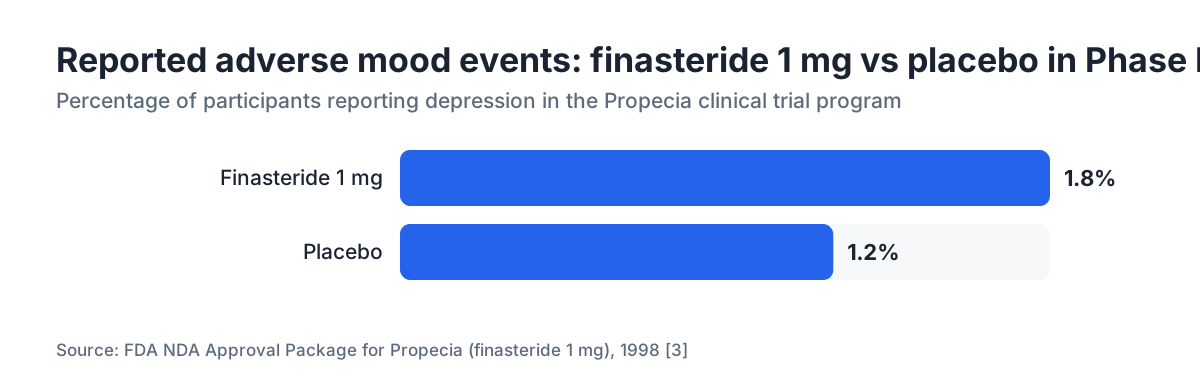
In the Phase III trials supporting FDA approval of Propecia, depression showed up in 1.8% of the finasteride group versus 1.2% on placebo [3]. That 0.6 percentage point gap is detectable but small in absolute terms. Over a million men take finasteride worldwide. Six-tenths of a percent of even a conservative user estimate is a large number of affected people.
A 2020 case-control study in JAMA Internal Medicine analyzed insurance claims for nearly 93,000 men and found current finasteride users had a significantly higher rate of depression diagnoses and antidepressant prescriptions than non-users [4]. The adjusted odds ratio for depression was 1.90, roughly double the baseline rate. For a pharmacoepidemiological study, that is a big signal. Critics rightly point out that men distressed about hair loss may be more prone to depression on their own, and observational data cannot fully rule that out. But 1.90 is hard to wave away.
A smaller, more mechanistic study by Melcangi and colleagues measured cerebrospinal fluid neuroactive steroids in men with PFS and found significantly reduced allopregnanolone and other neuroactive steroids compared to healthy controls [5]. That is the kind of finding that moves a hypothesis from speculation to a working theory.
So here is the honest summary. Clinical trials show a modest elevated incidence. Large observational data show a more pronounced signal. Mechanistic studies show a biologically plausible pathway. The lines point the same direction without proving the case.
What is Post-Finasteride Syndrome and how does depression fit in?
Post-Finasteride Syndrome (PFS) is a cluster of sexual, neurological, and psychiatric symptoms that some men report continuing or emerging after they stop taking finasteride [6]. Depression and emotional blunting are among the most commonly reported neuropsychiatric features.
The Post-Finasteride Syndrome Foundation, a patient advocacy group, published a survey of 131 men with self-reported PFS. In it, 94% reported depressive symptoms, 92% reported anxiety, and 69% reported cognitive difficulties [6]. Survey data from a self-selected community is not epidemiologically representative. Men with mild effects rarely self-identify as having a syndrome. Still, the symptom pattern repeats across unrelated reports from different countries, and that consistency is worth taking seriously.
The proposed mechanism ties back to the neuroactive steroid pathway. If finasteride suppresses allopregnanolone long enough, there is a hypothesis (still under investigation) that GABA-A receptor subunit expression changes in a lasting way. The brain adapts to low neuroactive steroid levels, then struggles to readjust when the drug stops [5]. In broad strokes, that resembles what happens with some long-term benzodiazepine users who go through prolonged withdrawal.
PFS is not a formal diagnosis in DSM-5 or ICD-11. The FDA acknowledges the reports but has issued no PFS-specific guidance beyond the current label [2]. Research continues, including studies registered at ClinicalTrials.gov.
Who is most at risk for depression on finasteride?
Nobody can tell you for certain whether you personally will get depressed on finasteride. The research has not produced reliable pre-treatment biomarkers. But a few patterns keep showing up across the literature.
Men with a personal or family history of depression appear more likely to report mood-related adverse events, though no prospective study built for that question has formally quantified it. The FDA label does not list prior depression as a contraindication. Most psychiatrists would still say that starting a drug with a depression signal in someone already vulnerable calls for close monitoring.
Age may matter. Younger men, especially those in their early 20s whose brains are still maturing, make up a disproportionate share of PFS case reports, though selection and reporting biases muddy that picture.
Genetic variation in the SRD5A1 and SRD5A2 genes (which encode 5-alpha-reductase) could in theory shape how much finasteride disrupts neuroactive steroid levels. A study by Guo and colleagues looked at genetic polymorphisms in 5-alpha-reductase among men reporting sexual side effects. The findings were preliminary, but they hint that pharmacogenomics may one day help flag higher-risk people [7].
Anxiety about hair loss itself muddies the water. A man already distressed about losing his hair carries a baseline vulnerability that the drug can then interact with. That does not make finasteride-associated depression less real. It means the causation is probably multifactorial in some patients.
How quickly can mood changes appear after starting finasteride?
Some men report mood changes within days to a few weeks of starting. Others describe a gradual slide over months. There is no consistent timing pattern in the case literature, and that itself tells you something. This is probably not one mechanism with one predictable clock.
The fastest changes likely come from the rapid drop in allopregnanolone after 5-alpha-reductase inhibition, which can happen within days of the first dose. Allopregnanolone is acutely sensitive to enzyme inhibition because the body makes it on demand rather than storing it [1].
Slower-onset changes might reflect gradual adaptation in GABA-A receptor expression. Or they might just reflect the accumulating psychological weight of other side effects like sexual dysfunction. When libido drops and erections turn unreliable, depression can follow for reasons as much psychological as neurochemical.
So watch for it. If you start finasteride and notice your mood shifting, emotional blunting, loss of interest in things you normally enjoy, more irritability, or any thoughts of self-harm, contact your prescriber quickly. Do more than push through and hope it passes. The label says outright that these effects can persist after you stop, so catching them early is the right call [2].
Does stopping finasteride fix the depression?
For most men who get mood changes on finasteride, symptoms improve after they stop. That fits what you would expect if the effect is driven by suppressed neuroactive steroids that recover once the drug clears.
Finasteride 1 mg has a half-life of roughly 5 to 6 hours, so it leaves the body fairly fast. DHT levels typically recover within about 2 weeks of stopping [8]. For most users with mild mood symptoms, recovery tracks that timeline.
The troubling part is the minority whose symptoms persist well past drug clearance. These are the men most often tied to PFS reports. The duration varies wildly across the literature and patient accounts, from weeks to years. There are no good prospective data on the natural history of PFS-associated depression, partly because running such a study requires first getting academic agreement that PFS exists as a defined entity, which is still contested.
Stopping finasteride is reasonable if you develop significant mood symptoms. Do not stop abruptly without talking to your prescriber first, especially if you are being treated for other conditions. And know the trade-off: once you stop, hair loss usually reverses any gains within 6 to 12 months [8].
Are there alternatives to finasteride that don't carry the same mood risks?
Yes, and the main one is minoxidil for men. It works by a completely different mechanism (vasodilation and potassium channel opening rather than 5-alpha-reductase inhibition) and has no known link to depression or neuropsychiatric effects. The trade-off is that minoxidil does not block DHT, so it is generally considered less effective at halting progression, particularly at the hairline and temples [9].
Topical finasteride (applied to the scalp instead of swallowed) is now more widely available and gets pitched as having lower systemic absorption, which could in theory reduce neuropsychiatric exposure. One study found topical finasteride 0.25% once daily cut serum DHT by about 37%, against roughly 65 to 70% suppression with oral finasteride 1 mg [10]. Lower systemic suppression is the hypothesis. Rigorous psychiatric outcome data comparing oral versus topical for depression risk do not yet exist.
Oral minoxidil at low doses (0.625 to 2.5 mg daily) is drawing attention as a systemic option without the DHT mechanism. Its side effects run different, mainly fluid retention and hypertrichosis, not mood effects.
Dutasteride is a stronger 5-alpha-reductase inhibitor that blocks both type 1 and type 2 enzymes. If finasteride's neuropsychiatric risk worries you, dutasteride is not the safer choice. It suppresses DHT more aggressively, which likely means greater neuroactive steroid disruption.
For men who have decided against medical treatment, hair transplant surgery is an option for the right candidates. See our overview of hair transplant if you are at that point.
To understand the full set of factors behind your hair loss before committing to anything, what causes hair loss and the role of DHT blockers are good places to build context.
What should you tell your doctor before starting finasteride?
Be honest about your mental health history. Tell your prescriber if you have had depression, anxiety disorders, or any history of suicidal ideation. Not because these are absolute contraindications, but because they shape the benefit-risk math and how closely you should be watched.
Ask your prescriber to walk through the full FDA label with you. The presence of depression and suicidal ideation on that label is not a reason to panic. It is information you deserve to hear out loud before you start, not something you stumble onto in a patient forum at 2am.
If you are starting, a brief mood baseline is reasonable. A PHQ-9 questionnaire takes about 5 minutes and gives you a documented starting point to compare against if things change [11]. Some prescribers do this routinely. Many do not.
Already on finasteride and noticing mood changes? Do more than quietly stop the drug, and do not minimize symptoms to yourself or your prescriber. Saying "I've been feeling kind of low but it's probably nothing" is not the same as saying "my mood has shifted noticeably since I started this drug." The second is what your prescriber actually needs to hear.
If tracking your progress is part of your monitoring plan, the free AI hair analysis at MyHairline can help you document density changes over time, so treatment decisions rest on real data rather than anxiety.
Is finasteride depression more likely with the 1 mg or 5 mg dose?
It seems like a clean question, but the data do not resolve it cleanly. The 5 mg dose (Proscar) produces greater DHT suppression, roughly 70 to 90% versus roughly 60 to 70% with 1 mg, with individual variation in both [8]. In theory, more DHT suppression means more neuroactive steroid disruption and potentially more mood risk.
In practice, most large hair loss trial data comes from the 1 mg dose, and most PFS case reports involve the 1 mg formulation too, simply because far more men take 1 mg for hair loss than take 5 mg. The psychiatric adverse event rates in the 5 mg BPH trials do not compare cleanly to the 1 mg hair loss trials, because the populations differ (older men with BPH versus younger men with androgenic alopecia).
Some hair loss physicians prescribe quarter-tablets of Propecia (0.25 mg) or alternate-day dosing to try to lower side effect risk. There are no randomized trial data measuring psychiatric outcomes at these lower or less frequent doses. It is a reasonable clinical hypothesis, not an evidence-based protocol.
What does the research say about finasteride's effect on brain chemistry?
The neurochemistry is one of the more genuinely interesting open questions in hair loss pharmacology.
Allopregnanolone is a positive allosteric modulator of GABA-A receptors. It boosts the receptor's response to GABA, the brain's main inhibitory neurotransmitter. Low allopregnanolone tracks with anxiety, depression, and reduced stress resilience in both animal models and human observational data [1]. Finasteride blocks the enzyme (5-alpha-reductase type 1 and type 2) that makes allopregnanolone from progesterone.
A study by Bixo and colleagues in Psychoneuroendocrinology measured allopregnanolone in women taking finasteride for other indications and confirmed significant reductions in brain and plasma levels [12]. Rodent studies have shown finasteride can produce depressive and anxious behavior, reversible with exogenous allopregnanolone.
The Melcangi study noted earlier found men with PFS had measurably lower allopregnanolone in cerebrospinal fluid than matched controls, even well after stopping the drug [5]. If that holds up in larger samples, it would be one of the stronger pieces of evidence that finasteride causes lasting neurochemical change in some men, beyond transient suppression during active use.
Serotonin may be involved too. Some researchers propose that reduced neuroactive steroids alter serotonergic signaling, which would explain emotional blunting and anhedonia as symptoms distinct from ordinary low mood. Plausible, not proven in humans [7].
For context on how hormones affect hair and the wider endocrine picture, the receding hairline piece covers the DHT-follicle relationship in more detail.
How do you monitor yourself for mood changes while on finasteride?
Self-monitoring is underused here and genuinely useful.
The PHQ-9 (Patient Health Questionnaire-9) is a validated, free, nine-question depression screen that takes about 5 minutes [11]. Fill it out at baseline before starting finasteride, then again at 4 weeks, 3 months, and 6 months. That gives you and your prescriber an objective record. A shift of 5 or more points from baseline is clinically meaningful and worth raising.
Keep a simple mood log. Not a journal, just a 1 to 10 rating each morning for mood and energy. No special app required. A note in your phone works. The value lives in the trend over weeks, not any single day's number.
Tell someone you trust that you are starting the drug, and ask them to flag it if you seem different. Depression often warps self-perception before self-awareness catches up. People around you may notice changes you chalk up to something else.
If thoughts of self-harm show up at any point, treat that as a medical emergency and contact your prescriber or a crisis line right away. The 988 Suicide and Crisis Lifeline in the US (call or text 988) provides 24-hour support [13].
Sources
- NIH National Institute of Mental Health, allopregnanolone and GABA-A receptor modulation research (via PubMed)
- FDA DailyMed, Propecia (finasteride 1 mg) prescribing information
- FDA NDA Approval Package for Propecia (finasteride 1 mg), 1998
- JAMA Internal Medicine, finasteride use and depression diagnosis (2020)
- Psychoneuroendocrinology, Melcangi RC et al., neuroactive steroid levels in CSF of men with Post-Finasteride Syndrome (via PubMed)
- Post-Finasteride Syndrome Foundation, patient survey of 131 men with PFS
- Journal of Sexual Medicine, Guo et al., SRD5A polymorphisms and finasteride side effects (via PubMed)
- FDA DailyMed, Proscar (finasteride 5 mg) prescribing information
- American Academy of Dermatology, androgenetic alopecia treatment overview
- Journal of the American Academy of Dermatology, topical versus oral finasteride DHT suppression comparison (via PubMed)
- NIH National Institute of Mental Health, Patient Health Questionnaire (PHQ-9) depression screening
- Psychoneuroendocrinology, Bixo M et al., allopregnanolone reduction in women taking finasteride (via PubMed)
- SAMHSA, 988 Suicide and Crisis Lifeline