
TL;DR: The FDA-approved finasteride dose for male pattern hair loss is 1 mg taken orally once a day. Most men see measurable results after 3 to 6 months, with peak benefit around 12 months. Higher doses (5 mg, approved for enlarged prostate) do not improve hair outcomes and raise side-effect risk. Dosing in women is a separate, mostly off-label discussion.
What is the standard finasteride dosage for hair loss?
One milligram, once a day. That is the FDA-approved dose for androgenetic alopecia in men, sold under the brand name Propecia [1]. You take the tablet with or without food, at roughly the same time each day, and there is no approved schedule where you start lower and ramp up.
This dose came out of a large, randomized, double-blind trial published in the Journal of the American Academy of Dermatology in 1998, which compared 1 mg, 0.2 mg, and 0.01 mg finasteride against placebo over 48 weeks. The 1 mg group showed statistically significant hair count increases versus placebo; the lower doses showed a dose-response trend but were meaningfully less effective [2]. The FDA reviewed that data and landed on 1 mg as the dose with the best efficacy-to-risk ratio for hair loss.
If you have been prescribed the 5 mg tablet (the prostate drug, Proscar) and told to cut it into quarters, that is common clinical practice and saves money because 5 mg generics are cheap. The delivered dose math works out to roughly 1.25 mg, which is close enough and shows no worse side effects than the 1 mg formulation in the available data. But the 5 mg tablet is not FDA-approved for hair loss. Cutting it is an off-label workaround, not a formal recommendation.
For more on how finasteride actually works, see the finasteride overview.
Why is 1 mg used instead of a higher or lower dose?
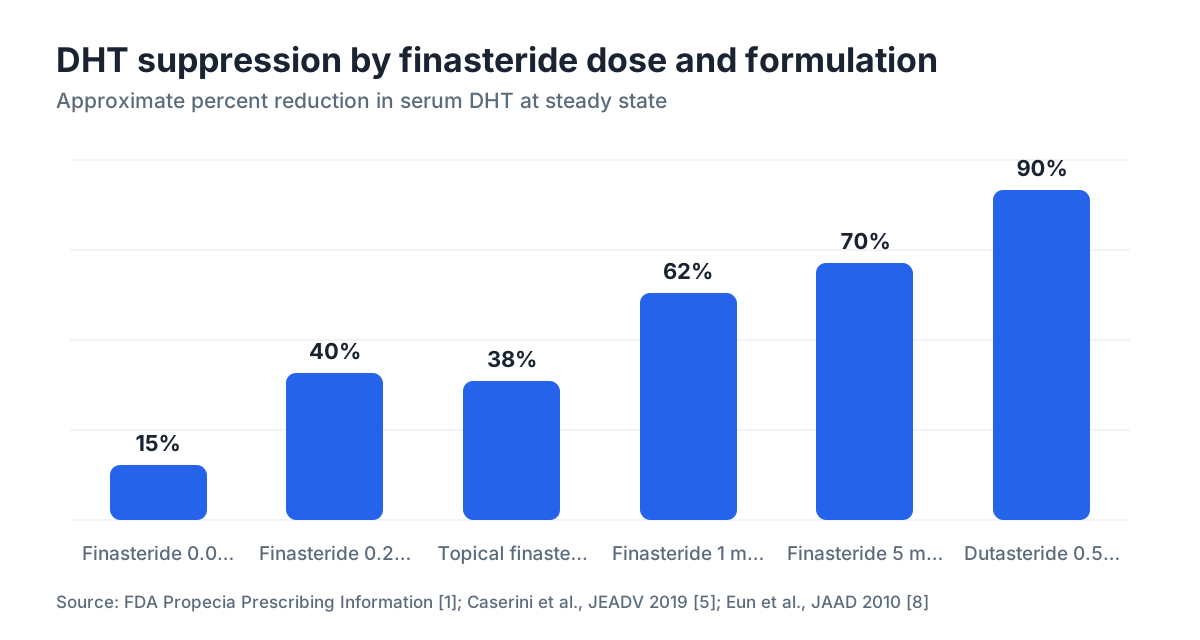
Finasteride blocks 5-alpha reductase, specifically type II, the enzyme that converts testosterone into dihydrotestosterone (DHT). DHT is the androgen that shrinks hair follicles in genetically susceptible people. At 1 mg per day, finasteride suppresses scalp DHT by roughly 60 to 70 percent and serum DHT by about 60 percent, according to the pharmacokinetic data in the FDA label [1].
The 5 mg dose, used for benign prostatic hyperplasia, suppresses serum DHT by closer to 70 percent. That is a real but modest difference, and the hair-growth trials did not show that extra suppression translates into meaningfully better hair [2]. Meanwhile, higher doses carry a heavier side-effect burden, even if the absolute risk at 5 mg is still low.
Below 1 mg, the payoff drops off faster than you might expect. The 0.2 mg dose in the dose-ranging trial suppressed DHT but produced hair count gains that were statistically weaker. The 0.01 mg dose was essentially no better than placebo. This is why no careful prescriber would suggest 0.5 mg daily as a primary hair-loss strategy. Some low-dose protocols do exist, but that is a different conversation covered below.
There is also the wider question of the DHT blocker mechanism: finasteride is not the only molecule that reduces DHT, but it is the only oral one with FDA approval specifically for hair loss in men.
Does the dosage differ for women?
Yes, and significantly. Finasteride is not FDA-approved for hair loss in women at any dose [1]. The 1 mg tablet carries a black-box warning that pregnant women must not handle it, because finasteride inhibits DHT, which is necessary for normal development of male genitalia in utero.
That said, finasteride is used off-label for female pattern hair loss. The doses studied in trials vary widely: 1 mg, 2.5 mg, and 5 mg daily all appear in the literature. A systematic review in the Journal of the American Academy of Dermatology concluded that finasteride at doses ranging from 1 to 5 mg showed positive effects in postmenopausal women and premenopausal women using reliable contraception, but acknowledged the evidence base is smaller and less consistent than the male data [3].
Dermatologists who prescribe finasteride to women typically use 2.5 mg to 5 mg daily, not the 1 mg male dose, because hormonal differences mean women may need more suppression to see a clinical effect. This is genuinely off-label territory. It requires a real conversation with a prescriber who knows your hormone panel.
If you are a woman worried about hair loss, the cause matters enormously before any drug enters the picture. Conditions like telogen effluvium can look identical to androgenetic alopecia but have completely different causes and treatments.
How long does it take for finasteride at 1 mg to work?
Slower than most people expect. You will not see anything useful in the first two months. The hair follicle cycle is long, and finasteride works by keeping existing follicles alive and improving their output over successive cycles, not by triggering fast regrowth.
The timeline from the registration trials breaks down roughly like this [2]:
| Timepoint | What typically happens |
|---|---|
| 0 to 3 months | No visible change; some men notice a slight shed as follicles reset |
| 3 to 6 months | First measurable hair count increases in clinical settings |
| 6 to 12 months | Visible improvement for roughly 66% of men in trials |
| 12 to 24 months | Peak benefit for most; some continued slow improvement |
| Beyond 2 years | Maintenance; slows further loss more than it keeps regrowing |
The 5-year data from the original Propecia trials showed that men who stayed on the drug held their improvements, while men who stopped lost the gained hair within 12 months and returned to the progression they would have had without treatment. This is not a cure. It is a maintenance drug.
Stop taking it and the DHT suppression reverses within about two weeks based on pharmacokinetic data, and the androgen-driven miniaturization resumes from wherever you left off.
What about low-dose finasteride, like 0.5 mg or 0.25 mg?
Low-dose finasteride is a real area of clinical interest, more than internet speculation. The reasoning is simple: if 1 mg suppresses scalp DHT by 60 to 70 percent and that seems enough for hair retention, maybe a lower dose keeps most of the benefit while cutting the risk of sexual side effects.
A 2021 randomized trial in Dermatology and Therapy compared 0.5 mg and 1 mg daily finasteride in men with androgenetic alopecia over 24 weeks. Both doses produced similar hair count improvements, and the 0.5 mg group reported fewer sexual adverse effects. The trial was small (around 60 participants per arm) and short [4]. Interesting data, but not enough to rewrite clinical guidelines.
Some compounding pharmacies offer 0.25 mg capsules or topical finasteride formulations. Topical finasteride at 0.25 mg per mL is designed to suppress scalp DHT locally while limiting systemic absorption, and a 2019 study in the Journal of the European Academy of Dermatology and Venereology found it achieved significant scalp DHT suppression with less impact on serum DHT than oral 1 mg [5]. The tradeoffs are cost, the consistency of compounded formulations, and the fact that no topical version has FDA approval yet.
Honestly, if side effects on standard dosing worry you, a real conversation with a prescriber about your specific situation will get you further than a forum thread. Nobody has clean data on which individual factors predict who responds well to a lower dose.
What are the side effects associated with finasteride at standard dose?
The FDA label lists sexual side effects as the main concern: decreased libido, erectile dysfunction, and ejaculatory disorders each occurred in roughly 1.8 to 3.8 percent of men in clinical trials, compared to 1.3 to 2.1 percent on placebo [1]. Small absolute numbers, and in the trials they resolved when men stopped the drug.
Post-finasteride syndrome (PFS) is a contested condition where some men report persistent sexual and cognitive symptoms after stopping. The FDA updated the Propecia label in 2012 to include a warning about possible persistence of sexual side effects after discontinuation [1]. How often true persistent PFS happens is not well established. The Post-Finasteride Syndrome Foundation points to ongoing research, but honest practitioners admit the data on long-term persistence is thin and the mechanism is not clear.
Finasteride also carries a warning about prostate-specific antigen (PSA): it lowers PSA by about 50 percent, which matters if you or a doctor are using PSA to screen for prostate cancer. Any man on finasteride should tell his doctor before a PSA test so the result is read correctly [1].
A rare but noted risk is male breast cancer. The FDA label reports a small number of cases in men taking finasteride. The numbers are too small to establish causation, but the label recommends promptly reporting any breast changes.
For how finasteride stacks up against other treatments, the finasteride and minoxidil combination article covers the side effect profiles side by side.
Is finasteride 1 mg or 5 mg better for hair loss?
For hair loss specifically, 1 mg and 5 mg produce similar results, and 1 mg wins because you get essentially the same DHT suppression that matters to hair follicles with a lower total drug load.
The 5 mg dose was studied in the prostate context, where the target is the gland, not scalp follicles. The extra DHT suppression beyond 1 mg does not seem to buy meaningfully better hair in direct comparisons [2]. The side-effect profile at 5 mg looks similar to 1 mg in the large prostate trials, but those enrolled older men with different baselines than a typical hair-loss patient.
The main reason men end up with 5 mg tablets is cost. Finasteride 5 mg generics often run around $0.10 to $0.30 per tablet at major pharmacies, while 1 mg generics can cost $0.50 to $1.00 or more per tablet depending on pharmacy and location, though discount pricing programs shift these numbers a lot. Quartering a 5 mg tablet to get roughly 1.25 mg is widely done and saves real money. The downside is that tablet splitting is not precise, and extended-release formulations (finasteride is not one, but worth knowing) should never be split.
If budget is a genuine concern and your prescriber is comfortable, the 5 mg cut strategy is reasonable. Ask the prescriber, not Reddit.
Can you take finasteride every other day instead of daily?
Some men do this, usually to manage side effects or cost. The half-life of finasteride is 5 to 6 hours in young men and 8 hours in men over 70, but the enzyme-inhibition effect lasts far longer than the drug's plasma half-life because finasteride binds tightly to 5-alpha reductase [1]. DHT suppression sticks around well past the pharmacokinetic window.
A small study in Dermatology in 2009 looked at alternate-day dosing (1 mg every other day) and found DHT suppression that was meaningful, though somewhat lower than daily dosing [6]. Hair outcomes in that study were not tracked long enough to be conclusive.
The honest answer is that every-other-day dosing probably does something, likely close to daily dosing given the extended enzyme binding, but no large clinical trial has validated it for hair regrowth. If a side effect is pushing you toward this approach, talk to your prescriber. There may be better options: dropping to 0.5 mg daily, switching to topical, or pausing entirely.
Don't let the uncertainty paralyze you. If you are doing fine on 1 mg daily and it is working, there is no reason to tinker with the schedule.
How does finasteride dosage compare to other hair loss treatments?
Putting finasteride next to other evidence-backed options helps before you spend money.
| Treatment | Dose / application | Evidence level | Approx. monthly cost (US, 2024) |
|---|---|---|---|
| Finasteride 1 mg oral | 1 mg daily | FDA-approved (men) | $10-$40 generic |
| Minoxidil topical | 2% (women) or 5% (men) once or twice daily | FDA-approved | $15-$30 |
| Oral minoxidil | 0.625 to 5 mg daily (off-label) | Strong off-label data | $10-$25 generic |
| Dutasteride | 0.5 mg daily (off-label for hair in US) | FDA-approved in Japan/Korea for hair | $20-$60 |
| PRP injections | Variable; typically 3 sessions to start | Moderate evidence | $500-$1500 per session |
| Hair transplant | One-time (usually) | Definitive but surgical | $4,000-$15,000 |
Finasteride combined with minoxidil outperforms either drug alone in head-to-head trials. A study in the Journal of the American Academy of Dermatology found combination therapy produced statistically greater hair count improvement than monotherapy at 12 months [7].
For men who have already lost significant ground and are weighing surgery, the hair transplant article covers what that process actually involves and costs.
If you are early in your research and want to see where your hair loss stands before committing to anything, tools like the free AI scan at MyHairline can give you a Norwood-stage read and help you figure out what to ask a dermatologist.
What happens if you miss a dose?
Skip it, take your next dose at the usual time, do not double up. That is standard advice for any once-daily drug without a narrow therapeutic window, and finasteride fits that description [1].
Because the enzyme-inhibition effect of a single dose lasts longer than 24 hours, missing one day now and then will not meaningfully disrupt your DHT suppression. What matters is consistency over months, not perfection on any single day.
If you keep missing doses, address it practically. Some people tie it to another daily habit, morning supplements or brushing teeth, since there is no requirement to take it at a specific time. Food does not affect absorption.
Is the dosage different for topical finasteride?
Topical finasteride is not FDA-approved as of mid-2025, though it is available through compounding pharmacies and prescribed off-label fairly often. The formulations vary: common concentrations include 0.1 percent, 0.25 percent, and 0.5 percent solutions, applied once daily directly to the scalp.
The most studied topical concentration is around 0.25 mg per mL applied once daily, which in the 2019 trial mentioned earlier achieved scalp DHT suppression comparable to oral 1 mg but with roughly 40 percent less serum DHT suppression [5]. For men worried about systemic side effects, that pharmacokinetic profile is appealing.
The limit on topical finasteride is not mechanism, it is evidence volume. The oral 1 mg data spans decades and tens of thousands of patients. Topical data spans a handful of trials with far fewer participants. It probably works. The confidence interval around that claim is wider than anyone would like.
Spray-based finasteride, minoxidil-plus-finasteride combination topicals, and other compounded variants all exist. Before using any compounded product, confirm the pharmacy is PCAB-accredited or at minimum compliant with USP 795/797 standards, since compounding quality control is not FDA-regulated the same way commercial manufacturing is.
Should you adjust finasteride dose if it stops working?
Dermatologists hear this one constantly, and the honest answer is: probably not by increasing the dose. If finasteride 1 mg has stopped holding the line after working for a while, the more likely explanations are disease progression the drug cannot fully stop, adherence that has slipped over time, or compensatory androgen pathways that finasteride does not touch.
Switching from finasteride to dutasteride is a real clinical option. Dutasteride inhibits both type I and type II 5-alpha reductase (finasteride only hits type II), which produces more complete DHT suppression, roughly 90 percent versus 60 to 70 percent [8]. A randomized trial in the Journal of the American Academy of Dermatology found dutasteride 0.5 mg significantly outperformed finasteride 1 mg for hair count at 24 weeks in men with androgenetic alopecia [8]. The FDA has not approved dutasteride for hair loss in the US (it is approved in Japan and South Korea for this use), so it is off-label here.
Adding topical minoxidil is another practical step if hair loss progresses on finasteride alone. The minoxidil for men article covers doses and application.
If you are wondering whether your current hair loss is even caused by androgens, the what causes hair loss article is a good diagnostic starting point before you change medications.
When should you talk to a doctor about finasteride dosing?
Always, before you start. That is not a liability hedge, it is practical advice. Finasteride affects hormones, interacts with PSA testing, and is contraindicated in pregnancy. A telehealth visit with a dermatologist or a prescribing platform takes 15 minutes and makes sure you are not missing a reversible cause of hair loss that finasteride will not help.
Once you are on the drug, check back in at 6 months with photo documentation. Use the same lighting and the same angle every month so progression or improvement is actually visible. Judging hair loss from memory is unreliable.
If you get sexual side effects, tell your doctor rather than quietly stopping. There are dosage adjustments, alternative formulations, and the chance that the side effect is not drug-related at all. Stopping abruptly without evaluation means losing the hair gains and never knowing whether a simple adjustment would have fixed the problem.
For a baseline record of your hair before starting any treatment, the free AI scan at MyHairline (myhairline.ai/scan) gives you a standardized Norwood stage you can compare against future photos, which beats eyeballing changes in the mirror.
Sources
- FDA, Propecia (finasteride) Prescribing Information
- Kaufman KD et al., Journal of the American Academy of Dermatology, 1998. Finasteride in the treatment of men with androgenetic alopecia.
- Olszewska M and Rudnicka L, Journal of the American Academy of Dermatology, 2005; updated systematic review 2020 on finasteride in women
- Adil A and Godwin M, Dermatology and Therapy, 2021. Low-dose finasteride 0.5 mg versus 1 mg in androgenetic alopecia.
- Caserini M et al., Journal of the European Academy of Dermatology and Venereology, 2019. Topical finasteride 0.25% pharmacokinetics and scalp DHT suppression.
- Shapiro J et al., Dermatology, 2009. Alternate-day dosing with finasteride for androgenetic alopecia.
- Khandpur S et al., Journal of the American Academy of Dermatology, 2002. Combination finasteride and minoxidil vs monotherapy in androgenetic alopecia.
- Eun HC et al., Journal of the American Academy of Dermatology, 2010. Dutasteride 0.5 mg vs finasteride 1 mg randomized trial in androgenetic alopecia.
- American Academy of Dermatology, Clinical Guidelines: Hair Loss
- FDA, MedWatch Safety Communication, Propecia/Proscar label update 2012
- National Library of Medicine, MedlinePlus: Finasteride
- Olsen EA et al., Journal of the American Academy of Dermatology, 2006. Global photographic assessment of dutasteride vs finasteride in men with androgenetic alopecia.