
TL;DR: Finasteride belongs to the 5-alpha reductase inhibitor (5-ARI) drug class. It blocks the enzyme that converts testosterone into dihydrotestosterone (DHT), the hormone that miniaturizes hair follicles in androgenetic alopecia. The FDA approved it for male pattern baldness at 1 mg/day in 1997. It is not a hormone, not a steroid, and not a minoxidil-class vasodilator.
What drug class does finasteride belong to?
Finasteride is a 5-alpha reductase inhibitor, almost always shortened to 5-ARI. That is its official pharmacological class. The FDA labels both Propecia (1 mg) and Proscar (5 mg) under this category, and the class name tells you exactly what the drug does mechanically: it inhibits 5-alpha reductase, the enzyme that drives the conversion of testosterone into dihydrotestosterone (DHT) [1].
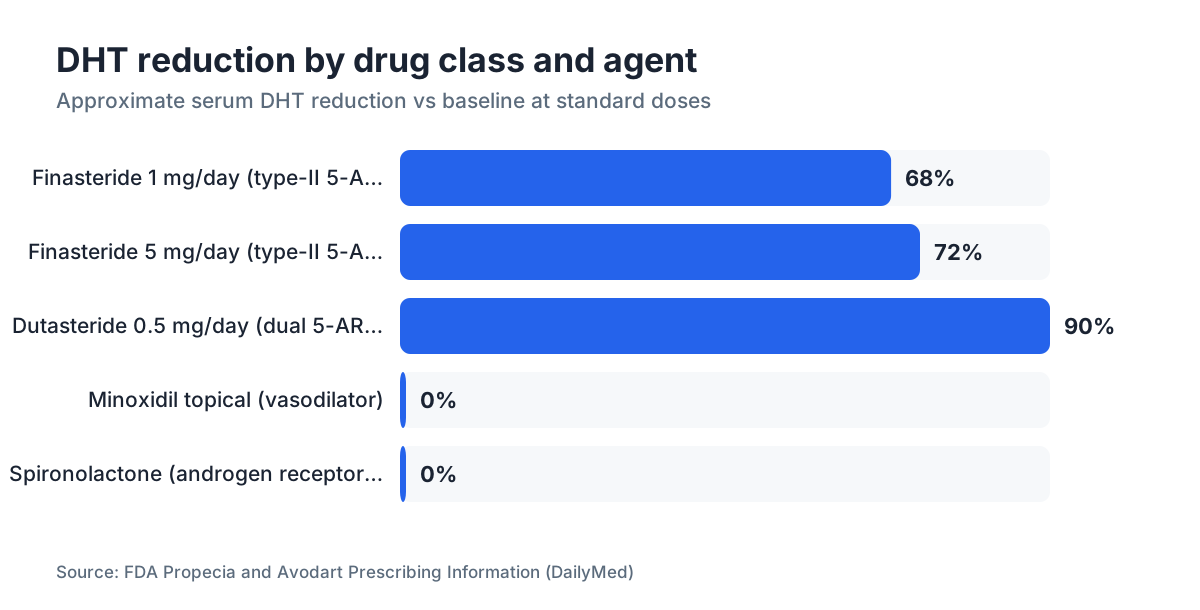
Two drugs in this class turn up in real clinical practice: finasteride and dutasteride. Finasteride preferentially blocks the type-II isoform of the enzyme. Dutasteride blocks both type-I and type-II isoforms, which is why dutasteride suppresses DHT harder but also carries a wider side-effect profile [2].
Nothing else fits this class the same way. Minoxidil is a vasodilator. Spironolactone is a potassium-sparing diuretic and androgen receptor blocker. Saw palmetto extracts get marketed alongside finasteride language, but they aren't 5-ARIs in any approved pharmacological sense. Finasteride's drug class is narrow and precise, and that precision matters the moment you start comparing it to alternatives.
For the bigger picture of how finasteride fits into hair loss treatment, see the full guide to finasteride.
What exactly is the drug finasteride and where does it come from?
Finasteride is a synthetic 4-azasteroid compound. Its chemical backbone resembles a steroid nucleus but has a nitrogen atom where steroids have a carbon. It is not a steroid. It doesn't bind androgen receptors or behave like testosterone, estrogen, or any anabolic compound. The distinction matters because patients sometimes assume a drug targeting male hormones must itself be hormonal. It isn't.
Merck developed finasteride first as a treatment for benign prostatic hyperplasia (BPH), the prostate enlargement that hits many men over 50. The FDA approved the 5 mg dose (Proscar) for BPH in 1992. During those trials, researchers noticed patients' scalp hair improved. That observation led straight to the separate development of the 1 mg formulation (Propecia) for androgenetic alopecia, approved in 1997 [1].
The active molecule is the same in branded and generic products. Generics have been widely available since the mid-2000s and are bioequivalent to Propecia under FDA standards. The price gap is big. Brand-name Propecia can run $70 to $90 per month, while generic finasteride 1 mg usually costs $10 to $30 per month at major pharmacies, and some telehealth platforms price it lower [3].
You take it by mouth. It absorbs through the gastrointestinal tract and metabolizes mostly in the liver.
How does the 5-alpha reductase inhibitor class work on hair loss?
DHT is the main driver of androgenetic alopecia (male and female pattern hair loss). It binds androgen receptors in genetically susceptible follicles and shrinks them over time, shortening the growth phase until the follicle makes only fine, unpigmented vellus hair instead of the terminal hair you can actually see.
Finasteride, as a 5-ARI, shuts down DHT production at the source. A registration trial published in the Journal of the American Academy of Dermatology found that 1 mg/day finasteride cut serum DHT by roughly 65 to 70 percent in men [4]. That's the whole mechanism. Less DHT means less follicle miniaturization, which for many men means existing hair stops thinning and some miniaturized follicles bounce back.
The drug doesn't grow hair from a dead follicle. If the follicle is alive but shrunken, finasteride can help it recover. If it's gone, no 5-ARI brings it back. That's why starting early beats starting after you've already lost a lot of ground.
For the mechanics of what DHT does at the receptor, the dht blocker guide covers the biology in more detail.
The effect is androgen-specific. Finasteride ignores follicles that aren't sensitive to DHT, which is why it doesn't strip body or beard hair in most patients.
Is finasteride a hormone or a steroid?
No. Finasteride is neither a hormone nor a steroid. Confusing the class with those categories is one of the most common mistakes men make before starting treatment.
A hormone is a signaling molecule the body makes to communicate between organs. Finasteride is an enzyme inhibitor. It blocks a metabolic step but doesn't act as a signaling molecule itself. It doesn't add testosterone to your system, doesn't add DHT, doesn't add estrogen.
The steroid confusion comes from finasteride's chemical structure, which includes a steroid-like ring system (the azasteroid scaffold mentioned above). Structurally resembling a steroid is not the same as being one. Aspirin structurally resembles the salicylate found in willow bark. Structure shapes how a molecule binds its target. It doesn't define the pharmacological class.
Finasteride does shift the ratio of testosterone to DHT because it stops the conversion. Serum testosterone can rise modestly (some studies find roughly a 10 to 15 percent increase) as testosterone that would have become DHT stays in circulation [4]. Whether that shift means anything clinically for most men is debated, but it is not the same as taking testosterone or any androgen.
Calling finasteride "hormone therapy" is wrong by pharmacological definition.
How does finasteride compare to other drug classes used for hair loss?
The major drug classes used in hair loss barely overlap, which is exactly why doctors combine them.
| Drug | Class | Mechanism | FDA Approved for Hair Loss |
|---|---|---|---|
| Finasteride | 5-alpha reductase inhibitor | Reduces DHT production | Yes (men, 1997) |
| Dutasteride | 5-alpha reductase inhibitor | Reduces DHT more broadly | No (off-label) |
| Minoxidil (topical) | Vasodilator / potassium channel opener | Prolongs anagen phase, increases blood flow | Yes (men and women) |
| Minoxidil (oral) | Vasodilator / antihypertensive | Same mechanism, systemic | No (off-label) |
| Spironolactone | Aldosterone antagonist / antiandrogen | Blocks androgen receptors | No (off-label, women) |
| Ketoconazole shampoo | Antifungal | May reduce scalp DHT, unclear mechanism | No (off-label adjunct) |
Finasteride and minoxidil get used together because they work on different pathways. The finasteride and minoxidil combination guide covers the evidence for that pairing.
Spironolactone shows up in women who can't take finasteride or for whom it's contraindicated. It's an androgen receptor blocker, not a 5-ARI, so its mechanism sits downstream of where finasteride acts.
Dutasteride, also a 5-ARI, suppresses both type-I and type-II enzymes and drops DHT by roughly 90 percent against finasteride's 65 to 70 percent. The extra suppression comes with a much longer half-life (around 5 weeks versus finasteride's 6 to 8 hours) and potentially greater hormonal side-effect exposure [2].
What are the FDA-approved uses of finasteride (and what's off-label)?
The FDA has approved finasteride for two specific indications [1].
First: benign prostatic hyperplasia, at 5 mg per day (sold as Proscar and generics). Approved in 1992 [7].
Second: androgenetic alopecia in men, at 1 mg per day (sold as Propecia and generics). Approved in 1997. The label is specifically for men. The FDA has not approved finasteride for hair loss in women, and the agency states it should not be used by women who are pregnant or may become pregnant because of the risk of feminizing a male fetus [1].
Off-label use in women with androgenetic alopecia does happen, especially in post-menopausal women, and some dermatologists prescribe it at doses from 1 mg to 2.5 mg per day in carefully selected patients. The American Academy of Dermatology's clinical guidelines acknowledge this practice but note the evidence base is thinner than for men [5].
Off-label use for gender-affirming care (as part of anti-androgenic treatment in transgender women) exists too, though spironolactone is more common for that purpose in the United States.
If you're still sorting out what's actually causing your hair loss before you pick a treatment, the what causes hair loss guide is a reasonable starting point.
What are the known side effects of finasteride's mechanism?
Because finasteride works by lowering a specific androgen, its side effects are mostly androgen-related. The FDA label lists sexual side effects as the main concern: decreased libido, erectile dysfunction, and reduced ejaculate volume. These occurred in roughly 3.8 percent of men in the original registration trials at 1 mg/day, versus 2.1 percent on placebo, per the Propecia prescribing information [1].
In most men who get these effects, they clear after stopping the drug. A smaller subset report persistent sexual side effects after quitting, a cluster sometimes called Post-Finasteride Syndrome (PFS). This is contested territory. The FDA updated the label with PFS-related concerns in 2012. The biology of persistent effects isn't well understood, and the honest answer is that nobody has good epidemiological data on true real-world incidence, only trial populations where reporting conditions differ from daily life [1].
Finasteride also carries an FDA-required warning about high-grade prostate cancer detection, tied to the Prostate Cancer Prevention Trial (PCPT). The 2003 PCPT found that finasteride (5 mg) cut overall prostate cancer prevalence by about 25 percent but showed a higher rate of high-grade tumors in the finasteride arm [10]. The FDA updated the Proscar and Propecia labels in 2011 to reflect this [6]. Later analysis suggested the signal may partly be a detection artifact rather than a real causal increase, but the warning stays.
Worried about hair loss in general? The receding hairline section covers whether your hairline pattern is even the type finasteride targets.
Does finasteride's drug class mean it requires a prescription?
Yes. In the United States, finasteride is prescription-only. It's not a controlled substance, but you can't buy it over the counter.
This holds regardless of dose. The 1 mg hair loss dose and the 5 mg prostate dose both need a valid prescription from a licensed prescriber. Some people take the 5 mg tablet and cut it into quarters, which lands near a 1.25 mg daily dose. That's off-label and introduces some dosing imprecision, but it's a known practice some prescribers suggest to cut costs.
Telehealth platforms made prescriptions far easier to get starting around 2018. A licensed physician or physician assistant can prescribe finasteride through an online consultation. This is legal under current federal and state telemedicine rules, though the specifics vary by state. Telehealth prescriptions run through licensed pharmacies [8].
Be cautious about any website selling finasteride without a prescription. That's illegal in the United States, and you can't verify the product's authenticity.
The prescription requirement exists because finasteride's effects need medical screening: a baseline prostate-specific antigen reading, ruling out other causes of hair loss, and a talk through contraindications.
How long does finasteride take to work, and is it permanent?
Finasteride is not a quick fix. Because it works by slowing follicle miniaturization rather than forcing an immediate growth spurt, visible results usually take 6 to 12 months of consistent daily use. The original Propecia trials measured men at 1 and 2 years, not weeks [4].
In the registration trials, about 83 percent of men who took 1 mg/day for 2 years maintained or increased their hair count from baseline, while 72 percent of placebo patients lost hair over the same stretch [4]. For most users it's a stabilization drug more than a regrowth drug, though real regrowth does happen in a meaningful share.
The effect isn't permanent, and it isn't curative. Stop taking finasteride and DHT returns to baseline within roughly 1 to 2 weeks (the drug's half-life is only 6 to 8 hours), and hair loss resumes at whatever rate it would have run without treatment. Most of the benefit fades within 6 to 12 months of stopping [4].
Long-term continuous use (5 to 10 years) has been studied and appears to hold efficacy and a steady safety profile for most patients, with no sign of tolerance developing [5][9].
If your loss has already progressed far, a hair transplant is the other major option worth understanding alongside finasteride.
Can women take finasteride, and does the drug class matter differently for them?
The drug class matters differently in women because the underlying androgen biology is different. Women produce far less DHT than men, and female androgenetic alopecia often involves receptor-level androgen sensitivity rather than DHT excess, so the treatment rationale is less clean.
The FDA has not approved finasteride for hair loss in women [1]. The label flatly contraindicates use in women who are pregnant or may become pregnant because 5-ARI drugs block the normal virilization of a male fetus. A pregnant woman absorbing even small amounts of finasteride (including from handling crushed tablets) risks feminizing a male fetus.
Still, post-menopausal women with androgenetic alopecia are sometimes prescribed finasteride off-label. Small randomized trials show modest benefit, though the evidence is much weaker than in men [5]. The AAD guidelines for female pattern hair loss recommend minoxidil as first-line treatment, not finasteride.
For women losing hair, figuring out whether the pattern is androgenetic or something else like telogen effluvium matters before picking any treatment. The causes can look alike and respond very differently to finasteride.
A free AI hair analysis at MyHairline can help identify your pattern before you commit to anything.
What does finasteride's drug class tell you about drug interactions?
Finasteride's 5-ARI class has a fairly clean interaction profile next to many drugs. It's metabolized in the liver by the CYP3A4 pathway, so drugs that strongly inhibit or induce CYP3A4 can theoretically shift finasteride blood levels, but clinically significant interactions are uncommon at the 1 mg hair loss dose [1][7].
The FDA label lists no absolute contraindications based on drug interactions for the 1 mg dose. The 5 mg BPH dose has more monitoring requirements, especially for patients also taking alpha-blockers for blood pressure or prostate symptoms, since the combination can drop blood pressure.
Alcohol is not a pharmacological contraindication, and finasteride won't trigger the disulfiram-type reaction some drugs cause.
Because finasteride doesn't touch androgen receptors directly (it acts upstream on the enzyme, not the receptor), it doesn't interact with testosterone replacement therapy the way antiandrogens do. Men on TRT can theoretically take finasteride, though the interaction between exogenous testosterone and 5-ARI treatment is complicated and needs physician oversight.
If you're thinking about stacking finasteride with supplements, the hair loss supplements guide covers what's actually supported and what might conflict.
How does understanding the drug class help you make a better treatment decision?
Knowing finasteride is a 5-ARI tells you several things that matter in practice.
It tells you the drug works upstream in the androgen pathway, before DHT ever reaches a receptor. That means it works best when your loss is genuinely DHT-driven (androgenetic alopecia) and does little for hair loss from thyroid disease, nutritional gaps, or stress-related shedding.
It tells you why your doctor needs a baseline PSA (prostate-specific antigen) reading before you start. Finasteride lowers PSA by roughly 50 percent. If a doctor orders a PSA test while you're on finasteride without knowing it, the result looks falsely normal and could mask early prostate cancer detection. Every doctor you see needs to know you're on a 5-ARI [1][6].
It tells you why the drug works slowly. Enzyme inhibitors change the downstream hormone environment, and hair follicles respond to hormonal environments over cycles of weeks to months, not days.
And it tells you why the sexual side effects that do occur are hormonally mediated and reversible in most men. They're downstream consequences of DHT reduction, not direct receptor stimulation.
If your loss is mostly frontal with a clearly receding hairline, understanding receding hairline patterns and Norwood staging helps you set realistic expectations for what finasteride can and can't recover. For men further along, reading about finasteride and minoxidil in combination is worth the time.
MyHairline's AI scan (/scan) lets you identify your loss pattern before you talk to a prescriber, so you walk into that conversation already knowing what stage you're at.
Sources
- FDA, Propecia (finasteride 1 mg) Prescribing Information, DailyMed
- FDA, Avodart (dutasteride) Prescribing Information, DailyMed
- GoodRx, Finasteride price data
- Kaufman KD et al., Journal of the American Academy of Dermatology, 1998, Finasteride 1 mg registration trial
- American Academy of Dermatology, clinical guidelines and patient resources on hair loss
- FDA Drug Safety Communication, 2011 to 5-alpha reductase inhibitors and prostate cancer risk
- FDA, Proscar (finasteride 5 mg) Prescribing Information, DailyMed
- National Library of Medicine, MedlinePlus, Finasteride
- Shapiro J, Kaufman KD, Journal of Investigative Dermatology Symposium Proceedings, 2003
- Thompson IM et al., PCPT, New England Journal of Medicine, 2003