

TL;DR: Clinical trials report erectile dysfunction in roughly 3.8% of men taking 1 mg finasteride for hair loss, compared to about 2.1% on placebo. Most cases resolve after stopping the drug. A small subset report persistent symptoms beyond six months, sometimes called post-finasteride syndrome, though the evidence on that condition is still contested. Every man considering finasteride deserves the full picture before starting.
What does finasteride actually do to your hormones?
Finasteride blocks an enzyme called 5-alpha reductase, which converts testosterone into dihydrotestosterone (DHT). DHT is the androgen responsible for miniaturizing hair follicles in men with androgenetic alopecia. At the 1 mg dose used for hair loss, finasteride suppresses scalp DHT by roughly 60% and serum DHT by around 65-70% [1]. The 5 mg dose used for prostate enlargement suppresses serum DHT by about 70%.
That hormone shift matters for sexual function. DHT and its precursor testosterone both contribute to libido, erectile function, and ejaculation. The 5-alpha reductase enzyme also works in the brain, adrenal glands, and peripheral nerves, well beyond the prostate and scalp. When you suppress it systemically, you're affecting neurosteroid production throughout the body, including levels of allopregnanolone, a neurosteroid that modulates GABA receptors [2]. That's one hypothesis for why some men report mood and sexual symptoms that feel neurological rather than purely mechanical.
This doesn't mean finasteride is dangerous for most men. It means the mechanism through which side effects could happen is real and not imaginary, which is relevant context if you end up in that small minority experiencing symptoms.
If you want a full breakdown of how finasteride works and what it's approved for, start with the finasteride overview.
How common is erectile dysfunction on finasteride?
More common than on placebo, but still uncommon in absolute terms. That's the honest short answer.
The two-year trial that supported FDA approval of Propecia (1 mg finasteride) reported erectile dysfunction in 1.3% of the finasteride group versus 0.7% in the placebo group [3]. Later pooled analyses from the same manufacturer's trials put the figure slightly higher. A 2010 meta-analysis of six randomized controlled trials found sexual adverse events (combining ED, decreased libido, and ejaculation disorders) in about 3.4-4.2% of finasteride users versus 1.5-2.3% in placebo groups [4].
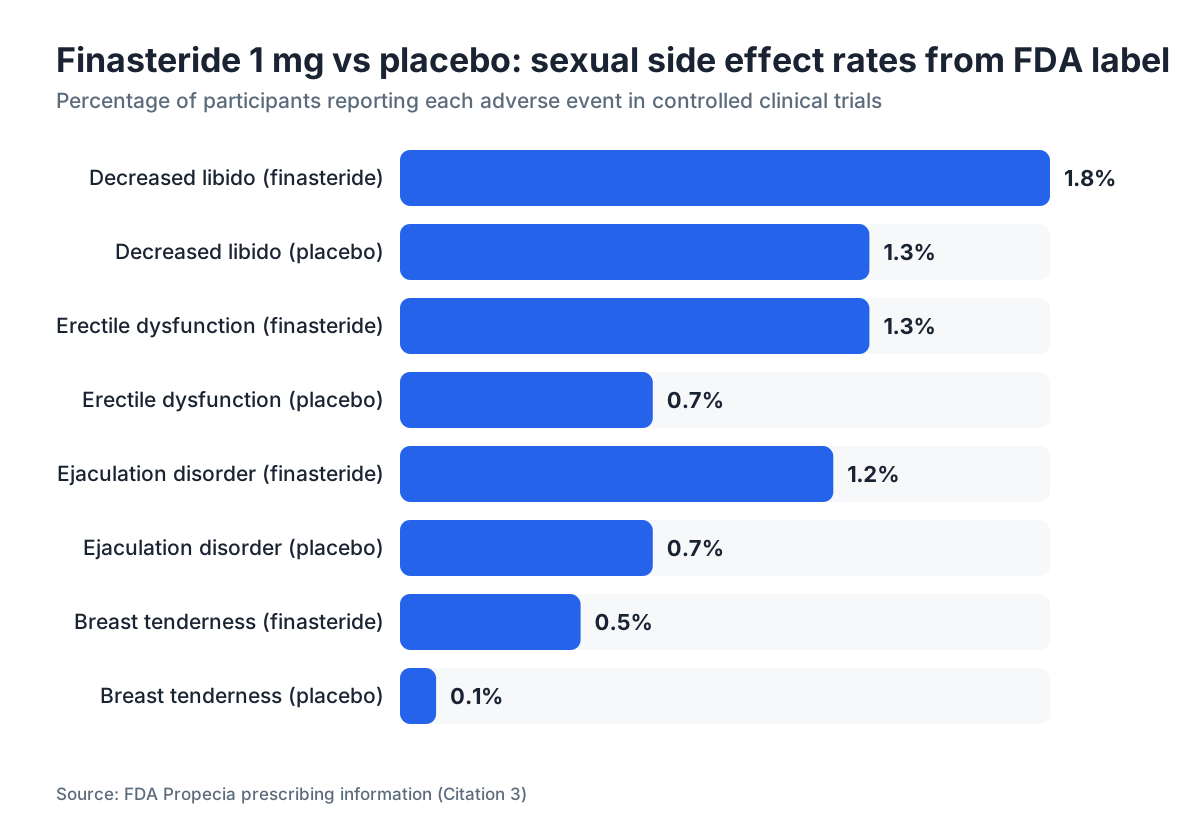
The FDA label for Propecia lists the following rates from clinical trials:
| Side effect | Finasteride 1 mg | Placebo |
|---|---|---|
| Decreased libido | 1.8% | 1.3% |
| Erectile dysfunction | 1.3% | 0.7% |
| Ejaculation disorder | 1.2% | 0.7% |
| Breast tenderness/enlargement | 0.5% | 0.1% |
Those numbers come from controlled trials with careful monitoring and reporting. Real-world rates are harder to pin down because men don't always report sexual symptoms to doctors, and some men who develop symptoms stop the drug without documenting it.
A 2021 survey-based study in the Journal of Sexual Medicine found self-reported rates of sexual dysfunction considerably higher than trial data, around 11-15% in some samples [5]. Survey studies carry well-known limitations: selection bias toward men already worried about side effects, recall bias, and no control group. So the truth probably sits somewhere between the trial numbers and the survey numbers. Nobody has clean population-level data here.
The placebo effect (and nocebo effect) is real too. When men are warned about sexual side effects, a percentage develop them regardless of whether they're taking the active drug. One blinded study found that informing men about sexual side effects before starting finasteride tripled the reported rate compared to men who weren't warned [6]. That's not a reason to hide the risks, but it's a reason to read uncontrolled survey data with care.
Does finasteride-related ED go away when you stop?
For most men, yes. The FDA label notes that adverse reactions resolved in men who discontinued therapy [3]. In the controlled trials, the great majority of men who stopped finasteride due to sexual side effects reported resolution within weeks to a few months.
The problem is that 'most men' is not all men. A subset of users report symptoms that persist for months or years after stopping. This cluster of persistent post-discontinuation symptoms, sometimes called post-finasteride syndrome (PFS), is the most contested and anxiety-inducing part of this conversation.
The Post-Finasteride Syndrome Foundation and several researchers have documented case series of men reporting persistent ED, low libido, genital numbness, depression, and cognitive symptoms after stopping the drug. The FDA added a label update in 2012 acknowledging reports of persistent sexual dysfunction after discontinuation [3]. That update was not based on a randomized trial confirming causation. It came from adverse event reports, which means the agency found the reports credible enough to include but could not prove they weren't coincidental.
The largest prospective study to date on PFS (Irwig, 2012, Journal of Sexual Medicine) followed 54 men with sexual side effects after finasteride. It found persistent dysfunction in a significant portion after stopping, with a mean symptom duration beyond 14 months [7]. This was a case series without a control group, so caution applies. But it was a real study with real patients, and dismissing it entirely isn't honest.
My read: the evidence strongly supports that most men who get sexual side effects on finasteride see them resolve after stopping. The evidence also supports that a minority do not, and that minority is real even if their numbers are uncertain. Anyone starting finasteride should know both halves of that sentence.
What is post-finasteride syndrome and how strong is the evidence?
Post-finasteride syndrome refers to a cluster of symptoms (sexual dysfunction, mood disturbance, cognitive difficulty, genital anesthesia) that some men report persisting for six months or more after stopping finasteride. It's not an official FDA diagnosis and it doesn't appear in the DSM or ICD codes. It's a descriptive label that a patient community and some researchers use for something real that doctors don't yet have a clean explanation for.
The proposed biological mechanisms include persistent changes in neurosteroid levels, epigenetic alterations to androgen receptor expression, or lasting disruption of 5-alpha reductase activity in neural tissue. A 2019 study in Scientific Reports found altered cerebrospinal fluid neurosteroid profiles in men who self-identified as having PFS compared to controls [2]. That's one study, and it was small (64 participants), but it points to something measurable, not purely psychological.
The honest position is that PFS is biologically plausible, documented in case series and adverse event reports, acknowledged by the FDA on the label, and not yet proven in a blinded randomized trial to be causally distinct from underlying mood or sexual disorders. Both things are true at once.
If you're a man deciding whether to take finasteride, the relevant question is: how much does that uncertainty bother you? If you're prone to anxiety, have a history of depression, or have pre-existing sexual dysfunction, your risk calculus might differ from someone without those factors.
For additional context on how DHT blockers work as a class and where finasteride fits, that piece breaks down the mechanisms in more detail.
Are some men more likely to get sexual side effects from finasteride?
Probably yes, though the predictive data is thin.
Men who already have some degree of erectile dysfunction before starting finasteride seem to be at higher risk of worsening. Men with baseline low testosterone or hypogonadism may also be more vulnerable, since finasteride's DHT suppression would push androgen signaling lower in an already low-androgen environment.
Age matters. Younger men (say, under 25) are an interesting case: their hair loss is often more aggressive, but they also have the longest potential exposure to the drug, the most years of sexual activity at stake, and possibly higher baseline testosterone that provides a buffer. The most vocal PFS communities skew toward men who started finasteride in their early twenties.
Genetic variability in androgen receptor sensitivity and 5-alpha reductase isoform expression may also predict who responds badly, but clinical genetic testing for this doesn't currently exist in a usable form.
Psychological factors genuinely matter too, in both directions. The nocebo effect (side effects caused by expecting side effects) is real and measurable [6]. But that doesn't mean reported symptoms are 'just in your head.' If you read every forum post about finasteride side effects before starting, you may have primed yourself to notice things you'd otherwise ignore. That's not weakness. That's how human cognition works. It's one reason your prescribing doctor should have a frank conversation with you before you start, not hand you a prescription and send you to Google.
How do you tell if your ED is from finasteride or something else?
This is genuinely tricky, because ED is common in men of all ages for many reasons: cardiovascular health, sleep apnea, stress, relationship factors, alcohol, diabetes, low testosterone unrelated to finasteride, and simple baseline anxiety about sexual performance.
The clearest signal is timing. Did symptoms appear after starting finasteride and have they persisted or worsened while on it? If you had solid erectile function before the drug and developed problems within weeks to a few months of starting, finasteride is a reasonable suspect. If symptoms showed up two years in, with a lot of life stress during that period, the connection is murkier.
A useful (if uncomfortable) trial is a drug holiday. Stop finasteride for 4-8 weeks and see if function improves. If it does, restart and see if symptoms return. That pattern is fairly strong evidence the drug is involved. Discuss this with your doctor rather than doing it unilaterally, since stopping and restarting has implications for hair loss progression.
Get bloodwork. Check total testosterone, free testosterone, LH, FSH, estradiol, and prolactin. Finasteride itself tends to raise serum testosterone slightly (because less is converted to DHT), so low testosterone on finasteride suggests another cause. If your testosterone is low, that's a separate problem worth treating regardless of what you do about finasteride.
A urologist or sexual medicine specialist is the right person to see here. General practitioners often have limited training in male sexual medicine, and dermatologists who prescribe finasteride for hair loss are not the right person to manage an ED workup.
Can you treat ED while staying on finasteride?
Yes, and many men do. PDE5 inhibitors (sildenafil, tadalafil, vardenafil) work independently of DHT pathways and stay effective in men on finasteride [8]. If your ED on finasteride is mild to moderate, a low-dose daily tadalafil prescription is a reasonable option that doesn't require you to abandon a drug that's working for your hair.
That said, using a second prescription drug to manage the side effects of the first is a real cost and a real complexity add to your life. Some men are fine with that trade-off. Others aren't.
Lifestyle factors matter here more than most people realize. Regular aerobic exercise, adequate sleep, less alcohol, and managing cardiovascular risk factors all improve erectile function through mechanisms that have nothing to do with finasteride. If you're on finasteride and developing mild ED, addressing those factors first is cheap, safe, and often effective.
Some clinicians have tried switching patients from oral finasteride to topical finasteride, on the theory that topical delivery produces lower systemic DHT suppression while keeping scalp DHT suppression. Early data suggests topical formulations do produce lower serum DHT reductions than the oral pill [9]. Whether that translates to fewer sexual side effects hasn't been proven in a large randomized trial, but the pharmacokinetic rationale is plausible.
If you're weighing hair loss treatments alongside their side effect profiles, the finasteride and minoxidil overview covers how these drugs work together and what that means for side effect stacking.
If you're at the point of reconsidering finasteride entirely and thinking about a hair transplant as a surgical alternative, that's a separate decision tree with its own trade-offs.
What does the FDA label actually say about sexual side effects?
The FDA-approved prescribing information for Propecia (finasteride 1 mg) lists sexual adverse events under the adverse reactions section and states that patients should be informed of this risk before treatment. The 2012 label update added language noting that reports of sexual dysfunction persisted after discontinuation in some patients [3].
The language from the FDA label includes: "In clinical studies for PROPECIA, 1.2% of patients treated with PROPECIA reported decreased libido and 1.3% reported erectile dysfunction... these adverse events resolved in patients who discontinued therapy with PROPECIA."
The label also notes: "There are reports of cases of sexual dysfunction that have continued after discontinuation of the treatment. However, the majority of these reports are spontaneous adverse event reports from post-marketing experience."
That distinction matters. The trial data supports resolution. The post-marketing reports suggest persistent symptoms in some patients. The FDA includes both because both are real sources of evidence with different reliability levels.
The FDA does not list post-finasteride syndrome by name as a diagnosed condition, but it does acknowledge persistent post-discontinuation sexual dysfunction as a labeled risk. That's meaningful regulatory acknowledgment, well beyond internet speculation.
For comparison, the FDA label for Proscar (finasteride 5 mg for BPH) lists similar sexual adverse events at somewhat higher rates, which fits the higher systemic DHT suppression at that dose [11].
Is there good evidence that finasteride causes long-term hormonal damage?
The evidence here is genuinely mixed, and the answer depends on what you mean by 'long-term' and 'damage.'
Serum testosterone actually tends to rise modestly on finasteride, because less testosterone gets converted to DHT, so it accumulates. That's not damage in any conventional sense. The concern is more about what happens at tissue and neurosteroid levels over months and years of use.
Research by Melcangi and colleagues found altered neurosteroid levels in men with PFS compared to controls, including the 2019 Scientific Reports study measuring cerebrospinal fluid neurosteroids in PFS patients, which found significant differences from healthy controls [2]. These are small studies in a population who self-selected as having problems, which limits generalizability. But 'neurosteroid changes are detectable' is a different claim from 'neurosteroid changes are permanent.'
On the hormonal recovery question: in the large majority of men who stop finasteride, DHT returns to baseline within 1-2 weeks, because the enzyme inhibition is reversible [1]. Testosterone and DHT normalize. Most men's hormonal profiles look normal within a month of stopping. The small group with apparent persistent symptoms despite normalized hormones is the mystery researchers are still trying to explain.
One proposed explanation involves epigenetic changes: finasteride may alter methylation patterns in genes related to androgen signaling, and those changes could persist even after DHT normalizes. This is an active research area, not a proven mechanism. Treating it as established fact in either direction (either 'finasteride causes permanent epigenetic damage' or 'epigenetic effects are impossible') would be premature.
If you want to track your own hormone levels before and during finasteride use, that's a reasonable thing to ask your doctor for. Baseline testosterone, free testosterone, and DHT give you a reference point.
Should you take finasteride if you're worried about erectile dysfunction?
That's a personal decision, and I'm not going to pretend otherwise. But here's how I'd frame the risk-benefit math honestly.
For every 100 men who take finasteride for hair loss, somewhere between 1 and 4 will likely experience some degree of sexual side effect, depending on whose data you trust [3][4]. Of those who do, the majority will see symptoms resolve within weeks to months of stopping. A minority (probably single-digit percentage of all finasteride users, not of those with side effects) may have symptoms persist for longer.
Set against that: finasteride is one of only two FDA-approved treatments for male pattern hair loss. At roughly $30-80/month for generic versions, it's affordable. It prevents hair loss in about 83% of men who take it and produces visible regrowth in around 66% over two years [10]. Hair loss has documented negative effects on quality of life, self-esteem, and in some studies, psychological wellbeing. That cost is real too, even if it's harder to quantify.
If you have pre-existing ED, depression, or significant anxiety about sexual performance, those are reasons to have a longer conversation with your doctor and possibly explore topical finasteride, minoxidil for men as a solo option, or hair loss supplements as a lower-risk starting point while you decide.
If you're in your early twenties with aggressive hair loss and no pre-existing sexual health concerns, the statistical probability of serious sexual side effects is low, though not zero.
If you want a data-informed starting point before talking to a doctor, MyHairline's free AI hair analysis at /scan can help you understand your current pattern and how quickly you might expect progression, which matters for deciding how aggressively to treat.
The decision isn't 'finasteride is safe' or 'finasteride is dangerous.' It's 'does the probability-weighted benefit outweigh the probability-weighted risk for me, specifically.' That answer differs by person.
What are the alternatives if you can't tolerate finasteride?
Several options exist, with different evidence levels.
Minoxidil (topical or oral) works through a completely different mechanism, has no effect on DHT, and has no established connection to sexual dysfunction. It's less effective than finasteride at preventing hair loss but is a reasonable alternative or companion. For a full comparison of the side effect profiles, see minoxidil side effects. For how the drugs work together, see the finasteride and minoxidil breakdown.
Topical finasteride (not yet FDA-approved in its branded form but available through compounding pharmacies in the US) produces much lower systemic DHT suppression than the oral pill. Some small studies show serum DHT reductions of 20-30% with topical versus 65-70% with oral [9]. The idea is that this keeps scalp DHT suppression meaningful while cutting systemic exposure. The sexual side effect data on topical finasteride is sparse. This is an area where the field genuinely needs better trials.
Dutasteride (Avodart) is a related drug that blocks both type 1 and type 2 5-alpha reductase, producing even more complete DHT suppression. It's not FDA-approved for hair loss (only for BPH) but is used off-label. It has similar or higher rates of sexual side effects compared to finasteride at equivalent androgenic suppression levels. It's not a solution for someone trying to avoid sexual side effects from this drug class.
Ketoconazole shampoo has weak anti-androgenic effects and some limited trial evidence for hair retention. Not a replacement for finasteride but potentially useful as an add-on.
For men who've lost significant hair already and don't want to rely on daily medication, hair transplant surgery has the best permanence, with no ongoing hormonal effects. It's expensive ($4,000-$15,000+ depending on the extent) and works best in men with stable donor areas, so it's usually not the first move for men under 30 with progressing loss.
Understanding what's driving your hair loss in the first place helps narrow down which alternative makes sense. The what causes hair loss primer covers the different mechanisms and which respond to which treatments.
Sources
- FDA, Propecia (finasteride 1 mg) prescribing information
- Melcangi RC et al., Scientific Reports 2019: Cerebrospinal fluid neurosteroids in post-finasteride syndrome patients
- FDA, Propecia (finasteride) label, including 2012 label update on persistent sexual dysfunction
- Mella JM et al., Journal of the American Academy of Dermatology 2010: Efficacy and safety of finasteride in male androgenic alopecia meta-analysis
- Traish AM et al., Journal of Sexual Medicine 2021: Survey-based study on sexual dysfunction rates in finasteride users
- Mondaini N et al., Journal of Sexual Medicine 2007: Nocebo effect of finasteride - informing men about sexual side effects triples reported rates
- Irwig MS, Journal of Sexual Medicine 2012: Persistent sexual side effects of finasteride in a 54-patient case series
- National Institutes of Health, MedlinePlus: PDE5 inhibitor drug information
- Caserini M et al., Drug Delivery 2016: Pharmacokinetics of topical finasteride in men with androgenetic alopecia
- Kaufman KD et al., Journal of the American Academy of Dermatology 1998: Finasteride 1 mg in the treatment of male androgenetic alopecia, 2-year trial
- FDA, Proscar (finasteride 5 mg) prescribing information
- European Medicines Agency, Finasteride 1 mg product information update