
TL;DR: Finasteride is an FDA-approved oral medication that blocks DHT, the hormone that shrinks hair follicles in androgenic alopecia. In clinical trials, 83-90% of men maintained or regrew hair after two years. It works best started early, requires daily use indefinitely, and carries a small but real risk of sexual side effects. It is not FDA-approved for women.
What is finasteride and how does it treat alopecia?
Finasteride is a 5-alpha reductase inhibitor. That enzyme converts testosterone into dihydrotestosterone (DHT), and DHT is the main driver of androgenic alopecia, the pattern hair loss that follows predictable thinning tracks on the scalp in genetically susceptible people. By blocking Type II 5-alpha reductase, finasteride at the 1 mg oral dose reduces scalp DHT by roughly 60% and serum DHT by about 70% [1].
That biochemical change matters because androgenic alopecia is fundamentally a follicle miniaturization process. DHT binds to androgen receptors in susceptible follicles, progressively shortening the anagen (growth) phase and shrinking the follicle itself over years. Less DHT means that miniaturization slows or stops, existing follicles can recover some diameter, and the hair cycle normalizes enough to produce visible regrowth in many men.
Finasteride for androgenic alopecia was approved by the FDA in 1997 under the brand name Propecia at the 1 mg dose, distinct from the 5 mg dose (Proscar) approved earlier for benign prostatic hyperplasia [1]. It is a once-daily oral pill. There is no topical finasteride formulation currently FDA-approved for hair loss, though compounded topical versions are widely prescribed off-label.
Here is the short version. Finasteride does not cure androgenic alopecia. It manages it. Stop taking it and DHT rebounds, follicle miniaturization resumes, and any regrown hair is typically shed within 6-12 months.
How well does finasteride actually work? What do the trials show?
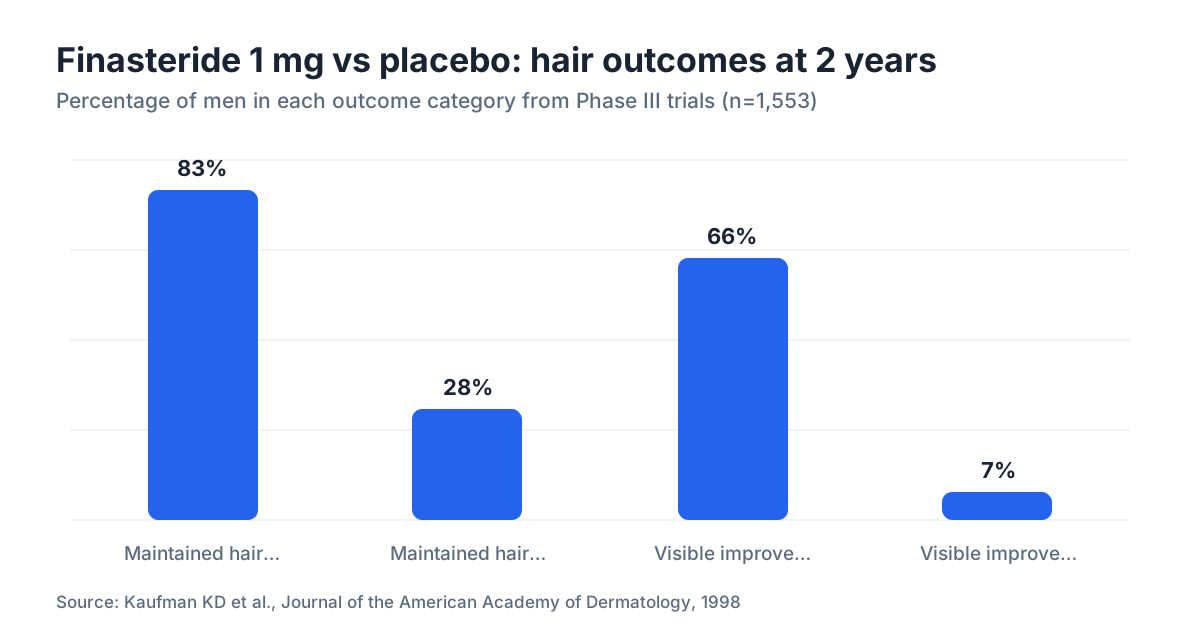
The core evidence comes from two Phase III trials published in the Journal of the American Academy of Dermatology in 1998, pooling 1,553 men with male-pattern hair loss (Norwood II vertex through Norwood IV). After two years, 83% of men taking 1 mg finasteride maintained their hair count versus baseline, compared with 28% on placebo. Hair count in the target zone (vertex scalp) increased by an average of 107 hairs per square inch in the finasteride group; the placebo group lost an average of 75 hairs per square inch [2].
Photographic global assessments told a similar story: 66% of finasteride-treated men showed improvement at two years versus 7% on placebo [2]. An extension of that trial running out to five years showed that efficacy held, with hair count remaining above baseline through 48 months [2].
For the frontal hairline specifically, results are more modest. The same trials found statistically significant but smaller improvements at the anterior scalp compared with the vertex. This matters because a receding hairline is often what men notice first, but the vertex (crown) responds better. Men with a receding hairline should set realistic expectations: finasteride is more likely to halt further recession than to dramatically restore the frontal zone.
Long-term real-world data largely confirm the trial findings. A study published in Dermatology and Therapy in 2019 following 3,177 men over 10 years found that roughly 91.5% reported no further hair loss progression while on finasteride [3]. These are observational data, not randomized, but the consistency with the trial results is reassuring.
One honest caveat: most trial participants were in the 18-41 age range with mild-to-moderate loss (Norwood II-IV). Men with more advanced loss (Norwood V-VII) are underrepresented in the data, and the consensus among dermatologists is that the drug works less impressively once follicles are truly dead rather than miniaturized.
How long does finasteride take to show results?
Expect nothing visible for the first three months. Finasteride stabilizes the follicle environment before any new growth is detectable, and the hair growth cycle itself runs on a schedule of months, not weeks.
The typical timeline works like this. By 3-6 months, many men notice a decrease in shedding, which is usually the first sign the drug is working. Between 6-12 months, early regrowth may appear, especially at the crown. At 12 months, the clearest assessment of whether you are a responder is possible. Peak regrowth, based on the clinical trials, generally occurs at around 24 months [2].
One thing worth flagging: some men notice increased shedding in the first 1-3 months. This is likely a follicle cycling effect as hairs reset their anagen phase, not a sign the drug is failing. The same phenomenon is well-documented with minoxidil. It is temporary.
If you have seen zero change at 12 months, there are two realistic possibilities. You are a genuine non-responder (roughly 10-17% of men in trials fell into this category). Or you are not taking it consistently. Finasteride has a half-life of around 6-8 hours, meaning missed doses matter more than with drugs that accumulate heavily. Daily consistency is not optional.
What are the real side effects of finasteride?
This is the part people worry about most, and it deserves an honest answer rather than dismissal or catastrophizing.
The FDA-approved label lists sexual side effects including decreased libido, erectile dysfunction, and decreased ejaculate volume [1]. In the Phase III trials, these occurred in 3.8% of finasteride-treated men versus 2.1% on placebo over two years. The difference is statistically significant but the absolute numbers are small. The trials also documented that in most men these effects resolved after stopping finasteride and in some while continuing it [2].
Post-finasteride syndrome is a separate and more contested topic. Some men and advocacy groups report persistent sexual, neurological, and psychological symptoms after stopping finasteride. The FDA updated the label in 2012 to include reports of libido disorders, ejaculation disorders, and orgasm disorders that continued after discontinuation [1]. The scientific literature here is genuinely divided: a 2020 systematic review in Dermatologic Therapy concluded that quality evidence is insufficient to establish causation, but that does not mean the experiences of affected individuals are fabricated. Nobody has good data on the true incidence of persistent effects. The honest answer is that the risk appears low but is not zero.
Other side effects documented in the label include gynecomastia (breast tissue growth in men), testicular pain, and hypersensitivity reactions. There is also the PSA issue: finasteride suppresses prostate-specific antigen levels by roughly 50%, which can mask early prostate cancer if a clinician does not account for it. Men over 40 should tell their doctor they are on finasteride before any PSA test [1].
Finasteride is a teratogen for male fetuses. Women who are or may become pregnant must not handle crushed or broken tablets. This is a hard contraindication, not a precaution [1].
For most men, finasteride is well-tolerated long-term. The risk-benefit calculation is individual, and the conversation belongs with a prescribing physician who knows your full history.
Does finasteride work for female pattern hair loss?
This is where the picture gets genuinely complicated. Finasteride is not FDA-approved for hair loss in women. The evidence base is smaller, and the results in trials have been inconsistent.
A randomized controlled trial published in the Journal of the American Academy of Dermatology in 2000 tested 1 mg/day finasteride in 137 postmenopausal women with androgenetic alopecia and found no significant difference versus placebo over 12 months [4]. That study is often cited as evidence finasteride does not work in women.
But the picture has more layers. Higher doses (2.5-5 mg/day) have shown benefit in some studies of women, particularly premenopausal women with elevated androgens, and a study in the British Journal of Dermatology found that finasteride 5 mg/day produced significant improvement in female androgenetic alopecia [5]. Off-label use at higher doses is common in clinical practice for women who have elevated DHT levels or who have not responded to other treatments.
The teratogen issue is the binding constraint for women of childbearing potential. Finasteride causes abnormal development of male genitalia in male fetuses, so any premenopausal woman using it must use highly reliable contraception. This is not a minor consideration.
For most women with pattern hair loss, the current standard first-line recommendation from the American Academy of Dermatology is minoxidil for men (and women), which has better evidence at standard doses in female patients [6]. Finasteride is generally considered a second- or third-line option in women, used off-label under specialist supervision.
What is the right dose of finasteride for hair loss?
For men with androgenic alopecia, the FDA-approved dose is 1 mg once daily [1]. This is not the same as Proscar (5 mg finasteride used for prostate enlargement), though some men and pharmacists do split Proscar tablets to reduce cost. The pharmacokinetics of the 1 mg dose were specifically studied for scalp DHT suppression, and the 1997 approval was based on that dose.
There is no strong evidence that higher doses produce proportionally better hair results. A dose-finding study found that 1 mg, 5 mg, and 0.2 mg all reduced scalp DHT significantly, with 1 mg hitting the practical plateau for hair-related benefit [2]. Going to 5 mg daily does not meaningfully increase DHT suppression but does increase systemic exposure.
Some prescribers are now writing for 0.5 mg every other day or similar reduced-frequency regimens to try to minimize side effect risk while maintaining DHT suppression. This is not established by trials and I would not count on the same efficacy.
Compounded topical finasteride (typically 0.1-0.25% in a solution) offers lower systemic absorption, with studies showing serum DHT suppression around 7-25% versus 70% with oral, which may reduce the risk of systemic side effects while still providing local scalp DHT suppression. The evidence base for topical finasteride is growing but remains smaller than for oral.
How does finasteride compare to minoxidil for alopecia?
These two drugs work through entirely different mechanisms, which is why combining them is a real strategy and more than upselling.
Minoxidil for men is a vasodilator that prolongs the anagen phase and increases follicle size through mechanisms that are still not fully understood. It does not reduce DHT. Finasteride reduces DHT but does not directly stimulate blood flow to follicles.
For men with androgenic alopecia, head-to-head data are limited, but the general clinical consensus is that finasteride produces more significant regrowth at the crown and better long-term maintenance, while minoxidil may act faster (visible effects sometimes at 4-6 months) and is available without a prescription. Minoxidil works in both men and women; finasteride's evidence base in women is much weaker at standard doses.
The combination is well-supported. A randomized trial published in Dermatology and Therapy in 2015 found that men using both finasteride and minoxidil had significantly greater hair density increases than either drug alone [7]. If you are serious about stopping androgenic alopecia and are an appropriate candidate for both, finasteride and minoxidil together is the strongest pharmacological approach short of a hair transplant.
Cost and accessibility differ a lot. Minoxidil (topical 5%) costs roughly $10-20/month over the counter. Generic finasteride 1 mg runs $20-50/month depending on pharmacy and insurance, plus the cost of a prescription visit. Oral minoxidil has also emerged as an option, typically prescribed at 2.5-5 mg daily for men, with a different side effect profile.
Here is the honest comparison. If you can only pick one, finasteride has stronger evidence for long-term maintenance in men. If you want maximum results and can manage both, combine them.
Is finasteride a DHT blocker and what does that mean for hair?
Yes. Finasteride is a DHT blocker, specifically through enzyme inhibition rather than receptor blockade (which is how drugs like spironolactone work). That distinction changes what the drug does and does not do.
DHT is synthesized from testosterone by the enzyme 5-alpha reductase. There are two main isoforms: Type I, found mostly in sebaceous glands and skin, and Type II, concentrated in hair follicles, the prostate, and seminal vesicles. Finasteride at therapeutic doses primarily inhibits Type II, which is why it hits scalp DHT hard and has the prostate-related effects [1].
Dutasteride inhibits both Type I and Type II, suppressing serum DHT by around 90% compared to finasteride's 70%. Some dermatologists use dutasteride off-label for androgenic alopecia in patients who did not respond adequately to finasteride. A Cochrane review published in 2020 found evidence suggesting dutasteride 0.5 mg produces greater hair count increases than finasteride 1 mg, but dutasteride is not FDA-approved for hair loss and carries a higher systemic DHT suppression that may increase side effect risk [8].
Here is the practical meaning of DHT blockade for hair. It works upstream. Rather than stimulating new growth directly (as minoxidil does), finasteride removes the hormonal signal that is destroying follicles. Think of it as stopping the damage rather than repairing it. Both are useful, which is again why the combination outperforms either alone.
Who is a good candidate for finasteride, and who should not take it?
Good candidates are men with confirmed androgenic alopecia (the pattern matters, more than diffuse thinning), particularly those in earlier Norwood stages (I-IV) where there are still miniaturized follicles to rescue rather than fully dead ones. Men who start earlier generally see better outcomes, which is the one consistently replicated finding across the literature.
Finasteride is a reasonable option if you have a family history of significant hair loss and want to stay ahead of it, even before the thinning is severe. Preventive use in genetically susceptible men is practiced but lacks long-term trial data in its own right.
Men who should not take finasteride, or should only do so with careful medical oversight: men with a personal or family history of prostate cancer (finasteride's effect on PSA complicates monitoring), men with liver disease (it is metabolized hepatically), men who are actively trying to conceive (finasteride has been associated with reduced sperm parameters in some studies, though effects appear reversible after discontinuation), and men with a history of depression or anxiety, given some reports of mood effects.
Women of childbearing potential face the teratogen constraint. Postmenopausal women or those with reliable contraception may be candidates for off-label use at higher doses under specialist supervision, especially if androgens are elevated.
Anyone with hair loss that is not androgenic in pattern, such as telogen effluvium, alopecia areata, or scarring alopecia, should not expect finasteride to help. DHT suppression is irrelevant when the mechanism of loss is autoimmune, inflammatory, or stress-related. Getting the diagnosis right before starting any drug matters.
What happens if you stop taking finasteride?
The effects of finasteride reverse. That is the clearest and most consistent finding in the literature.
When you stop, DHT levels return to baseline within roughly two weeks. The follicle miniaturization process resumes. Within 6-12 months of stopping, most men find their hair has regressed to approximately where it would have been without treatment, sometimes described as returning to the natural progression they would have experienced anyway. Regrown hair from finasteride is almost always shed.
This is not a reason not to use finasteride. It is a reason to go in with clear expectations. The drug works as long as you take it. It is a long-term commitment, not a course of treatment with a defined endpoint.
Some men stop finasteride because they experience side effects and find the side effects resolve after discontinuation. The FDA label notes that in the clinical trials, side effects resolved in men who discontinued the drug [1]. For the subset of men who report persistent symptoms (post-finasteride syndrome), the timeline is more variable and the mechanism is not established.
If you stop and restart, the drug appears to work again in most men. There is no evidence from trials of tachyphylaxis (the drug becoming less effective after a break). But the hair shed during the off period is not guaranteed to return, which argues for not stopping unless you have a genuine reason.
How much does finasteride cost, and do you need a prescription?
In the United States, finasteride for hair loss requires a prescription. You cannot buy it over the counter.
Brand-name Propecia (1 mg) has largely been displaced in practice by generic finasteride, which became available after the patent expired. Generic finasteride 1 mg costs roughly $20-50 per month at retail pharmacies without insurance, and significantly less through discount platforms like GoodRx or cost-plus pharmacy services, sometimes as low as $10-15/month [9].
The 5 mg Proscar tablet can be split into five pieces to approximate 1 mg dosing, which some men and doctors do to further reduce cost, though tablet splitting introduces dosing variability and the FDA has not approved this practice for hair loss.
Telehealth platforms have made prescriptions much more accessible in the last several years. A telehealth consultation for finasteride can cost $15-50 for the visit, after which a recurring prescription is usually straightforward. The AAD and most major dermatology guidelines still recommend baseline bloodwork and follow-up for anyone starting finasteride [6].
Outside the US, finasteride regulation and cost vary widely. In the UK it is available by prescription; some countries make it available over the counter. Always confirm your country's regulatory status before purchasing online, since counterfeit medications are a real issue in the unregulated online pharmacy space.
If you want a starting point for understanding where your hair loss currently stands before committing to a prescription, a tool like MyHairline's free AI scan (/scan) can help you identify your pattern and severity before your first appointment.
Can finasteride be combined with a hair transplant?
Yes, and this combination is standard practice. A hair transplant moves DHT-resistant follicles (typically from the back and sides of the scalp) to thinning areas. Those transplanted follicles are generally permanent because they carry their original DHT resistance. But the existing native follicles in the recipient zone and elsewhere on the scalp are still susceptible to DHT-driven miniaturization.
Without finasteride after a transplant, a man can continue to lose his native hair around and behind the transplanted grafts, creating an unnatural appearance over time as the surrounding hair thins further. Most hair transplant surgeons recommend continuing or starting finasteride around the time of transplant to protect remaining native follicles and maximize the long-term result.
The two approaches work well together in clinical practice, though there are no large randomized trials specifically on transplant plus finasteride versus transplant alone. The recommendation is based on the well-established mechanism (transplanted follicles are DHT-resistant; non-transplanted ones are not) and clinical experience.
If you are considering a transplant, be clear with your surgeon about your finasteride history. Stopping it in the period around surgery can cause a temporary shedding episode, which some surgeons prefer to avoid.
Should you be worried about finasteride and prostate cancer?
This is a legitimate concern that got significant attention from the Prostate Cancer Prevention Trial (PCPT), a large NIH-funded study published in the New England Journal of Medicine in 2003. That trial found that men taking finasteride 5 mg daily for 7 years had a 24.8% relative reduction in the prevalence of prostate cancer compared with placebo. But it also found a higher rate of high-grade (Gleason 7-10) tumors in the finasteride group [10].
Subsequent analysis and a follow-up study published in 2013 suggested that the apparent increase in high-grade cancers was likely an artifact of finasteride's effect on prostate volume (a smaller prostate makes biopsy sampling more efficient, making it easier to detect high-grade cancers that were already there) rather than a genuine carcinogenic effect [10]. The FDA reviewed this data and updated the finasteride labels in 2011 to mention the high-grade cancer finding, while most expert bodies including major urology associations do not consider finasteride at 1 mg to meaningfully increase prostate cancer risk.
The PSA suppression effect is the more immediately practical concern. Finasteride at 1 mg reduces PSA by approximately 50% in most men. If a doctor orders a PSA test without knowing the patient is on finasteride, a cancer-level PSA might appear normal. Men on finasteride should always disclose this to their prescriber and any ordering physician before PSA testing [1].
Sources
- FDA, Propecia (finasteride) prescribing information
- Kaufman KD et al., Journal of the American Academy of Dermatology, 1998
- Chordas C et al., Dermatology and Therapy, 2019 (10-year observational data, 3,177 men)
- Price VH et al., Journal of the American Academy of Dermatology, 2000
- Iorizzo M et al., British Journal of Dermatology, 2006
- American Academy of Dermatology, Hair loss: diagnosis and treatment guidelines
- Khandpur S et al., Dermatology and Therapy, 2015
- Suchonwanit P et al., Cochrane Database of Systematic Reviews (updated analysis), 2020
- GoodRx, finasteride 1 mg pricing data
- Thompson IM et al., New England Journal of Medicine, 2003; Goodman PJ et al. NEJM 2013 follow-up
- Mysore V, Dermatology and Therapy, 2012; topical finasteride review