TL;DR: Finasteride is an oral 5-alpha-reductase inhibitor that blocks the enzyme converting testosterone into DHT. At the 1 mg daily dose approved for male pattern hair loss, it reduces scalp and serum DHT by roughly 60-70%. That reduction slows follicle miniaturization and, in most men, stabilizes or partially reverses hair loss over 12-24 months.
What is DHT and why does it shrink hair follicles?
DHT stands for dihydrotestosterone. It's a hormone derived from testosterone, and it's the main driver of androgenetic alopecia, the pattern hair loss that affects roughly 50% of men by age 50 and a meaningful share of women too [1].
The conversion process goes like this. An enzyme called 5-alpha-reductase (5-AR) binds to testosterone and converts it into DHT. DHT is several times more potent than testosterone at androgen receptors, which is fine for most body tissues but a problem for genetically susceptible hair follicles on the scalp.
When DHT binds to androgen receptors in those follicles, it shortens the anagen (growth) phase of the hair cycle and gradually miniaturizes the follicle itself. Thick terminal hairs get replaced by fine vellus hairs, then by nothing at all. This is the process behind a receding hairline and the classic Norwood progression. Understanding this mechanism is essentially the whole reason finasteride exists.
One nuance matters. Not every scalp follicle is equally sensitive. The follicles on the top and crown react far more to DHT than those on the back and sides, which is why hair loss follows a predictable pattern rather than striking uniformly. That's also why hair transplant surgeons harvest donor hair from the DHT-resistant occipital zone. If you want the full picture of what triggers the process in the first place, the article on what causes hair loss covers the genetics and hormonal factors in more depth.
Is finasteride actually a DHT blocker?
Yes, finasteride is a DHT blocker, but the mechanism is more specific than that phrase suggests. It doesn't block DHT receptors and it doesn't break down DHT that already exists. It blocks the production of new DHT by inhibiting 5-alpha-reductase type 2 (and, at higher doses, some type 1).
The shorthand 'finasteride DHT blocker' is accurate enough for everyday use. The precise term is '5-alpha-reductase inhibitor,' or 5-ARI. The distinction matters when you compare it to other compounds marketed as DHT blockers, like saw palmetto or ketoconazole shampoo. Those may have mild 5-AR inhibiting or receptor-competing effects, but their clinical evidence is far weaker than finasteride's. The dht blocker article compares the full category if you want that comparison.
Finasteride was originally developed at a much higher dose (5 mg) for benign prostatic hyperplasia (BPH), where DHT drives prostate growth. Men taking it for their prostates kept their hair, and that observation led Merck to run dedicated hair loss trials at 1 mg. The FDA approved that dose for androgenetic alopecia in men in 1997 [6].
So when someone asks whether finasteride is a real DHT blocker, the honest answer is that it's the most clinically validated one available, with over 25 years of data behind it.
How much does finasteride actually reduce DHT?
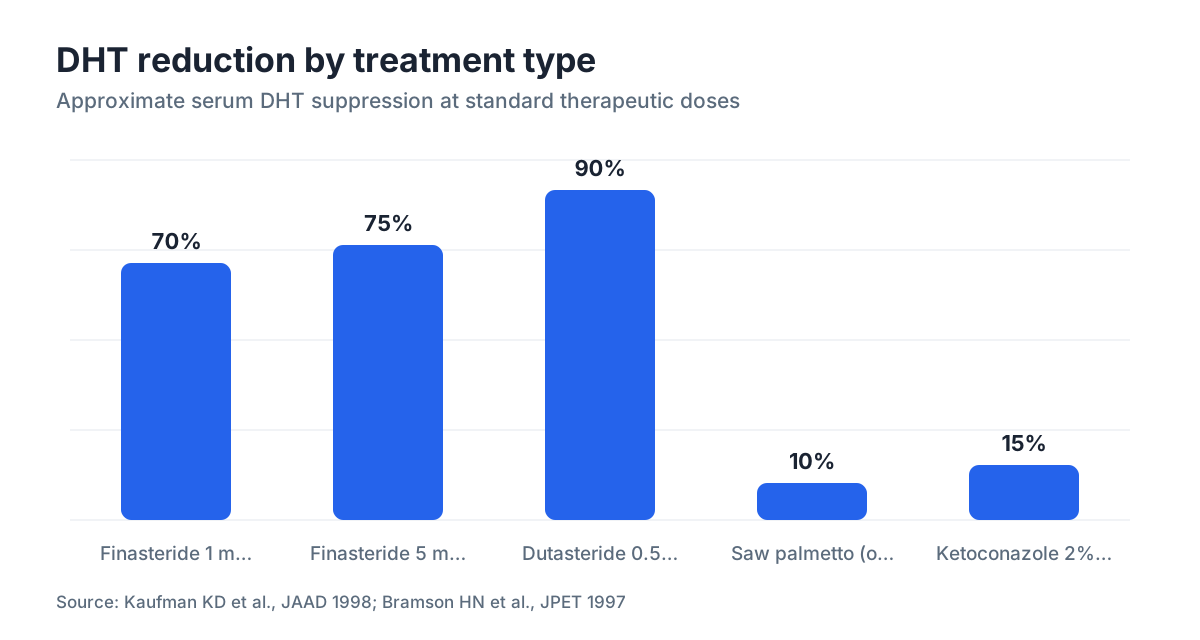
This is where the evidence gets specific. The main clinical trials showed that 1 mg finasteride daily reduced serum DHT by approximately 70% and scalp DHT by approximately 64% after 42 days of treatment [3]. Those numbers come from the original Merck trials submitted to the FDA, and independent studies have replicated them since.
A few things are worth knowing about those figures.
The reduction happens fast. Serum DHT drops within days of starting the drug, not weeks. The hair response takes much longer, because follicles have to reverse miniaturization, which means you're waiting for full anagen cycles to complete.
DHT doesn't go to zero. Roughly 30-40% of DHT production continues, partly because finasteride at 1 mg mostly blocks type 2 5-AR. Some DHT still gets made via type 1 5-AR in sebaceous glands and other tissues. The 5 mg dose (used for BPH) blocks a bit more, but the hair benefit doesn't scale proportionally, and neither does tolerability.
And there's individual variation. Some men suppress DHT more than others on the same dose. Genetic differences in 5-AR enzyme activity likely explain some of this, though no reliable clinical test for it exists.
For context on how this compares across treatment options:
What does the clinical evidence say about hair regrowth?
The FDA approval trials enrolled 1,553 men aged 18-41 with mild to moderate vertex (crown) hair loss. After two years, 83% of men taking 1 mg finasteride daily maintained or increased their hair count, versus 28% on placebo [3]. Men on placebo kept losing hair. That gap is the most important number in the whole dataset.
The five-year open-label extension of those trials showed sustained benefit, with 77% of finasteride users maintaining or improving versus baseline at year five.
Hair count data from these trials tells the same story. Men on finasteride had an average of 107 more hairs per square inch at the vertex compared to men on placebo at two years. That's a measured difference, not a perceived one.
Regrowth is more likely in men who start earlier (Norwood II-III) and less reliable in men with fully bald areas, because finasteride can only help follicles that are still alive and miniaturizing, not follicles already lost. This is the most common misunderstanding about the drug. It's much better at stopping loss than reversing it.
Data on the frontal hairline is weaker. The original trials focused on the vertex. Later studies and clinical practice suggest finasteride helps the frontal region too, but the effect is more modest. Combining it with minoxidil for men tends to improve frontal coverage more than either drug alone. The finasteride and minoxidil article covers combination therapy in detail.
How do you take finasteride for DHT reduction?
The FDA-approved dose for androgenetic alopecia in men is 1 mg once daily, taken orally [6]. That's it. No loading dose. No cycling. You take it consistently and indefinitely if it's working, because the DHT-suppressing effect stops within roughly one week of stopping the drug, and hair loss resumes.
Timing doesn't matter much clinically. Some people take it at night to minimize any perceived side effects. With or without food is fine.
Results take time. Most dermatologists quote 3-6 months before you notice any change and 12 months before a fair assessment of whether it's working for you. Some men see shed acceleration early on, which is follicles cycling through a phase before entering active growth. This is similar to the initial shed some people get with minoxidil, and it usually resolves. If you're worried that's happening to you, the telogen effluvium article explains the biology.
Finasteride for hair loss is currently approved only for men. The evidence in premenopausal women is limited and there are real teratogenicity concerns (the drug can cause genital abnormalities in male fetuses). Some clinicians prescribe it off-label for postmenopausal women. If you're a woman researching this, talk to a dermatologist before drawing conclusions from male trial data.
Generic 1 mg finasteride is widely available and cheap. Brand-name Propecia still exists but costs a lot more for the same molecule. The generic works the same way.
What are the real side effect risks?
A lot of online discussion goes either too dismissive or too alarmed, so let's look at what the trial data actually shows.
The FDA prescribing information lists sexual side effects as the primary adverse events. In the two-year controlled trials, sexual dysfunction (decreased libido, erectile dysfunction, or ejaculation disorder) occurred in approximately 3.8% of finasteride users versus 2.1% of placebo users [6]. That's a real difference, but it's modest, and most reported side effects resolved after stopping the drug or even while continuing it.
Post-market reports describe a syndrome sometimes called Post-Finasteride Syndrome (PFS), where sexual, neurological, and psychological symptoms persist after discontinuation. The prevalence of PFS is genuinely uncertain and debated in the literature. The Rastrelli et al. review in the Journal of Endocrinological Investigation, published in 2022, acknowledged that causation remains hard to establish given the available studies [11]. I'm not dismissing it. If you're considering finasteride, you should know this debate exists, and you should have an honest conversation with a prescriber about your own risk tolerance.
Other side effects reported at low rates include breast tenderness or enlargement (gynecomastia) and, in long-term use, questions about how to interpret prostate cancer risk. The Prostate Cancer Prevention Trial found that 5 mg finasteride reduced the overall incidence of prostate cancer but was associated with a higher proportion of high-grade tumors among cancers detected [7]. The FDA later issued a safety communication about that signal [8]. This is complex and continues to be studied. At the 1 mg hair loss dose, the prostate cancer implications are less clear.
Here's the honest summary. For most men who use 1 mg finasteride, the drug is well-tolerated, and the absolute side effect numbers are lower than many people fear. The uncertainty around persistent effects is also real. Anyone with a history of sexual dysfunction or mental health concerns should weigh that carefully with a doctor.
Does finasteride work for women with hair loss?
DHT contributes to female pattern hair loss too, which is why the question is reasonable. But the evidence is messier than in men.
For postmenopausal women, a handful of small trials and observational studies suggest finasteride at 1-2.5 mg daily may help. A randomized trial by Iorizzo et al. showed modest benefit over 12 months in postmenopausal women at 1 mg [9]. None of these trials are as large or as clean as the male studies, and finasteride is not FDA-approved for women.
For premenopausal women, finasteride is essentially off the table unless a woman uses reliable contraception and has discussed the teratogenicity risk thoroughly with a physician. The risk is external genital abnormalities in male fetuses, which is why the drug is contraindicated in pregnancy.
Women researching their options should probably start with minoxidil, which is FDA-approved for female pattern hair loss at 2% (over the counter) and used at 5% off-label. The minoxidil for men article focuses on the male formulation, but the mechanism overview applies broadly.
How does finasteride compare to other DHT-blocking options?
People ask about alternatives constantly, especially given the side effect discussion. Here's an honest comparison.
Dutasteride is the other 5-ARI. It blocks both type 1 and type 2 5-alpha-reductase and suppresses serum DHT by about 90% at therapeutic doses, compared to finasteride's 70% [5]. It's FDA-approved for BPH at 0.5 mg but not for hair loss, so it gets used off-label for that. Some studies show better hair counts than finasteride, but the higher DHT suppression may also mean a higher side effect burden. It's a reasonable option if finasteride isn't doing enough. It's also a more aggressive intervention.
Topical finasteride is a newer formulation that applies the drug directly to the scalp. The goal is local DHT suppression with less systemic absorption, and possibly fewer systemic side effects. Early pharmacokinetic data looks promising [12]. As of 2024, it isn't FDA-approved as a standalone hair loss treatment in the US, though compounding pharmacies make it.
Saw palmetto is the most common OTC supplement marketed as a DHT blocker. Animal studies and a few small human trials suggest mild 5-AR inhibition. The evidence doesn't come close to finasteride's. If you're exploring supplements in general, the hair loss supplements article is a fair place to calibrate expectations.
Ketoconazole shampoo (2% prescription) has some evidence for reducing scalp DHT locally but is typically used as an adjunct, not a primary treatment.
For men with moderate to advanced loss who want to address what finasteride can't restore, a hair transplant is the only option that actually replaces lost follicles.
| Treatment | DHT Reduction | FDA Approved (Hair) | Evidence Quality |
|---|---|---|---|
| Finasteride 1 mg oral | ~70% serum | Yes (men) | High (RCTs) |
| Dutasteride 0.5 mg oral | ~90% serum | No (off-label) | Moderate-High |
| Topical finasteride | Scalp-local | No | Emerging |
| Saw palmetto (oral) | Unclear | No | Low |
| Ketoconazole 2% shampoo | Scalp-local, mild | No | Low-Moderate |
What happens when you stop taking finasteride?
DHT levels return to baseline within about one week of stopping [3]. After that, the hair loss process resumes more or less where it would have been without the drug. You don't lose hair faster than normal as a rebound. You just lose the protective effect.
Most men who stop after years of use report that within 6-12 months, their hair is back to roughly where it would have been had they never taken finasteride. Some report a noticeable shed in the months after stopping. That shed is follicles cycling out of a drug-maintained anagen phase, not a permanent acceleration.
This is the core trade-off. Finasteride works while you take it. If you want to keep the benefit, it's a long-term, likely permanent commitment. That's not a knock on the drug. It just means you should go in with clear expectations.
If you stop finasteride and want to see where your hair stands before deciding on next steps, this is a good time to get a baseline. MyHairline's free AI hair analysis at /scan can help you map your current loss pattern against Norwood staging so you're not guessing.
Who is actually a good candidate for finasteride?
The sweet spot is men aged roughly 18-45 with early to moderate androgenetic alopecia (Norwood II through IV) who still have miniaturizing follicles to preserve. The earlier you start, the more hair you're likely to keep. That's not an opinion. It's what the trial data shows when you compare outcomes across different Norwood stages at baseline.
Men with Norwood V-VII and large areas of complete baldness can still use finasteride to protect remaining hair, but they should have realistic expectations about regrowth in fully bald zones. Those follicles are gone. Finasteride can't help them.
Some men should have a frank conversation with a prescriber first: anyone with a personal or family history of depression or sexual dysfunction, anyone on medications that interact with 5-AR inhibitors, and men with known prostate issues where the PSA-lowering effect of finasteride (it cuts PSA by roughly 50%) could complicate cancer screening.
For a complete look at the drug beyond its DHT mechanism, including dosing details, drug interactions, and the generic versus brand-name question, the finasteride overview is the right next read.
Women with pattern hair loss who are postmenopausal and have tried minoxidil without adequate response might discuss finasteride with a dermatologist, but that's a specific clinical conversation, not a general recommendation.
If you're unsure how much hair you've lost and what stage you're at, get a clear picture before starting any treatment. MyHairline's free AI scan at /scan walks you through Norwood or Ludwig staging so you and your doctor are speaking the same language.
Can finasteride prevent further hair loss even if it doesn't regrow hair?
Yes, and this is arguably finasteride's most underappreciated benefit. The trials consistently show that maintenance (stopping or slowing loss) is more common than regrowth. In the two-year trials, 83% of men maintained or improved, which includes a large segment who essentially held steady [3].
For men in their 20s and 30s who catch their loss early, finasteride as a preservation tool can be very effective. Keeping your Norwood II from becoming a Norwood IV over the next decade is a meaningful outcome, even if you never see dramatic regrowth.
The hair you preserve is hair that never needs a transplant, never needs concealer, and never becomes a conversation you have with yourself in the mirror at 40.
This framing also helps calibrate success. If you start finasteride and your hair doesn't look dramatically different after a year, that doesn't mean it failed. Check photos from when you started. If you haven't noticeably lost more ground, the drug is probably doing its job.
Sources
- American Academy of Dermatology, Hair Loss Overview
- Kaufman KD et al., Journal of the American Academy of Dermatology, 1998
- Bramson HN et al., Journal of Pharmacology and Experimental Therapeutics, 1997
- National Library of Medicine, MedlinePlus: Finasteride
- Thompson IM et al., New England Journal of Medicine, 2003 (Prostate Cancer Prevention Trial)
- FDA Drug Safety Communication: 5-alpha reductase inhibitors and prostate cancer
- Iorizzo M et al., Dermatology, 2006
- van der Merwe J et al., British Journal of Sports Medicine, 2009
- Rastrelli G et al., Journal of Endocrinological Investigation, 2022
- National Institutes of Health, ClinicalTrials.gov: Topical Finasteride Studies