

TL;DR: Most COVID hair loss is telogen effluvium, a stress-triggered shed where follicles quit the growth phase early and rest. It usually starts 6 to 12 weeks after infection, peaks around month 3, and reverses on its own within 6 to 9 months. Most people need no treatment. Loss that drags past a year needs a dermatologist.
What is COVID hair loss and why does it happen?
The hair loss people report after COVID is almost always telogen effluvium, not the virus chewing through your follicles. Here's the distinction. Your body reads a serious illness as a physiological emergency, and in response, large numbers of growing follicles quit at once and drop into telogen, the resting phase [1]. Two to three months later, those resting hairs shed together, and you see clumps in the drain and on your pillow.
The virus itself isn't really the culprit. The fever is. So is the systemic inflammation, the metabolic stress, the wrecked sleep, and the plain fear of being seriously sick. Any one of those triggers telogen effluvium on its own. COVID often hands you several at once, which is why the shed can look alarming.
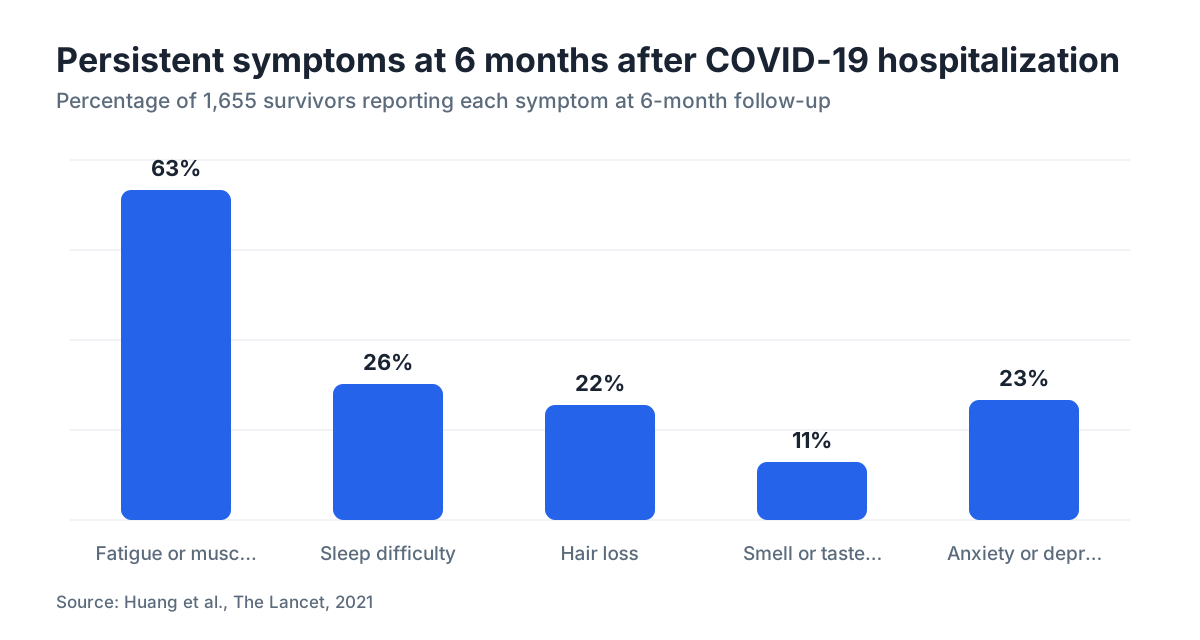
One prospective study of over 1,500 COVID patients found hair loss among the most common lingering symptoms, with roughly 22% of hospitalized patients reporting it at six months [2]. In people who weren't hospitalized the rate is lower, but it still turns up often. The sicker you were, the harder and longer the shed tends to run.
This is not androgenetic alopecia, the genetic kind tied to DHT and receding hairlines. Telogen effluvium doesn't kill follicles. They're dormant, not dead.
How long after COVID does hair loss start?
The delay is what throws everyone. You get sick in January, feel fine by February, and then in April your hair starts coming out in fistfuls. By then you've forgotten you were ever sick, or you blame something else entirely.
The gap exists because of the hair cycle. When a follicle gets shocked into telogen, it doesn't shed right away. It grips the hair for roughly two to three months before letting go. So the shed you see in month three or four reflects the hit your body took weeks earlier, during the acute illness [1].
Here's the typical timeline based on published data:
| Phase | Approximate timing after COVID infection |
|---|---|
| Acute illness | Week 0-2 |
| Recovery begins | Week 2-4 |
| Follicles shift to telogen | Week 1-4 (during stress) |
| Shedding begins | Week 6-12 |
| Shedding peaks | Month 2-4 |
| Shedding slows | Month 4-6 |
| Regrowth visible | Month 6-9 |
| Full density restored | Month 9-18 |
These ranges move around. People who had severe COVID, or who already had androgenetic alopecia brewing, may see the shed start sooner, last longer, and recover more slowly.
How much hair loss after COVID is normal?
Normal daily shedding runs 50 to 100 hairs. In telogen effluvium that jumps to 300 or more a day [11]. If you're pulling obvious clumps from the drain or waking up to a nest on the pillow, you're in effluvium territory, not everyday fluctuation.
Dermatologists use a quick self-test: the pull test. Grab a small bunch of 40 to 60 hairs between your thumb and fingers, apply firm but gentle traction, and draw down the length. More than about six hairs per grab is a positive result and points to active effluvium [3]. It won't replace a real diagnosis, but it tells you roughly where you stand.
Pattern matters too. Telogen effluvium thins the whole scalp evenly. It doesn't carve out a receding hairline or a bald circle. If you're losing hair specifically at the temples or crown in a recognizable shape, that's androgenetic alopecia, and COVID may have sped it up rather than started it. Patchy round bald spots point to alopecia areata, a separate immune-driven condition [4].
Get off Google and see a doctor when the shed doesn't slow after six months, when scalp starts showing through diffuse thinning, or when you see any of the atypical patterns above.
Does COVID directly damage hair follicles, or is the stress the real culprit?
This is still an open research question. The honest answer: probably both, but stress dominates.
The physiological stress model holds up well. High fever alone is a classic effluvium trigger. The psychological weight of illness, hospitalization, and isolation is another. Nutritional gaps common during COVID (zinc, iron, vitamin D in particular) pile on [5].
Some researchers argue the virus may hit follicles more directly. ACE2 receptors, the door SARS-CoV-2 uses to enter cells, sit in the outer root sheath of hair follicles [6]. Early lab work suggested the virus can infect follicular cells in a dish. Whether that means real follicle damage in actual patients is far less clear. The clinical picture looks overwhelmingly like stress-driven effluvium, not some new pattern of permanent destruction.
Practically speaking: if your shed follows the classic two to four month delay and spreads evenly across the scalp, it's almost certainly telogen effluvium. If something looks off, a dermatologist can run trichoscopy or take a scalp biopsy to check for inflammatory changes that would flag a different diagnosis.
The ACE2 angle gets thrown around online, but don't let it scare you. People who recover from COVID hair loss regrow normally. You wouldn't see that if the follicles were structurally wrecked.
Does COVID hair loss grow back?
Yes. In most people it grows back on its own, and that's the whole signature of telogen effluvium. Once the trigger is gone and the body settles, follicles cycle back into anagen, the growth phase, and push out new hair [1].
Regrowth usually shows up around month six after the shedding peaks. It often looks like a fringe of short, fine hairs along the hairline or scattered over the scalp. People mistake it for fuzz or baby hairs when it's actually the growing tips of new shafts.
Full thickness takes 12 to 18 months, because hair grows only about half an inch a month [12]. You're more than waiting for follicles to switch back on. You're waiting for the new hairs to grow long enough to blend with what's left. If your hair was long before the shed, plan on that full 12 to 18 month stretch.
Nobody should promise you a complete recovery. In a small group, mainly people whose genetic hair loss COVID dragged forward early, regrowth may settle at a lower density than before. The what causes hair loss guide breaks down effluvium versus permanent patterned loss in more detail.
Hit the nine-month mark with no sign of regrowth? See a dermatologist. That's the point where treatment options are worth a real conversation.
Are some people more likely to lose hair after COVID?
Severity of illness is the strongest predictor. People who were hospitalized, ran high fevers for days, or landed in the ICU shed more than people who had a mild case [10].
Other things stack the odds:
Existing androgenetic alopecia. COVID can expose or speed up genetic hair loss in someone already on that path. If you were a quiet Norwood 2 drifting toward Norwood 3, a big stressor can shove you there faster. This kind of loss doesn't fully reverse with time alone.
Nutritional status going in. Iron deficiency in particular is independently tied to telogen effluvium. Low ferritin before COVID meant higher risk [5].
Being female. Women notice telogen effluvium more, partly because longer hair makes diffuse thinning obvious, and partly because hormonal shifts (postpartum and perimenopausal changes included) leave the body more effluvium-prone [3].
High stress during recovery. Anxiety about long COVID, isolation, and broken sleep all keep a low-grade physiological stress running, which can drag the shed past the usual window.
What actually helps COVID hair loss recover faster?
No treatment has been shown in a randomized controlled trial to speed recovery from COVID-related telogen effluvium specifically. That's the honest starting point.
What does have evidence in effluvium generally:
Fix nutritional gaps first. Get a blood panel for ferritin, serum iron, zinc, vitamin D, and B12 before you buy a single supplement. Taking iron when you're not deficient does nothing for hair and carries real risk. Ferritin below 30 ng/mL is low enough that many dermatologists treat it even without frank anemia [5].
Minoxidil. The one topical with solid evidence for speeding regrowth in effluvium is minoxidil. It's not a cure, but it can shorten the visible thinning stretch by nudging more follicles back into anagen sooner. The minoxidil for men guide covers dosing and what to expect. If the oral form is on your mind, read the oral minoxidil article, since the side effect profile differs.
Manage the stress you can control. Sleep, exercise, and lowering your psychological load all count here. This isn't vague wellness talk. Sustained cortisol keeps signaling follicles to stay in telogen.
Go easy on styling. Tight ponytails, extensions, and heat won't cause effluvium, but they make it worse by loading traction onto already-fragile hairs.
Skip most supplements sold for COVID hair loss. Biotin is the worst offender. Unless you're actually biotin-deficient (rare), it does nothing for growth and skews thyroid lab results at high doses [3].
If your shed has run past six months and won't slow, that's when a dermatologist talk about minoxidil, or other options, becomes worthwhile rather than premature.
Can COVID trigger permanent hair loss?
This is the question most people are quietly scared to ask. Short answer: usually no, but there are cases where the line blurs.
Pure telogen effluvium from COVID reverses. The follicles return to normal cycling once the stress clears.
The tricky cases are people who had quiet, early androgenetic alopecia before COVID. In them, the illness can accelerate a miniaturization process that was already creeping along. Miniaturized follicles make progressively finer, shorter hairs and eventually stop making visible hair at all. Once that's meaningfully advanced, it doesn't undo itself. You'd be looking at finasteride or finasteride and minoxidil combined to slow further loss, not to reverse what's gone.
There are also rare reports of COVID triggering or worsening alopecia areata, an autoimmune condition where immune cells attack follicles. Different mechanism, different treatment.
How do you tell which camp you're in? The pattern gives it away. Diffuse thinning across the whole scalp that started two to four months after illness is almost certainly effluvium. Recession at the temples, thinning at the crown, or a shape that matches the Norwood scale points to androgenetic involvement. A dermatologist can often read it by looking and tugging a few hairs. Trichoscopy or a scalp biopsy settles any doubt.
Want a fast read on where your hairline actually sits right now? The free AI scan at myhairline.ai can analyze your photos and help you tell diffuse effluvium from a patterned recession before you book a visit.
Does COVID hair loss look different from other types of hair loss?
Yes, and the differences change what you do about it.
COVID-related telogen effluvium shows up as diffuse shedding across the whole scalp. You lose volume everywhere instead of in a set shape. The hairline stays put. The crown doesn't open into a circle. You just have less hair, uniformly.
Androgenetic alopecia (male or female pattern loss) has a signature distribution. In men it tracks the Norwood scale, hitting temples and crown first. In women it widens the central part. The receding hairline article covers early androgenetic loss in men.
Alopecia areata makes smooth, coin-shaped bald patches, sometimes with short exclamation-mark hairs at the edge. The scalp underneath looks normal.
Traction alopecia follows the hairline where tension pulls, usually from tight styles.
Frontal fibrosing alopecia carves a band of recession with faint redness or scaling at the hairline edge, and it's common in postmenopausal women.
If your post-COVID loss doesn't match the diffuse pattern, press a dermatologist for a specific diagnosis rather than assuming effluvium. These conditions aren't interchangeable, and some need prompt treatment to prevent permanent damage.
Should you see a doctor, or wait it out?
Most COVID hair loss needs no medical treatment. It resolves. Waiting is a fair strategy for the first six months.
See a dermatologist if:
Shedding hasn't slowed by month six after the peak. Persistent shedding past six months can mean chronic effluvium, a nutritional deficiency, thyroid trouble, or an underlying condition that's now the main driver.
You're seeing patchy bald areas instead of diffuse thinning.
Your hairline is receding or your crown is visibly thinning in a pattern rather than diffusely.
You're losing eyebrows, eyelashes, or body hair along with scalp hair.
You have scalp symptoms: itching, burning, scaling, or tenderness.
Your blood panel showed a nutritional deficiency or thyroid abnormality.
A basic workup usually covers full blood count, ferritin, TSH, free T4, zinc, vitamin D, and in women, androgen levels. These labs cost relatively little and rule out the most common treatable causes of prolonged shedding.
The American Academy of Dermatology publishes guidance on evaluating hair loss [4]. Their line is that most effluvium resolves without treatment, but investigation makes sense when the picture doesn't fit the expected pattern or timeline.
What does the latest research actually say about long COVID and hair?
The WHO's Delphi consensus definition of post-COVID condition (long COVID) describes symptoms lasting beyond three months after infection that another diagnosis can't explain [8]. Hair loss sits among the commonly reported symptoms.
The most cited large study here is a six-month follow-up of 1,655 COVID patients discharged from Jin Yin-tan Hospital in Wuhan. Published in The Lancet in 2021, it found 22% reported hair loss at six months, the third most common lingering symptom after fatigue and sleep difficulty [2]. The stated conclusion: "most patients had physical and psychological improvements at 6 months, but the burden of symptoms and reduced health status were still apparent."
A 2022 systematic review in the Journal of the American Academy of Dermatology found telogen effluvium was the leading skin-related sign of long COVID, with a timeline matching classic post-illness effluvium [9].
The honest limit: we still don't have high-quality randomized trial data on treatments aimed specifically at COVID hair loss. Most of what guides care comes from the broader telogen effluvium literature, not COVID-specific work. Research continues, and the picture should sharpen over the next few years.
For now, if you want to track whether your shedding and density are actually improving, the free AI scan at myhairline.ai gives you a consistent baseline to compare against month to month, which beats eyeballing it in the mirror each morning.
Sources
- StatPearls (NCBI Bookshelf), Telogen Effluvium
- Huang C et al., The Lancet 2021, 6-month follow-up of COVID-19 survivors
- American Academy of Dermatology, Hair loss resource center
- American Academy of Dermatology, Hair loss causes overview
- Rushton DH, Clinical and Experimental Dermatology 2002, ferritin and hair loss
- Rajabi F et al., JEADV 2021, ACE2 expression in hair follicles and COVID-19
- World Health Organization, Post COVID-19 condition (long COVID) fact sheet
- Systematic review, Journal of the American Academy of Dermatology 2022, dermatological manifestations of long COVID
- Starace M et al., Dermatologic Therapy 2021, COVID-19 and the hair
- NIH MedlinePlus, Telogen effluvium hair shedding
- Blume-Peytavi U et al., JEADV 2019, hair growth and disorders