

TL;DR: Losing hair on your pillow overnight is almost always normal. The average person sheds 50 to 100 hairs a day, and because you're not brushing or styling at night, many of those hairs collect in one place. Real causes range from friction and the hair growth cycle to stress, diet, and hormone shifts. Heavy shedding lasting more than three months deserves a doctor's look.
How much hair on a pillow is actually normal?
The American Academy of Dermatology puts normal daily shedding at 50 to 100 hairs for most adults [1]. That sounds alarming until you do the math. Your scalp holds roughly 100,000 hairs at any moment, so even at 100 lost per day, you'd need years to see a real change in density.
The reason your pillow catches so many is simple. During the day, shed hairs stay tangled in other hairs or get combed away without you counting them. At night, you lie still for seven or eight hours with your head pressed against a surface that catches everything. One study in the Journal of Investigative Dermatology found daily hair counts swing widely by wash day, season, and individual baseline, which means the number on your pillow on any single morning tells you almost nothing on its own [2].
Finding 10 to 15 hairs and panicking? Stop. Finding dense clumps that fill your hand is a different conversation.
Here's a useful sanity check. Run your fingers through clean, dry hair and tug gently. Pull out more than five or six hairs in a single pass and it's worth paying attention. Dermatologists call this the pull test. It isn't diagnostic on its own, but it beats guessing before you spend money on anything.
What actually causes hair to fall out while you sleep?
Hair doesn't fall out because you're asleep. It falls out because it's at the end of its natural cycle, and sleep is just when the pillow collects the evidence.
Every hair on your head moves through three phases. Anagen is the active growth phase and lasts two to seven years. Catagen is a short transition of a few weeks. Telogen is the resting phase, roughly three months, after which the hair sheds and the follicle starts over [1]. At any moment, about 10 to 15 percent of your hairs are in telogen, already detached at the root and waiting to fall. Those are the ones your pillow catches.
Friction makes it worse. Cotton pillowcases drag more than silk or satin, and if you're a restless sleeper, that drag can dislodge more telogen hairs than would leave on their own. This doesn't damage follicles. It just means more hairs show up before they'd otherwise go.
Tying hair tightly before bed is a real contributor. Tight ponytails, braids, or sleep buns put steady tension on the follicle, and over time that can cause traction alopecia, where the follicle gets physically damaged by repeated pulling [3]. If you keep waking up with hairs yanked from a tight sleep style, change the style.
Dehydration, friction from extensions, and sleeping on freshly colored or chemically treated hair also raise what you see on the pillow. These are hairs that were already loose, not hairs being torn from healthy follicles.
Could stress or a recent illness explain the sudden increase?
Yes. This is one of the most common reasons for a shedding spike that seems to come out of nowhere.
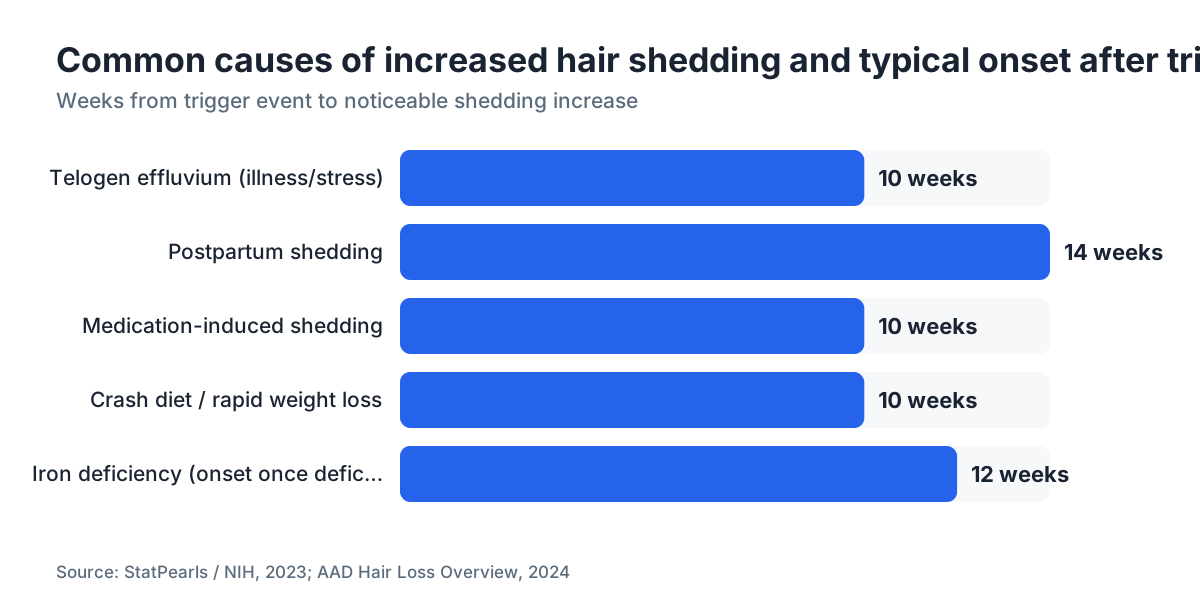
Telogen effluvium is the clinical name for a temporary shedding surge triggered by a physical or emotional shock [4]. Common triggers are surgery, a high fever, rapid weight loss, childbirth, a crash diet, or a long stretch of severe stress. The shock pushes a big share of hairs from anagen (growth) into telogen (rest) all at once. Those hairs then shed in bulk about two to four months after the event.
That lag is why people get confused. You get sick in January, feel fine by February, then start finding scary amounts of hair on your pillow in April with no clue why. The timing makes it look random, but it almost always traces back to something specific.
Here's the reassuring part about telogen effluvium. It usually clears on its own within six to nine months once the trigger is gone. The follicles aren't destroyed. The hair does come back. Chronic stress dragged out over months can keep it going, though, so fixing the root cause matters more than any topical.
Not sure if this is telogen effluvium or the early stage of androgenetic alopecia (pattern hair loss)? A dermatologist can usually tell from a scalp exam. The shedding patterns look different.
Can hormonal changes cause more hair on your pillow?
Hormones are one of the bigger drivers of hair loss, and many hormonal shifts are timed in ways that surface as pillow shedding.
Postpartum shedding is the most dramatic example most women meet. Estrogen climbs sharply during pregnancy and locks hairs in the growth phase longer than usual, which is why hair often looks thicker while pregnant. After delivery, estrogen drops fast and all those extra hairs enter telogen together. Heavy shedding often starts around three to four months postpartum [11]. It's temporary in most cases, but it can look genuinely alarming.
Menopause and perimenopause bring a different shift. Falling estrogen and a relatively higher androgen-to-estrogen ratio can trigger or speed up female pattern hair loss, which usually shows as diffuse thinning rather than a receding hairline. The hair left behind tends to miniaturize, so strands get finer before they're gone.
For men, dihydrotestosterone (DHT) is the main hormonal driver of androgenetic alopecia. DHT binds to receptors in follicles that are genetically sensitive to it, shrinking them over years. If pillow shedding is creeping up alongside a receding hairline or thinning crown, DHT-driven pattern loss is worth considering. A dermatologist or endocrinologist can run a basic hormone panel.
Thyroid trouble, both hypothyroidism and hyperthyroidism, also causes diffuse shedding. If you're unusually tired, cold, or noticing weight changes, ask your doctor to add thyroid markers to your bloodwork.
Does your diet or nutritional status affect how much hair you lose overnight?
Diet matters more than most people expect, and the effect is often delayed in the same frustrating way stress shedding is.
Iron deficiency is the most documented nutritional cause of diffuse shedding. A 2013 review in the Journal of the American Academy of Dermatology found a clear link between low ferritin (the iron storage protein) and telogen effluvium, especially in premenopausal women [5]. If you've been through caloric restriction, a plant-based diet without planning, or heavy periods, test ferritin before buying supplements.
Zinc, biotin, and vitamin D deficiencies also show up in the literature, though less consistently than iron. The AAD notes biotin deficiency causes hair loss, but genuine biotin deficiency is rare in people eating a normal diet [1]. Most biotin supplements sold for hair loss target people who aren't deficient, and the evidence of benefit in non-deficient people is thin. Worth knowing before spending on hair loss supplements.
Protein is the structural building block of hair (the fiber itself is keratin, a protein). Severe protein restriction, as in extreme deficits or restrictive eating disorders, does cause real shedding. Normal protein intake in a balanced diet rarely is the problem.
Crash diets are efficient shedding machines. Rapid weight loss, even when intentional and healthy, is a big physical stressor. The shedding usually shows up eight to twelve weeks after the diet starts. Curious about specific supplements? The evidence on does creatine cause hair loss is more nuanced than the internet suggests.
What does your pillow or sleep position have to do with it?
Your pillowcase is not making you go bald. Let's be clear. But it does change how many already-loose hairs you find each morning.
Cotton drags on the hair shaft more than silk or satin. That friction can tangle and snap hair, especially if your hair is chemically processed, dry, or long. The hairs on a cotton pillow after a restless night aren't all shed from the root. Some are broken mid-shaft, which is a different problem (breakage from friction or dryness) than true shedding (loss from the follicle). You can tell them apart. A naturally shed hair has a small white bulb at one end, the root club. A broken hair has no bulb and often a rough, frayed tip.
Silk or satin pillowcases cut friction and are commonly recommended by dermatologists for fragile or heavily processed hair. They won't stop natural shedding, but they reduce mechanical breakage and make your pillow look less dramatic.
Sleeping with hair wrapped or in a loose protective style also lowers what you see, but again, that captures hairs rather than stopping them from falling.
Sleep position matters less than the style your hair is in. Loose hair spreads shed strands across the pillow. Tight hair up concentrates them at the tie and, over time, can worsen traction at the follicle.
When should you actually be worried about hair on your pillow?
A few hairs every morning is not a concern. A steady, noticeable increase over several weeks paired with visible thinning is worth a conversation with a dermatologist.
The signals that make pillow shedding significant:
- Shedding has increased noticeably and stayed high for more than two to three months
- You can see scalp through your hair where you couldn't before
- You're finding large clumps, not individual hairs
- Shedding comes with scalp symptoms like itching, flaking, or tenderness
- You're also losing hair from eyebrows, eyelashes, or body
- There's no obvious trigger (no recent illness, stress, or diet change)
Pattern hair loss, the most common permanent type, tends to be gradual and location-specific. Men usually see a receding hairline or thinning crown first. Women usually see a widening part or diffuse thinning. Pillow shedding alone doesn't diagnose it, but it can be an early flag.
Scalp conditions like seborrheic dermatitis, psoriasis, and fungal infections (tinea capitis) can raise shedding by inflaming the follicle. These come with visible scalp changes. A dermatologist can separate them from other causes in one appointment, and most health insurance covers dermatology visits.
The AAD recommends seeing a board-certified dermatologist if hair loss is causing noticeable thinning, coming out in clumps, or accompanied by other symptoms [1]. That's a reasonable threshold. Want a faster first look before booking? The free AI hair analysis at MyHairline can help you document and baseline what you're seeing.
What are the most common medical conditions that cause increased shedding?
Several treatable conditions announce themselves through increased shedding before anything else.
Androgenetic alopecia (male or female pattern hair loss) is the most common cause of progressive loss. It affects roughly 50 percent of men by age 50 and up to 40 percent of women by menopause [6]. It runs on a genetic sensitivity to DHT. Shedding from this cause is gradual and patterned, not sudden and diffuse.
Telogen effluvium, covered above, drives a large share of sudden pillow-shedding spikes. It's triggered, temporary, and usually reversible.
Alopecia areata is an autoimmune condition where the immune system attacks follicles. It typically causes patchy round bald spots rather than diffuse shedding. About 2 percent of people develop it at some point [7]. It's unpredictable and needs medical management.
Thyroid disease, both hypo and hyperthyroidism, causes diffuse shedding across the whole scalp. It's one of the first things a dermatologist screens for with bloodwork because it's common and fixable.
Polycystic ovary syndrome (PCOS) in women raises androgens that can drive female pattern hair loss. Diagnosis needs bloodwork and often an ultrasound.
Iron deficiency anemia, as noted above, is common and correctable [5].
Medications can trigger telogen effluvium too. Anticoagulants, retinoids, beta-blockers, some antidepressants, and several other drug classes are documented causes [4]. If shedding started or worsened after a new medication, tell the prescribing doctor. Do not stop a prescribed drug without medical guidance.
The what causes hair loss guide has a fuller breakdown of every major category.
What treatments actually work if the shedding is from pattern hair loss?
If a dermatologist confirms androgenetic alopecia rather than a temporary shed, there are FDA-approved treatments with real evidence behind them.
Minoxidil is the most accessible. The FDA approved 2% topical minoxidil for women in 1991 and 5% for men in 1997 [8]. It works by lengthening the anagen (growth) phase and increasing follicle size. It doesn't touch the hormonal cause of pattern loss, so shedding tends to resume if you stop. One common early side effect is a temporary shedding bump in the first four to eight weeks as resting hairs get pushed out to make room for new growth. That's normal and not a reason to quit. Read the full breakdown on minoxidil for men and know the minoxidil side effects before starting.
Finasteride is an oral prescription approved by the FDA for male pattern hair loss (1 mg daily, brand name Propecia) [9]. It blocks the enzyme that converts testosterone to DHT, cutting scalp DHT by roughly 60 to 70 percent. Trials showed it slowed or reversed loss in most men who took it for two years. It is not FDA-approved for women who are or may become pregnant, because of the risk of birth defects in male fetuses. The full picture of how it works is in the finasteride article.
Using minoxidil and finasteride together beats either alone in most head-to-head data [10]. The finasteride and minoxidil combination is increasingly the standard recommendation for men with confirmed androgenetic alopecia. DHT blockers more broadly, including some topical options, are worth understanding too.
Oral minoxidil at low doses (0.625 to 2.5 mg daily for women, 2.5 to 5 mg for men) has come up as an alternative to topical application, with studies showing comparable or better results for some patients. The full context is in the oral minoxidil guide.
For people with significant permanent loss, hair transplant surgery is the only option that restores actual hair where follicles are gone. It's expensive (typically $4,000 to $15,000 depending on method and graft count), permanent, and increasingly refined. It doesn't stop loss elsewhere, so most surgeons want you stabilized on medication first.
Nothing here is a cure. These slow, pause, or partly reverse loss while you use them. Set your expectations to match.
Can you prevent hair loss on your pillow with simple changes?
You can reduce how much you see without necessarily reducing actual shedding, and a few changes do hit real contributing factors.
Switching to a silk or satin pillowcase cuts friction and mechanical breakage. It's a low-cost, low-risk move that makes sense for anyone with fragile or processed hair.
Avoiding tight sleep hairstyles reduces traction on follicles. If you tie your hair up at night, use a soft scrunchie at lower tension than daytime.
Getting bloodwork for ferritin, thyroid function, and vitamin D removes the guesswork. If a deficiency is the driver, correcting it stops the shedding. That beats buying a supplement stack without knowing whether you're deficient at all.
Managing stress helps hair cycling downstream, though it's easier said than done. The link between chronic stress and sustained telogen effluvium is real [4].
Handling hair gently, especially when wet (when it's weakest), reduces breakage. Wide-tooth combs, less heat styling, and air-drying when you can all help with breakage, though not with true follicle-level shedding.
What doesn't work: biotin supplements if you're not deficient, most over-the-counter hair growth shampoos (active ingredient concentration is too low to reach the follicle in most cases), scalp massages (limited evidence for growth), and castor oil (no peer-reviewed evidence for regrowth). Spending on these before you know what's causing your shedding is a reliable way to waste money.
How do doctors diagnose the reason for excess hair shedding?
A dermatologist starts with a detailed history: when shedding increased, whether it's diffuse or in specific areas, what medications you take, any recent illness or major stressor, your diet, and your family history of hair loss.
Next comes a scalp exam with a dermatoscope (a handheld magnifier), which shows follicle size, density, and whether miniaturization is happening. Miniaturized follicles (making finer, shorter hairs over time) point to androgenetic alopecia. Uniformly sized follicles with more empty follicle spaces point to telogen effluvium.
Bloodwork usually includes complete blood count, ferritin, thyroid-stimulating hormone (TSH), total and free testosterone, DHEA-S (for women), and vitamin D. Some clinicians add zinc.
A scalp biopsy comes in for ambiguous cases. It gives a definitive count of follicles in each growth phase and can confirm inflammatory conditions.
The pull test, mentioned earlier, gets done in office. More than six hairs releasing from a gentle tug suggests shedding above normal.
None of this needs a specialist to start. A primary care doctor can order the bloodwork and give you a baseline. If bloodwork is normal and shedding continues, that's when a dermatology referral makes sense. Waiting and watching for three months after a suspected trigger (illness, stress, postpartum) before spending on tests is reasonable if your gut says there was a clear cause.
Sources
- American Academy of Dermatology Association, Hair loss overview
- Journal of Investigative Dermatology, Quantitative assessment of normal scalp hair
- American Academy of Dermatology Association, Hairstyles that pull can cause hair loss
- StatPearls, National Library of Medicine, Telogen Effluvium
- Journal of the American Academy of Dermatology, Iron deficiency and hair loss
- National Institute of Arthritis and Musculoskeletal and Skin Diseases, Alopecia overview
- National Alopecia Areata Foundation, About alopecia areata
- FDA, Minoxidil drug label information
- FDA, Propecia (finasteride) prescribing information
- Journal of the American Academy of Dermatology, Combination minoxidil and finasteride for androgenetic alopecia
- American Academy of Dermatology Association, Postpartum hair loss