

TL;DR: Surgery, general anesthesia, physical illness, and intense psychological stress can all push hair follicles into a resting phase called telogen effluvium. Shedding usually starts 2 to 3 months after the trigger and peaks around month 4. In most cases, hair regrows fully within 6 to 12 months once the trigger is gone, and no treatment is needed.
What actually happens to hair follicles after surgery or a major stressor?
Hair does not fall out the day of your surgery. It falls out months later, which is why so many people never connect the two.
Here is what happens under the surface. Your follicles cycle through three phases: anagen (active growth, lasting 2 to 6 years), catagen (a brief 2 to 3 week transition), and telogen (a resting phase of roughly 3 months before the hair sheds) [1]. At any moment, about 85 to 90 percent of your follicles are in anagen and only 10 to 15 percent are in telogen [1].
When the body takes a significant physical or emotional hit, it can abruptly signal a large batch of growing follicles to quit anagen early and enter telogen all at once. This is telogen effluvium. Three months later, when those follicles finish resting, they release their hairs together. You see the clumps on your pillow, the handfuls in the shower drain, the thinning at the temples and crown. The trigger happened months ago. The shedding is biology catching up.
The condition is well documented. The American Academy of Dermatology lists telogen effluvium among the most common causes of hair loss in adults and names major surgery as a recognized trigger [2]. The anesthesia is not destroying your follicles. The physiological stress on your whole system is: blood pressure swings, nutritional demands, inflammation, and the hormonal cascade that rides along with any serious procedure.
For a deeper look, see our full guide on telogen effluvium.
Does anesthesia itself cause hair loss, or is it the surgery?
This question comes up constantly, and the honest answer is that it is almost certainly the surgery and everything around it, not the anesthetic drugs.
There is no strong clinical evidence that general anesthetic agents (propofol, isoflurane, sevoflurane, and the rest) directly disrupt the hair follicle cycle at standard doses [3]. What does disrupt it is the broader insult: blood loss, the acute stress response (a surge of cortisol and catecholamines), hours under anesthesia as a physical strain, body temperature shifts, and often the caloric deficit that comes with fasting before surgery and poor appetite after.
There is one exception worth knowing. A rare condition called pressure alopecia can follow prolonged surgery where the patient stays in one position for many hours. Sustained pressure on the scalp restricts blood flow to follicles and causes localized loss at the pressure point [4]. This is mechanical, not chemical, and it shows up as patchy loss at the back or sides rather than the diffuse thinning of classic telogen effluvium.
So if someone asks whether they should skip general anesthesia to protect their hair, the answer is no. The risk is real, but it comes from the physiological stress of the procedure, not the specific drugs.
How long after surgery does hair loss start, and how bad can it get?
The classic timeline is 2 to 3 months from trigger to first noticeable shedding, with the peak around 3 to 4 months post-surgery [2]. Some people notice it as late as 5 or 6 months out, especially after a long illness following the procedure.
Severity tracks the size of the stressor. A short outpatient procedure under local anesthesia rarely triggers meaningful effluvium. A major surgery (cardiac, bariatric, major orthopedic, or anything with significant blood loss and a long recovery) carries higher risk. Bariatric surgery in particular has a well-documented link to heavy post-operative shedding, because it stacks surgical stress on top of rapid caloric restriction and micronutrient changes [5].
In a typical acute episode, you can lose up to 300 hairs a day against a normal baseline of 50 to 100 [1]. That sounds alarming, but it rarely creates bald patches. What you see is diffuse thinning across the whole scalp, a wider part, more skin showing under bright light. The follicles are not dead. They are empty for now.
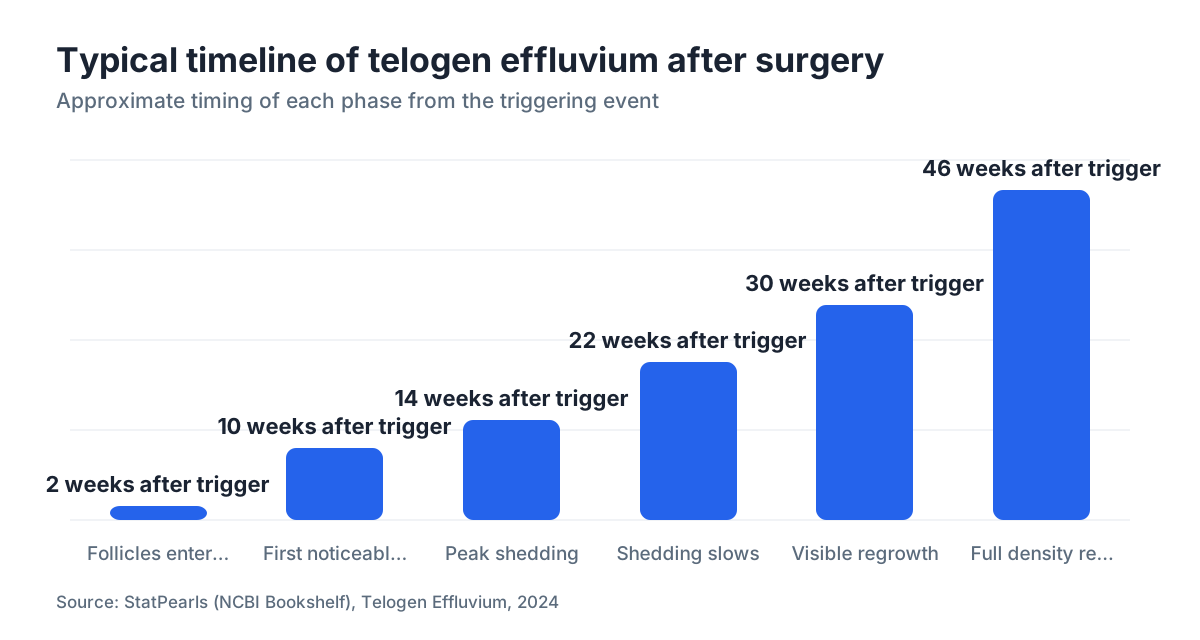
The shedding phase usually runs 2 to 6 months and then tapers on its own [2]. Full regrowth typically takes 6 to 12 months from when shedding peaks.
| Timeline phase | Approximate timing after trigger |
|---|---|
| Follicles enter telogen | 0 to 4 weeks |
| First noticeable shedding | 8 to 12 weeks |
| Peak shedding | 12 to 16 weeks |
| Shedding slows | 4 to 6 months |
| Visible regrowth | 6 to 9 months |
| Full density restored | 9 to 12 months |
Can emotional and psychological stress cause the same kind of hair loss?
Yes. Psychological stress runs the same biological pathway. Same cortisol-driven disruption of the hair cycle, no scalpel required.
Bereavement, divorce, job loss, a traumatic event, prolonged anxiety, or severe depression can all set off telogen effluvium on the same 2 to 3 month delay. The research here is looser than surgical studies (you cannot randomize people to grief), but dermatologists see this pattern in clinic all the time, and case series consistently tie major life stressors to diffuse shedding months later [2].
The machinery runs through the hypothalamic-pituitary-adrenal (HPA) axis. Under sustained psychological stress, cortisol climbs. Cortisol has receptors in hair follicles and can shorten anagen directly [6]. Animal work shows that high corticosterone pushes follicles toward telogen and holds them there; human studies are harder to design but point the same way.
Panic after the shedding starts adds a second layer: now you are stressed about your hair, which some people worry might drag the episode out. Nobody has solid data on whether that is a real physiological loop. Clinically, lowering the overall stress load does seem to help things resolve. The one principle we can lean on is that the shedding stops once the triggering stressor is gone.
For a wider view of what else drives shedding, see what causes hair loss.
Why is post-surgery hair loss worse after weight loss surgery specifically?
Bariatric surgery hits three separate hair-loss triggers at once: major surgical stress, severe caloric restriction in the weeks that follow, and micronutrient deficiencies as the gut's absorptive capacity changes.
Iron deficiency is the most documented. After Roux-en-Y gastric bypass, iron absorption drops sharply because the duodenum, the main site of iron absorption, is bypassed entirely [5]. Iron is needed for normal follicle cycling. A study in the Journal of the American Academy of Dermatology found iron deficiency to be one of the most frequent nutritional triggers for telogen effluvium in women [7]. Zinc follows the same logic. Protein matters too: hair is almost entirely keratin, and a diet too low in protein for too long simply cannot supply the raw material a follicle needs.
Post-bariatric hair loss can be heavy, affecting 30 to 40 percent of patients by some estimates, though rates swing widely depending on how carefully supplementation is managed [5]. The good news is that close nutritional monitoring and supplementation after surgery cuts the shedding down, even if it does not always erase it.
Planning bariatric surgery? Talk to your surgical team about iron, zinc, and protein targets before you go in. Starting from a nutritionally full baseline helps.
What nutrients does hair need to recover after surgery or illness?
The follicle is one of the most metabolically active structures in the body. During anagen it divides faster than almost any other tissue. That makes it sensitive to nutritional shortfalls that would barely register elsewhere.
Iron has the strongest evidence. Ferritin (stored iron) below roughly 30 ng/mL has been linked to telogen effluvium in several studies, though the exact threshold is debated [7]. Some dermatologists aim for ferritin above 70 ng/mL during recovery, but that is clinical opinion, not a hard guideline.
Zinc deficiency can cause hair loss directly, through zinc's role in DNA synthesis and cell division inside the follicle. Low zinc shows up more often after bariatric surgery and in people eating very low calorie diets [8].
Vitamin D receptors sit in hair follicles, and vitamin D deficiency has been tied to alopecia areata and, less firmly, to telogen effluvium [8]. The AAD advises against routine supplementation for hair loss without a confirmed deficiency, but checking your vitamin D level after a major illness or surgery is reasonable.
Biotin gets a lot of hype and deserves a blunt assessment. True biotin deficiency is rare in anyone eating a normal diet, and most "biotin for hair" marketing rests on very thin evidence. The FDA has warned that high-dose biotin supplements can interfere with thyroid tests and cardiac biomarker tests, producing falsely normal or abnormal results [9]. Unless a lab confirms you are deficient, the supplement is unlikely to help and could muddy your bloodwork.
Protein: hair is keratin, and keratin is protein. After major surgery or illness with a suppressed appetite, hitting adequate dietary protein (at least 0.8 g per kg body weight, often more during recovery) is one of the more practical moves you can make.
For which supplements have real evidence behind them, see our rundown of hair loss supplements.
How do doctors tell the difference between telogen effluvium and other kinds of hair loss?
This matters because the treatments and outcomes are completely different depending on what you actually have.
A dermatologist usually starts with a detailed history. When did shedding start? Was there a stressor 2 to 3 months before? Is the loss diffuse or patchy? Is the hairline receding, or is the thinning all over? They will likely run a pull test, gently grasping about 40 hairs between two fingers and pulling with steady tension. More than 6 hairs coming out in one pull counts as positive and suggests active effluvium [2].
Bloodwork typically covers ferritin, iron, TIBC, TSH, a complete blood count, zinc, vitamin D, and sometimes sex hormone levels. Thyroid dysfunction is a big and often missed driver of diffuse hair loss and needs to be ruled out.
Dermoscopy (a handheld magnifier with polarized light) can reveal short regrowing hairs (a sign of recovery) or miniaturized hairs (a sign of androgenetic alopecia). That distinction changes everything: if your follicles are miniaturizing, you have genetic hair loss layered on top of, or possibly kicked off by, the effluvium, and that needs different management.
Alopecia areata (an autoimmune condition causing patchy loss) can also be stress-triggered but looks nothing alike: round patches, exclamation-mark hairs at the patch edges, and a different dermoscopic picture.
Short version: diffuse shedding with a clear stressor 2 to 3 months prior and healthy scalp skin is almost certainly telogen effluvium. Anything atypical earns a visit to a board-certified dermatologist.
Will post-surgical or stress-related hair loss grow back on its own?
In most cases, yes, fully.
Acute telogen effluvium after a one-time stressor (a surgery, an illness, a grief event) resolves once the trigger is gone. The follicles that went dormant re-enter anagen on their own schedule. Most people see visible regrowth around 6 months after peak shedding, with density returning close to baseline within a year [2].
Here is the catch. If you had underlying androgenetic alopecia (genetic thinning) that was invisible before surgery, the effluvium can expose it. The shedding clears out enough hair to reveal a thinner baseline than you expected, and things do not fully bounce back. DHT-affected follicles (DHT is the hormone behind genetic hair loss) recover from telogen worse than healthy ones do [12]. If your hair has not substantially recovered by 12 to 18 months, that is your cue to get evaluated for androgenetic alopecia.
For people in that spot, the two most evidence-based options are minoxidil for men and finasteride. Minoxidil can also be used during or after an effluvium episode to nudge follicles back into anagen, though that evidence is softer than for genetic hair loss.
Want a quick read on where your own hair stands? MyHairline's free AI hair scan at /scan can help you tell diffuse effluvium from early patterned thinning, though it does not replace a dermatologist's assessment.
Are there any treatments that speed up recovery from post-surgical hair loss?
Honest answer: the evidence for actively treating acute telogen effluvium is thin, because the condition usually clears on its own.
Minoxidil is the most studied option for coaxing follicles back into anagen. The FDA has approved topical minoxidil for androgenetic alopecia in both men and women [10], and dermatologists sometimes use it off-label to shorten the recovery phase of effluvium. The logic holds (minoxidil prolongs anagen and shortens telogen), but no large randomized trials in post-surgical effluvium show it speeds recovery in a meaningful way. It is a reasonable choice, especially if you also have underlying genetic thinning, and the minoxidil side effects profile is well established.
Finasteride is not indicated for telogen effluvium. It blocks DHT, which is not the driver here. It makes sense only if androgenetic alopecia is also present.
Correct any nutritional deficiencies your bloodwork turns up. That is not optional, that is the base. Low ferritin in particular seems to blunt recovery.
Cut ongoing stressors where you can. Obvious advice that is easier said than done, but chronic psychological stress can turn an acute effluvium into a chronic one lasting past 6 months.
Curious about stacking treatments? Our guide to finasteride and minoxidil covers the evidence on using both together.
What to skip: biotin megadosing (see the FDA warning above [9]), ketoconazole shampoo as a primary treatment, and any supplement making "regrowth" claims without FDA-cleared evidence. None of these have strong randomized trial support for effluvium recovery.
Can COVID-19 cause the same kind of hair loss as surgery?
Yes, and it was one of the more widely noticed patterns from the pandemic.
COVID-19 is a heavy physiological stressor, and post-COVID telogen effluvium runs the exact mechanism described above. The hair falls out roughly 2 to 3 months after infection, not during it. In a large prospective cohort published in The Lancet, hair loss was reported in about 22 percent of hospitalized COVID-19 survivors at 6-month follow-up, making it one of the more common post-acute complaints [11].
Severity tracks illness severity. People who were hospitalized or ran high fevers shed more heavily than those with mild cases. High fever on its own is an established trigger for telogen effluvium, sometimes called febrile effluvium.
Recovery mirrors post-surgical effluvium. Most people who lost hair after COVID saw regrowth begin around 6 to 9 months after their acute illness, assuming no lingering health problems.
This pattern is not unique to COVID. Influenza, severe bacterial infections, and any febrile illness bad enough to put you in bed can do the same thing. The body prioritizes survival over hair growth during acute illness. That is the right trade-off.
When should you see a doctor about hair loss after surgery or stress?
Not every episode of post-surgical shedding needs a dermatology visit. Several situations do.
See a doctor if the shedding is still heavy past 6 months with no sign of slowing. Chronic telogen effluvium (lasting more than 6 months) has a wider list of possible causes and usually needs bloodwork to find an ongoing trigger like thyroid disease, autoimmune disease, or a persistent nutritional deficiency [2].
See a doctor if the loss is patchy rather than diffuse. Patches point to alopecia areata, tinea capitis (a fungal infection), or traction alopecia, none of which resolve on their own the way effluvium does.
See a doctor if the hairline is specifically receding or the crown is thinning in a recognizable pattern. That is androgenetic alopecia, and the earlier it is caught and treated, the better the outcome. A receding hairline in a young person who just had surgery might be effluvium unmasking genetic thinning that was already underway.
See a doctor if other symptoms ride alongside the hair loss: fatigue, weight changes, cold intolerance, skin changes, joint pain. Those can point to thyroid dysfunction, lupus, or other systemic conditions driving both the hair loss and the rest.
For the full range of causes, our broader article on what causes hair loss walks through the major categories.
A board-certified dermatologist or a physician who specializes in hair disorders is the right starting point. Primary care can handle the initial bloodwork but may not have the dermoscopy skills or pattern-recognition experience to sort out the subtypes accurately.
Sources
- StatPearls (NCBI Bookshelf), Telogen Effluvium
- American Academy of Dermatology, Hair Loss Types: Telogen Effluvium
- Dermatology and Therapy, 'Anesthesia and Hair Loss: A Review'
- Journal of the American Academy of Dermatology, 'Pressure alopecia'
- Surgery for Obesity and Related Diseases, 'Hair loss after bariatric surgery'
- PLOS Biology, 'Stress inhibits hair follicle stem cell activity via corticotropin-releasing hormone'
- Journal of the American Academy of Dermatology, 'The role of iron in hair loss'
- Dermatology and Therapy, 'The Role of Vitamins and Minerals in Hair Loss: A Review'
- U.S. Food and Drug Administration, biotin and lab test interference safety communication
- U.S. Food and Drug Administration, Minoxidil Drug Approval Information
- The Lancet, 'Six-month consequences of COVID-19 in patients discharged from hospital'
- StatPearls (NCBI Bookshelf), Androgenetic Alopecia