
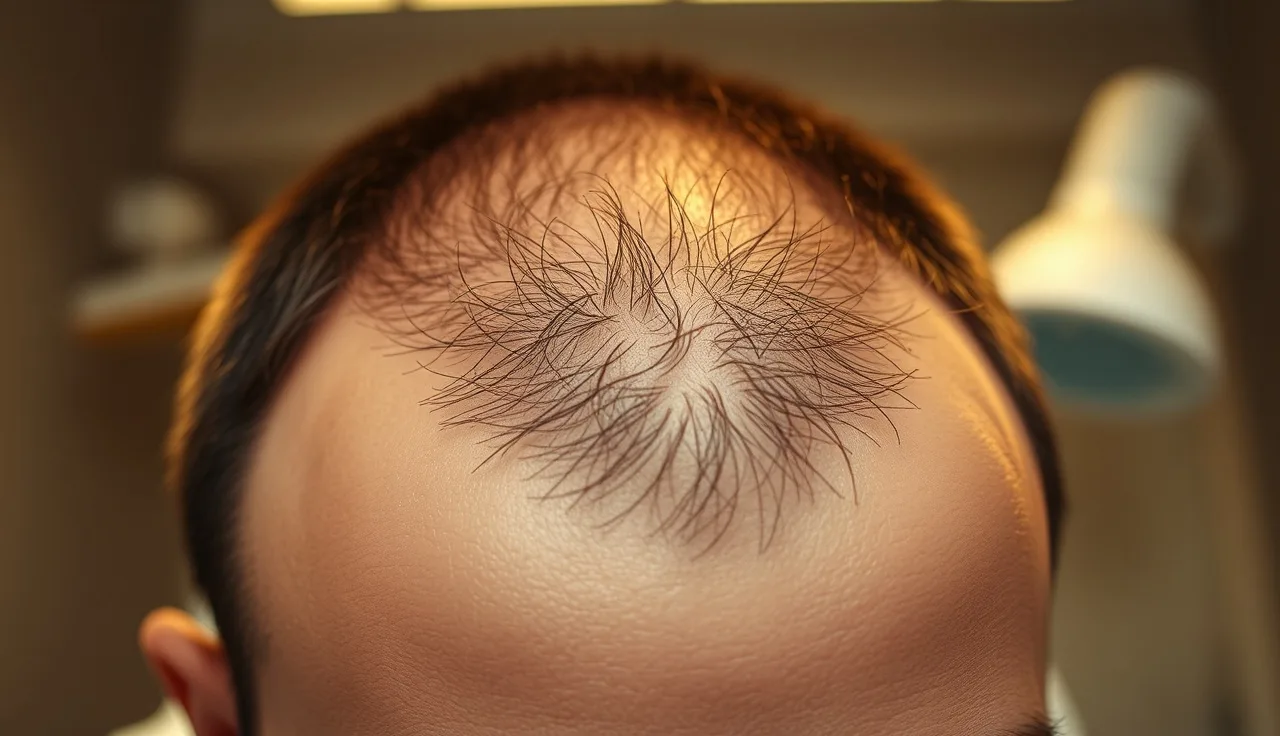
TL;DR: Shock loss after a hair transplant usually starts 2 to 8 weeks post-surgery. Surgical trauma pushes resting-phase follicles into shedding. Most shock-lost hair regrows within 3 to 6 months, and transplanted grafts that shed are almost always temporary. The real concern is native hair near the recipient zone, especially if it was already miniaturized before you sat down for surgery.
What is hair transplant shock loss?
Shock loss is the shedding of hair, either transplanted grafts or your own existing hair nearby, triggered by the physical trauma of a transplant. It sounds alarming. It is expected, and for transplanted grafts it is almost always temporary.
Here is what happens mechanically. The scalp takes a beating during surgery: incisions, punch extractions, needle channels, and hours of manipulation. That stress can push hair follicles from the anagen (active growth) phase straight into the telogen (resting) phase, and they shed. The clinical name for a stress-induced shed is telogen effluvium, and a transplant is one of the more reliable triggers for it [1].
Two separate populations of hair can shed. First, the transplanted grafts: the hairs attached to relocated follicles often fall out in the weeks after surgery. Second, native hair in and around the recipient area that was never transplanted at all. The second type matters more. Those follicles were already yours, already growing, and any permanent loss there is a straight subtraction from your result.
When exactly does shock loss start after a hair transplant?
The most common window is 2 to 8 weeks after surgery [2]. Some patients notice the first hairs coming out around day 10. Others see nothing significant until week 6 or 7. The timing tracks how long the telogen transition takes: a follicle does not drop its hair the instant it shifts phase, it takes a few weeks for the club hair to loosen and detach.
A few factors move the start date. Larger sessions (more grafts, longer surgery) tend to cause earlier and heavier shedding because the cumulative trauma is greater. FUT strip procedures can trigger shock loss across a wider scalp area than FUE, thanks to the wound tension and undermining involved. Very dense packing of grafts raises the inflammatory load on the follicles nearby.
The shed itself usually runs 2 to 4 weeks before it tapers. By the end of month 3 the acute shed is almost always over, and you are waiting on regrowth rather than watching more hair fall.
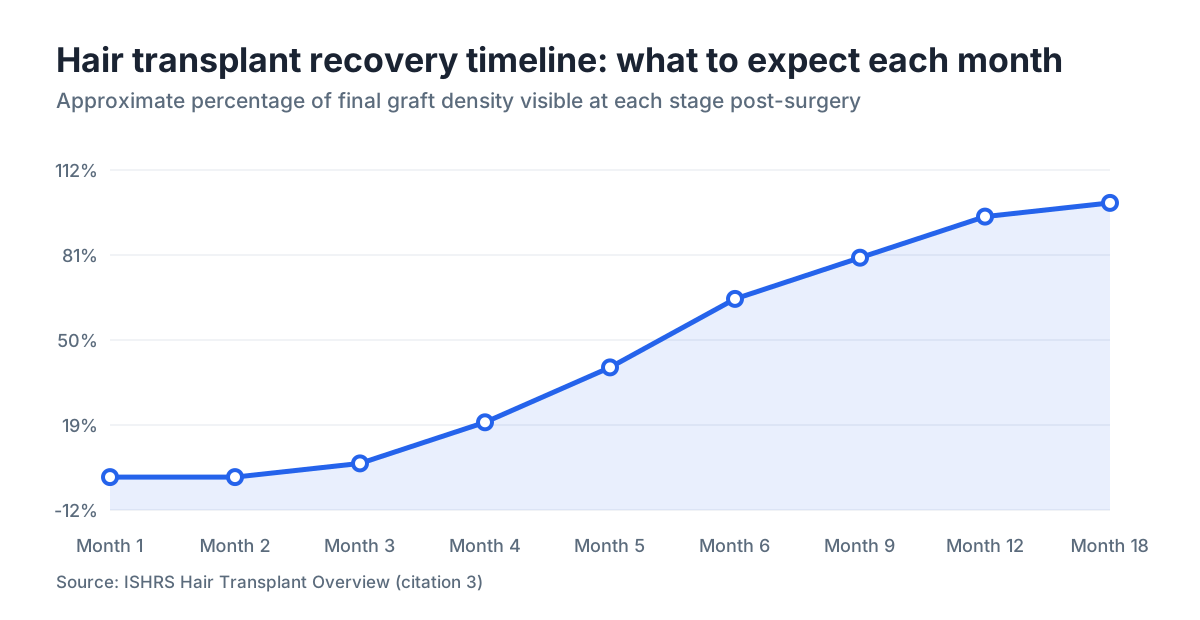
One point worth burning into memory: the transplanted grafts that shed are not lost. The follicle anchored into the recipient tissue. The shaft fell, the root stayed. New growth from those grafts usually shows up around months 3 to 4, with real density arriving between months 6 and 12 [3].
Why do transplanted grafts shed in the first place?
Graft shedding is a normal response to being moved. When a follicle is pulled from the donor area and set into a new site, it temporarily loses its blood supply. That ischemia, plus the handling stress of extraction and implantation, tells the follicle to pause growth and enter telogen. The hair shaft it was producing gets pushed out.
This is not permanent damage. As long as the follicle survived implantation (which it does in the large majority of cases with an experienced surgeon and careful graft handling), it re-enters anagen and grows a new hair. Graft survival rates in well-run FUE and FUT procedures are generally reported in the 90 to 95 percent range, though the number moves with technique and surgeon skill [4].
The shed you see at week 3 or 4 is the old hair making way for the new one. Frustrating to watch. Normal to experience.
Is shock loss to native (existing) hair permanent?
This is the question that actually matters, and the honest answer is: usually not, but sometimes yes.
Native hair that sheds from post-surgical telogen effluvium almost always regrows, typically within 3 to 6 months [2]. The follicles were healthy going in, the trauma briefly disrupted their cycle, and once the scalp settles they cycle back into anagen.
The exception is native hair that was already miniaturized from androgenetic alopecia. A miniaturized follicle has been progressively weakened by DHT over years. Think of it as a follicle already on the edge. Surgical trauma can be enough to push it past recovery. If it sheds after the procedure, it may not come back, or it may return finer and then quietly stop producing hair over the following months and years [10]. That is not "shock loss" in the reversible sense. It is underlying androgenetic loss that the procedure sped up.
The further along your hair loss is, and the more miniaturized hair you have in and around the recipient zone, the higher your risk of permanent native loss from shock. This is one reason surgeons often recommend starting or continuing a DHT blocker like finasteride before and after a transplant: to protect those borderline follicles during recovery [5].
Who is at highest risk for shock loss after a hair transplant?
Shock loss is not evenly distributed. Several things make it more likely and more severe.
Men and women with diffuse thinning across the recipient area have more miniaturized hairs in the zone, which raises the chance of permanent native loss. Someone getting a first transplant with a lot of existing hair (a Norwood 3 or 4 with decent coverage) has more to lose from shock than someone starting from a nearly bald base.
Larger sessions carry more risk than small touch-ups, simply because more trauma spreads across a wider area. Dense packing concentrates mechanical pressure and cuts blood supply to nearby follicles.
Stopping finasteride or minoxidil before surgery strips away follicle protection at the worst possible moment. If you are on either drug, most hair restoration physicians tell you to stay on it through the procedure and recovery rather than pause [5].
Technique matters too. Surgeons who cut recipient channels at too steep an angle or pack grafts too tight raise the risk of follicle compression and vascular disruption in the surrounding tissue. This is hard for a patient to judge before surgery, which is why reviewing before-and-after photos with an eye on native hair preservation (more than the graft results) is worth your time.
Want a baseline read on how much miniaturization you already have before committing? MyHairline's free AI hair scan can map thinning zones from photos and give you something concrete to put in front of your surgeon.
Does shock loss affect the donor area too?
Yes, though it gets less airtime. In FUE, the extraction punches across the donor area can cause telogen effluvium in the follicles nearby. The donor site looks patchy or thin in the weeks after surgery, then usually fills back in as those shocked follicles re-enter anagen.
In FUT (strip), the linear scar and the tension from closing the wound can trigger temporary shedding along the edges of the strip. This typically resolves too [9].
Permanent donor thinning from shock is uncommon when the donor zone is chosen well and extraction density stays within safe limits. Over-harvesting, meaning pulling too many grafts from a limited donor supply, is a different problem. It can leave permanent thin patches, but that is a planning error, not shock loss.
What does the hair regrowth timeline look like after shock loss?
Here is a realistic month-by-month for most patients. Individual variation is real, so treat none of this as a guarantee.
Weeks 1 to 2: Scalp is red and scabbed. Transplanted hairs are still attached. Little shedding yet.
Weeks 2 to 6: Active shedding begins. Transplanted hairs start falling. Native hair in and around the recipient zone may shed too. This is the hard stretch, mentally.
Weeks 6 to 12: Shedding tapers. The scalp may look worse than before surgery, especially if you had reasonable coverage going in. Normal.
Months 3 to 4: Fine new hairs start pushing through from transplanted follicles. Thin at first.
Months 4 to 6: Native hair from reversible shock loss starts coming back. Growth picks up.
Months 6 to 9: Real visible density from the grafts. Most patients see about 60 to 70 percent of their eventual result by month 6 [3].
Months 9 to 12: Continued thickening and maturation. Most surgeons assess final results at 12 months, sometimes 18 for slow responders.
Any native hair that shows no sign of return by month 9 to 12 is probably not coming back, and likely reflects underlying androgenetic loss rather than reversible shock.
Can you prevent or reduce shock loss?
You cannot eliminate shock loss. It is a biological response to surgical trauma. But you can blunt its severity and protect native hair, especially the miniaturized hair most at risk.
Finasteride and minoxidil are the two evidence-backed options. Finasteride cuts DHT-driven miniaturization, giving borderline follicles a better shot at surviving the stress [5]. Minoxidil for men (and women, where appropriate) is a vasodilator that improves blood flow to follicles and has been shown in small trials to speed post-transplant regrowth when used around the time of surgery [6]. The FDA has approved topical minoxidil 5% for men and 2% for women for androgenetic alopecia, and many surgeons say to start it about 2 weeks after surgery once the scalp has healed [6].
Some surgeons use platelet-rich plasma (PRP) injections at surgery or in follow-up sessions. The evidence is promising, not settled. A 2019 systematic review in the Journal of Cutaneous and Aesthetic Surgery found PRP "may improve graft survival and reduce post-transplant shock loss" but called for larger randomized controlled trials before firm conclusions [7].
Gentle handling of the scalp in the first month helps too. Keep trauma off the recipient area, sleep with your head elevated to reduce swelling, skip tight hats, and keep the scalp out of direct sun. All of that removes extra stressors during the healing window.
If you are already on finasteride and minoxidil together, continuing both through the peri-operative period is the usual recommendation. Stopping either one around surgery pulls your protection right when you need it most.
How is shock loss different from normal post-transplant shedding?
The terms blur in online forums, but there is a practical distinction worth keeping straight.
Normal graft shedding means the transplanted hairs falling out in weeks 2 to 8. It happens to essentially every patient and does not affect the final result. The grafts stay, the hairs fall, new hairs grow. Done.
Shock loss, strictly defined, means the shedding of native (non-transplanted) hair near the recipient zone from surgical trauma. This is what carries real risk, because if those follicles were already miniaturized from androgenetic alopecia, some may not fully recover.
Some surgeons and patients use "shock loss" for both. Fine for casual talk. But if you are trying to gauge whether your own situation is a problem, ask yourself one thing: is the hair falling out hair that was transplanted, or hair you already had that is now gone? The first is basically harmless. The second needs watching.
Should you be worried if you are still shedding at month 3?
A little shedding at month 3 is still within normal range, especially after a large session. Most of the active shed is over by then, but stragglers happen.
Call your surgeon if you see shedding getting heavier after month 2 instead of tapering, signs of scalp infection (persistent redness, warmth, discharge, or pain well past the first week), large areas of scalp with zero new growth by month 4, or shedding far from the transplant zone with no other explanation.
If you are seeing continued diffuse shedding across your whole scalp at month 3, ask whether something else is running in parallel. Nutritional deficiency, thyroid trouble, iron deficiency, and high stress are all independent triggers for telogen effluvium that can stack on top of surgical recovery and drag out the shed. Serum ferritin below 40 ng/mL has been linked to telogen effluvium, particularly in women [8]. A basic blood panel is cheap insurance if the shedding looks excessive.
What questions should you ask your surgeon about shock loss before booking?
Most patients never ask the right questions before the consult wraps up. Have these ready.
How much native hair do I have in the recipient zone, and how much of it is miniaturized? This gets at your personal risk for permanent native loss.
What is your protocol for protecting native hair during and after surgery? A surgeon with no answer, or one who waves off the concern, is a flag.
Do you recommend continuing or starting finasteride or minoxidil around surgery? The answer should be considered and individual, not a blanket yes or no.
What is your graft density per session, and why? Dense packing can push results but raises shock loss risk. Staged sessions sometimes make more sense.
Can I see before-and-after photos of patients who had existing hair going in, more than patients who started nearly bald? Preserving native hair is a skill that bald-baseline photos cannot show.
If your surgeon treats shock loss as a known, manageable part of the deal rather than dismissing it or over-promising, that is a good sign you are dealing with someone honest. A hair transplant is a major commitment. The consult should feel like a real conversation.
For a clearer picture of where your hair stands right now, including how much miniaturization may already be present, MyHairline's free AI scan at myhairline.ai/scan gives you an analysis you can bring into that conversation.
Sources
- American Academy of Dermatology, Telogen Effluvium Overview
- Dermatologic Surgery, Nusbaum & Fuentefria (2010): Anticipated versus Unanticipated Hair Loss After Hair Transplantation
- International Society of Hair Restoration Surgery (ISHRS), Hair Transplant Overview
- Journal of Cutaneous and Aesthetic Surgery, Gupta et al. (2013): FUE Graft Survival
- FDA, Finasteride (Propecia) Prescribing Information
- FDA, Minoxidil Topical Solution Drug Label
- Journal of Cutaneous and Aesthetic Surgery, Systematic Review on PRP for Hair Transplantation (2019)
- Journal of the American Academy of Dermatology, Rushton (2002): Nutritional Factors and Hair Loss
- ISHRS, FUE vs FUT Hair Transplant Techniques
- National Library of Medicine / StatPearls, Androgenetic Alopecia