

TL;DR: Don't write off a hair transplant before 12 months. Transplanted hair sheds within weeks, regrows slowly, and most grafts aren't visibly mature until month 9-12. A true failure, meaning poor graft survival or zero density improvement, can't be fairly assessed until 12-18 months post-op. Anything earlier is almost always normal biology, not a failed procedure.
What actually happens to transplanted hair in the first year?
Hair transplants work by moving follicles from a donor area (usually the back and sides of the scalp) into balding zones. The follicles survive the move, but they do something that alarms almost every patient: they shed.
Within 2-6 weeks of surgery, most of the transplanted hairs fall out. This is called shock loss or effluvium, and it's normal. The follicle itself is still alive under the skin; it just enters a resting phase called telogen while it settles into its new blood supply. You can read more about why this happens in our explainer on telogen effluvium.
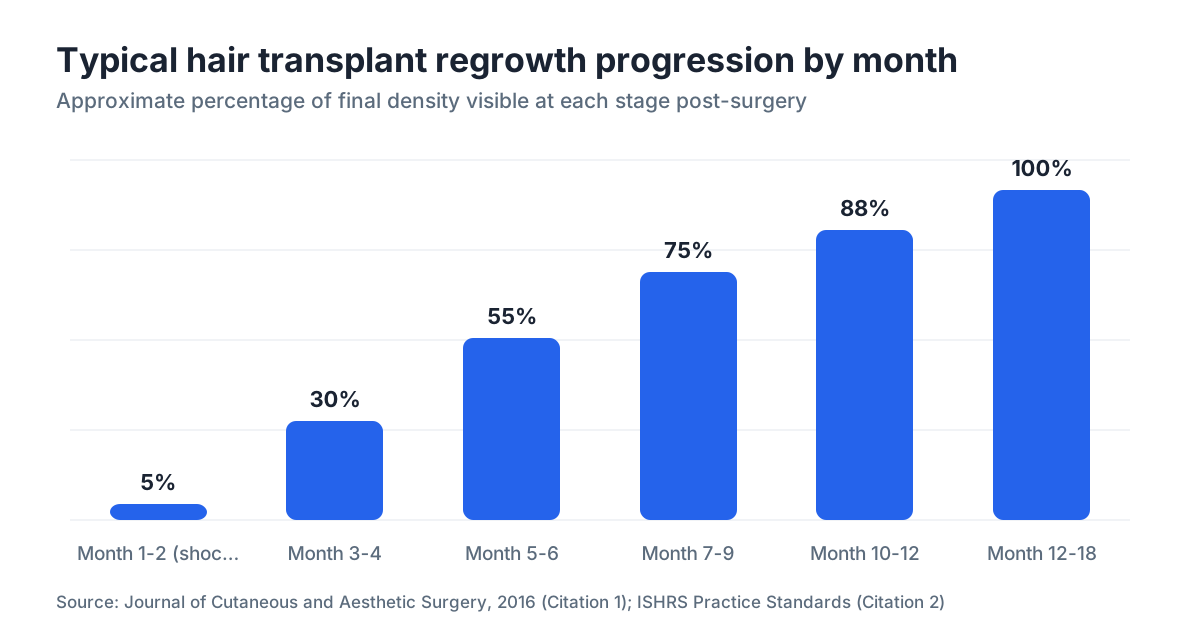
New growth typically starts somewhere between months 3 and 4. It comes in thin, sometimes curly or colorless at first. By month 6, most patients see maybe 50-60% of the final result. The remaining density fills in slowly through months 7-12, and some patients, particularly those who had dense packing or thick donor hair, are still improving at month 15-18 [1].
So the timeline looks roughly like this: weeks 1-3 feel great (transplanted hairs are visible), weeks 3-8 feel terrible (shedding), months 3-6 show hope, months 6-12 show the real result, and months 12-18 are when a surgeon can make a fair final assessment.
What is the normal hair transplant growth timeline month by month?
Understanding each phase helps you know whether what you're seeing is normal variation or a genuine warning sign.
| Timeframe | What to expect |
|---|---|
| Week 1-2 | Scabbing, redness, transplanted hairs visible |
| Week 3-8 | Shock shedding; most transplanted hair falls out |
| Month 3-4 | First thin regrowth appears |
| Month 5-6 | Roughly 40-60% of final density visible |
| Month 7-9 | Hair thickens, texture normalizes |
| Month 10-12 | 80-90% of final result visible for most patients |
| Month 12-18 | Final density, hair caliber fully mature [1][2] |
A 2016 review in the Journal of Cutaneous and Aesthetic Surgery noted that graft survival rates are typically assessed at 12 months post-procedure, with some studies extending follow-up to 18 months for dense-packed cases [1]. Rushing judgment before month 12 means you're evaluating an incomplete process.
One thing many patients miss: the hairs that grow in at month 3-4 are often fine and unpigmented. They look wispy and disappointing. By month 8-9 those same hairs have usually thickened considerably and taken on their natural color. Patience at that stage is genuinely hard, but it's not optional.
When can you officially call a hair transplant a failure?
Twelve months is the earliest realistic point for a failure call. Eighteen months is fairer, especially for patients who had large sessions, had prior transplants, or have naturally slow-growing hair.
What does a failure actually look like at that point? There are a few distinct categories.
Poor graft survival is the most common definition. Industry consensus puts acceptable survival rates at roughly 90% or above in skilled hands; rates below 80% are generally considered poor outcomes [2]. If you've had no meaningful density improvement after 14-16 months, graft survival was likely low. Causes include improper storage of grafts during surgery, excessive time out-of-body before implantation, trauma during extraction or placement, or poor blood supply in the recipient area.
Wrong hairline design is a different kind of failure. The grafts survived; the hairline just looks unnatural, too low, or asymmetric. This is visible earlier, but correction still can't happen until the tissue heals fully, usually at least 12 months out.
Existing hair loss progressed. This one gets misclassified as transplant failure all the time. If you stopped finasteride or minoxidil after surgery, or never started them, the native (non-transplanted) hairs around the grafts can keep miniaturizing. The transplanted hairs themselves are permanent (they carry DHT-resistant genetics from the donor zone), but the surrounding hair can thin, making the result look worse than expected. This isn't graft failure. It's untreated androgenetic alopecia. Learn more about DHT's role in this process in our piece on DHT blockers.
Poor cosmetic density despite good survival. Some patients have adequate graft survival but still thin-looking results because their donor hair is fine-caliber, their skin is light, or the session wasn't large enough. That's a planning and expectation-setting issue, not technically a failed transplant.
What signs in the first few months are actually normal, not failure?
Almost everything that terrifies patients in months 1-5 is completely normal.
Shedding. Expected. Shock loss can take out more than transplanted hairs but nearby native hairs that were disturbed by the procedure. Both come back.
Patchiness. Grafts don't all wake up at the same time. Some areas look fuller at month 4; other patches are still dormant. This uneven growth usually evens out by month 8-10.
Scabbing and crusting in the first 1-2 weeks. Normal healing. Following your surgeon's washing protocol matters here; over-aggressive washing can dislodge grafts in the first 5-7 days, but gentle cleansing after that is fine and encouraged.
Redness of the recipient area. Can persist 2-4 weeks. In some patients with sensitive skin or lighter complexions, mild pinkness lasts 2-3 months. That's not an infection or graft rejection.
Thinness of early regrowth. Months 3-5, new hairs are often colorless or very fine. They look almost invisible in photos. This is the phase where most patients Google "hair transplant failure" at 2am. It is not failure.
What's NOT normal: signs of infection (increasing pain, warmth, pus, fever) in the first few weeks; complete, total absence of any regrowth past month 6-7; or large areas of the scalp that remain completely smooth with zero follicular activity by month 8. Those warrant a follow-up with your surgeon.
Does shock loss after a hair transplant mean the grafts are dead?
No. Shock loss means the hair shaft fell out, not the follicle.
The follicle is the living root structure. The hair shaft is just the fiber it produces. When a follicle is stressed, it conserves energy by pausing shaft production and shedding whatever hair it had. The follicle itself stays alive beneath the scalp. This is exactly what happens with telogen effluvium from other causes like illness or surgery.
The only scenario where shed hair means dead grafts is if the follicle was desiccated, crushed, or starved of nutrients during the procedure. In that case, nothing regrows from that graft site ever. But you can't tell the difference between "normal telogen shed" and "dead graft" until you wait for regrowth. That's the whole problem. There's no blood test or scan that tells you which follicles survived.
Patience, unfortunately, is the diagnostic tool.
How do surgeons measure whether a hair transplant worked?
Most reputable surgeons use a combination of methods to assess outcomes at the 12-month mark.
Graft count vs. density measurement. Before surgery you'll have a baseline hair density photo or trichoscopy reading. At 12 months, the same measurement tells you whether density improved and by how much.
Photographic comparison. Standardized photos (same lighting, same angle, wet vs. dry) from before surgery vs. 12 months after. This is the most practical method for patients to track progress themselves.
Hair densitometry. A dermatoscope counts hairs per square centimeter. A well-placed session of 40-50 grafts per square centimeter in a previously bald patch should produce measurable density at 12 months [2].
Patient satisfaction surveys. Some clinics use validated instruments. A 2021 survey-based study in Dermatologic Surgery found that patient satisfaction after FUE was highest at 12-month follow-up and was strongly correlated with managing pre-operative expectations, more than actual graft yield [3].
If your surgeon didn't do baseline documentation and can't offer you comparative data, that's a red flag about the practice, not necessarily about your result. Document everything yourself: photos every month, same angle, same light.
What causes a hair transplant to actually fail?
Real failures, not impatience, have identifiable causes. Knowing them helps you evaluate whether your situation warrants concern.
Graft handling. Follicles are alive and delicate. Time out of the body, temperature during storage, and the solution used for holding grafts all affect survival. Research published in Dermatologic Surgery has shown that graft survival drops significantly when out-of-body time exceeds 6 hours at room temperature; proper chilled saline storage extends viability [4].
Technician skill in FUE. In follicular unit extraction, individual grafts are punched out one by one. Poorly angled punches transect (cut through) the follicle, producing a graft with no living root. Clinics that use minimally trained technicians for the extraction phase have higher transection rates. This is one reason checking your surgeon's involvement in actual extraction, more than the design phase, matters.
Recipient site depth. Grafts implanted too shallow sit partly exposed and dry out. Too deep and they have poor oxygenation in early days. Both hurt survival.
Vascular compromise. In patients with heavily scarred scalps (from prior surgeries, injuries, or aggressive treatments), blood supply to recipient sites is limited. Grafts need rapid neovascularization to survive.
Infection. Bacterial infection of the scalp in the early post-op period can destroy grafts. This is uncommon with proper antibiotic protocols, but it happens.
Post-op care failure by the patient. Drinking heavily in the first week, sun exposure, vigorous exercise that raises blood pressure significantly, picking at scabs, or wearing tight headgear can all damage grafts in the first 10-14 days.
Should you take finasteride or minoxidil after a hair transplant?
Most hair restoration surgeons recommend continuing (or starting) medical therapy after a transplant. Here's the honest reason: the transplant does not stop your underlying hair loss.
Transplanted hairs come from DHT-resistant donor follicles, so they won't miniaturize from androgenetic alopecia. But the hair you still have in your temples, crown, or mid-scalp continues to be vulnerable to DHT unless you treat it. Without medication, you may see the transplanted patch look like an island of hair surrounded by progressively thinning native hair over the next 5-10 years.
Finasteride (1 mg daily, oral) is FDA-approved for male pattern hair loss and works by blocking the conversion of testosterone to DHT [5]. The original approval trials showed a mean increase of 107 hairs per inch squared vs. placebo at 2 years. Pairing finasteride with minoxidil, especially oral minoxidil which has growing evidence behind it, may protect your native hair more effectively than either alone. See the full breakdown in our comparison of finasteride and minoxidil.
The American Academy of Dermatology recommends both finasteride and minoxidil as first-line treatments for androgenetic alopecia [6]. They don't expire after you get a transplant.
If you stopped these medications around the time of surgery, that could explain why your result looks worse than expected at month 12, and it's worth restarting before concluding the procedure failed.
At what point should you go back to your surgeon with concerns?
Return visits matter. A good surgeon wants to see you.
Month 1: Go back if you have signs of infection (fever, increasing pain, discharge) or if you feel something went wrong with the immediate post-op care.
Month 3-4: A routine check-in. Some clinics build this into their protocol. You can show photos of shedding and get reassurance. Mostly you'll hear: normal, wait.
Month 6: If you have zero visible regrowth in any area, that's worth discussing. Some areas recover slower, but by month 6 there should be at least some early activity across the transplanted zone.
Month 12: This is the formal assessment visit. Bring your baseline photos. Have a density discussion. If survival looks poor, a reputable surgeon will be honest.
Month 18: If you had a large session or your growth has been unusually slow, this is a fair final deadline before discussing revision options.
Don't be afraid to ask for PRP (platelet-rich plasma) as a potential adjunct if growth is slower than expected; some clinics offer it as part of follow-up care, though evidence for PRP as a rescue therapy post-transplant is still limited [7].
And if your surgeon is dismissive at month 12 when you have a clearly poor result, getting a second opinion from a board-certified hair restoration surgeon is completely reasonable. The International Society of Hair Restoration Surgery (ISHRS) has a member directory for finding credentialed surgeons [8].
Can a failed hair transplant be repaired or revised?
Often, yes. But timing and donor supply dictate what's possible.
Revision surgery typically can't happen until 12-18 months after the first procedure, for the same reason you can't evaluate the result earlier: tissue needs to fully heal before anyone operates again.
If graft survival was poor and the donor zone is still intact, a second session can add grafts to underdense areas. This is straightforward if the surgeon documents the original graft placement.
If the hairline design is the problem (wrong placement, asymmetry), it can often be corrected by adding or redistributing grafts. Extremely low hairlines placed by aggressive surgeons are harder to fix because removing follicles from scar tissue is technically demanding.
If donor supply is limited (which becomes an issue for patients who've had multiple transplants or have limited donor density to begin with), revision options shrink. This is where body hair transplant (beard, chest) becomes relevant for some patients, though success rates with body hair are more variable than scalp donor hair.
The cost of revision surgery varies widely. FUE revision sessions in the US typically range from $3,000 to $15,000+ depending on session size and clinic [9]. Some clinics will redo work at reduced cost if they acknowledge the poor outcome; most won't unless you negotiated it pre-operatively.
If you're still managing ongoing hair loss after a transplant, getting on a stable medical regimen first makes revision surgery more predictable. A hair transplant over actively progressing loss is like painting a wall that's still wet.
How do you track your own progress objectively?
Most patients judge their transplant by how they feel that week, which is an unreliable method. A structured approach helps enormously.
Monthly photos. Same lighting (natural window light works well), same camera-to-scalp distance, same angles: top-down, front, both sides, crown. Wet hair vs. dry hair photos tell different stories. Do both.
A written log. Note what you see changing each month. When did new growth first appear? Where? How quickly did it spread? This gives you real data instead of anxiety-driven impressions.
Trichoscopy or a dermatoscope photo. Some dermatology practices and hair restoration clinics will do this at baseline and at 12 months. It counts actual hairs per square centimeter and is far more objective than looking in a mirror.
If you want an outside perspective before spending money on an in-person consultation, a free AI hair analysis like the one at MyHairline can give you a quick read on what's changed in your photos, though it's not a substitute for a surgeon's in-person assessment.
The goal of tracking isn't to obsess. It's to separate "I feel like it's not working" (unreliable) from "I have documented zero change in density between month 9 and month 12" (meaningful).
What questions should you ask before surgery to protect yourself?
A lot of disappointment is set up before the procedure, not during it. These questions matter at the consultation stage.
What graft survival rate does your clinic typically achieve, and do you have 12-month photos to show? Any honest clinic tracks this. Vague or defensive answers here are a signal.
Will you personally perform the extraction and implantation, or will technicians do most of it? This is especially relevant for FUE, where technician skill directly affects transection rate.
How many grafts are realistic for my donor density, and is what I'm asking for achievable in one session? Overpromising is common in hair transplant marketing.
What happens if I'm unhappy at 12 months? Some clinics have written revision policies. Most don't. Knowing the policy before you pay matters.
What medical therapy do you recommend after surgery, and will you manage that ongoing or refer me back to a dermatologist? The answer tells you whether the surgeon cares about your long-term result or just the procedure fee.
And an honest question for yourself: do I understand that a transplant works best as a complement to ongoing medical treatment (finasteride, minoxidil) rather than a permanent solution to an ongoing condition? Looking at what causes hair loss before you commit to any procedure is worth the time.
Sources
- Journal of Cutaneous and Aesthetic Surgery, 2016 review on hair transplant graft survival and assessment timelines
- International Society of Hair Restoration Surgery (ISHRS), Practice Standards
- Dermatologic Surgery, 2021, patient satisfaction after FUE at 12-month follow-up
- Dermatologic Surgery, graft survival and out-of-body time study
- FDA, Propecia (finasteride 1mg) label and approval information
- American Academy of Dermatology, hair loss treatment guidance
- PubMed, systematic review on PRP for hair loss and post-transplant outcomes
- International Society of Hair Restoration Surgery (ISHRS), member directory
- American Board of Hair Restoration Surgery, cost and procedure information
- FDA, Rogaine (minoxidil 5%) label, topical treatment for hair loss
- National Institutes of Health, MedlinePlus, hair loss overview