
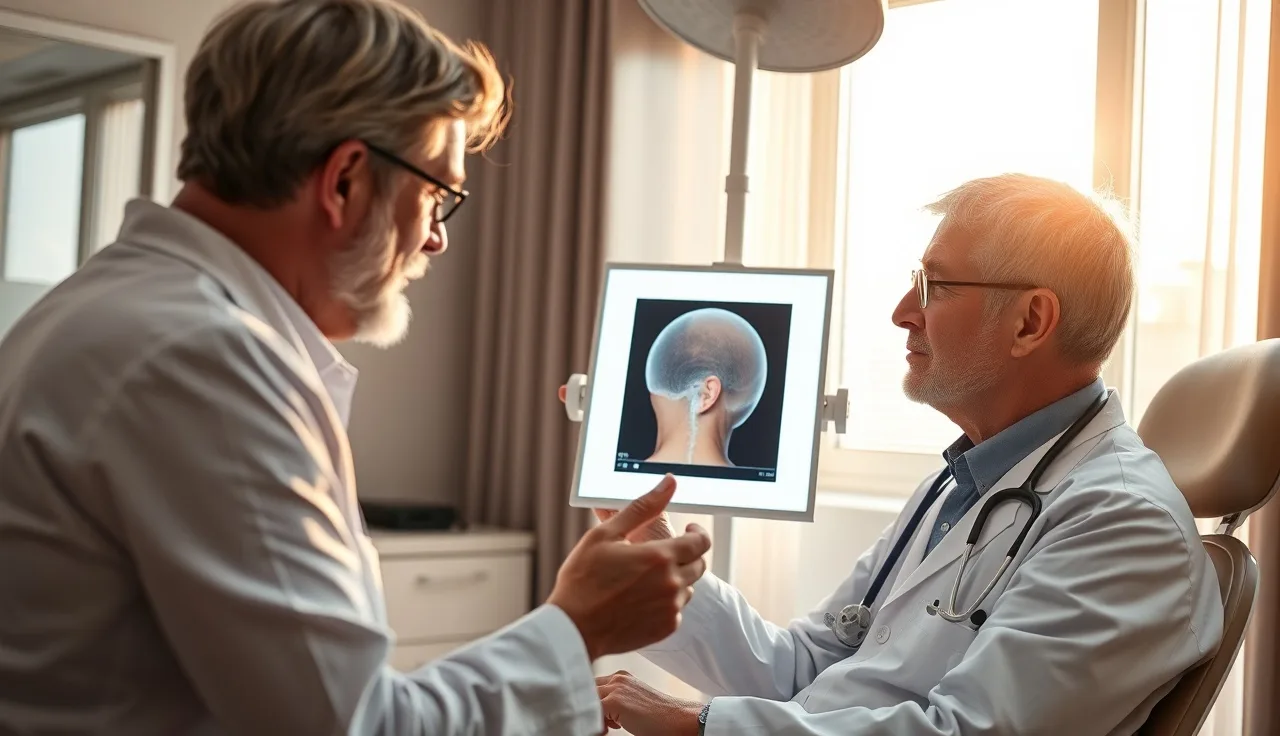
TL;DR: A legitimate hair transplant clinic has a board-certified surgeon performing or directly supervising every procedure, transparent before-and-after photos with patient consent records, verifiable credentials on your state medical board's public lookup, a clear written quote, and no pressure to book same-day. Five minutes of public-record searches can separate a real clinic from a high-risk one.
Why does verifying a hair transplant clinic matter so much?
Hair transplants are surgical procedures. In the United States they fall under medical practice laws, which means only a licensed physician can perform them legally. That sounds reassuring until you learn that enforcement is patchy, that technicians in some states do the actual graft work with minimal oversight, and that the consequences of a botched procedure, including permanent scarring of your donor area, are irreversible.
The American Board of Hair Restoration Surgery estimated in its 2022 membership survey that hundreds of "hair mills" operate in the US and abroad where technicians do most of the cutting, slitting, and placing with little physician involvement [1]. Patients rarely realize this until they see poor density, unnatural hairlines, or donor areas stripped bare.
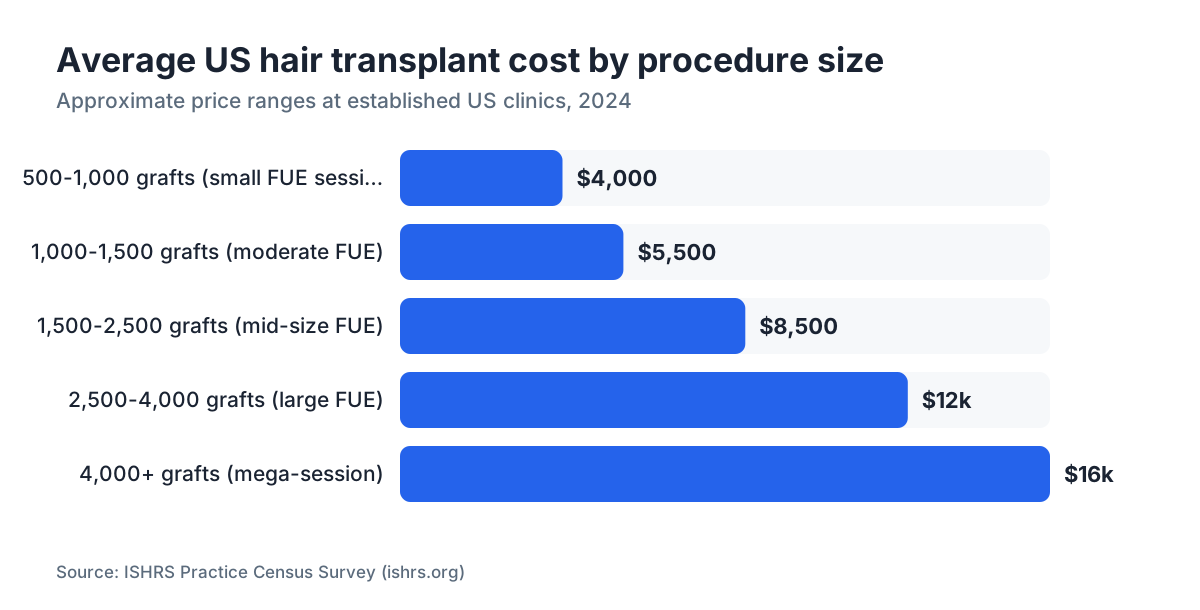
The money is real too. FUE procedures in the US average $4,000 to $15,000 depending on graft count and geography [2]. That is not a purchase you want to repeat because the first clinic botched it. Repair work on a failed transplant costs more, takes longer, and often cannot fully fix the damage.
You are making a decision that shows on your face every day for the rest of your life. A little research upfront is the single highest-return thing you can do before signing anything.
Is the surgeon actually board-certified, and how do you check?
Start here. The physician doing your procedure should hold one of two meaningful credentials: board certification from the American Board of Hair Restoration Surgery (ABHRS) or membership in the International Society of Hair Restoration Surgery (ISHRS) with documented fellowship training. Neither is a state license, but both require demonstrated case volume, written exams, and peer review.
To confirm a US physician's state license, go directly to the public lookup tool on your state medical board's website. The Federation of State Medical Boards runs a centralized tool called DocInfo (docinfo.org) that aggregates license status, disciplinary actions, and malpractice settlements across participating states [3]. Type in the doctor's name, confirm their license reads "active," and look for disciplinary flags. This takes about three minutes.
For ABHRS certification, search the directory at abhrs.org. ISHRS has its own member directory at ishrs.org. Neither directory is exhaustive, but absence from both, paired with vague website language like "our team of experts," is a real warning sign.
Ask the clinic one question directly: "Will the physician be present for the entire procedure, or will technicians perform the extractions and implantations?" A legitimate clinic answers this clearly. A clinic that hedges, changes the subject, or tells you "that's standard practice" without elaborating deserves more scrutiny, not less.
What do red flags in a hair transplant clinic actually look like?
Some red flags are obvious. Most are not.
The obvious ones: no physician name anywhere on the website, before-and-after photos that look like stock images or show only cropped hairlines with no identifiable features, prices dramatically below the US market (under $2,000 for a procedure reputable clinics charge $6,000+ for), and high-pressure same-day booking offers.
The less obvious ones are where people get burned. Watch for clinics that quote in "grafts" without defining how many hairs per graft. A quote of 2,000 grafts sounds identical to another clinic's 2,000 grafts, but if one is single-hair grafts and another is multi-hair follicular units, the density outcomes are entirely different. Ask them to specify follicular units and average hair count per unit in writing.
Watch for before-and-after photos shot under different lighting between the "before" and "after." A legitimate clinic standardizes photography: same camera angle, same lighting setup, same distance. Clinics that show one blurry bathroom selfie before and a studio-lit portrait after are manipulating your perception of the result.
Also watch for clinics that downplay your hair loss stage to sell you a procedure you're not ready for. If you're a Norwood stage 2 or 3 and a clinic is urgently pushing a large graft session, question it. The what causes hair loss picture matters: if your loss isn't stable yet, a transplant into a zone that keeps losing native hair looks progressively worse over time.
And a clinic that cannot give you a written itemized quote, including surgeon fee, facility fee, graft pricing, and follow-up care, is not ready to operate on your head.
How do you evaluate before-and-after photos honestly?
Before-and-after photos are the closest thing to a product demo you will get. They are also the easiest thing for a clinic to fake. Here is how to read them properly.
First, look for volume. A well-run clinic shows dozens to hundreds of cases, not six. Ten curated examples tell you nothing statistically meaningful. Fifty cases across hair types, skin tones, and Norwood stages tell you something real about consistency.
Second, check the time gap. Transplanted hair sheds in the first 4 to 8 weeks after the procedure, and new growth takes 9 to 14 months to reach final density [4]. Any "after" photo taken at 3 months is meaningless and possibly misleading. Ask when the "after" photos were taken. Good clinics document at 6 months and 12 months.
Third, look at the donor area in the afters. Most clinics only show the recipient zone. Ask to see the back and sides of the scalp. Overharvesting the donor area, which leaves a diffusely thinned look, is a common consequence of high-volume graft clinics that chase upfront density over long-term donor preservation.
Fourth, reverse image search every photo. It takes fifteen seconds on Google Images or TinEye. Clinics that use stolen patient photos from other practices do exist. If the images show up on multiple clinic websites, walk away.
If the clinic has a real online presence, look at third-party review platforms: RealSelf, Google Reviews, Trustpilot. Weight the 3-star reviews more heavily than the 5-star and 1-star extremes. The 3-star reviewer usually gives you the honest mixed experience.
What questions should you ask at a hair transplant consultation?
A consultation is an interview. You are evaluating them as much as they are evaluating you.
Ask who will physically perform each step. FUE (follicular unit extraction) has three distinct steps: extraction of grafts from the donor zone, creation of recipient site incisions, and placement of grafts. In many clinics, technicians handle the first and third while the physician only creates the incisions. This is the legal and ethical gray area in hair restoration. You have a right to know.
Ask how many procedures they do per day. A surgeon running eight cases in a single day is not giving any patient adequate attention. Reputable surgeons typically cap their schedule at one or two cases per day.
Ask for the complication rate. Specifically: what percentage of patients get significant cobblestoning (raised graft sites), poor growth (under 70% survival rate), or donor scarring beyond the expected? A clinic that says "we've never had a complication" is lying. A clinic that gives you a real number and explains how they handle problems is being honest.
Ask about their policy if results are poor. Do they offer corrective work? Is there a written guarantee of any kind? You probably won't get money back, but a reputable clinic has a defined protocol for inadequate results.
Ask whether you are a good candidate at all. A physician who tells you you're not ready yet, or who recommends trying finasteride or minoxidil for men before surgery, is almost certainly more trustworthy than one who says everyone qualifies.
Is overseas hair transplant tourism safe, and how do you check those clinics?
Turkey, Thailand, India, and Mexico have become major destinations for hair transplant tourism, driven mainly by price. A procedure that costs $10,000 in the US might cost $2,000 to $4,000 in Istanbul. That gap is real, and legitimate clinics exist in all of those countries. But verification is harder and your recourse if something goes wrong is close to nonexistent.
For Turkish clinics, look for membership in the Turkish Society of Hair Diseases and Hair Transplantation (TURKDERM) or the International Society of Hair Restoration Surgery. ISHRS has members in over 70 countries and its directory is a reasonable starting point [5]. Turkey's Ministry of Health licenses medical facilities and those records are theoretically public, but reaching them as a foreign patient is difficult.
The core risk with overseas clinics is not always surgical skill. It is the package model. Many Istanbul clinics run on a high-volume package basis: fly in, take an extremely high graft count in a single day-long session by a team of technicians, fly home. The economics require throughput. That model, regardless of country, creates pressure to overharvest and under-supervise.
If you are considering overseas treatment, at minimum: video consult with the actual surgeon (not a coordinator), ask for the surgeon's credentials verified against an independent directory, read reviews on international forums like HairRestorationNetwork.com where patients post full case documentation including donor area photos, and understand that any follow-up care, revision work, or complication will be handled at home by a physician who did not perform the procedure.
The ISHRS published a 2019 alert specifically about illegal practitioners performing hair restoration surgery, noting a rise in unlicensed procedures globally [5]. That warning applies domestically and internationally.
What does the FDA say about hair transplant devices and clinics?
The FDA does not directly license clinics or certify surgeons. That is a state-level function. But the FDA does regulate the tools used in hair restoration.
FUE robotic systems like the ARTAS system are FDA-cleared medical devices for use in hair transplant procedures [6]. Clearance means the device has been shown to be substantially equivalent to a legally marketed predicate device, not that the FDA endorses the clinic using it. A clinic advertising FDA-cleared technology is making a device claim, not a safety or outcome claim.
The FDA also regulates platelet-rich plasma (PRP) kits used as adjuncts to transplants. Specific PRP preparation kits are FDA-cleared, though PRP itself is not FDA-approved as a hair loss treatment, and the evidence base for PRP as a standalone or adjunct therapy is still modest [7].
For medications used around transplants, finasteride is FDA-approved for male pattern hair loss at 1 mg/day under the brand name Propecia [8]. Minoxidil is FDA-approved as a topical for both men and women [9]. A clinic that recommends these as part of a post-operative protocol is operating within the evidence base. A clinic that sells you proprietary "growth serums" or supplements with implied transplant benefits is in a different territory entirely. Check the hair loss supplements evidence before paying for anything beyond standard medications.
How do you check a clinic's complaint and disciplinary history?
Three sources matter here.
First, the state medical board. Every US state has one. Search "[your state] medical board license lookup" and find the official .gov site. Look up the physician by name. Most states display disciplinary actions, consent orders, and probationary status publicly. The Federation of State Medical Boards DocInfo tool pulls much of this into one search [3].
Second, court records. Malpractice suits are civil cases filed in state court. Many states have publicly searchable court dockets online. Search the physician's name plus your state's court records portal. A single old suit means little. A pattern of settlements means something.
Third, the Better Business Bureau and state attorney general's office. If a clinic, rather than a specific physician, has a pattern of consumer complaints about billing fraud, no-show surgeons, or failure to deliver promised results, those complaints sometimes surface here. This is a weaker signal than medical board records but it takes two minutes.
For clinics abroad, the ISHRS keeps a "find a surgeon" tool that lists vetted members by country [5]. Not being in that directory is not disqualifying by itself, but being unreachable by any independent verification is.
One overlooked check: call the clinic and ask what hospital it is affiliated with. Legitimate outpatient surgical facilities often have a transfer agreement with a nearby hospital in case of emergencies. A clinic with no hospital affiliation and no answer to this question is operating with no safety net.
How much should a legitimate hair transplant cost, and what should the contract cover?
In the United States, expect to pay roughly $3,000 to $6,000 for a small session of 1,000 to 1,500 grafts at a reputable clinic, and $8,000 to $15,000 or more for larger sessions of 2,500 to 4,000+ grafts [2]. These ranges shift with geography, surgeon reputation, and technique (FUT vs. FUE). Prices at the extreme low end of what you see advertised online almost always signal either a high-volume mill or a less experienced operator.
A written contract for a hair transplant should cover, at minimum: the name and credentials of the operating physician, the estimated graft count and the method for counting (follicular units, not individual hairs), total cost with no hidden facility or anesthesia fees, the cancellation and refund policy, what post-operative care is included versus extra, and the clinic's protocol if the result is judged inadequate.
If the clinic gives you a verbal quote only and resists putting anything in writing, that is a hard stop.
Some clinics offer financing through third-party lenders. That is fine, but verify the annual percentage rate in writing. Medical financing often carries deferred interest, where the full interest balance comes due if you don't pay off the principal within the promotional period. That $8,000 procedure can become $11,000 with a 26% APR on a lapsed promotional plan.
At myhairline.ai's free AI hair scan, you can get a baseline picture of your hair loss pattern and Norwood stage before your consultation, which helps you walk in knowing whether the graft count a clinic quotes is actually appropriate for your degree of loss.
What are the signs of a trustworthy hair transplant surgeon specifically?
Credentials and a clean disciplinary record are the floor, not the ceiling. Beyond those, a few things separate genuinely good surgeons from technically licensed ones.
The surgeon should spend real time on your hairline design. The hairline is the most visible and permanent part of the result. A surgeon who hands hairline design to a coordinator or rushes it in five minutes is not prioritizing the thing that defines how you look for decades. Good surgeons often spend 20 to 30 minutes on hairline design in the consultation alone.
The surgeon should discuss your future hair loss trajectory honestly. If you're in your 20s and still losing hair, a surgeon who explains that native hair will keep thinning around transplanted grafts, and who factors that into the design conservatively, is looking out for you. A surgeon who tells a 23-year-old with Norwood 3 loss to do a full hairline restoration without mentioning long-term DHT blocker options is either uninformed or incentivized to sell the bigger procedure.
The surgeon should be reachable after the procedure, and by more than a general support email. Ask the clinic directly: if you have a concern at day 10 post-op, who do you call and what is the response time?
And finally: the surgeon should tell some patients no. Any clinic with a 100% consultation-to-booking rate is not turning away inappropriate candidates. Patients with unrealistic expectations, insufficient donor density, active autoimmune conditions, or unstable hair loss patterns should be declined or deferred. A surgeon who does that is building a practice on real results.
Should you trust before-and-after photos on clinic social media?
Social media is where clinics put their best work. That is not inherently dishonest, it is marketing. But it creates selection bias so severe that social media results alone tell you almost nothing about typical outcomes.
The cases shown on Instagram and TikTok are almost always: patients with dark straight hair on light skin (because contrast makes density look better), cases with the largest graft counts (because more hair means more dramatic results), and results photographed at optimal lighting and distance. Curly hair, fine hair, grey hair, and lighter skin tones that match donor hair all present harder cases with less photogenic results. You will rarely see those.
For a more representative sample, go to patient community forums. HairRestorationNetwork.com and the Reddit community r/HairTransplants both have user-documented cases where patients post their own photos over time, including the ugly months at 3 and 6 weeks when hair sheds and the scalp looks worse than before surgery. These forums are not curated by clinics. They are much closer to the actual distribution of outcomes.
One useful signal: does the clinic's Instagram show any cases that didn't turn out well, or any honest post about why a patient wasn't a good candidate? Clinics that show nothing but spectacular results are either very lucky or very selective. Both should make you curious.
Also consider that social media reviews can be incentivized. Some clinics offer discounts or referral bonuses for positive reviews. That does not make every positive review fake, but it is worth knowing.
What if you've already paid a deposit to a clinic that now seems suspicious?
First, check the contract you signed for the cancellation and refund terms. Most reputable clinics have a 48 to 72 hour full-refund window after signing. Some have no refund policy at all for deposits. Know what you signed.
If the deposit was paid by credit card, you have a potential path through a chargeback under the Fair Credit Billing Act [10]. Chargebacks are available for services not rendered or significantly not as described. If you paid before any service was performed and the clinic refuses to refund a cancellation, contact your card issuer. Success with chargebacks varies, and the window is usually 60 to 120 days from the statement date depending on your card network.
If you paid by bank transfer or wire, recovery is much harder. Wire fraud complaints can be filed with the FBI's Internet Crime Complaint Center (IC3.gov) [11], and your state attorney general's consumer protection office, but actual recovery is uncommon.
Do not let sunk cost push you into a procedure you are not confident about. A lost $500 deposit is very much recoverable. A failed hair transplant with a scarred donor area is not.
If you have concerns about a clinic's conduct, file a complaint with your state medical board whether or not you proceed. Even if your individual complaint goes nowhere, a pattern of complaints against the same facility triggers investigation. You may protect someone else.
Before booking anything, use a resource like myhairline.ai's free scan to understand where your hair loss actually stands, then cross-reference any clinic's proposed graft count against what is realistic for your stage.
What are the alternatives to a transplant you should consider first?
A hair transplant is a permanent surgical intervention, and it makes sense to exhaust medical options before committing to it, especially if your hair loss is still progressing.
Finasteride (1 mg/day, oral) is FDA-approved for male androgenetic alopecia and slows or halts progression in roughly 83 to 90% of men who take it, with about 66% seeing visible regrowth in clinical trials at two years [8]. It works by blocking the conversion of testosterone to DHT. The finasteride and minoxidil combination has better evidence than either alone. If you haven't tried both for at least 12 months, you don't yet know your stable hair loss endpoint, and therefore don't know how much donor hair you'll actually need to cover future loss.
Topical and oral minoxidil are options with a real evidence base. Oral minoxidil at low doses (1.25 to 5 mg/day) has shown meaningful regrowth in several trials and is increasingly prescribed off-label by dermatologists [12]. Review the minoxidil side effects before starting.
Do you actually have androgenetic alopecia? Telogen effluvium from stress, illness, or diet looks similar at first glance and resolves on its own. A transplant into a zone that's shedding temporarily from effluvium is a completely unnecessary procedure.
None of this means surgery is wrong for you. For someone with stable loss, sufficient donor density, and realistic expectations, a well-done transplant by a board-certified surgeon is a genuinely effective intervention. The point is to go in knowing what you're doing and why.
Sources
- ABHRS (American Board of Hair Restoration Surgery), organizational overview and standards
- ISHRS, Practice Census and Hair Transplant Cost Survey
- Federation of State Medical Boards, DocInfo physician lookup
- American Academy of Dermatology, Hair loss types and treatments
- ISHRS, 2019 Alert on Illegal Hair Restoration Practitioners
- FDA, 510(k) Premarket Notification database, ARTAS Robotic Hair Transplant System
- National Institutes of Health / PubMed, Platelet-Rich Plasma for Hair Loss review
- FDA, Propecia (finasteride) prescribing information
- FDA, Minoxidil OTC labeling for topical use
- Federal Trade Commission, Fair Credit Billing Act consumer guidance
- FBI, Internet Crime Complaint Center (IC3)
- Journal of the American Academy of Dermatology, Low-dose oral minoxidil for hair loss (Randolph & Bhatt, 2021)