

TL;DR: Hair transplants move real follicles and grow actual hair, but cost $4,000, $15,000 and require surgery. Scalp micropigmentation (SMP) is a non-surgical tattoo that mimics a shaved-head look for $1,500, $4,000, with touch-ups every few years. Your best choice depends on how much hair you have left, whether your loss is still active, and what result you actually want.
What is the core difference between a hair transplant and SMP?
A hair transplant is surgery. A surgeon removes follicles, usually from the back and sides of your scalp where DHT-resistant hair grows, and plants them in thinning or bald areas. The transplanted hairs shed within weeks, then regrow permanently over 12 to 18 months. You end up with real hair you can grow, style, and cut however you want [1].
Scalp micropigmentation is a cosmetic tattoo. A trained technician uses fine needles to deposit pigment dots into the upper dermis, replicating the look of cropped or shaved hair follicles. Nothing grows. There are no roots. The result is an illusion of density or a full buzz-cut shadow, and it holds up well until the pigment fades, which typically happens over three to five years [2].
That gap matters more than anything else. One procedure produces biological hair. The other produces a very convincing drawing of hair. Both can look excellent when done well. Both can look terrible when done badly. Which one is right for you depends on things the procedure itself can't control: how much donor hair you have, whether your hair loss is still progressing, your lifestyle, and your tolerance for surgery and recovery.
What does each procedure actually cost?
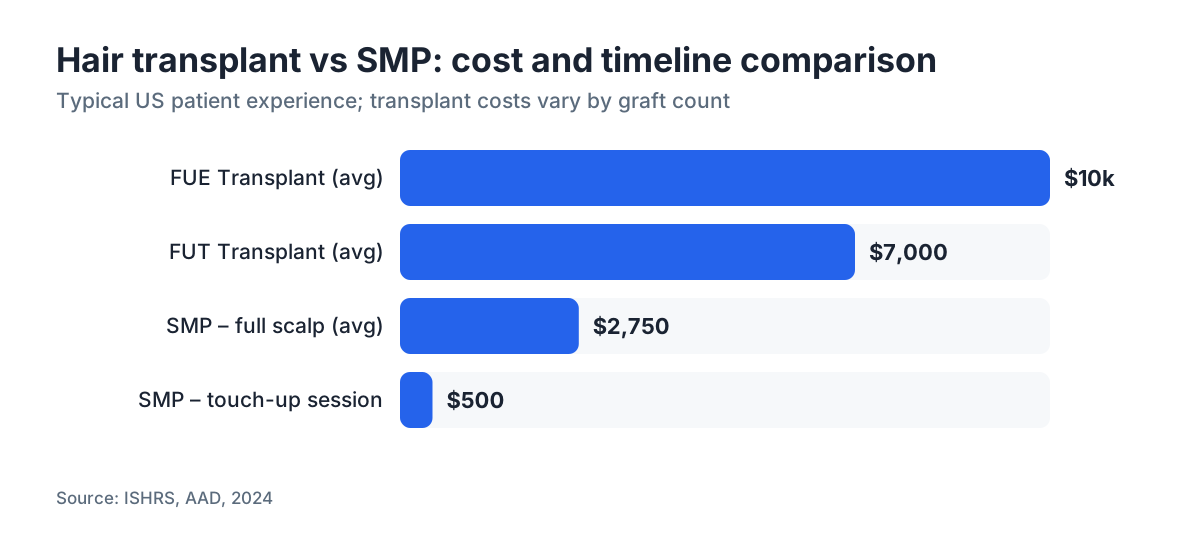
Hair transplant pricing is almost always quoted per graft. Most US clinics charge $3, $10 per graft, and the average session uses 1,500 to 3,000 grafts, putting total cost somewhere between $4,000 and $15,000 depending on the extent of your hair loss and the clinic's location and reputation [3]. FUE (follicular unit extraction) tends to cost more than FUT (follicular unit transplantation/strip) because it is more labor-intensive. A second session to add density, which is common for Norwood 5 to 7 patients, adds another round of costs on top.
SMP is priced per session or as a package. Typical US pricing runs $400, $1,000 per session, with most people needing two to three sessions, landing the total somewhere between $1,500 and $4,000 [4]. Touch-ups every three to five years add ongoing cost that a transplant generally does not have (though transplant patients sometimes return for additional grafts).
Here's the honest comparison. SMP costs roughly one-third to one-quarter of a transplant upfront, but it's a permanent recurring expense. A transplant is expensive once.
| Procedure | Typical US Cost | Recurring Cost | Downtime |
|---|---|---|---|
| FUE Hair Transplant | $6,000, $15,000 | Rare (occasional touch-up session) | 1 to 2 weeks |
| FUT Hair Transplant | $4,000, $10,000 | Rare | 2 to 3 weeks |
| Scalp Micropigmentation | $1,500, $4,000 | Touch-ups every 3 to 5 years | 24 to 48 hours |
One thing people underestimate: if you go abroad for a transplant (Turkey is the most common destination), total costs including travel often land at $2,000, $4,000, overlapping with domestic SMP pricing. The risk calculus there is its own discussion, but the numbers are real [3].
Who is actually a good candidate for a hair transplant?
Donor supply decides almost everything. A transplant moves hair from areas of your scalp that are genetically resistant to DHT to areas where it's thinning. If your donor zone is sparse, surgeons cannot manufacture grafts out of nothing. Patients with advanced Norwood 6 or 7 loss (large bald area, limited side and back density) often don't have enough donor hair to achieve meaningful coverage, and an honest surgeon will tell them so [1].
Age matters. Hair loss is typically still progressing in your twenties. Transplanting into areas where loss is still active means the native hairs around the transplants will keep falling out, leaving you with transplanted islands surrounded by bald skin. Most experienced surgeons prefer to wait until loss has stabilized, or require patients to be on finasteride or minoxidil for men first to slow progression before committing to surgery [5].
Your hair characteristics shape how many grafts you need and how natural the result looks. Coarser, curlier hair covers more ground per graft than fine, straight hair. Contrast between hair color and scalp skin also affects the visual result; lighter hair on lighter skin tends to need more grafts to look dense.
The timeline surprises people. The transplanted hairs shed in weeks two through four (this shocks almost everyone who hasn't read about it). New growth starts at three to four months and reaches full density somewhere around 12 to 18 months post-procedure. If you need results before a major event in six months, factor that in.
Who is actually a good candidate for scalp micropigmentation?
SMP works best when you're comfortable keeping your hair very short, because the pigment dots look like a shaved stubble pattern. If you want to grow your hair out a few inches and style it, SMP won't give you that.
The procedure fits three situations especially well. First, people with advanced hair loss who lack sufficient donor hair for a transplant. SMP can cover a fully bald scalp convincingly. Second, people who want the illusion of density in thinning areas without surgery. Third, people who want to camouflage a hair transplant scar, particularly the linear scar from FUT strip surgery [2].
SMP doesn't demand active or stable loss the way a transplant does. If your hair keeps thinning after SMP, a technician can adjust the pigment pattern at touch-up appointments to match your evolving hairline. That flexibility is real.
Medical contraindications are few: active skin conditions on the scalp (psoriasis, seborrheic dermatitis flares), keloid-forming skin, and certain medications that affect wound healing. People on blood thinners should discuss timing with their physician. The procedure isn't regulated by the FDA as a medical device itself, but the pigments used fall under FDA oversight as color additives [6].
If you have a receding hairline that's genuinely early-stage with plenty of hair still present, SMP can add the illusion of a denser frontal zone, but it blends best when your own hair is kept short around it.
Does hair loss stage (Norwood scale) change which procedure makes sense?
Yes, and the difference is not subtle. The Norwood-Hamilton scale classifies male pattern baldness from 1 (no loss) to 7 (most extensive loss). Where you fall on it shapes your options in concrete ways.
Norwood 1 to 3: Hair loss is early. You likely have ample donor supply. A transplant can produce an excellent, natural result if your loss has stabilized. SMP is often overkill at this stage, though it can help conceal a slightly receded hairline. Medical treatment (finasteride, minoxidil) deserves serious consideration before surgery here, because surgery doesn't stop ongoing loss.
Norwood 3 to 5: This is the range where both options are legitimately on the table. A transplant can restore meaningful density and a hairline, assuming donor supply is adequate. SMP can create a full buzz-cut look or add density illusion. Many patients in this range combine a transplant for the hairline and SMP for the crown if donor supply is limited.
Norwood 6 to 7: Donor supply is the constraint. Many surgeons will attempt coverage with careful graft distribution, but expectations have to be managed: complete coverage is often not achievable, and multiple sessions may still leave a thinner result than the patient wants. SMP frequently makes more sense at this stage, producing a consistent full-scalp shaved appearance without the graft shortage problem [1].
Women experience a different pattern, typically diffuse thinning rather than the Norwood recession pattern, which makes transplant candidate selection more complex. SMP for diffuse thinning in women tends to be less useful than for men, because the dots become visible between longer hairs rather than blending with a short crop.
What does recovery look like for each procedure?
A hair transplant recovery is real. The first week involves a scabbed, tender scalp, some swelling around the forehead (this usually peaks around day three and looks alarming), and strict instructions around sleeping position, water exposure, and sun protection. Plan to stay home or work remotely for at least a week. Most surgeons clear patients for light exercise around two weeks and full activity at four weeks. Grafts are fragile in the first ten days, and dislodging them is a genuine concern [1].
The aesthetic dip from a transplant deserves honesty too. The donor area is shaved (for FUE) or shows a linear scar (for FUT). The recipient area has tiny scabs. At three to four weeks, the transplanted hairs fall out in what's called shock loss, leaving you looking thinner than before the surgery for several months. This phase ends, but it's genuinely discouraging if you're not prepared for it.
SMP recovery is a different category entirely. The scalp is slightly red and sensitive for 24 to 48 hours. There's no open wound in the surgical sense. Most people return to work the next day. The main aftercare instructions involve avoiding sun exposure, sweat, and swimming for about two weeks to protect the pigment while it sets. No anesthesia, no incisions, and infection risk beyond what any minor skin procedure carries is minimal.
The psychological recovery from a bad result is harder to quantify but worth mentioning. A bad transplant can produce unnatural-looking hairlines with pluggy, visible grafts that require corrective work. A bad SMP result can look like a helmet of dark dots that don't match your skin tone. Both go wrong in distinct ways, and choosing an experienced, credentialed provider matters more than choosing the procedure category.
Are there risks specific to each procedure I should know about?
Hair transplants carry standard surgical risks: infection (rare but possible), poor graft survival if aftercare instructions are not followed, nerve damage causing temporary or permanent numbness, and scarring. FUT strip surgery leaves a linear scar that can be visible with short haircuts. FUE leaves tiny dot scars that are generally invisible unless you go very short. There's also the risk of a poor cosmetic result: an unnatural hairline design, poor density, or mismatched direction of growth [1].
One specific risk worth knowing: shock loss (effluvium) can cause native hairs near the transplant zone to shed temporarily after the procedure. This is usually reversible, but it can be distressing. Understanding telogen effluvium helps put this in context.
For SMP, the main risks are pigment color mismatch (the dots look blue or green rather than gray), uneven fading, migration of pigment over time (though this is less common with modern SMP than with traditional tattoo inks), and allergic reactions to pigment components. There's no surgical risk. Infection risk exists but stays low when sterile technique is used.
Both procedures carry financial risk in the form of poor results. Hair transplant revision surgery is possible but expensive. SMP can be lightened with laser treatments, but complete removal is difficult. Neither is easily undone, which is the risk that outranks the rest.
Can you combine a hair transplant and SMP?
Yes, and this combination is more common than people realize. The typical use case is a patient who gets a hair transplant but has limited donor supply, leaving the crown thinner than they'd like. SMP can fill in the crown visually without using grafts, matching the pigment to the shaved or closely cropped look of the surrounding hair.
Another common combination: FUT strip surgery leaves a linear scar across the back of the head that shows when hair is cut short. SMP can camouflage that scar extremely well, making it nearly invisible with short hair.
Sequencing matters. SMP is generally done after a transplant has fully settled, meaning at least 12 months post-surgery, so the technician can see where the hair actually grew and where additional coverage is needed.
Some patients take the opposite route: SMP first, for immediate coverage while they decide whether to pursue surgery, then a transplant later if they want to grow their hair out. The pigment doesn't interfere with transplant surgery as long as the surgeon knows it's there.
If you're unsure where you fall and want an objective starting point before booking consultations, a tool like the free AI hair analysis at MyHairline can help you map your current loss pattern and think through your options before spending money on in-person consultations.
How do results compare long-term?
A well-executed hair transplant with healthy donor hair should last permanently. The transplanted follicles carry the same DHT resistance as the donor zone they came from, which is why they don't fall out the way miniaturizing hairs do. The main caveat: ongoing native hair loss continues around the transplanted area, which is why patients who transplant young and don't address the underlying loss with a DHT blocker like finasteride can end up with an island of transplanted hair surrounded by progressive loss [5].
SMP fades. UV exposure speeds it up. Most patients return for a color refresh every three to five years to maintain the look. The pigment softens in tone over time, which some patients find acceptable and others find annoying. With each pass of touch-up work, the skin has taken multiple needle sessions, and the cumulative effect on skin texture over decades is less studied than the surgical literature on hair transplants.
A 2021 review published in the Journal of Cosmetic Dermatology reported patient satisfaction with SMP in the 70 to 80% range across the studies reviewed, with color mismatch and fading as the most common complaints [2]. Hair transplant satisfaction data vary widely by procedure type, surgeon, and patient selection, but well-designed studies show satisfaction rates above 80% when patients are appropriately selected [1].
The long-term psychological picture matters too. Many patients report that gaining back even the appearance of hair density improves self-perception and social confidence, regardless of which method they used. What the research doesn't capture well is how patients feel at year ten, when a transplant's result has aged and native loss has continued, or when SMP has faded unevenly.
What questions should I ask a provider before deciding?
Before a hair transplant consultation, ask the surgeon: How many grafts do I actually have available in my donor zone? What Norwood stage are you placing me at now, and what stage do you expect me to reach? Will this procedure still look natural if I lose another 30% of my native hair? What technique do you use, and why? Can I see results from patients with similar loss patterns and hair characteristics to mine, at 18 months post-procedure?
For SMP, ask the technician: What pigment formula do you use, and how does it hold color over time? Do you have photos of healed results at two and four years, more than freshly completed work? How do you handle fading or color shift? What happens if I later want a hair transplant in the same zone?
For both: ask to see before-and-after photos of patients who look like you, with similar skin tone, hair color, and loss pattern. Be skeptical of providers who show only their very best results. Ask what happens if you're unhappy.
One practical step helps before committing to either procedure: understand your current loss pattern in detail and whether it's still progressing. What causes hair loss and whether it's genetic, hormonal, or something else changes the treatment plan. A dermatologist or trichologist assessment, or a blood panel looking at thyroid, ferritin, and androgen levels, can catch treatable causes that make both surgical options premature.
Should I try medication before either procedure?
For androgenetic alopecia (the most common type of hair loss in men and women), the evidence for medical treatment is solid enough that most surgeons and dermatologists recommend trying it first, or at minimum using it alongside surgery.
Finasteride (1 mg daily, oral) is FDA-approved for male pattern hair loss and has shown in randomized controlled trials that it halts progression and produces some regrowth in a meaningful percentage of men. A two-year trial by Kaufman and colleagues in the Journal of the American Academy of Dermatology found finasteride increased hair count and slowed loss versus placebo [8]. The American Academy of Dermatology includes it as a first-line treatment [5]. The combination of finasteride and minoxidil beats either alone for most men.
Minoxidil (2% or 5% topical, or low-dose oral) is FDA-approved and works differently, mainly by prolonging the growth phase of follicles. It works for both men and women [7]. The side effect profile of oral minoxidil differs from topical and is worth reading about separately.
Here's why this matters for the transplant-versus-SMP decision: if your loss is still active and you go into surgery without controlling it medically, you may need a second or third transplant session sooner than you'd planned, inflating the total cost. Many surgeons require at least a year of stable loss, either naturally or with medical treatment, before they'll operate.
If you've already tried medication and it isn't enough, or your loss is too advanced for it to make a visible difference, then the surgical or cosmetic route makes sense. But going straight to a $10,000 surgery before trying a $30-a-month medication is hard to justify on economics alone. You can look into hair loss supplements as an add-on too, though the evidence there is weaker than for FDA-approved drugs.
How do I actually make the final decision?
Most people overthink this by comparing procedures in the abstract. The more useful approach starts with what you want the result to look like.
Want to grow your hair out, style it, and have people not be able to tell you've had any work done? A transplant is the only option. SMP can't give you that.
Comfortable keeping your hair shaved or very short, with the main goal being to kill the bald-patch look? SMP gets you there faster, cheaper, and without surgery.
If your loss is advanced and your donor supply is genuinely insufficient, the decision may be made for you. A consultation with a board-certified hair restoration surgeon (look for members of the International Society of Hair Restoration Surgery) will tell you your donor count and realistic coverage expectations. That single piece of information narrows the decision considerably [1].
Budget is real. A transplant at $8,000, $12,000 isn't accessible for everyone. SMP at $2,000, $3,000 is a meaningful but more manageable number for many people. If the budget gap is the deciding factor, that's a legitimate factor.
Age and loss trajectory matter. If you're 24 and still losing hair fast, both procedures risk becoming outdated as loss progresses. Stabilizing with medication first, then reassessing at 27 or 28, is often the most cost-effective path.
To map your current hair loss stage before booking consultations, the free AI scan at MyHairline can give you a baseline to bring into your conversations with providers. It won't replace an in-person evaluation, but it's a useful starting point.
The practical honest answer: if you can afford it, your loss is stable, your donor supply is good, and you want to grow your hair, get a transplant. If any of those conditions aren't met, SMP is a faster, lower-risk, lower-cost way to look better while you figure out the rest.
Sources
- International Society of Hair Restoration Surgery (ISHRS), Practice Census and Patient Guide
- Rassman WR et al., Journal of Cosmetic Dermatology, SMP patient satisfaction review 2021
- American Board of Hair Restoration Surgery, Cost and Procedure Information
- American Academy of Dermatology, Hair Loss: Diagnosis and Treatment
- American Academy of Dermatology, Hair Loss: Types and Treatment
- U.S. Food and Drug Administration, Color Additives
- National Institutes of Health, MedlinePlus: Minoxidil Topical
- Kaufman KD et al., Journal of the American Academy of Dermatology, Finasteride RCT
- National Institutes of Health, MedlinePlus: Hair Loss
- Bernstein RM, Rassman WR, Follicular Unit Transplantation, Dermatologic Surgery