

TL;DR: Minoxidil lowers blood pressure and can cause fluid retention, which makes it riskier with heart failure or arrhythmia. Finasteride has minimal cardiac effect but needs a prescription discussion. Topical minoxidil beats oral for most heart patients. A hair transplant is elective surgery with real anesthetic risk. Loop in your cardiologist before you start anything.
Why heart problems change the hair loss treatment calculus
Most hair loss articles treat treatment choice like a menu. Pick what sounds good, order it online, start using it. If your heart is healthy, that loose approach rarely causes harm. If it isn't, the stakes change completely.
Several of the most effective hair loss treatments work systemically. They circulate through your bloodstream and touch organs well beyond your scalp. For a heart patient, that matters. Minoxidil started life as an oral blood pressure drug in the 1970s, and nobody noticed it grew hair until patients on it sprouted fuzz in odd places [1]. Finasteride shifts circulating hormone levels. Oral minoxidil, which is having a real resurgence, can hold enough fluid to worsen heart failure [2]. None of that puts these treatments automatically off-limits. But "I'll just try it and see" is a bad plan if you have a pacemaker, a stent, an arrhythmia, heart failure, or a recent cardiac event.
Drug interactions are the second problem. Many cardiac patients take a stack of medications: beta-blockers, ACE inhibitors, diuretics, anticoagulants, antiarrhythmics. Some hair loss treatments collide with those classes in ways a product label never mentions.
This article walks through each treatment category, spells out the actual cardiac risks, and shows you how to run a useful conversation with your cardiologist so you can make a decision you understand.
What are the main hair loss treatment options and which carry cardiac risk?
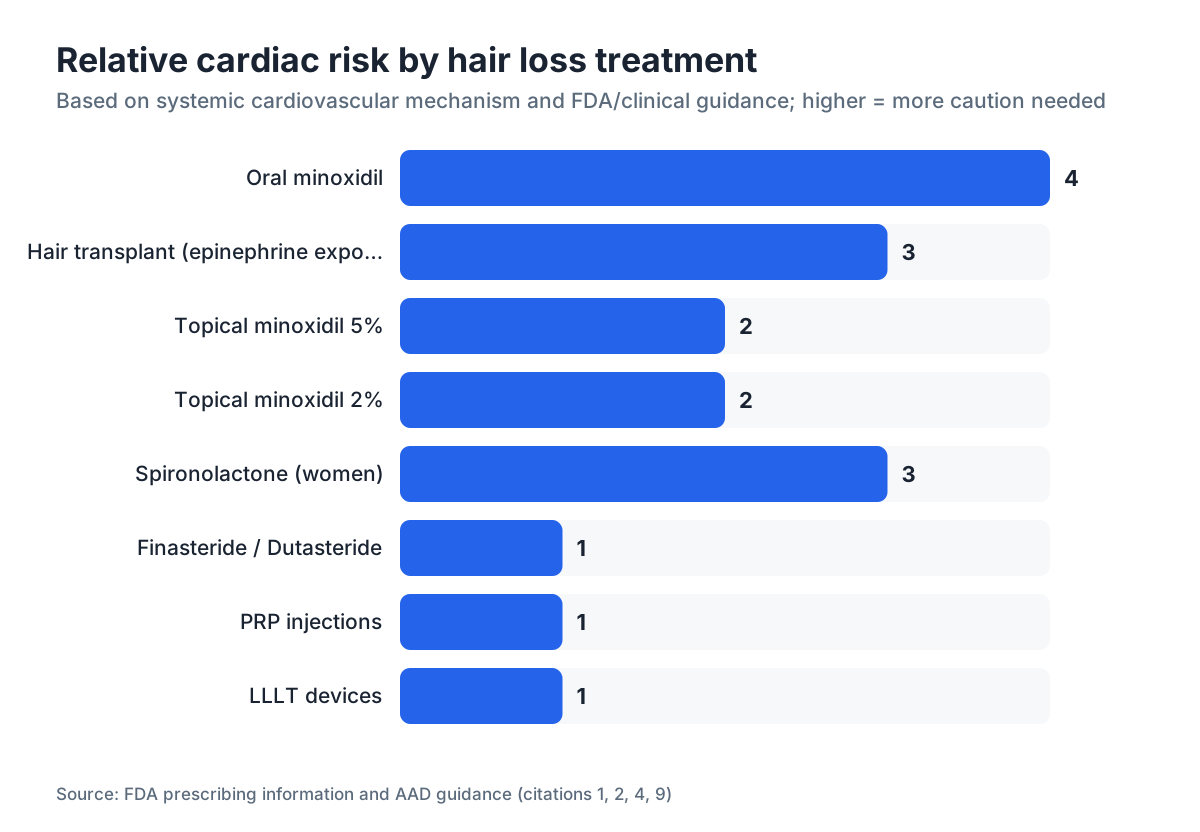
Here's the plain-language map before we go deeper into each option. The split that matters most in practice is topical versus oral. Topical treatments stay close to the scalp. Oral treatments enter full systemic circulation and can move your blood pressure, heart rate, and fluid balance in ways topical versions mostly avoid.
| Treatment | Route | Main cardiac concern | Risk level (relative) |
|---|---|---|---|
| Topical minoxidil 2-5% | Applied to scalp | Systemic absorption, BP drop | Low-moderate |
| Oral minoxidil 1.25-5 mg | Swallowed pill | Fluid retention, tachycardia, BP drop | Moderate-high |
| Finasteride 1 mg | Swallowed pill | Minimal direct cardiac effect | Low |
| Dutasteride 0.5 mg | Swallowed pill | Minimal direct cardiac effect | Low |
| Hair transplant surgery | Surgical procedure | Anesthetic and surgical stress | Moderate (procedure risk) |
| Platelet-rich plasma (PRP) | Scalp injections | Minimal systemic effect | Low |
| Low-level laser therapy | Device, scalp only | No systemic effect known | Very low |
| Hair loss supplements | Varies widely | Varies (biotin, saw palmetto, etc.) | Generally low, some interactions |
Keep that topical-versus-oral divide in your head as you read the rest. It explains most of the risk gradient.
Is topical minoxidil safe if you have heart disease?
For most stable cardiac patients, low-to-moderate-strength topical minoxidil is considered acceptable, but you still have to tell your cardiologist you're using it. That's the honest short answer. Topical minoxidil (the 2% and 5% solutions and foams sold as Rogaine and generics) is the treatment cardiologists field the most questions about.
Here's why the caution exists. Topical minoxidil does get absorbed, usually estimated at roughly 1-2% of the applied dose through intact skin [1]. In healthy people with normal blood pressure, that fraction rarely does anything you'd notice. In someone who already runs low, or who takes antihypertensives like amlodipine or lisinopril, even a small additive drop can cause dizziness, fainting, or reduced blood flow to the heart in vulnerable patients.
The FDA OTC label spells this out. It tells patients to ask a doctor before use if they have "heart disease." That warning isn't filler. The original testing for topical minoxidil left out people with significant cardiovascular disease, so the safety data in that group is thin.
In practice, most dermatologists and cardiologists won't refuse topical minoxidil for a stable patient with, say, well-controlled hypertension or a single heart attack years back. They get far more cautious with active heart failure, a recent cardiac event (within 3 to 6 months), unstable angina, or a significant arrhythmia. If any of those describe you, wait for explicit clearance.
For more on how the drug works and what to expect, see minoxidil for men and minoxidil side effects.
Is oral minoxidil safe for people with heart conditions?
Oral minoxidil is exciting on efficacy. Doses of 1.25 to 5 mg daily produce real regrowth. But its cardiovascular side effect profile is the heaviest of any hair loss medication, and cardiac patients have to respect that.
At blood pressure doses (10 to 40 mg/day), oral minoxidil causes reflex tachycardia, fluid retention, and pericardial effusion (fluid around the heart) often enough that it's almost always paired with a beta-blocker and a diuretic in practice [2]. At the low hair-loss doses (0.25 to 5 mg), those effects shrink but don't disappear. A 2021 review in the Journal of the American Academy of Dermatology reported that fluid retention and edema are the most common reasons patients quit oral minoxidil at hair-loss doses [3].
For someone with compensated heart failure, even mild fluid retention can tip the scale toward decompensation. For someone prone to tachycardia or living with an arrhythmia, a reflex jump in heart rate is not a small thing.
That doesn't make oral minoxidil universally forbidden. Some cardiologists will prescribe or co-manage it in stable patients already on the right diuretics. It just demands active medical supervision, not a telehealth script written without a cardiac history.
Read up on the current research at oral minoxidil before you raise it with your doctor.
Can you take finasteride or dutasteride if you have a heart condition?
From a straight cardiac standpoint, finasteride is one of the lower-risk prescription options for most heart patients. Finasteride (1 mg for hair loss, sold as Propecia; 5 mg for prostate, sold as Proscar) blocks 5-alpha reductase, the enzyme that turns testosterone into dihydrotestosterone (DHT). It doesn't dilate blood vessels, push up heart rate, or shift fluid balance the way minoxidil does [4].
It's not free of systemic effects. It changes androgen metabolism, and researchers are still looking at whether long-term use carries any cardiovascular signal in older men. But current evidence doesn't establish a clinically significant cardiac risk in otherwise stable patients [4].
The more practical wrinkle: finasteride lowers PSA levels, which matters if you're being watched for prostate cancer. There are also older concerns about effects on libido and mood that can weigh on quality of life for someone already managing a chronic illness.
Dutasteride (0.5 mg, sold as Avodart) is a stronger 5-alpha reductase inhibitor used off-label for hair loss. Its cardiac profile mirrors finasteride: low direct risk, but less studied in the hair loss setting.
Want the biology in plain terms? dht blocker covers the mechanism, and finasteride walks through the full evidence base and who it helps most.
One hard line: finasteride is contraindicated in women who are pregnant or may become pregnant because of the risk of fetal harm [4]. It's off the table for most premenopausal women, cardiac condition or not.
Is a hair transplant safe when you have heart disease?
A hair transplant is elective surgery. Hold onto that framing.
For a healthy person in their 30s or 40s, the procedure (usually done under local anesthesia with optional oral sedation) carries a low but real surgical risk. For someone with heart disease, the math shifts with the severity of the condition.
The worries are anesthetic agents, epinephrine in the local anesthetic, the surgical stress response, and sitting or lying still in a chair for 4 to 8 hours. Epinephrine goes into almost every hair transplant because it cuts bleeding. It directly stimulates cardiac receptors and can trigger tachycardia, elevated blood pressure, and, in patients with arrhythmia or ischemic heart disease, serious cardiac events [5].
Reputable clinics ask about cardiac history at consultation. They should require a cardiology clearance letter for anyone with significant heart disease before proceeding. A clinic that skips that question is waving a red flag.
Some conditions are relative contraindications, meaning the surgeon and cardiologist weigh risk against benefit case by case. Those include recent heart attack (wait at least 6 months, often longer), active heart failure, poorly controlled arrhythmia, and significant coronary artery disease. Patients with well-controlled, stable disease may get cleared with monitoring.
So "can I get a transplant?" rarely gets a clean yes or no. It's a conversation between your restoration surgeon and your cardiologist, with your anesthesiologist looped in if sedation is on the table.
For the procedure details, see hair transplant.
What about PRP, laser therapy, and supplements for cardiac patients?
These carry the lowest cardiac risk, which is exactly why they earn a spot in the plan when medications or surgery get complicated.
Platelet-rich plasma (PRP) injections draw your own blood, spin it to concentrate growth factors, and inject it into the scalp. Because it uses your blood and stays local, systemic cardiovascular effects are basically nil. The evidence in androgenetic alopecia is real but modest: a 2019 meta-analysis found statistically significant gains in hair density and thickness versus placebo, though effect sizes bounced around a lot between studies [6]. For a cardiac patient who can't safely use minoxidil or finasteride, PRP is a reasonable low-risk option to raise.
Low-level laser therapy (LLLT) devices (combs, helmets, caps) use red light wavelengths to nudge follicle activity. The mechanism isn't fully pinned down, but there are no systemic effects and no known cardiovascular interactions. The FDA has cleared several LLLT devices for hair loss as a cosmetic treatment. Results are modest, roughly on par with low-dose topical treatments in some trials [7]. It's not a high-power standalone, but for a patient where everything else is off-limits, it beats nothing.
Supplements are the messiest category. Biotin, zinc, iron, and vitamin D make sense if labs show a deficiency, and they carry no meaningful cardiac risk at recommended doses. Saw palmetto, a mild 5-alpha reductase inhibitor sold as a natural DHT blocker, has thin safety data in cardiac populations but no obvious path to cardiac harm. The trouble with blended supplements is that they're underregulated, and the "other ingredients" can hide things that interact with cardiac drugs. Some herbal supplements (ginkgo, high-dose garlic, high-dose fish oil) affect platelet function and can interact with anticoagulants like warfarin. On warfarin or a DOAC? Run any new supplement past your prescriber. Hair loss supplements breaks down what the evidence actually supports.
Stress-related or illness-related shedding, called telogen effluvium, shows up often in people who've had a cardiac event or major surgery. That kind of shedding usually clears on its own once the stressor passes. Sorting out whether your loss is androgenetic or reactive matters before you commit to anything. Telogen effluvium explains how to tell them apart.
How do cardiac medications contribute to hair loss, and does treating them help?
This part gets overlooked. Several common heart drugs are themselves tied to hair loss, and patients chase hair treatments without realizing their cardiac medications are driving the shedding.
Beta-blockers, especially older non-selective ones like propranolol and metoprolol, are linked to telogen effluvium in a subset of patients. Anticoagulants including heparin and warfarin can cause heavy shedding. ACE inhibitors and statins turn up in case reports too, though the statin link is weaker [8].
Did your hair loss start or worsen after a new cardiac medication? Bring that timeline to your cardiologist before you stack a hair loss treatment on top. Sometimes switching to another drug in the same class stops the shedding without adding any new treatment or risk. Your cardiologist can only make that call if they know what's going on.
What causes hair loss covers medication-induced loss in more depth if you want the mechanism.
What should you actually say to your cardiologist before starting a hair loss treatment?
Plenty of people skip this talk. They figure their cardiologist won't care about something cosmetic, or they don't want to seem vain. Neither reason is worth your safety.
A good conversation hits four things.
First, name exactly what you're considering: topical or oral minoxidil, finasteride, a transplant, something else. "Hair loss treatment" is too vague to get useful guidance.
Second, hand over your current cardiac medications and recent test results so they can judge interaction and blood pressure risk accurately.
Third, ask whether your cardiac status is stable enough that blood pressure swings from topical minoxidil would be manageable, or whether fluid retention from oral minoxidil would be dangerous given your ejection fraction or diuretic regimen.
Fourth, if you're eyeing a transplant, ask what a surgical clearance evaluation involves and whether they'd want extra testing first.
If your cardiologist doesn't know hair loss drugs well, that's normal. Bring a printout of the FDA prescribing information for the treatment you're weighing [1][4]. The cardiac effects are documented there, and a cardiologist can size up those risks against your case even without deep dermatology knowledge.
The American Academy of Dermatology advises that patients with significant medical conditions discuss hair loss treatments with both their dermatologist and their primary care or specialist physician before starting [9]. That guidance exists because these treatments are so often self-started without a full medical review.
Can women with heart problems use hair loss treatments safely?
Women with androgenetic alopecia or other hair loss already face a narrower treatment landscape than men, and cardiac comorbidities tighten it further.
Finasteride and dutasteride are not FDA-approved for hair loss in women and are contraindicated in women who are or may become pregnant [4]. Some dermatologists prescribe finasteride off-label for postmenopausal women, and in that group the cardiac risk profile matches men's: low direct cardiac risk.
Topical minoxidil 2% (the FDA-approved strength for women) is the usual first-line choice. The same caveats about additive blood pressure lowering apply, especially for women on antihypertensives. Women with heart failure or a significant arrhythmia need cardiology clearance first.
Oral minoxidil at low doses (0.25 to 1.25 mg for women) gets used off-label and has shown promise in small trials. The fluid retention risk is present even at these doses and calls for extra caution in women with heart failure or already on diuretics.
Spironolactone, an aldosterone antagonist used as an antiandrogen for female hair loss (25 to 200 mg/day), has direct cardiac and blood pressure effects. It lowers blood pressure, raises potassium, and interacts with several cardiac drugs. A woman already on heart failure medications, especially other potassium-sparing agents or ACE inhibitors, can develop dangerous hyperkalemia with spironolactone. This one truly needs cardiology sign-off.
PRP and LLLT stay low-risk options for women with cardiac conditions, same as for men.
What's a realistic treatment plan if several options are off-limits for you?
Say oral minoxidil is out over fluid retention, surgery is out because your cardiologist won't clear you, and finasteride is out because you're a woman of childbearing age. You still have options. The set is just narrower.
Topical minoxidil, used carefully with blood pressure monitoring, is often the realistic first step for stable cardiac patients. Start at the lower 2% concentration and watch your blood pressure in the weeks after starting. Dizzy or lightheaded? Stop and call your prescriber.
Stack PRP on top if you can access it and afford the sessions (roughly $400 to $1,500 each out of pocket, with 3 to 6 sessions recommended up front) [10]. Home LLLT devices run $200 to $900 for a quality unit and add no systemic risk.
Fix any nutritional deficiencies your bloodwork turns up, particularly iron, ferritin, vitamin D, and zinc, since low levels of any of these can worsen hair loss on their own. Low-risk, low-cost.
Be straight with yourself about expectations. The less aggressive your approach has to be because of cardiac limits, the more modest your regrowth may be. Holding the line and stopping further loss is still a real, worthwhile goal.
Want to map your pattern before committing to anything? The free AI analysis at MyHairline gives you a baseline read on pattern and severity to carry into the doctor conversation.
For the combined route, finasteride and minoxidil covers how the two work together for people who can safely use both.
How do you monitor for cardiac side effects once you start a treatment?
Starting cautiously matters. So does knowing what to watch for.
For topical minoxidil, track your blood pressure for the first 4 to 6 weeks. If you own a home cuff (most cardiac patients do), take readings at the same time each day and write them down. Tell your cardiologist you've started, and bring the log to your next appointment. Watch for ankle or foot swelling, shortness of breath, or palpitations. Any of those can mean absorption is reaching your cardiovascular system.
For oral minoxidil, monitoring gets more intensive: regular blood pressure checks and probably periodic weight checks (a jump of 2 or more pounds in 24 hours often signals fluid retention before ankle swelling shows up). Your prescriber should set a monitoring schedule before you start, not after.
For finasteride, specific cardiac monitoring usually isn't needed, but report any new symptoms, especially shifts in mood, libido, or energy, since those can ripple into quality of life and how well you stick to your cardiac medications.
After a transplant, follow your clinic's wound care instructions and call both your surgeon and cardiologist right away if you notice chest pain, heavy palpitations, or unusual swelling in the days after the procedure.
If stress from a cardiac event is driving part of your hair loss, tracking it over time helps. Photograph the same areas in the same light every 8 to 12 weeks to see whether the shedding is reactive and settling or progressive and needing treatment. The receding hairline article shows what progressive androgenetic pattern loss looks like next to reactive shedding.
Sources
- FDA, Minoxidil Topical Solution prescribing information and OTC label
- FDA, Loniten (oral minoxidil) prescribing information, Drugs@FDA
- Journal of the American Academy of Dermatology, Randolph and Tosti, oral minoxidil review 2021
- FDA, Propecia (finasteride 1 mg) prescribing information, Drugs@FDA
- American Heart Association
- PRP for androgenetic alopecia meta-analysis 2019, PubMed Central
- Lasers in Surgery and Medicine, LLLT for alopecia review, Avci et al.
- MedlinePlus, National Library of Medicine, drug-induced hair loss information
- American Academy of Dermatology, hair loss treatment overview
- American Society of Plastic Surgeons, PRP cost data
- MedlinePlus, National Library of Medicine, minoxidil drug information