

TL;DR: The Norwood scale (officially Hamilton-Norwood) sorts male-pattern baldness into 7 stages, from a full hairline at Stage 1 to near-total crown and frontal loss at Stage 7. Your stage points to your best treatment: medications work hardest at Stages 2-4, while transplants become the main option at Stages 5-7. Most men move through several stages over decades.
What is the Norwood scale and who created it?
The Norwood scale is the standard system doctors and dermatologists use to describe how far male-pattern hair loss has gone. James B. Hamilton published the original version in 1951. O'Tar Norwood revised and expanded it in 1975, which is why the full name is the Hamilton-Norwood scale [1]. Norwood added a Type A variant pattern and refined the middle stages, which made the system far more useful in the clinic than Hamilton's original seven-stage sketch.
The scale runs from Stage 1 (no visible loss) through Stage 7 (only a horseshoe band of hair remaining around the sides and back of the scalp). It was built for androgenetic alopecia, the hormone-driven hair loss that hits roughly 50% of men by age 50 and up to 80% by age 70 [2]. It is not a tool for diagnosing other forms of hair loss like telogen effluvium or alopecia areata.
The scale describes. It does not predict. Knowing you're at Stage 3 today tells you nothing about exactly when or whether you'll reach Stage 5. Progression rate swings hard between individuals based on genetics, age of onset, and DHT sensitivity. Even so, it's the most widely used tool in hair loss research and clinical trials, because it gives researchers a shared language.
What does each Norwood stage look like? A description of all 7 stages
Here is a plain-language description of each stage and its Type A variant where one exists. These match the clinical descriptions from Norwood's 1975 paper and the dermatology literature since [1][3].
Stage 1 is your control. The hairline sits at or near the adolescent position. No visible recession. Most men in their teens and early twenties fit here, though a few start losing hair even at this age.
Stage 2 shows slight recession at the temples. The hairline starts moving back symmetrically. It's minor enough that many men catch it only in photos or under harsh light. Stage 2 still counts as very early loss. The Type 2A variant shows a band of recession across the whole front hairline rather than just the temples.
Stage 3 is the first stage the American Hair Loss Association calls clinically significant. Temple recession deepens and may be symmetrical (Stage 3) or come with crown thinning (Stage 3 Vertex). Stage 3A shows the frontline pulled back more uniformly. This is usually when men start searching for solutions.
Stage 4 has a clear gap between the receded frontal hairline and the crown. The crown patch is visible and separated from the front by a bridge of hair running across the top of the scalp. From above, you see two distinct thinning zones.
Stage 5 is where that bridge starts to thin and narrow fast. The frontal and crown zones begin to merge. This stage is a turning point, because the total surface area of visible scalp grows quickly from here.
Stage 6 is where the bridge disappears. The frontal and crown zones fuse into one large stretch of bare or very thin scalp. What's left is the start of the classic horseshoe pattern along the sides.
Stage 7 is the most advanced classification. Only a narrow band of hair remains on the sides and back of the head (the donor area for transplants). The hair in that band is often finer than it once was. Roughly 1 in 8 men who experience heavy hair loss reaches Stage 7 [2].
The Type A variants run parallel to the main scale but describe a different pattern. Instead of the temples receding first and leaving an island of hair at the front, the whole front hairline retreats as a continuous band from front to back. Type A men rarely develop isolated crown thinning.
How common is each Norwood stage? Real prevalence data
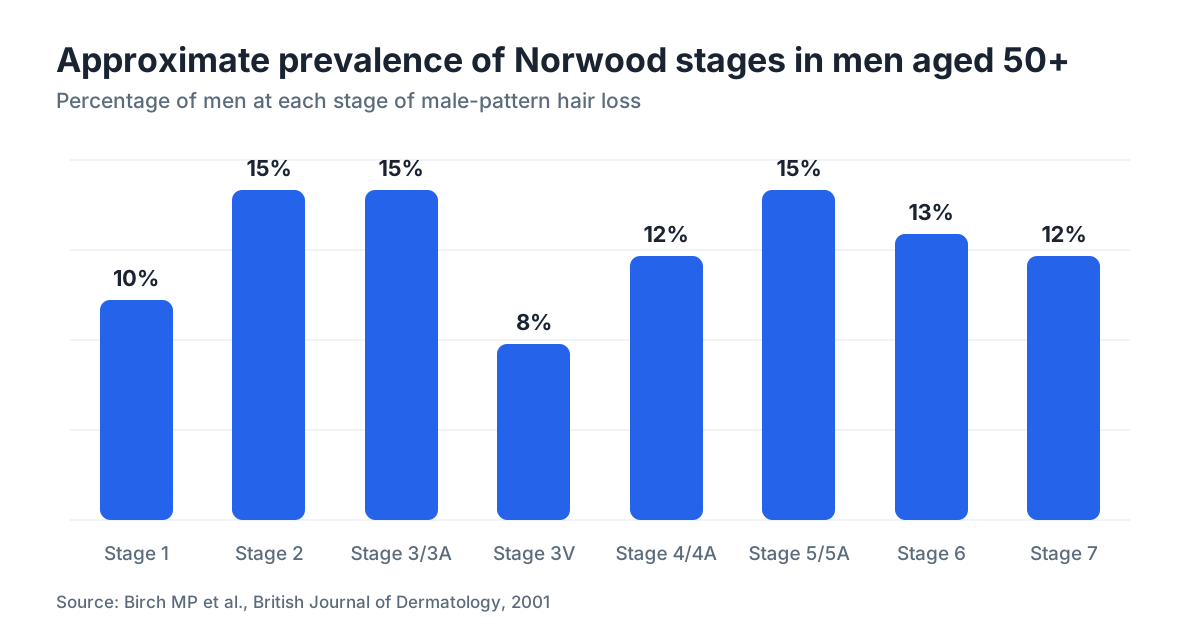
The population data comes from Norwood's own work and from a large German cohort published in the British Journal of Dermatology in 2001 by Birch and colleagues [2][4]. The distribution shifts dramatically with age. Younger men cluster at Stages 1-2. After 50, the spread moves hard toward the higher stages.
| Norwood Stage | Approximate prevalence (men 18-49) | Approximate prevalence (men 50+) |
|---|---|---|
| 1 | ~45% | ~10% |
| 2 | ~25% | ~15% |
| 3 / 3A | ~12% | ~15% |
| 3 Vertex | ~5% | ~8% |
| 4 / 4A | ~5% | ~12% |
| 5 / 5A | ~4% | ~15% |
| 6 | ~2% | ~13% |
| 7 | ~2% | ~12% |
Treat these as approximations. Population studies use slightly different age cutoffs and classification methods, so the exact percentages drift between sources. The pattern holds across all of them [2][4].
Stage 7 is not your fate. Most men who lose some hair stabilize before losing full coverage. The exception is men who start losing hair in their late teens, who carry a higher statistical risk of reaching the advanced stages.
What causes progression through the Norwood stages?
The engine is androgenetic alopecia: genetic susceptibility plus the androgen dihydrotestosterone (DHT). DHT binds to androgen receptors in genetically sensitive follicles on the scalp and shrinks them over years or decades. Each growth cycle produces a shorter, finer hair until the follicle finally stops making a visible shaft at all [5].
The genetics are not simply passed down from your maternal grandfather, despite that stubborn myth. It's polygenic. Multiple genes from both sides of the family shape your sensitivity. The androgen receptor gene sits on the X chromosome, which is where the maternal grandfather story gets its grain of truth, but that gene is one piece of a much bigger picture [5].
The speed of Norwood progression varies. Some men jump from Stage 2 to Stage 4 in three years. Others hold at Stage 3 for two decades. Age of onset is one of the stronger predictors: men who start losing hair before 25 tend to progress further over a lifetime than men who first notice thinning at 45. Stress, some medications, and nutritional gaps can speed up temporary shedding (see what causes hair loss) but they don't usually drive long-term Norwood progression the way DHT does.
For a closer look at how DHT drives follicle miniaturization, the dht blocker article covers the biochemistry in plain terms.
How do you figure out your own Norwood stage?
The honest answer: harder than it sounds, especially in the middle. Stage 3 versus Stage 4 can be genuinely ambiguous, and the Type A variant trips up a lot of people trying to self-diagnose off diagrams.
Your best approach mixes two things. Photos taken in consistent lighting (overhead fluorescent is unforgiving and therefore honest), plus a consultation with a dermatologist or hair loss specialist. A trichoscopy exam (dermoscopy of the scalp) can show follicle miniaturization that isn't visible to the naked eye yet, which is useful for catching early progression [3].
For a quick starting point, the free AI scan at MyHairline reads your photos and gives you an estimated Norwood stage with a confidence range. It won't replace a clinical exam. It can tell you whether you're probably in the Stage 2-3 range versus Stage 4-5, which changes what treatments make sense to discuss with a doctor.
One self-assessment habit works better than anything else: compare your current hairline to photos from 1, 3, and 5 years ago. Watch the temples and the crown. If the skin at your crown catches light in photos where it didn't before, you've likely crossed into at least Stage 3 Vertex.
What treatments actually work at each Norwood stage?
Treatment results depend heavily on stage, and this is where the Norwood classification earns its keep in the clinic. Here is the honest picture based on FDA labeling, randomized controlled trials, and clinical guidelines [6][7][8].
Stages 1-2: Medication is optional here. If you have a strong family history and you're already seeing subtle recession, starting finasteride or minoxidil early gives you the best odds of keeping what you have. Finasteride does more to halt progression than to regrow lost hair. The five-year trial published in the Journal of the American Academy of Dermatology found 48% of men on 1mg finasteride daily had increased hair count, and 42% held their baseline, against significant further loss in the placebo group [6].
Stages 3-4: The most treatment-responsive window. Both finasteride and minoxidil for men have their strongest evidence here. Using them together (finasteride and minoxidil) adds up in most trials. A transplant is possible at Stage 3-4, but many surgeons prefer to wait until loss is stable (usually 12-24 months of a steady Norwood stage) before operating. Transplanting into an actively receding hairline can leave patchy results as the native hair keeps falling.
Stage 5: Medication still helps protect the donor area and any remaining native hair. But the coverage you regain from medication alone is modest at Stage 5. Transplant planning gets more complex, because the surgeon has to design a hairline that looks natural now and accounts for future loss without draining the donor supply.
Stages 6-7: Medical therapy still slows progression and protects the donor area, which matters enormously for transplant candidates. Expectations have to shift, though. You're not getting a Stage 2 hairline back from medication alone at Stage 6. A skilled surgeon can build meaningful coverage, though Stage 7 needs careful donor planning because the graft supply is limited relative to the area to cover. Some men at Stage 7 also weigh scalp micropigmentation as an alternative or a complement to a transplant.
If side effects worry you, read the minoxidil side effects article before starting. Finasteride has its own risk profile, laid out in the FDA prescribing information [7].
How is the Norwood scale used in hair transplant planning?
Transplant surgeons use the Norwood stage two ways: to estimate total graft demand across a patient's lifetime of possible loss, and to design a hairline that still looks natural if loss continues.
A man at Stage 4 who wants his Stage 2 hairline back might need 2,000-3,000 grafts for that one procedure. But if his genetics point toward Stage 6, the surgeon has to decide how many grafts to spend on the front versus holding a reserve for future crown work. The average donor area yields roughly 6,000-8,000 extractable grafts over a lifetime, though this swings a lot by individual density and hair caliber [8].
This is why most experienced surgeons won't build an aggressive hairline on a 22-year-old at Stage 3. The risk: by 35 he's at Stage 5 and the transplanted hairline looks like an island in a sea of bare scalp.
For the full breakdown of the procedure and costs, the hair transplant article covers FUT versus FUE, graft pricing, and what recovery looks like.
Is the Norwood scale used for women? What about female hair loss?
No. The Norwood scale is built for male-pattern hair loss and does not apply to female-pattern hair loss, which shows up differently. Women usually lose hair diffusely across the crown while keeping the frontal hairline (instead of the temple recession men see), and the standard classification for women is the Ludwig scale, developed in 1977 [3].
Some women do show a more Norwood-like pattern, especially those with elevated androgens from conditions like polycystic ovary syndrome. Even then, dermatologists reach for the Ludwig scale or the Sinclair scale rather than Norwood for diagnosis and research.
If you're a woman losing hair and you've been trying to match yourself to Norwood diagrams, stop. The patterns don't map well, and you'll end up either underestimating or overestimating your situation. A dermatologist can classify female hair loss properly using the right tools.
What are the limitations of the Norwood scale?
The scale is useful but imperfect. Here are the criticisms worth knowing.
Inter-rater reliability is mediocre. Studies comparing how different clinicians classify the same patient show meaningful disagreement, especially around Stages 3, 4, and 5 [3]. Two dermatologists looking at the same scalp photos will sometimes land a full stage apart.
The scale captures pattern, not density. Two men can both be Stage 4 with very different amounts of miniaturized (thin, fine) hair in the thinning zones. The man with more miniaturized hair still present has better regrowth potential from treatment.
It describes pattern, not rate of change. A Stage 3 who's been stable for five years is in a completely different situation than a Stage 3 who moved from Stage 1 in eighteen months.
The Type A variant gets underused in practice. Many clinicians stick to the seven main stages and skip the A variants, so men with that pattern sometimes get classified wrong.
Other tools fill the gaps. The Basic and Specific (BASP) classification is more widely used in Asia and tries to address some of these weaknesses, and trichoscopy-based density measurements add detail Norwood can't [3]. For research, standardized photography protocols are increasingly used alongside or instead of Norwood staging.
Can you slow or reverse Norwood progression? What the evidence says
Slow it, yes, with real evidence behind the claim. Reverse it substantially, rarely, and only in the earlier stages.
Finasteride 1mg daily (Propecia, plus many generics) is the most studied oral treatment. The FDA approved it for male-pattern hair loss in 1997. In the five-year trial above, men on finasteride lost significantly less hair than the placebo group, and a meaningful subset saw net regrowth [6]. The drug inhibits 5-alpha reductase type II, cutting scalp DHT by roughly 60-70%. It doesn't work for everyone, and it carries a risk of sexual side effects in about 1-2% of users based on trial data, though real-world figures are debated [7].
Minoxidil (2% and 5% topical, FDA approved for men at 5%) stretches the anagen (growth) phase and increases follicle size. It does nothing about DHT and stops working when you stop using it. The FDA-approved labeling says it's indicated to regrow hair and slow further loss in men with Norwood Stage 2-4 vertex thinning specifically, which is a detail worth holding onto [8].
Finasteride plus minoxidil beats either one alone in head-to-head trials, which is why it's the first-line recommendation for most men with Stage 3-5 loss who want to skip surgery [6].
Low-level laser therapy (LLLT) has FDA clearance (not approval, a different bar) for hair loss. The evidence is modest but real for early-stage loss. Supplements like saw palmetto have weak evidence and are no substitute for proven treatments (see hair loss supplements for an honest look at the data).
At Stage 6-7, the realistic goal from medication is holding the donor area and slowing ongoing loss, not restoring coverage. That's still worth doing if a transplant is planned. Just understand it for what it is.
The American Academy of Dermatology clinical guidelines on hair loss endorse minoxidil and finasteride as first-line treatments for androgenetic alopecia in men [9].
How does the Norwood scale relate to receding hairlines specifically?
A receding hairline is the defining feature of Norwood Stages 2 through 4, and in the Type A variants it drives progression all the way to Stage 7. Placing your hairline on the Norwood scale is the first step in deciding whether treatment makes sense and which one fits.
Stage 2 recession is subtle and easy to dismiss. Most men at Stage 2 who treat early have a good chance of holding that stage for years. The receding hairline article goes deeper on what's normal versus what's progressive, and how to tell it apart from the adolescent maturation of the hairline (which is not hair loss).
One useful fact for self-assessment: a mature hairline (the normal adult position reached by the mid-20s) sits about 1.5 cm above the top forehead wrinkle. Recession past that, especially at the temples, is worth tracking. If that recession moves over a 6-12 month watch period, it fits Norwood Stage 2 or 3 rather than a stable mature hairline.
MyHairline's free AI scan at myhairline.ai/scan can help you place your hairline on the Norwood scale and track changes over time with consistent photos.
Sources
- Norwood OT. Male pattern baldness: classification and incidence. Southern Medical Journal, 1975
- Birch MP et al. Hair density, hair diameter and the prevalence of female pattern hair loss. British Journal of Dermatology, 2001
- Lee WS et al. Classification of hair loss: a review of current standards. International Journal of Dermatology, 2017
- Kuster W, Happle R. The inheritance of common baldness: two B or not two B? Journal of the American Academy of Dermatology, 1984
- Ellis JA et al. Androgenetic alopecia: pathogenesis and potential for therapy. Expert Reviews in Molecular Medicine, 2002
- Kaufman KD et al. Finasteride in the treatment of men with androgenetic alopecia. Journal of the American Academy of Dermatology, 1998
- FDA. Propecia (finasteride) prescribing information
- FDA. Rogaine (minoxidil 5%) OTC labeling
- American Academy of Dermatology. Hair loss: diagnosis and treatment guidelines
- International Society of Hair Restoration Surgery. Hair transplant state of the art report 2022