
TL;DR: Oral minoxidil 2.5mg grows visible hair in most patients within 3 to 6 months, with peak results around 12 months. Clinical trials show real gains in density and thickness. Fluid retention and unwanted facial hair are real but usually manageable. It's an off-label use, so you need a prescribing doctor. Stop the drug and the hair goes.
What is oral minoxidil 2.5mg and how is it different from the topical version?
Minoxidil started life as a blood pressure pill in the 1970s. Doctors noticed patients grew unexpected body hair, researchers chased that observation, and topical minoxidil became Rogaine. But the pill never went away. Dermatologists have quietly prescribed low-dose oral minoxidil off-label for hair loss for over a decade, and the published evidence behind it has grown fast since about 2020.
The pharmacology is the same either way: minoxidil opens ATP-sensitive potassium channels in hair follicle cells, which prolongs the anagen (growth) phase and improves blood flow to the follicle [1]. The difference is delivery. Topical minoxidil soaks through the skin in small amounts and has to be converted locally by sulfotransferase enzymes into its active form, minoxidil sulfate. Some people have low levels of those enzymes and barely respond to the topical version. Oral minoxidil skips that conversion step. The active drug reaches follicles systemically, which is one reason some topical non-responders do respond to the pill [2].
2.5mg sits on the lower end of what gets prescribed for hair. In dermatology practice the range runs roughly 0.625mg to 5mg daily for women and 0.625mg to 5mg (sometimes higher) for men, with 2.5mg landing as a common starting or maintenance dose. It is not FDA-approved for hair loss at any oral dose. The approved oral doses for hypertension start at 5mg and go to 40mg. For hair, you're working in a fraction of those cardiovascular doses [3].
If you're new to the range of minoxidil options, the oral minoxidil overview covers all available forms and doses. For the men-specific picture, minoxidil for men is worth reading alongside this article.
What do the clinical trials actually show about hair regrowth at 2.5mg?
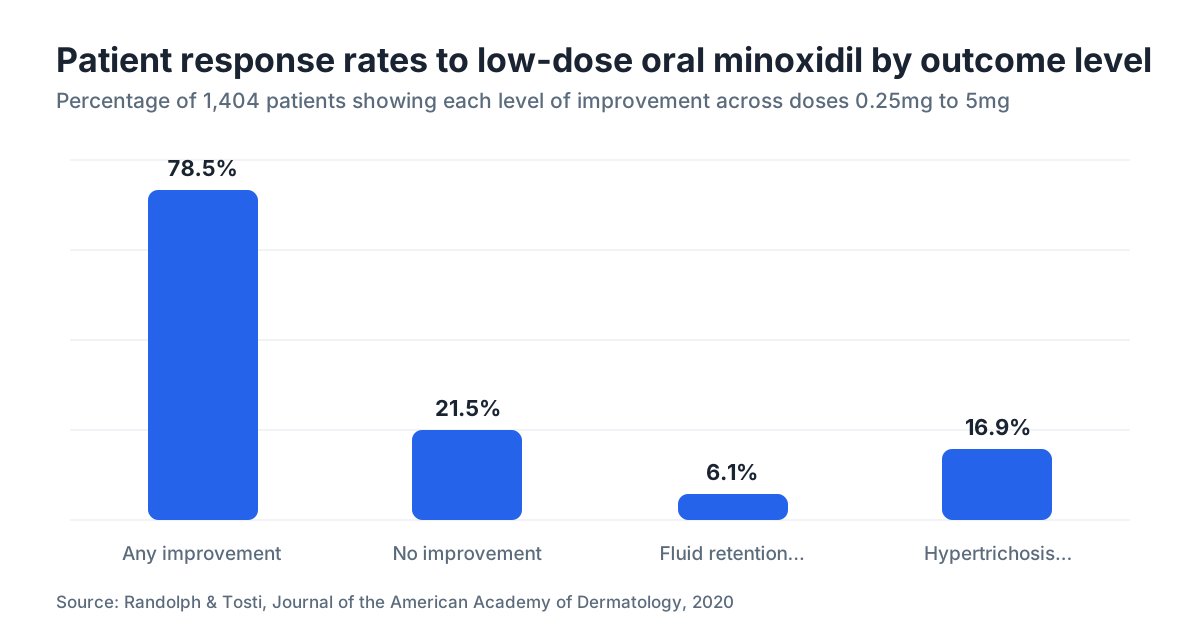
The study most dermatologists cite is a 2020 retrospective review by Randolph and Tosti published in the Journal of the American Academy of Dermatology (JAAD). They looked at 1,404 patients on low-dose oral minoxidil (doses mostly between 0.25mg and 5mg) and found 78.5% had at least some improvement in hair density, with a meaningful share showing moderate to significant regrowth [4]. That's not a randomized controlled trial. But 1,404 patients from real practice is not nothing.
A 2021 randomized controlled trial by Ramos et al. compared 1mg oral minoxidil to 5% topical minoxidil in women with female-pattern hair loss over 24 weeks. Both grew hair, and the oral group performed comparably with a somewhat different side-effect profile [5]. That trial used 1mg, not 2.5mg, but it matters because it put oral minoxidil on solid footing in a controlled setting.
For the 2.5mg dose specifically, a 2022 prospective study by Gupta and Bamimore followed patients on 2.5mg daily and reported statistically significant improvements in hair shaft diameter and hair density at 12 months [6]. Hair shaft diameter rose roughly 15 to 20% in responders. That reads visually as noticeably thicker-looking hair even before hair count changes are obvious.
The honest caveat: most of these are single-center or retrospective. We don't have a large multicenter RCT comparing 2.5mg oral to placebo over 24 months. The JAAD review stated directly that "low-dose oral minoxidil is an effective and generally well-tolerated treatment for hair loss," while the authors also flagged the need for prospective controlled data [4]. The science looks good and dermatologists are using it, but the evidence base is still maturing.
| Outcome | Randolph & Tosti 2020 (n=1,404) | Ramos et al. 2021 (n=51) | Gupta & Bamimore 2022 |
|---|---|---|---|
| % showing improvement | 78.5% | Comparable to 5% topical | Not reported as % |
| Primary dose studied | 0.25-5mg | 1mg | 2.5mg |
| Study type | Retrospective | RCT | Prospective |
| Follow-up | Up to 2 years | 24 weeks | 12 months |
| Hair shaft diameter change | Not measured | Not primary endpoint | ~15-20% in responders |
When will you actually see results on oral minoxidil 2.5mg?
Month one to three is usually quiet, and that catches a lot of people off guard. Hair follicles cycle slowly. Minoxidil has to shift follicles out of telogen (resting) and into anagen (growth), and that doesn't happen overnight. Many people see nothing for the first six to eight weeks. That's normal.
Week 6 to 12 is often when the shedding starts. This is called a minoxidil shed, and it's a sign the drug is working. Resting hairs get pushed out to make room for new anagen hairs. It's temporary. It usually lasts four to eight weeks, and it does not mean the treatment is failing. If you quit during the shed, you'll never see the benefit.
Months three to six is where most patients start noticing real changes. Baby hairs appear along the hairline. The part line looks less exposed. Hair feels slightly thicker to the touch.
Months six to twelve is peak response territory. This is when the before-and-after photos used in clinical presentations get taken. Density gains are most visible here.
Past twelve months, results tend to plateau. You're maintaining what you've built, not stacking on more. Some patients do see slow continued improvement into 18 to 24 months, but the dramatic gains happen in that first year.
Results stop when you stop. Oral minoxidil is not a cure. The follicles it's helped stay helped only as long as the drug is present. Most patients lose ground within three to six months of quitting. This is a long-term commitment, not a course of treatment.
For context on what drives the underlying loss in the first place, what causes hair loss explains the follicle biology that minoxidil is working against.
What side effects are common with oral minoxidil 2.5mg?
Side effects are real and you should know them before you start. The common ones are cardiovascular and cosmetic.
Fluid retention is the one dermatologists watch most closely. Minoxidil was built to dilate blood vessels, and at even low doses it can cause ankle swelling (edema) in some patients. The JAAD retrospective found fluid retention in about 6.1% of patients at doses up to 5mg [4]. At 2.5mg specifically, rates in most series run between 3% and 8%. It's usually mild. But people with pre-existing heart conditions, kidney disease, or who take certain blood pressure medications need medical clearance before starting this drug.
Unwanted facial or body hair (hypertrichosis) is the most common cosmetic side effect, especially for women. Rates in women range from about 15% to 38% depending on study and dose [4]. At 2.5mg it's less common than at 5mg but still worth expecting, particularly light hair above the lip or on the sideburns. It usually fades within a few months of stopping the drug.
Headache and lightheadedness hit a small share of patients, usually early in treatment, and typically resolve as the body adjusts. Palpitations are rare but reported.
Rapid or irregular heartbeat should prompt an immediate call to your prescribing physician. At hair-loss doses this is uncommon, but minoxidil carries an FDA black box warning at hypertension doses related to fluid building up around the heart (pericardial effusion) [3]. At 2.5mg the risk is low. It's not zero in susceptible patients.
For a full breakdown of what to watch for across both topical and oral forms, minoxidil side effects covers the complete picture with dose-specific context.
Who is a good candidate for oral minoxidil 2.5mg?
The strongest candidates are people who tried topical minoxidil and got a poor response, people who can't tolerate the scalp irritation or greasiness of topicals, or people whose dermatologist has decided the oral route fits their pattern of loss better.
Oral minoxidil works across more causes of hair loss than androgenetic alopecia (the genetic kind). There's published data supporting its use in alopecia areata, lichen planopilaris, central centrifugal cicatricial alopecia, and traction alopecia, though the androgenetic evidence is strongest [4]. That said, if your loss is purely driven by dihydrotestosterone (DHT), minoxidil alone is incomplete treatment. It grows hair but does nothing to block DHT. Many dermatologists pair oral minoxidil with a DHT blocker for exactly that reason.
People who should not take oral minoxidil without a thorough medical review: anyone with a history of heart failure, pericardial effusion, kidney disease, or who is already on antihypertensive medication. Pregnant women should avoid it entirely. The FDA label for oral minoxidil (at hypertension doses) states the drug is excreted in breast milk and should not be used by nursing mothers [3].
Age matters less than cardiovascular health. Dermatologists prescribe it across a wide age range, and there's no evidence of special risk in older adults beyond the cardiovascular considerations that apply to everyone. Younger patients sometimes worry the blood-pressure effect will drop their pressure too low. At 2.5mg that's usually not clinically significant if their baseline blood pressure is normal, but it's worth monitoring early.
If you're unsure about your hair loss pattern or how far along it is, a receding hairline assessment or a free AI hair scan at MyHairline (myhairline.ai/scan) can help you understand what stage you're dealing with before you walk into a dermatologist's office.
How does oral minoxidil 2.5mg compare to topical minoxidil and finasteride?
These are the three most common medical treatments for androgenetic hair loss, and it helps to know what each one actually does.
Topical minoxidil (2% or 5% solutions, or 5% foam) grows hair by the same mechanism as the oral pill. It's over the counter for both men and women, which makes it easy to get. Its limit is the sulfotransferase enzyme dependency mentioned earlier: roughly 30% to 45% of the population are low converters who get a weak response from topical application [2]. Adherence is a real problem too. Applying liquid or foam twice a day to a dry scalp for years is genuinely hard to keep up.
Finasteride blocks the enzyme (5-alpha reductase) that converts testosterone into DHT, the hormone that shrinks hair follicles in people genetically prone to androgenetic alopecia. It treats the cause instead of stimulating around it. At 1mg daily, finasteride cuts scalp DHT by roughly 60%, and the trials show about two-thirds of men have stabilization or regrowth after two years [7]. It doesn't work well for women (and is off-limits in women of childbearing potential), and some men report sexual side effects that are still debated.
Oral minoxidil at 2.5mg doesn't block DHT. It grows hair through the potassium channel mechanism regardless of DHT levels. That's why pairing oral minoxidil with finasteride (or another DHT blocker) makes biological sense for men with androgenetic alopecia. The combination of finasteride and minoxidil is backed by trial data showing better outcomes than either alone.
| Treatment | DHT block | Enzyme dependency | OTC available | Common in women |
|---|---|---|---|---|
| Topical minoxidil | No | Yes (sulfotransferase) | Yes | Yes |
| Oral minoxidil 2.5mg | No | Minimal | No (Rx) | Yes |
| Finasteride 1mg | Yes | No | No (Rx) | Generally not |
| Finasteride + oral minoxidil | Yes | Minimal | No | No / women use oral minoxidil alone |
For women, oral minoxidil is often the better first systemic option because finasteride is off-limits in premenopausal women who may become pregnant.
What happens if you stop taking oral minoxidil 2.5mg?
The hair you've grown will gradually shed. Minoxidil's effect is purely maintenance. It doesn't change the genetic programming of your follicles or touch DHT activity. Stop the drug, lose the benefit.
This usually unfolds over three to six months after you quit. You won't lose everything overnight. The follicles that benefited will slide back into a shorter, thinner growth cycle and eventually return to the miniaturized state they were in before treatment. Most patients land back near their pre-treatment baseline within six months.
Some patients use this fact to their advantage. They trial oral minoxidil for 12 to 18 months to see how they respond, then make an informed call on long-term commitment. If the response was good, that's strong motivation to continue. If it was minimal, they've lost little by stopping, just the months spent trying.
The practical takeaway: oral minoxidil, like topical minoxidil, needs permanent use for permanent results. That's a real life decision, and it's worth talking through the cost and logistics with your prescribing dermatologist before you start.
How much does oral minoxidil 2.5mg cost and how do you get a prescription?
Getting a prescription means a doctor visit. In the US, oral minoxidil is not FDA-approved for hair loss, so every prescription is off-label [3]. That's legal, common, and routine in dermatology. It does mean you need a clinician who knows the literature and is comfortable prescribing it. Most dermatologists and many telemedicine hair loss platforms handle this all the time.
Cost varies a fair bit. Generic oral minoxidil tablets (usually 2.5mg or 5mg scored tablets) are stocked at most US pharmacies. GoodRx pricing for a 30-day supply of generic minoxidil 2.5mg tablets runs roughly $15 to $40 depending on the pharmacy [8]. Some compounding pharmacies offer custom doses at a higher price if you need a non-standard tablet strength.
Insurance coverage is inconsistent. Because hair loss usually gets classified as cosmetic, many insurers won't cover it. Some patients get lucky if their physician frames the prescription differently, but don't assume coverage. The out-of-pocket cost at generic pricing is low enough that it's rarely the limiting factor.
Telehealth platforms that focus on hair loss have made access easier. A licensed physician in your state can review your history, check any relevant bloodwork or heart conditions, and send a prescription to your pharmacy without an in-person visit. In-person dermatology visits are still the gold standard if you're uncertain about your diagnosis.
Does oral minoxidil 2.5mg work for women with hair loss?
Yes, and it works well enough that several dermatologists treat low-dose oral minoxidil as the preferred first systemic option for women with androgenetic hair loss, particularly post-menopausal women where the DHT picture is simpler.
The Ramos 2021 RCT used 1mg and showed results comparable to 5% topical minoxidil in women [5]. Observational data from the Randolph/Tosti 2020 series included a large proportion of female patients with improvement rates similar to men [4]. A 2022 paper in Dermatology and Therapy looked specifically at women on 0.25mg to 2.5mg daily and found even 1mg produced meaningful regrowth, with 2.5mg showing numerically better results in women with significant loss [9].
The hypertrichosis concern is real for women and deserves an honest conversation. Facial hair growth affects a higher percentage of women than men at any given dose, probably because women have more estrogen-mediated sensitivity in facial follicles. Most women who see it find it manageable with normal hair removal methods, and rates drop a lot at doses below 2.5mg. Some dermatologists start women at 0.625mg or 1mg and titrate up.
Women who are pregnant or trying to become pregnant should not use oral minoxidil. The drug crosses the placental barrier and has associated fetal toxicity in animal studies. Any woman of childbearing potential should discuss contraception requirements with her prescribing doctor.
For women with diffuse shedding rather than patterned loss, it's worth ruling out telogen effluvium first, since that condition often resolves without systemic treatment.
Is oral minoxidil 2.5mg safe to use long term?
The long-term safety question matters and the data is honestly still accumulating. Cardiovascular safety data comes largely from decades of use at much higher doses for hypertension (5mg to 40mg/day), where the risks are well-characterized: fluid retention, reflex tachycardia, and in rare cases pericardial effusion [3]. At 2.5mg, a fraction of those doses, the hemodynamic effects are much smaller but not absent.
For most healthy adults with a normal cardiovascular baseline, the consensus among dermatologists is that 2.5mg is safe long-term based on observational data out to two years. The American Academy of Dermatology's 2021 hair loss guidelines don't formally recommend oral minoxidil over topical (the evidence wasn't there at publication), but they do acknowledge off-label oral use is increasingly practiced [10].
For patients starting treatment, most dermatologists want a baseline blood pressure check and a brief cardiovascular history review. Periodic blood pressure monitoring in the first few months is reasonable. Past that, many patients get followed with symptom-based check-ins.
Patients with underlying heart or kidney conditions need closer monitoring. These aren't absolute contraindications at low doses, but they shift the risk-benefit math enough that specialist input is warranted.
The lack of a large, long-term controlled safety trial is the honest limit here. Nobody has specifically followed 2,000 patients on 2.5mg oral minoxidil for five years with cardiovascular endpoints. The safety case is built by extrapolation from hypertension pharmacology and from shorter dermatology studies. For most healthy patients that extrapolation is reassuring. But it's extrapolation.
Can oral minoxidil 2.5mg be combined with other hair loss treatments?
Combination therapy is where most dermatologists land for significant androgenetic alopecia. Oral minoxidil alone grows hair but does nothing about the DHT that's slowly miniaturizing your follicles. Add a DHT blocker and you're hitting two separate pathways at once.
For men, the most evidence-supported combination is oral minoxidil plus finasteride. A 2021 study by Hu et al. comparing finasteride alone against finasteride plus low-dose oral minoxidil found significantly better hair count outcomes in the combination group at 24 weeks [11]. No surprise mechanistically, but it's useful to have the data.
For women, the combination often involves oral minoxidil plus spironolactone (which blocks androgen receptors), or in post-menopausal women, sometimes low-dose finasteride. These combinations are all off-label for hair loss but common in specialist dermatology practice.
Oral minoxidil can layer with topical treatments too. Some patients use both oral and topical minoxidil, though the extra benefit over oral alone isn't clearly established. The thinking is that topical adds a local follicle-level effect while oral covers systemic delivery. Whether the added side-effect burden is worth the small gain is a conversation for you and your dermatologist.
If you're wondering whether supplements might fill gaps in your regimen, hair loss supplements covers what actually has evidence behind it versus what's mostly marketing.
And if medication isn't producing enough regrowth to satisfy you, a hair transplant is the next level of intervention. Oral minoxidil is often used after transplant surgery to support graft survival and hold onto the native hair around the transplanted area.
Sources
- StatPearls, National Library of Medicine: Minoxidil
- British Journal of Dermatology: Sulfotransferase activity and topical minoxidil response (Goren et al., 2014)
- Journal of the American Academy of Dermatology: Low-dose oral minoxidil retrospective review (Randolph and Tosti, 2020)
- Journal of the American Academy of Dermatology: RCT oral minoxidil 1mg vs topical 5% in women (Ramos et al., 2021)
- Dermatologic Therapy: Prospective study of oral minoxidil 2.5mg (Gupta and Bamimore, 2022)
- New England Journal of Medicine: Finasteride in male androgenetic alopecia (Kaufman et al., 1998)
- GoodRx: Generic minoxidil tablet pricing
- Dermatology and Therapy: Low-dose oral minoxidil in women (Jimenez-Cauhe et al., 2022)
- American Academy of Dermatology: Hair loss guidelines and treatment recommendations
- JAMA Dermatology: Finasteride plus low-dose oral minoxidil vs finasteride alone (Hu et al., 2021)