

TL;DR: Postpartum alopecia is temporary hair shedding that peaks around 3 to 4 months after delivery, caused by a sudden drop in estrogen. Most women regrow full hair by 12 months with no treatment at all. Minoxidil, iron repletion, and gentle hair care can speed the recovery. Finasteride is not safe while breastfeeding. See a dermatologist if shedding lasts past 12 months.
What is postpartum alopecia and why does it happen?
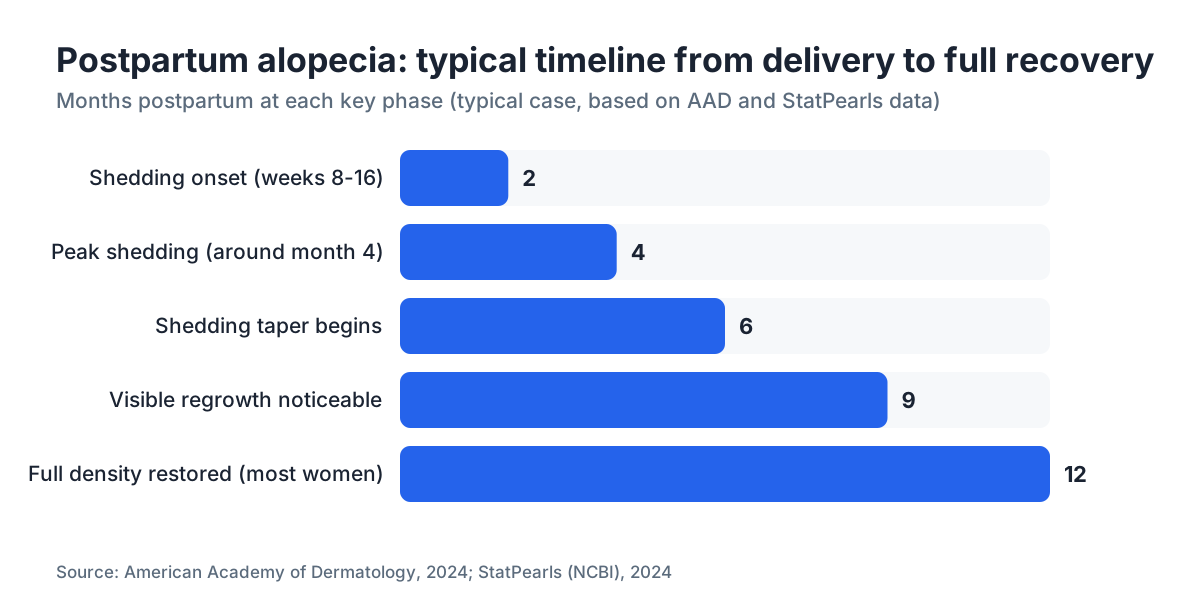
Postpartum alopecia is the fast hair shedding that follows childbirth. It usually starts 2 to 4 months after delivery and peaks around month 4. It is not a disease. It is a delayed response to the hormone crash that happens the moment the placenta comes out.
Here is the mechanism. During pregnancy, high estrogen holds hair follicles in the anagen (growth) phase longer than normal, so fewer hairs shed and most new mothers notice thicker hair by the third trimester [1]. When estrogen falls off a cliff at delivery, a big group of those retained hairs shifts into the telogen (resting) phase all at once. Two to three months later they let go together. This process is called telogen effluvium, and postpartum alopecia is its most common trigger [2].
The shedding looks scary. Handfuls in the shower, clumps on the pillow, thinning at the temples and part line. The hairline recession some women notice is real and can look like a receding hairline, but the cause is nothing like androgenetic alopecia. Postpartum thinning is diffuse and temporary. Pattern baldness is progressive and permanent.
Up to 50% of postpartum women get noticeable shedding [1]. The severity varies. Women who had unusually thick pregnancy hair often shed more dramatically, because they had a bigger group of retained hairs to lose in the first place.
How long does postpartum hair loss last?
For most women, shedding slows by months 6 to 9 postpartum and full density returns by month 12 [1]. A smaller group, mostly women with thyroid problems or iron deficiency, sheds past a year.
The timeline looks roughly like this. Shedding onset: weeks 8 to 16 postpartum. Peak shedding: around month 4. Shedding taper: months 5 to 9. Visible regrowth: months 6 to 12. Full recovery: months 9 to 18 in most cases.
Still losing significant hair at month 12? That is your cue to get bloodwork. Postpartum thyroiditis affects roughly 5 to 9% of postpartum women and gets mistaken for stubborn telogen effluvium all the time [3]. Ferritin below 30 ng/mL is also strongly tied to persistent shedding in several observational studies, though the causality debate is still open [4]. Shedding past a year almost always means something else is contributing, and that something is almost always treatable.
Do you need treatment, or will postpartum hair loss resolve on its own?
Honestly, most women need no active treatment. The follicles are not damaged. They are resting. Given time, they cycle back into growth on their own.
That said, "wait it out" is brutal advice when you are staring at thinning hair in the mirror after an already exhausting few months. There are real things you can do to support recovery and make the shedding look less bad while it runs its course. None of them wake the follicles up faster than biology allows. But some cut breakage, improve scalp health, and fix the nutritional gaps those follicles depend on.
The bigger question is whether something is stretching the effluvium past its natural end. Rule out thyroid dysfunction, iron deficiency, and low protein intake first. If those come back normal and you are still shedding at month 7, then adding a treatment like minoxidil becomes a reasonable conversation.
What treatments actually help postpartum hair loss?
Here is an honest breakdown of what has evidence behind it and what does not.
Minoxidil (topical) Minoxidil is the only topical treatment with FDA approval for female hair loss. It stretches the anagen phase and improves blood flow to the follicle [5]. It does nothing about the hormonal cause of postpartum alopecia, but it can shorten the recovery window and thicken hair during regrowth.
The standard women's formula is 2% minoxidil solution or 5% minoxidil foam. The 5% foam is technically labeled for men but widely used off-label in women and studied in several trials. A 2004 randomized controlled trial in the Journal of the American Academy of Dermatology found 5% minoxidil solution significantly better than 2% for raising hair count in women with androgenetic alopecia, though postpartum alopecia was not the target [6].
The safety caveat is real. Minoxidil is not approved during breastfeeding, and the FDA label says to avoid it in nursing mothers because excretion into breast milk has not been studied adequately [5]. If you are done breastfeeding, or formula-feeding, topical minoxidil is a reasonable option to discuss with a dermatologist. Before you start, minoxidil side effects are worth reading; that page covers them in full.
Oral minoxidil Low-dose oral minoxidil (0.25 to 1.25 mg daily in women) is increasingly used off-label and generating real evidence. A 2022 review in the Journal of the American Academy of Dermatology found low-dose oral minoxidil effective for several types of hair loss in women, with a favorable side effect profile at doses under 2.5 mg [7]. It is not FDA-approved for hair loss in this form, and like the topical, it should not be used while breastfeeding. Here is more on oral minoxidil as an option.
Finasteride Finasteride blocks DHT and works well for androgenetic alopecia, but it has no place in postpartum alopecia. Postpartum shedding is not driven by DHT. And finasteride is FDA Pregnancy Category X, contraindicated in women who are pregnant or may become pregnant, with real concern around breastfeeding [8]. A dermatologist might consider it if a woman has both postpartum effluvium and confirmed androgenetic alopecia, and is not breastfeeding, but it is never the first move here. If you want to understand how finasteride works in general, that context helps.
Nutritional support Iron and ferritin are the most evidence-linked nutrients for shedding. A 2006 review in the Journal of Investigative Dermatology found ferritin below 30 ng/mL tied to diffuse hair shedding in women [4]. Postpartum women often run low on iron from blood loss at delivery and the demands of breastfeeding. Getting ferritin tested and supplementing to bring it above 70 ng/mL (a threshold some dermatologists prefer, though the exact target is debated) is cheap, low-risk, and possibly meaningful.
Biotin gets marketed hard for postpartum hair loss. The honest answer: biotin deficiency is rare in adults eating a normal diet, and there is no good evidence that supplementing it speeds regrowth in women who are not deficient [9]. It will not hurt you. It is mostly a marketing play. For the bigger picture on hair loss supplements and what the evidence actually says, that article sorts the real from the noise.
Zinc, vitamin D, and protein are worth checking. Postpartum women, especially those breastfeeding, can run low on all three. Fix a real deficiency and it helps. Supplement when levels are already normal and it probably does nothing.
How does postpartum hair loss compare to other causes of female hair loss?
This table puts postpartum alopecia next to the conditions it gets confused with most.
| Condition | Cause | Pattern | Permanent? | Timeline |
|---|---|---|---|---|
| Postpartum alopecia | Estrogen drop after delivery | Diffuse, worst at temples | No | Resolves by 12 to 18 months |
| Telogen effluvium (non-postpartum) | Stress, illness, crash diet | Diffuse | No | Resolves 6 to 9 months after trigger |
| Androgenetic alopecia (female) | DHT sensitivity, genetics | Crown thinning, preserved hairline | Yes, progressive | Ongoing without treatment |
| Postpartum thyroiditis | Autoimmune thyroid inflammation | Diffuse | No, if treated | Variable |
| Iron deficiency alopecia | Low ferritin | Diffuse | No, if treated | Reverses with iron repletion |
The distinction that changes treatment is temporary versus permanent. Postpartum alopecia is temporary. Androgenetic alopecia is not. Some women find androgenetic alopecia for the first time postpartum, because the effluvium strips away the thick pregnancy hair that was hiding thinning already underway. If your shedding is diffuse and even and clearly started after delivery, postpartum effluvium is the likely answer. If thinning sits at the crown and part line and your mother or sisters have patterned hair loss, get checked for both.
What should you tell your doctor, and which tests should you ask for?
Most postpartum hair loss needs no doctor visit. But if shedding is severe, has lasted past 9 months, or you are worried, a dermatologist or your OB-GYN can order the right workup.
The tests worth asking about:
CBC with ferritin. Ferritin is the single most useful marker. A complete blood count adds context on overall iron status.
TSH and free T4. Thyroid-stimulating hormone plus free T4 rules out postpartum thyroiditis. The American Thyroid Association notes that postpartum thyroiditis often gets missed because its symptoms overlap with normal new-parent exhaustion [3].
Vitamin D (25-OH). Observational data link low vitamin D to shedding, though causality is not established.
Zinc and total protein/albumin. Worth checking in women with restricted diets or heavy breastfeeding demands.
A dermatologist may also do a pull test (gently tugging 40 to 60 hairs to count how many are in the telogen phase) or, in stubborn cases, a scalp biopsy, though biopsy is rarely needed for a typical postpartum picture.
Bring a timeline to the appointment: delivery date, when shedding started, when it peaked, any other stressors or illnesses. That history, plus a normal scalp exam, is usually enough to confirm postpartum telogen effluvium without a lot of testing.
Are there hair care habits that help or make things worse?
The follicles are not fragile during postpartum effluvium, but the hair shafts already growing can be. Breakage on top of shedding makes everything look worse.
Things that help. A sulfate-free, gentle shampoo cuts friction during washing. A wide-tooth comb on wet hair instead of a brush cuts mechanical breakage. Silk pillowcases and loose hairstyles ease traction on the hairline. If you use heat tools, a lower temperature setting genuinely protects shaft integrity.
Things that make it look worse. Tight ponytails and braids pile traction alopecia on top of telogen effluvium, and that combination can damage hairline follicles if it goes on long enough. Bleaching or chemical processing weakens shafts that are already cycling out.
Camouflage products, volumizing sprays, and root powders are useful tools during the thinning phase, and they are more than vanity. Using them does not slow regrowth one bit. Scalp massage has some preliminary support from a small 2016 Japanese study that showed thicker hair after standardized massage [10], though that study was in healthy men and the data does not map cleanly onto postpartum effluvium.
None of these are treatments. But cutting breakage plus holding good nutritional status is the best no-medication strategy for the months you spend waiting on regrowth.
Is it safe to use minoxidil while breastfeeding?
No. This is the wall most postpartum women hit the second they look up minoxidil. The FDA label for topical minoxidil states plainly that it is not recommended for nursing mothers, because it is unknown whether the drug passes into human milk [5]. Systemic absorption from topical use is low but measurable, and the drug has cardiovascular activity that makes caution the right call.
If you are breastfeeding and the shedding is bad enough that you want to do something medical, talk to a dermatologist. Some practitioners will walk through risk and benefit with an individual patient, especially for very low dose topical use. That is a personalized conversation, not a blanket green light. Most dermatologists say wait until you have weaned.
Once breastfeeding ends, topical 2% or 5% minoxidil is a reasonable option if you want to push regrowth along. Plenty of women find that by the time they wean, the shedding is already slowing, and they skip treatment. That is a fine call too.
When is postpartum hair loss actually pattern baldness in disguise?
This happens more than people expect. Pregnancy hair is unusually dense because high estrogen keeps follicles in the growth phase longer than normal. When that extra density sheds postpartum, it can expose androgenetic alopecia that was invisible before.
The signs pointing to androgenetic alopecia rather than pure postpartum effluvium: thinning packed at the crown and along the central part rather than spread evenly across the scalp; a family history of female pattern hair loss in your mother or maternal aunts; shedding that does not really improve after 12 to 15 months; and thinning that quietly started before pregnancy.
If a dermatologist suspects androgenetic alopecia, the plan changes hard. Minoxidil becomes a long-term maintenance tool instead of a short-term recovery aid. DHT blockers come into play for women no longer pregnant or breastfeeding. Understanding what causes hair loss at the follicle level explains why the treatments diverge.
The practical takeaway: get evaluated at 12 months if you are not back to your pre-pregnancy density. Do not assume all postpartum shedding is temporary without checking.
What about PRP, laser therapy, and other clinic-based treatments?
Platelet-rich plasma (PRP) injections mean drawing your blood, spinning it to concentrate the platelets, and injecting the result into the scalp. The theory is that growth factors in platelets nudge follicles into activity. There is genuinely some evidence for PRP in androgenetic alopecia. A 2019 meta-analysis in Dermatologic Surgery found statistically significant gains in hair density with PRP versus placebo [11]. Evidence specifically in postpartum alopecia is thin, because postpartum hair regrows on its own, which makes controlled trials hard to justify.
Since most postpartum alopecia clears by 12 months on its own, signing up for a PRP course (usually 3 sessions at $400 to $800 each) before those 12 months are up is hard to defend on cost. If you still have significant thinning at 15 to 18 months and lab work is clean, the math shifts.
Low-level laser therapy (LLLT), sold as FDA-cleared laser combs and caps, has modest evidence for androgenetic alopecia and basically none for postpartum alopecia. It is unlikely to hurt you, but $200 to $600 on a laser cap is not where your first dollar should go.
A hair transplant is wrong for postpartum alopecia. Transplant surgeons want stable hair loss over at least 12 months before they operate, and postpartum shedding is temporary and actively changing by definition.
If you want to track whether your hair is recovering or maybe progressing, a baseline assessment makes sense. MyHairline's free AI scan at myhairline.ai/scan documents scalp coverage over time, so you have real data instead of bathroom-mirror dread.
What is the most practical recovery plan for postpartum hair loss?
Here is what I would actually tell a friend going through this.
First, confirm the diagnosis. Shedding that started 2 to 4 months after delivery and spreads diffusely is almost certainly postpartum telogen effluvium. That is reassuring news.
Second, get basic labs. TSH, ferritin, and a CBC run $30 to $80 with most insurance and rule out the two most common reasons shedding drags on. Do not skip this if shedding is severe or you feel unusually wiped out.
Third, fix any deficiency you find. Low ferritin: supplement iron under a physician's guidance, aiming above 30 ng/mL (many dermatologists prefer above 70). Thyroid abnormality: treat it with your OB or endocrinologist.
Fourth, drop the habits that drive breakage. Tight hairstyles, high heat, and chemical processing are all things you control.
Fifth, if you are not breastfeeding and want to be more active after 6 months or so, talk to a dermatologist about topical minoxidil.
Sixth, reassess at 12 months. If density is not mostly back by then, see a dermatologist to rule androgenetic alopecia in or out. That answer changes everything downstream.
At that 12-month mark, MyHairline's AI analysis at myhairline.ai/scan gives you an objective read on current scalp coverage if you want a data point going into a dermatology visit.
The single thing that helps most is a realistic timeline. The hair is coming back. The shedding feels like a catastrophe and almost never is. Most women who follow this path are back to pre-pregnancy density by month 12 to 18.
Sources
- StatPearls, Telogen Effluvium (NCBI Bookshelf)
- American Thyroid Association, Postpartum Thyroiditis
- Rushton DH, Journal of Investigative Dermatology 2006, Iron and the Diffuse Hair Loss
- Lucky AW et al, Journal of the American Academy of Dermatology 2004, 5% vs 2% minoxidil in women
- Vano-Galvan S et al, Journal of the American Academy of Dermatology 2022, Low-dose oral minoxidil in women
- NIH Office of Dietary Supplements, Biotin Fact Sheet for Health Professionals
- Koyama T et al, ePlasty 2016, Standardized scalp massage and hair thickness
- Hausauer AK, Jones DH, Dermatologic Surgery 2019, PRP meta-analysis for androgenetic alopecia