TL;DR: DHT blocker shampoos use ingredients like ketoconazole, saw palmetto, or zinc pyrithione to lower scalp DHT activity. The evidence is modest: one trial found 1% ketoconazole shampoo improved hair density about as much as 2% minoxidil. They won't stop aggressive pattern hair loss alone. Used alongside finasteride or minoxidil, they may add a small local benefit.
What is a DHT blocker shampoo, exactly?
A DHT blocker shampoo is a wash-out product with one or more ingredients meant to lower the activity of dihydrotestosterone (DHT) on the scalp. DHT is the androgen most directly tied to androgenetic alopecia, the pattern hair loss that affects roughly 50 million men and 30 million women in the United States [1]. The idea is simple. Lower DHT's effect on follicles, and you slow the miniaturization that eventually kills them.
The catch is that word "wash-out." These shampoos sit on your scalp for two to five minutes, then rinse away. That short contact time is the central problem with the whole category. Even if an ingredient is genuinely anti-androgenic, the question is whether enough of it reaches the follicle before it goes down the drain.
Ingredients marketed as DHT-blocking fall into a few groups. Antifungals like ketoconazole have the most published data. Botanical extracts like saw palmetto, pumpkin seed oil, and nettle root have some mechanistic plausibility. Zinc compounds, particularly zinc pyrithione, show up in clinical dandruff shampoos and have limited but real hair-density data. The rest, things like biotin dropped into a shampoo, are there to sell the bottle.
Work out what causes hair loss and the role DHT plays before spending money on any topical product. If you want a wider look at how DHT works beyond shampoo, the dht blocker article covers the systemic options too.
How does DHT cause hair loss in the first place?
DHT is made from testosterone by an enzyme called 5-alpha reductase (5-AR). In people who are genetically susceptible, DHT binds to androgen receptors in scalp follicles and triggers a slow shrinking process called miniaturization. Each hair cycle produces a thinner, shorter strand until the follicle stops making visible hair at all [2].
Women have far less testosterone than men, but they still make enough to produce DHT. Female pattern hair loss usually shows up as diffuse thinning across the crown rather than a receding frontal hairline. It follows the same DHT-driven miniaturization pathway, though hormonal factors like estrogen loss around menopause also matter. That's the core of what a DHT blocker for women targets: the same enzymatic conversion, starting from a lower androgen baseline.
The frontal and vertex areas of the scalp carry more androgen receptors and more 5-AR activity than the back and sides. That's why those areas go first. It's also why a receding hairline tends to follow predictable Norwood stages in men.
Oral 5-AR inhibitors like finasteride block this conversion body-wide and drop serum DHT by roughly 70% at the 1 mg daily dose [3]. Topical shampoos can't come close. What they might do is trim local scalp DHT a little, which could slow, but not reverse, the process in mild-to-moderate cases.
What does the evidence actually say about DHT blocker shampoos?
Thin, inconsistent, and mostly small. That's the honest read on the evidence. But it isn't nothing.
The strongest data involves ketoconazole. A 1998 randomized trial published in Dermatology compared 1% ketoconazole shampoo used every 2 to 4 days against 2% minoxidil solution in men with androgenetic alopecia. After 21 weeks, both groups showed similar improvements in hair density and in the proportion of anagen (growth phase) hairs. Mean hair diameter in the ketoconazole group rose compared to baseline [4]. This is a single small trial, and 1% ketoconazole shampoo is no cure for the field. But it's peer-reviewed data, not a brand claim.
Why would an antifungal touch hair loss? Ketoconazole inhibits cytochrome P450 enzymes involved in androgen synthesis, in fungi and in human cells. At the scalp, this may cut local DHT production. It also has anti-inflammatory effects that could matter, since scalp inflammation often rides along with androgenetic alopecia.
Saw palmetto is the most studied botanical. A 2002 pilot study found a saw palmetto extract standardized to beta-sitosterol helped a small group of men with androgenetic alopecia [5]. The mechanism involves 5-AR inhibition, like finasteride but much weaker. A 2021 review in JAAD noted that saw palmetto's clinical evidence stays limited and that extract standardization across commercial products is poor [6].
Zinc pyrithione has a small but legitimate dataset. A 2003 randomized controlled trial in Skin Pharmacology and Physiology found that a shampoo with 1% zinc pyrithione increased hair count in men with androgenetic alopecia compared to placebo after 26 weeks [7].
Pumpkin seed oil, caffeine, and rosemary oil each have scattered evidence, mostly in forms other than rinse-off shampoo. None has strong clinical trials at shampoo concentration levels.
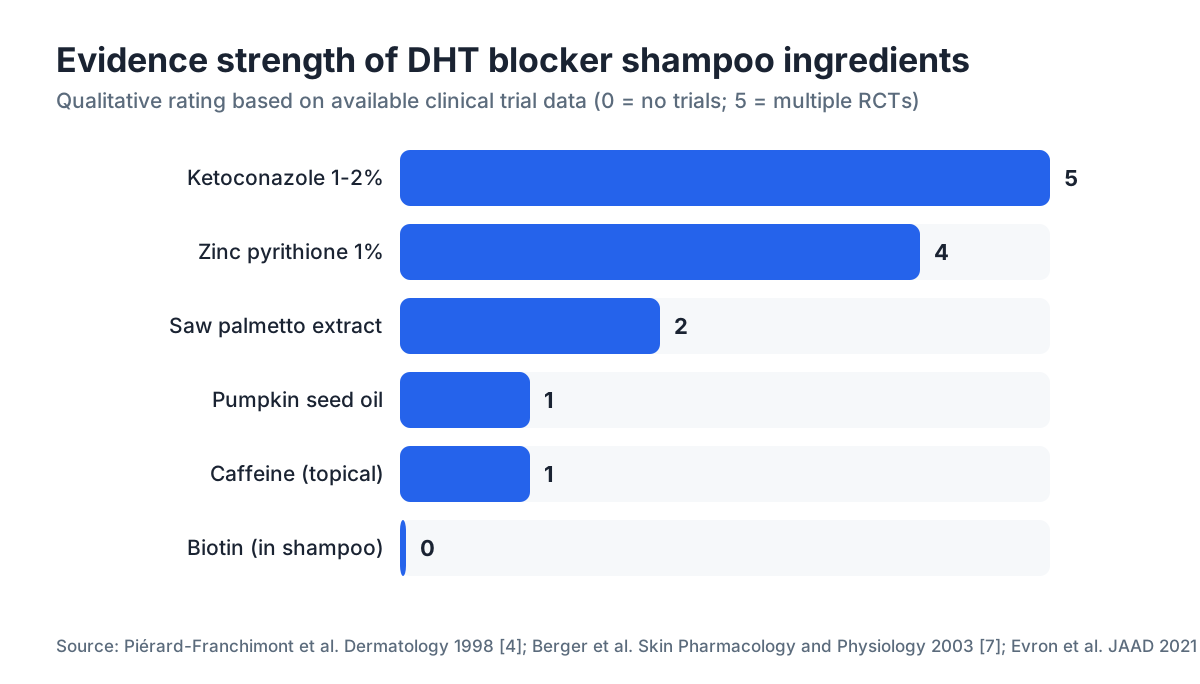
The bottom line on evidence: ketoconazole shampoo (1 to 2%) has the most credible data of anything in this category. Saw palmetto and zinc pyrithione show weak but real signals. Everything else is marketing stretching non-shampoo studies or lab-dish work.
Which ingredients in a DHT blocker shampoo are worth paying for?
Here's a practical breakdown of the ingredients that show up in shampoos marketed as DHT blockers, ranked honestly by evidence quality.
| Ingredient | Mechanism | Evidence Level | Notes |
|---|---|---|---|
| Ketoconazole (1-2%) | 5-AR inhibition, anti-inflammatory | Best in class for shampoos | Rx at 2%; 1% OTC in some markets |
| Zinc pyrithione (1%) | Reduces scalp DHT locally; anti-dandruff | Moderate, RCT data | Also helps seborrheic dermatitis |
| Saw palmetto extract | 5-AR inhibition (weak) | Low-moderate | Extract quality varies widely |
| Pumpkin seed oil | Possible 5-AR inhibition | Low | Studies not done in shampoo form |
| Caffeine | May counteract DHT in hair cells (in vitro) | Very low | Lab data does not equal clinical effect |
| Rosemary oil | May improve scalp circulation | Very low for shampoo | Leave-in data is stronger |
| Biotin | No DHT-blocking action | None in shampoo | Oral biotin helps only if deficient |
| Nettle root | Possible DHT binding | Very low | No shampoo RCTs found |
The practical read: if you're going to spend on a shampoo with a DHT blocker, look for one with at least 1% ketoconazole, 1% zinc pyrithione, or a high-quality saw palmetto extract as the actual active, not buried in a long ingredient list as a trace amount.
One thing rarely said plainly: many shampoos list eight to twelve "DHT-blocking" botanicals to justify a $40 to $60 price tag. Quantity of ingredients is not quality of evidence. A shampoo with 1% ketoconazole, which you can find for far less, may outperform a flashy "multi-complex" bottle carrying none of the actives at concentrations that matter.
Do DHT blocker shampoos work differently for men vs. women?
Mechanically, no. DHT causes follicle miniaturization in both sexes through the same 5-AR pathway. A shampoo that lowers scalp DHT activity works, to whatever modest degree, by the same mechanism regardless of who uses it.
In practice, a few real differences matter.
Women's hair loss is more often multifactorial. Androgenetic alopecia in women can sit alongside telogen effluvium, thyroid disorders, iron deficiency, or hormonal shifts from pregnancy and menopause. A DHT blocker shampoo does nothing for those. So the same product that gives a man with straightforward male pattern baldness a marginal benefit might do almost nothing for a woman whose thinning comes from iron deficiency or postpartum shedding.
What is a DHT blocker for women, then, in practical terms? The same product with the same actives, often repackaged with softer scents and different marketing. There's no evidence that women need a different ketoconazole concentration or a different saw palmetto extract. The biology is the same.
Women should be careful with any product claiming to be a "DHT blocker shampoo for women" that also packs high concentrations of hormonal ingredients or compounds with systemic absorption potential. Finasteride is contraindicated in women who are pregnant or may become pregnant because of the risk of birth defects in a male fetus [3]. Shampoo concentrations of saw palmetto are almost certainly too low to cause systemic hormonal effects, but the evidence base for topical botanical anti-androgens in pregnant women simply doesn't exist.
For women with significant thinning, a dermatologist visit to rule out other causes is worth more than any shampoo purchase.
How do DHT blocker shampoos compare to proven hair loss treatments?
This is where honesty matters most, because the gap between what shampoos can plausibly do and what standard care delivers is wide.
Minoxidil (topical 2% or 5% for women, 5% for men) is FDA-approved for androgenetic alopecia and has decades of randomized trial data showing it slows loss and regrows some hair in a meaningful share of users [8]. It extends the anagen phase and increases follicle size. The 5% foam is used once daily and stays on the scalp. That's a different pharmacokinetic situation than a rinse-off shampoo. For the mechanics and side effects, see minoxidil for men and minoxidil side effects.
Finasteride 1 mg daily is FDA-approved for male pattern hair loss and cuts serum DHT by about 70% [3]. It's the most effective single oral treatment short of a transplant. Women of childbearing age can't use it safely. More at finasteride.
Low-dose oral minoxidil (0.25 to 2.5 mg daily for women, 2.5 to 5 mg for men) is used off-label with growing evidence, and pairing it with finasteride adds benefit in several trials [see finasteride and minoxidil]. Hair transplant surgery restores hair permanently in suitable candidates but costs $4,000 to $15,000 or more and needs donor hair [see hair transplant].
Where does a DHT blocker shampoo fit? As an adjunct. Using a ketoconazole shampoo two to three times a week alongside minoxidil or finasteride is reasonable and has some mechanistic logic. Using it instead of those treatments when you have moderate-to-severe androgenetic alopecia is a way to lose a year of follicle health while spending $30 to $60 a month on shampoo.
For very early, mild thinning, a ketoconazole shampoo might slow things noticeably. That's the honest best case. Nobody should expect reversal.
What are the best DHT blocker shampoos you can actually buy?
Instead of ranking brands (formulations change, prices move, and brand ties compromise objectivity), here's what to look for in a top DHT blocker shampoo.
For the most evidence-backed option: a shampoo with 1% or 2% ketoconazole. In the US, 2% ketoconazole shampoo (brand name Nizoral 2%, plus generics) needs a prescription. The 1% version sells over the counter. In the UK, Australia, or Canada, access and pricing differ. A pharmacist can tell you what's available without a prescription in your market.
For an OTC shampoo with a multi-ingredient approach: look for a product that lists zinc pyrithione (1%) and saw palmetto extract in the first half of the ingredient list. If saw palmetto shows up near the end after 20 other ingredients, it's probably at a concentration that matters more to marketing than to your follicles.
Price reality: effective doesn't mean expensive. Generic 1% ketoconazole shampoo costs roughly $8 to $15 per bottle. Specialty "DHT blocker" branded shampoos run $25 to $60. The price gap rarely reflects a clinically meaningful difference in active ingredient concentration.
For women specifically: the same ketoconazole or zinc pyrithione criteria apply. Be skeptical of products labeled "DHT blocker shampoo for women" at premium prices when the ingredient list doesn't back the claim with real actives at real concentrations.
If you're not sure whether your hair loss is the androgenetic type or something else, get a proper assessment first. It saves wasted product spending. MyHairline's free AI hair scan (/scan) can help you figure out your Norwood or Ludwig stage before you commit to any regimen.
You can also look at hair loss supplements for a sense of what the oral supplement evidence looks like for comparison.
How do you use a DHT blocker shampoo correctly?
Most people use shampoo wrong for this purpose, which probably explains a lot of the "it did nothing" reviews.
The standard guidance for a ketoconazole shampoo is to apply it to the scalp (more than the hair lengths), work it into a lather, and leave it in contact with the scalp for three to five minutes before rinsing. That dwell time matters for any ingredient that needs to reach the follicle opening. A quick lather-and-rinse like you'd do with regular shampoo wastes most of the active.
Frequency: for androgenetic alopecia, ketoconazole is typically used two to three times per week, not daily. Daily use of a 2% antifungal shampoo can dry and irritate the scalp in some people. On off-days, a gentle sulfate-free shampoo works fine.
Don't pile on harsh styling products that occlude the scalp right after washing. If you use topical minoxidil, apply it after your hair is dry, separately.
Results, if any, take months. Hair follicle cycles run 3 to 6 months, so you won't see a real change in four weeks. A fair trial of a ketoconazole shampoo as an adjunct is 3 to 6 months of consistent, correct use.
Are there any side effects or risks from DHT blocker shampoos?
For most people the risks are minor. Ketoconazole shampoo can cause scalp dryness, irritation, or changes in hair texture with frequent use. Allergic contact dermatitis is rare but possible with any cosmetic product. The American Academy of Dermatology notes that ketoconazole shampoo is generally well tolerated when used as directed [9].
Topical saw palmetto is low risk. The worry sometimes raised about systemic anti-androgenic effects from topical saw palmetto (things like changes in libido or hormone levels) is almost certainly irrelevant at shampoo concentrations that rinse off in under five minutes. Even so, anyone with a hormone-sensitive condition should ask their physician before using any anti-androgenic product.
For women who are pregnant or trying to conceive, the caution is more about finasteride (teratogenic in male fetuses at even very low doses [3]) than about shampoo-format botanicals. But the honest answer is that there are no safety trials of DHT blocker shampoos in pregnant women, so avoidance is the prudent call.
One understated risk is opportunity cost. Spending 6 to 12 months on shampoo alone for moderate androgenetic alopecia, while miniaturization keeps progressing, means losing follicles you could have kept with a more effective treatment. That's a real harm, even when the shampoo itself is perfectly safe.
Can creatine or other supplements increase DHT and make shampoos less effective?
This comes up more than you'd expect, especially among men who lift and already worry about their hair.
The creatine-DHT link is real but often overstated. A 2009 study in Clinical Journal of Sport Medicine found that college rugby players taking creatine for three weeks had a 56% rise in DHT and a 40% rise in the DHT-to-testosterone ratio compared to placebo [10]. This is the study people cite. But total testosterone didn't change, and the finding has never been replicated at scale. Nobody has run a clinical trial showing creatine causes measurable hair loss in humans. For the full breakdown, see does creatine cause hair loss.
If creatine does nudge scalp DHT up, a DHT blocker shampoo (especially ketoconazole) could in theory offset some of that locally. But this is extrapolation. No study has tested the combination.
Other supplements that may raise androgens include DHEA and certain testosterone boosters, which could similarly cut against any DHT-blocking effect at the scalp. If you're taking hormone-affecting supplements while trying to manage DHT-driven hair loss, you're working against yourself on two fronts.
Who should actually use a DHT blocker shampoo, and who's wasting their money?
Straight opinion, based on what the evidence shows.
Good candidates for a DHT blocker shampoo:
- People with early-stage androgenetic alopecia (Norwood 1-2 in men, early Ludwig stage in women) who want a low-risk, low-cost adjunct while they sort out a treatment plan.
- Anyone already on minoxidil or finasteride who wants to add a scalp-level layer. Ketoconazole shampoo alongside systemic or topical treatment is reasonable and unlikely to hurt.
- People with concurrent seborrheic dermatitis or scalp inflammation, where ketoconazole's antifungal effect handles a real secondary issue.
People probably wasting their money:
- Anyone at Norwood 4 or above expecting shampoo to meaningfully slow loss. At that stage you need real treatment. A shampoo isn't it.
- People buying a $50 "botanicals complex" shampoo instead of a $10 ketoconazole OTC, thinking more ingredients equals more effect.
- Women whose hair loss comes mostly from postpartum shedding, iron deficiency, thyroid dysfunction, or other non-androgenetic causes. A DHT blocker does nothing for those.
If you genuinely don't know which type of hair loss you have, that's the first thing to sort out. Your Norwood or Ludwig stage matters before you choose any product. MyHairline's AI hair scan at /scan takes about two minutes and gives you a starting point.
Sources
- American Academy of Dermatology, Hair Loss Overview
- National Institutes of Health, MedlinePlus, Androgenetic Alopecia
- US National Library of Medicine, MedlinePlus, Finasteride
- Piérard-Franchimont C et al., Dermatology 1998; Ketoconazole vs minoxidil RCT
- Prager N et al., Journal of Alternative and Complementary Medicine 2002; saw palmetto pilot study
- Evron E et al., Journal of the American Academy of Dermatology 2021; saw palmetto review
- Berger RS et al., Skin Pharmacology and Physiology 2003; zinc pyrithione RCT
- FDA, Drugs@FDA, Rogaine (minoxidil) Approved Labeling
- American Academy of Dermatology, Seborrheic Dermatitis Treatment
- van der Merwe J et al., Clinical Journal of Sport Medicine 2009; creatine and DHT