

TL;DR: Telogen effluvium is classified under ICD-10-CM code L65.0. That single code sits inside the L65 category for other nonscarring hair loss. It shows up on insurance claims, medical records, and prescription paperwork. Knowing it lets you check billing accuracy, appeal a denied claim, and talk more sharply with your dermatologist about what triggered your shedding.
What is the ICD-10 code for telogen effluvium?
The ICD-10-CM code for telogen effluvium is L65.0. One code, no ambiguity. It sits inside the broader category of "other nonscarring hair loss" (L65), within the ICD-10-CM chapter on diseases of the skin and subcutaneous tissue (L00-L99). [1]
L65.0 is what your dermatologist enters into the billing system when they diagnose you with telogen effluvium. It travels on your Explanation of Benefits, your insurance claim, and any referral paperwork. See a different code on your documentation? Something may have been miscoded, and it's worth a closer look.
Here is how the full L65 category breaks down:
| Code | Condition |
|---|---|
| L65.0 | Telogen effluvium |
| L65.1 | Anagen effluvium |
| L65.2 | Alopecia mucinosa |
| L65.8 | Other specified nonscarring hair loss |
| L65.9 | Nonscarring hair loss, unspecified |
If your doctor hasn't yet pinned down whether your shedding is telogen or anagen effluvium, they might use L65.9 as a placeholder until the workup confirms the type. [1]
What exactly is telogen effluvium, and why does it get its own code?
Telogen effluvium (TE) is a diffuse, non-scarring hair loss caused by a disruption to the normal hair growth cycle. Normally, roughly 5 to 15% of your scalp hairs sit in telogen (the resting phase) at any moment. After a big physical or psychological stressor, that share can jump to 30% or higher, and those hairs shed together two to four months after the trigger. [2]
The condition earns its own billing code because it is genuinely different from androgenetic alopecia, alopecia areata, or the scarring alopecias. The treatment, the prognosis, and the workup all diverge. L65.0 tells an insurer, a specialist, and a pharmacist exactly what kind of hair loss they're looking at.
Common triggers include childbirth (postpartum TE is one of the most frequently seen variants), major surgery, rapid weight loss, thyroid problems, iron deficiency, high fever, and severe psychological stress. [2][3] For the full trigger list, see our article on telogen effluvium.
Most acute TE resolves on its own within six to twelve months once the underlying trigger is handled. Chronic TE, defined as shedding that lasts more than six months, is a separate picture and harder to manage.
Why does the ICD-10 code matter for insurance and treatment?
The code decides whether your visit, your lab tests, and sometimes your treatment get covered. Insurers process claims by code first, human second.
Here is why that matters in practice. If your dermatologist codes the visit as L65.9 (nonscarring hair loss, unspecified) instead of L65.0 (telogen effluvium), some insurers will deny a claim for thyroid or ferritin labs as "not medically indicated" because the unspecified code doesn't map to a clear clinical pathway. L65.0 directly supports ordering TSH, free T4, CBC, serum ferritin, and iron studies, because the standard workup for TE includes ruling out systemic causes. [3]
Medications are where it gets sticky. Minoxidil is FDA-approved for androgenetic alopecia (coded L64.x), not for TE. If a doctor prescribes it off-label for TE, the L65.0 code can flag as a mismatch at the pharmacy or on a prior authorization form. Knowing this helps you understand a coverage denial instead of just eating it. [4]
The code also rides along on referral paperwork for telehealth and in-person visits. When a GP refers you to a dermatologist, an L65.0 code signals what the receiving specialist should focus on. It shortens the diagnostic delay.
How is telogen effluvium actually diagnosed before the code gets assigned?
The diagnosis is clinical. No single blood test returns "telogen effluvium confirmed." Your dermatologist combines history, physical exam, and targeted labs to rule out other causes and confirm the picture. [2][3]
The hair pull test is the most direct physical sign. The doctor grasps 40 to 60 hairs between thumb and forefinger and pulls gently. Extracting more than 6 telogen hairs per pull is considered a positive result consistent with active TE. [11]
Trichoscopy, a dermoscopy technique, can show short vellus hairs and the absence of the follicular dropout you'd see in scarring conditions. A scalp biopsy isn't usually needed for straightforward cases, but it may be done when the diagnosis is uncertain. Histology in TE typically shows an increased percentage of telogen follicles (greater than 20 to 25%) without inflammation. [2]
Lab workup usually includes:
- Serum ferritin (low iron stores are one of the most commonly missed drivers)
- TSH and free T4 (thyroid disorders are a major cause)
- CBC with differential
- Zinc, vitamin D, and B12 in selected patients
- ANA if autoimmune disease is suspected
Once the clinical picture fits and other diagnoses are excluded, L65.0 goes on the chart. If an underlying cause turns up, like hypothyroidism (ICD-10: E03.9) or iron deficiency anemia (D50.9), those codes appear alongside L65.0 as secondary diagnoses. That combination is genuinely useful for insurance because it spells out the causal chain.
What are the ICD-10 codes for related hair loss conditions?
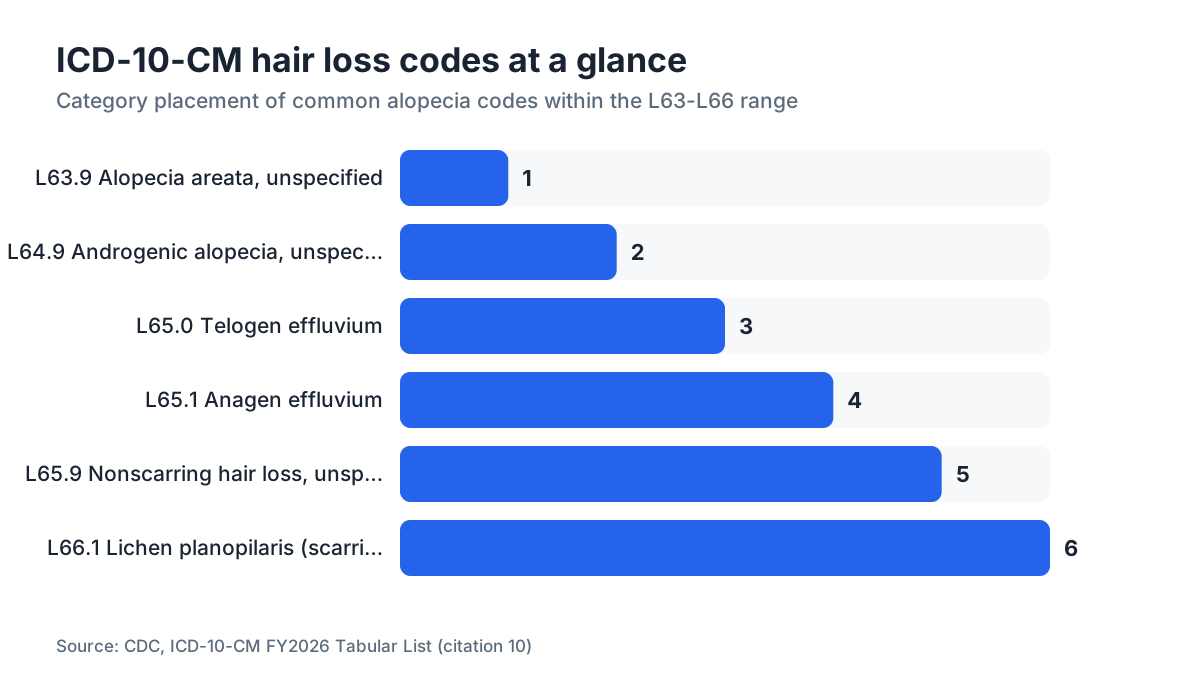
Knowing where L65.0 sits relative to its neighbors helps you catch a miscoding or read a referral note. Hair loss codes in ICD-10-CM spread across several categories.
| Code | Condition | Notes |
|---|---|---|
| L63.0 | Alopecia totalis | Autoimmune, total scalp hair loss |
| L63.1 | Alopecia universalis | Autoimmune, body-wide |
| L63.9 | Alopecia areata, unspecified | Patchy autoimmune hair loss |
| L64.0 | Drug-induced androgenic alopecia | Pattern baldness from drugs |
| L64.9 | Androgenic alopecia, unspecified | Classic male/female pattern baldness |
| L65.0 | Telogen effluvium | Diffuse shed, non-scarring |
| L65.1 | Anagen effluvium | Chemo-related or toxic hair loss |
| L66.1 | Lichen planopilaris | Scarring alopecia |
| L66.2 | Folliculitis decalvans | Scarring alopecia |
Androgenic alopecia (L64.9) is the most common cause of hair loss, and it's what minoxidil and finasteride are FDA-approved to treat. [4][5] If you have both pattern hair loss and TE at the same time (which happens more than people expect), both L64.9 and L65.0 can land on the same claim. [6]
For more on androgenic alopecia and the treatments available, our what causes hair loss article covers the full spectrum.
Does insurance cover telogen effluvium treatment?
Partially, and it depends on what the treatment actually is.
The diagnostic workup (blood tests, dermatologist visits, trichoscopy) is generally covered when billed under L65.0 with proper medical necessity documentation. The office visit itself, coded with an E/M code alongside L65.0, usually falls under standard specialist visit coverage. [1]
Treatment for the underlying cause (correcting hypothyroidism or iron deficiency anemia) is covered normally under those respective diagnoses.
Coverage gets murky with topical or oral minoxidil. Neither is FDA-approved specifically for TE. If a dermatologist prescribes 5% minoxidil solution for TE-driven shedding, many insurers deny it because the FDA indication is androgenic alopecia (L64.x), not L65.0. [4] Some plans cover it with a prior authorization and a letter of medical necessity. Many won't.
Finasteride sits in the same spot. The FDA approves finasteride 1mg (Propecia) for male androgenetic alopecia, not for TE. [5] Prescribing it off-label for TE is uncommon and not well-supported by evidence on its own. See our finasteride article for what it actually treats.
If you've had a hair loss claim denied, start by pulling your Explanation of Benefits, confirming the code used, and asking your dermatologist's billing department whether a corrected claim or a medical necessity letter would help.
Can telogen effluvium be chronic, and does that change the coding?
Yes. Chronic telogen effluvium (CTE) is defined by most dermatologists as diffuse shedding that lasts more than six months. [2] The clinical picture differs from acute TE: the trigger is often harder to find, the shedding is less dramatic but more stubborn, and it disproportionately hits women in their 30s to 50s.
Here is the coding reality. ICD-10-CM has no separate code for chronic versus acute telogen effluvium. Both use L65.0. The distinction lives in the physician's clinical notes, not the billing code. When a specialist needs to flag chronicity, they document it in the visit note.
This matters because chronic TE often gets confused with female-pattern hair loss (androgenic alopecia in women, L64.9). The two can coexist and look alike on the surface. A scalp biopsy showing a higher-than-normal telogen-to-anagen ratio without follicular miniaturization points toward CTE rather than androgenic alopecia, though the line isn't always clean. [2][6]
If you've been diagnosed with CTE and want to track your hair's response over time, tools like the free AI scan at MyHairline give you a baseline to compare against future photos.
What treatments actually work for telogen effluvium?
For acute TE, the most effective move is finding and correcting the underlying cause. That sounds obvious, but it's the whole game for most people.
If your ferritin is below 30 ng/mL (some dermatologists aim higher, around 70 ng/mL, for hair-specific cases), iron supplementation is usually the first step. [9] If your TSH is out of range, treating the thyroid disorder usually cuts shedding over the following three to six months. These corrections fix the root problem instead of chasing the symptom.
Beyond treating the cause, the evidence for TE-specific drug therapy is thin. Minoxidil is commonly used off-label and may shorten the visible thinning phase by pushing resting follicles back into growth, but there are no large randomized trials in TE populations. [4] For men with concurrent androgenic alopecia, pairing minoxidil with a DHT blocker may protect follicles during recovery; see our finasteride and minoxidil article for the evidence on that combination.
For women considering oral minoxidil, low doses (0.25 to 1.25mg daily) have shown promising results for female diffuse hair loss in small trials, though the data in pure TE is limited.
Supplements marketed for hair loss have weak evidence. Hair loss supplements like biotin are often oversold, and biotin can interfere with thyroid lab results at high doses, which matters when you're monitoring ferritin and TSH. [3] Patience is part of the plan too. Even when everything goes right, regrowth takes six to twelve months to show.
In the rare cases where TE becomes a permanent or severely ongoing problem, a hair transplant is generally not indicated because the follicles themselves are healthy. [7]
How do doctors document telogen effluvium for insurance appeals?
If your insurer denies coverage for a lab test or treatment billed under L65.0, a strong appeal usually has three parts.
First, a letter from your dermatologist explaining the clinical diagnosis and why the ordered test or treatment is medically necessary given that diagnosis. The letter should name the L65.0 code, note the shedding timeline, and list any completed workup results.
Second, the clinical evidence behind the treatment. For something like IV iron infusions in severe iron deficiency-driven TE, citing the American Academy of Dermatology's guidance on hair loss evaluation adds weight. [3]
Third, documentation of the underlying comorbidity if there is one. If hypothyroidism (E03.9) is the identified driver and the ferritin or thyroid labs were what got denied, showing that L65.0 and E03.9 appear together, and that the labs followed standard TE workup, makes the case much stronger.
The AAD advises that evaluation of diffuse hair loss should include "a complete blood count, serum ferritin, total iron-binding capacity, thyroid function tests." [3] Quoting that directly in an appeal letter beats a physician's opinion alone.
One more thing. If the denied claim was for minoxidil, the appeal is harder because the FDA indication mismatch is real. Some patients have won by documenting concurrent androgenic alopecia (L64.9), which is an approved indication.
What questions should you ask your dermatologist about an L65.0 diagnosis?
Getting coded L65.0 tells you what you have. It doesn't tell you why, or what to do next. These are the questions worth asking before you leave the office.
-
What specific trigger do you think caused this, and roughly when did it happen? (TE sheds two to four months after the trigger, so your doctor should be looking back in time, not at current stressors.)
-
Which labs are you ordering, and what thresholds are you using? (Ask specifically about ferritin. A level that's technically "in range" at 12 ng/mL is often too low for good hair cycling.)
-
Is there any sign of concurrent androgenetic alopecia? (The two often coexist, and telling them apart changes the long-term plan.)
-
How long should I expect the shedding to continue after the trigger is addressed?
-
At what point would you consider a scalp biopsy?
For context on what separates TE from pattern hair loss and what a receding hairline looks like in androgenetic alopecia, that separate presentation is worth understanding if your shedding is concentrated at the temples or crown rather than spread across the scalp.
Being specific about these questions helps your dermatologist write better documentation, which in turn supports your L65.0 code and any insurance paperwork that follows.
Is telogen effluvium permanent?
Usually not. Acute TE, the most common form, almost always reverses once the underlying trigger is found and corrected. Shedding typically stops within six months, and visible density returns within six to twelve months after that. [2]
The follicles in TE are intact. They haven't been destroyed or permanently miniaturized the way they are in androgenetic alopecia. They've just been shoved into a resting phase early. Once the follicle gets the signal that conditions are stable again, it re-enters anagen and grows a new shaft. That's why patience plus treating the cause is the real treatment, not a placebo.
Chronic TE lasting more than six months is harder to clear and may need a fuller workup, sometimes a scalp biopsy to rule out a coexisting condition. But even CTE isn't permanent the way androgenic alopecia is. [2][3]
If you're worried your shedding might be more than TE, look at family history, whether the loss is patterned or diffuse, and the timeline. The what causes hair loss overview covers the full diagnostic landscape, including how to tell TE from the pattern alopecias that do cause permanent follicle loss.
How does the ICD-10 revision process work, and could the TE code change?
The ICD-10-CM is updated every year by the Centers for Disease Control and Prevention (CDC) alongside the Centers for Medicare and Medicaid Services (CMS). Updates take effect every October 1. [1]
Code L65.0 for telogen effluvium has been stable for years and is unlikely to change in any near-term cycle. The L65 category for "other nonscarring hair loss" is settled. New codes tend to appear for newly recognized conditions or for ones that previously lacked specificity, not for well-established diagnoses like TE.
If you're working with billing software, a coding book, or a telehealth platform, the current year's edition of ICD-10-CM is what matters. CMS and CDC publish the full code set each year. [1][10] For clinical purposes, L65.0 has meant telogen effluvium consistently since the US adopted ICD-10-CM in October 2015.
The coming transition to ICD-11, which the World Health Organization adopted in 2019 and which the US has not yet implemented, will eventually bring different alphanumeric codes. In ICD-11, telogen effluvium falls under skin appendage conditions with a different code structure, but the US transition timeline stays uncertain as of mid-2026. [8]
Sources
- CMS, ICD-10-CM Official Guidelines and Code Set
- Malkud S, Journal of Clinical and Diagnostic Research, 2015
- American Academy of Dermatology, Hair Loss Guidelines
- FDA, Minoxidil Drug Label (Rogaine)
- FDA, Finasteride (Propecia) Drug Label
- Whiting DA, Journal of the American Academy of Dermatology, 1996
- International Society of Hair Restoration Surgery, Patient Information
- WHO, ICD-11 Implementation
- Harrison S, Bergfeld W, Cleveland Clinic Journal of Medicine, 2009
- CDC, ICD-10-CM tabular list, FY2026
- Rebora A, Journal of the European Academy of Dermatology and Venereology, 1997