

TL;DR: Telogen effluvium (TE) is temporary hair loss where a shock to your body pushes large numbers of hairs into the resting phase at once. In men, it usually causes diffuse shedding across the whole scalp starting 2 to 3 months after a trigger. Most cases clear on their own within 6 to 9 months once the trigger is gone.
What is telogen effluvium and how does it affect men?
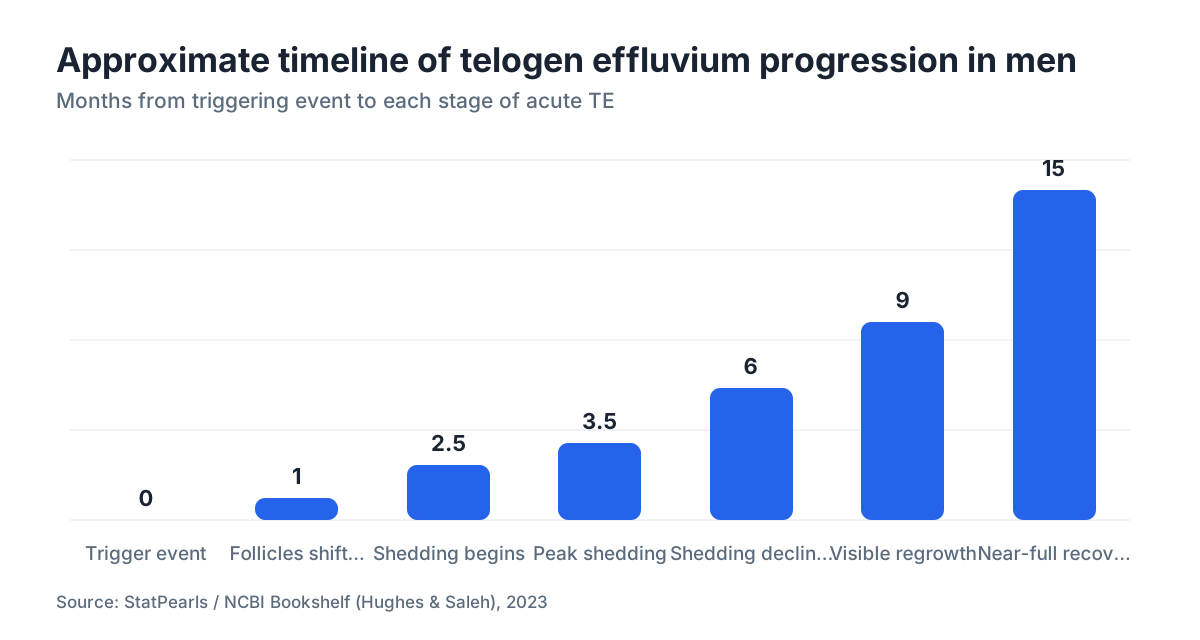
Telogen effluvium is what happens when your hair growth cycle gets knocked off track by a physical or psychological shock. Normally around 85 to 90 percent of your scalp hairs sit in the active growth phase (anagen) at any moment, and only about 10 to 15 percent are resting (telogen) before they fall out [1]. When something jolts your system, a much larger share of hairs shift early into telogen. Two to three months later, all of them shed at roughly the same time. That is the moment men notice something is wrong.
The defining feature is diffuse shedding. Not a receding hairline, not a bald spot at the crown. You find hair on the pillow, in the shower drain, on your hands after running them through your hair. Men often count 200 to 400 hairs per day during a peak episode, against normal loss of roughly 50 to 100 hairs daily [1].
Male telogen effluvium is probably underdiagnosed, because men tend to assume any hair loss must be genetic male pattern baldness. That assumption sends a lot of men reaching for finasteride or minoxidil when the real problem is a deficiency or illness that needs a different fix entirely. Getting the two conditions mixed up is more than an academic slip. It can mean months of pointless medication while the actual trigger goes untouched.
See telogen effluvium for a full breakdown of the condition across both sexes.
What causes telogen effluvium in men specifically?
Almost any significant physical stress can trigger TE, but in men the common culprits fall into recognizable patterns.
Nutritional deficiencies top the list. Low serum ferritin (iron stores) is strongly linked to TE, and some studies suggest levels should be above 40 ng/mL to support hair growth, though the exact threshold is debated [2]. Zinc and protein deficiencies also show up often, especially in men who crash diet or follow very restrictive eating patterns.
Illness and surgery are classic triggers. COVID-19 drove a well-documented surge in TE cases starting in 2020 and 2021, with one study finding that up to 22 percent of COVID-19 patients reported significant hair shedding roughly 2 to 3 months after infection [3]. Any high fever, hospital stay, or major surgery can do the same thing.
Psychological stress can absolutely cause TE, though it happens more with acute, severe stress than with chronic low-grade anxiety. A sudden job loss, a divorce, a death in the family can each be shock enough.
Medications are an underrated cause. Several drug classes list telogen effluvium as a known side effect, including beta-blockers, retinoids, anticoagulants, and some antidepressants [4]. If your shedding started shortly after a new prescription, raise that connection with your doctor.
Thyroid dysfunction (both hypo- and hyperthyroidism) and rapid weight loss are also well-established triggers. Men who lose a lot of weight fast, whether through bariatric surgery, aggressive calorie cutting, or illness, commonly hit TE 2 to 3 months later.
Reading what causes hair loss more broadly can help you think through what else might be at play.
How is telogen effluvium different from male pattern baldness?
This is the question that matters most in practice, because the treatments are completely different and picking the wrong one wastes time and money.
| Feature | Telogen effluvium | Male pattern baldness (androgenetic alopecia) |
|---|---|---|
| Shedding pattern | Diffuse, all over scalp | Follows Norwood pattern: temples, crown |
| Onset | Sudden, 2-3 months after trigger | Gradual, over years |
| Miniaturization | No | Yes (progressive thinning of individual hairs) |
| Family history | Not required | Strong genetic component |
| Reversible | Usually yes, once trigger removed | No, without ongoing treatment |
| Scalp appearance | Normal or slightly more visible | Progressive thinning zones visible |
| Duration | Typically 6-9 months | Lifelong and progressive |
In male pattern baldness, you lose hairs in predictable zones because DHT (dihydrotestosterone) makes follicles in those zones miniaturize over time. In telogen effluvium, the follicles themselves are healthy. They have just been pushed early into a resting state. Run your fingers through the hair of someone with TE and the shed hairs usually carry a small white bulb at the root, the telogen club hair. That is a useful sign but not proof on its own.
To complicate things, the two can coexist. A man with underlying androgenetic alopecia who takes a major hit can get a TE episode stacked on top of his pattern loss, and pulling them apart clinically takes some care. A dermatologist can run a scalp biopsy or trichoscopy to look for miniaturization, which confirms pattern baldness [5]. A pull test, where the clinician grasps 50 to 60 hairs near the root and pulls firmly, is positive (more than 6 hairs released) in active TE.
If you have a receding hairline specifically, that picture points more toward androgenetic alopecia. Read more about receding hairline patterns and what they mean.
For men who are genuinely unsure which condition they have, the free AI hair analysis at MyHairline can give you an early read on your pattern before you see a dermatologist.
How long does telogen effluvium last in men?
The honest answer is that it depends on whether the trigger is gone.
Acute TE usually resolves within 6 to 9 months of the trigger being removed or treated [1]. Hair does not regrow overnight. Once shedding slows, expect 3 to 6 months of gradual regrowth before your density looks noticeably better. Full recovery can take 12 to 18 months from the peak shedding point.
Chronic TE is a different animal. If it runs longer than 6 months, dermatologists call it chronic telogen effluvium. It can persist for years and may be driven by an ongoing nutritional problem, a medication you are still taking, or an undiagnosed condition. Chronic TE is more common in women than men, but it does happen in men, often tied to long-standing low ferritin, thyroid issues, or chronic psychological stress.
Here is the timeline most men find reassuring: shedding usually peaks around month 3 to 4 after the trigger and then tapers off. If you are still losing dramatic amounts of hair 6 months after removing the obvious trigger, get blood work done. Something is probably still wrong.
What blood tests should men get for telogen effluvium?
No single test diagnoses telogen effluvium. The diagnosis is clinical, built from your history and exam. But blood work is essential to find the trigger and rule out other causes.
A reasonable first workup for a man with diffuse shedding includes:
- Complete blood count (CBC) to check for anemia
- Serum ferritin (more useful than serum iron, which can read normal even when stores are low)
- Thyroid-stimulating hormone (TSH)
- Metabolic panel to assess protein levels and kidney/liver function
- Zinc and vitamin D levels
- Testosterone and DHEA-S if androgen excess is suspected
Ferritin deserves special attention. Standard lab reference ranges often bottom out at 12 to 20 ng/mL, but hair loss researchers have proposed that levels below 30 to 40 ng/mL may impair the hair cycle even without frank anemia [2]. If your ferritin comes back at 18 and your doctor calls it "normal," it is worth a conversation about what optimal for hair actually looks like.
Vitamin D deficiency has been linked to several types of hair loss in observational studies, though the evidence is shakier than it is for ferritin [6]. It is cheap to test and cheap to treat, so include it.
If you suspect recent illness, autoimmune disease, or hormonal changes, say so. Those findings shape which extra tests make sense.
How do you treat telogen effluvium in men?
The most effective treatment for TE is finding and removing the trigger. That sounds obvious, but it is genuinely the first job, and no topical or oral hair loss drug will make up for a ferritin level of 15 or uncontrolled hypothyroidism.
Address nutritional deficiencies directly. If your ferritin is low, iron supplementation is appropriate, but work with a doctor on dosing since excess iron carries its own risks. Protein intake matters too. The American Academy of Dermatology points to adequate protein as a basic building block for hair health [7].
Give it time. For acute TE triggered by a one-time event like surgery or COVID-19, time is the primary treatment. Watching your hair fall out when you cannot do anything to stop it is genuinely stressful, and that stress can itself drag out the episode. Frustrating, but true.
Minoxidil is sometimes used off-label. There is logic to it. Minoxidil works partly by extending the anagen phase and may shorten the recovery window. It is not FDA-approved for TE, and the evidence for TE specifically is thin. If a man has both TE and underlying androgenetic alopecia, minoxidil makes more sense because it treats the pattern loss too. Read more about minoxidil for men if you are considering it, and check the minoxidil side effects before starting.
Finasteride is generally not the right tool here. Finasteride blocks DHT and works only on androgenetic alopecia. If your shedding is pure TE with no pattern loss underneath, finasteride does nothing. More detail on finasteride.
Hair loss supplements sold for TE usually pack biotin, zinc, and assorted amino acids. Biotin helps if you are actually biotin-deficient, which is uncommon in men who eat a varied diet. Biotin is cheap and safe, but the evidence that it regrows hair in people with normal levels is thin [8]. Learn more about hair loss supplements.
If chronic TE hangs on despite addressing the obvious triggers, book a dermatologist. They can do a scalp biopsy to rule out other conditions (like alopecia areata or scarring alopecia) that can look like TE on the surface.
Can stress alone cause telogen effluvium in men?
Yes, though the stress usually has to be fairly acute and severe rather than the background hum of a hard job or a rough year.
The mechanism runs through cortisol and substance P. High cortisol has been shown in animal studies to disrupt hair follicle cycling and cut growth factors in the scalp [9]. A 2021 study in Nature identified a pathway where sustained stress hormone signaling keeps follicles in a prolonged resting phase by depleting a signaling molecule called GAS6 from dermal papilla cells [9]. That is the clearest molecular explanation to date for why severe stress causes real, measurable hair loss.
In practice, men who report stress-related TE can often point to a discrete event: a car accident, a death in the family, a severe illness, a stretch of extreme overtraining, or several of these landing at once. The hair loss shows up 2 to 3 months later. That delay is long enough that many men never connect the two on their own.
Chronic, lower-grade stress is a messier story. It probably does add to hair loss over time, but the evidence is hard to separate from other factors. What is clear: managing the acute trigger matters more than managing your stress levels alone.
Does telogen effluvium cause permanent hair loss in men?
For most men with true TE, no. The follicles are intact. They went dormant. They can wake back up.
There are two exceptions. First, if a man has androgenetic alopecia running in the background and a TE episode speeds up the shedding of hairs that were already miniaturizing, some of that loss may not fully recover. The TE did not cause the permanent loss, but it may have fast-forwarded a slow process.
Second, if the underlying trigger is never found and treated, particularly in chronic TE, prolonged follicle dormancy can, in rare cases, lead to follicle death. This is far less common than men fear. Most chronic TE does no permanent damage, but the longer a follicle sits inactive, the smaller its window to recover.
The practical takeaway: get the blood work, find the trigger, treat it. Do that within a reasonable timeframe and the odds of full recovery are good. Men who show up with 5 years of undiagnosed chronic TE have a harder road than men who catch the problem at month 4.
Telogen effluvium vs male pattern baldness: which do I have?
Use this framework to think it through before seeing a doctor, though a proper clinical exam and blood work are the only way to be sure.
Points toward telogen effluvium:
- Sudden onset of heavy shedding (you noticed it within weeks)
- Loss is diffuse across the whole scalp, not concentrated at temples or crown
- You can name a trigger 2 to 3 months before the shedding started (illness, surgery, diet change, major stress, new medication)
- You are under 25, which makes early androgenetic alopecia somewhat less likely though not impossible
- Your shed hairs carry a visible white bulb at the root
- Pull test is positive (more than 6 hairs from a gentle tug on 50 hairs)
Points toward androgenetic alopecia:
- Gradual thinning over years, not weeks
- Concentrated at the temples and crown, following the Norwood scale
- Father or maternal grandfather had significant hair loss
- Hairs in the affected area are visibly finer and shorter than hairs elsewhere on the scalp (miniaturization)
- No identifiable stress or health event before the loss
Points toward both at once:
- You have a clear Norwood pattern developing, then a sudden acute shed on top of it
- Trichoscopy or biopsy shows both excess telogen hairs and miniaturized follicles
If you want a starting point before booking a dermatologist, the MyHairline AI scan can analyze your hairline and shedding pattern in minutes. It is not a diagnosis, but it can help you frame the conversation with your doctor and decide how fast you need that appointment.
See the full comparison at telogen effluvium vs male pattern baldness and the what causes hair loss guide for a broader look at differential diagnosis.
Can creatine or supplements trigger telogen effluvium in men?
This one comes up constantly in men's fitness communities, so it deserves a direct answer.
The theory is that creatine raises DHT levels and that higher DHT speeds follicle miniaturization. A small 2009 study in male rugby players found that 3 weeks of creatine loading raised the DHT-to-testosterone ratio by roughly 56 percent versus placebo [10]. That finding gets quoted endlessly in hair loss forums.
Here is what the evidence actually supports. The creatine-DHT link rests largely on that one small study (n=20), and DHT elevation would logically worsen androgenetic alopecia over time rather than cause acute TE. There is no well-established mechanism by which creatine specifically triggers the mass follicle shift into telogen that defines TE.
That said, any supplement or dietary change big enough to move your nutritional status could in theory contribute to TE as part of a wider picture. Protein powders that crowd out whole food and cut micronutrient intake, aggressive cutting cycles that create caloric deficits, and stimulants that wreck sleep all create the kind of physical stress that can push hairs into telogen.
Get the full picture at does creatine cause hair loss.
What should men do in the first 30 days after noticing heavy shedding?
Panic less than you think you need to. The shedding you see today reflects what happened to your follicles 2 to 3 months ago. You are not going bald in real time.
Here is what actually helps in the first month:
-
Document the shedding. Count hairs in the shower drain for 3 straight days, or take photos of your part width and hairline in consistent lighting. Baselines matter for tracking recovery.
-
Make a timeline. Go back 2 to 4 months and think hard about what happened. Illness? New medication? Diet change? Intense training? Major stressor? Write it down. Every doctor you see will ask.
-
Get blood work. Ask your primary care doctor for the panel above, specifically including ferritin (more than iron) and TSH. Do this in the first few weeks. Do not wait for the shedding to slow before investigating.
-
Do not overhaul your hair care routine. Switching shampoos, starting aggressive scalp massage, or piling on multiple supplements at once makes it harder to tell what is actually helping. One change at a time.
-
Eat normally and rest. If your trigger was a stretch of undereating or overtraining, removing those stressors is the most useful thing you can do. Crash dieting to lose weight while already in a TE episode works against you.
-
See a dermatologist if shedding is still heavy at 3 months. General practitioners are fine for blood work but often lack the tools (trichoscopy, pull test experience) to sort out hair loss types with confidence. A board-certified dermatologist, ideally one focused on hair disorders, is your best clinical resource.
Sources
- Springer, Hughes EC & Saleh D. Telogen Effluvium. StatPearls (NCBI Bookshelf)
- Journal of the American Academy of Dermatology, Trost et al. The diagnosis and treatment of iron deficiency and its potential relationship to hair loss
- Journal of the American Academy of Dermatology, Rizzetto et al. Post-COVID-19 telogen effluvium
- U.S. National Library of Medicine MedlinePlus, Hair Loss
- American Academy of Dermatology, Hair Loss: Diagnosis and Treatment
- NCBI PMC, Almohanna et al. The Role of Vitamins and Minerals in Hair Loss. Dermatology and Therapy 2019
- American Academy of Dermatology, Hair Loss: Tips for Managing
- NCBI PMC, Almohanna et al. The Role of Vitamins and Minerals in Hair Loss. Dermatology and Therapy 2019
- Nature, Choi et al. A stress-mediated hair loss mechanism and a hair regrowth opportunity. 2021
- Clinical Journal of Sport Medicine, van der Merwe et al. Three weeks of creatine monohydrate supplementation affects dihydrotestosterone to testosterone ratio. 2009
- American Academy of Dermatology, Hair Loss Types: Telogen Effluvium