

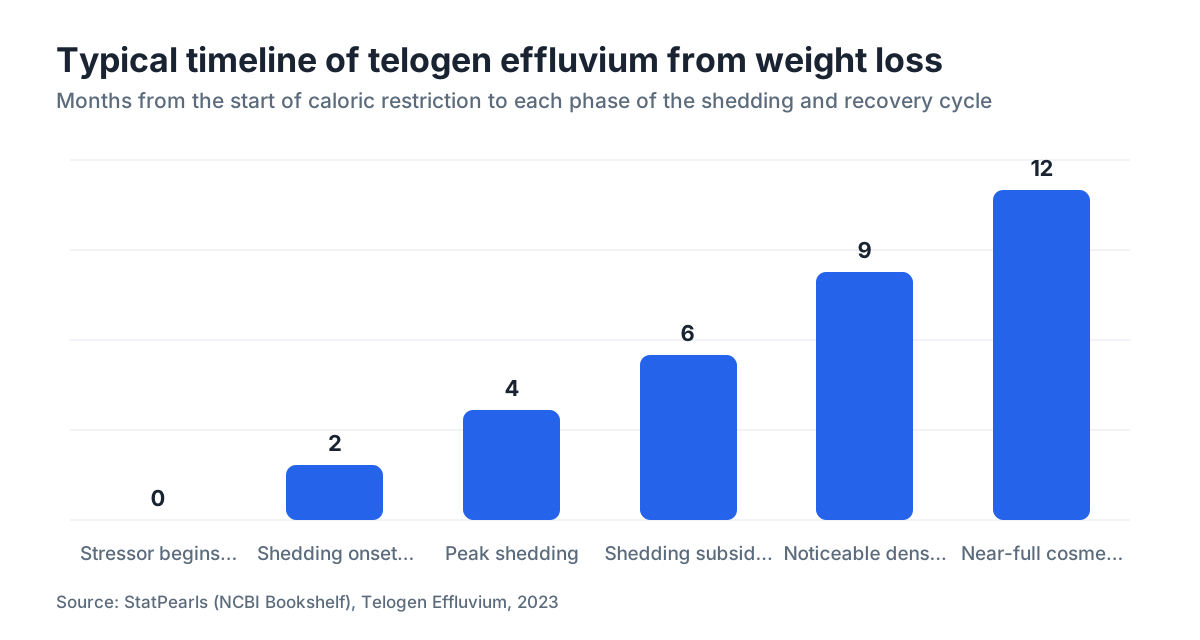
TL;DR: Rapid weight loss pushes hair follicles into a resting phase called telogen effluvium. Shedding typically starts 2 to 4 months after the dietary stress and peaks around month 3 to 6. Most people see full regrowth within 6 to 12 months once nutrition is restored, though underlying deficiencies in protein, iron, or zinc can stall recovery if left uncorrected.
What is telogen effluvium and why does weight loss trigger it?
Your hair follicles cycle through three phases: anagen (active growth), catagen (transition), and telogen (rest/shedding). Normally, about 85 to 90% of follicles are in anagen at any given time, and roughly 50 to 100 hairs shed daily without anyone noticing [1].
Telogen effluvium is what happens when a metabolic or physiological shock forces a disproportionate share of follicles to abandon anagen and enter telogen simultaneously. Two to four months later, those resting hairs eject all at once. The result is diffuse thinning across the whole scalp rather than the patterned recession you see in androgenetic alopecia.
Weight loss is one of the most reliable triggers. The mechanism is mostly caloric and nutritional deprivation. When your body senses an energy deficit, it pulls resources away from tissue it can live without. Hair is metabolically expensive and biologically optional in the short term, so follicles get cut off. Crash diets under 1,000 to 1,200 kcal/day carry the highest risk, but any rapid loss of more than 1 lb (0.45 kg) per week for an extended period can do it [2].
Weight loss surgery (bariatric procedures) is a particularly well-documented trigger. Studies report telogen effluvium in 30 to 57% of bariatric patients in the first 3 to 6 months post-op, because the caloric restriction is severe and sudden [3]. GLP-1 receptor agonist drugs like semaglutide and tirzepatide are now generating the same pattern, since they suppress appetite enough to replicate crash-diet conditions in many users.
For a broader look at the condition outside of weight loss, the telogen effluvium explainer covers the full trigger list.
How long after weight loss does hair shedding start?
The delay is almost always 2 to 4 months. That lag is the telogen phase itself: once a follicle is pushed into rest, it takes roughly 2 to 3 months before the club hair (the dead hair at the base) is physically ejected by the new hair growing in beneath it.
That delay is the most confusing part for patients. Someone loses 25 lbs between January and March, then wakes up in May or June to a shower drain full of hair. The connection to the diet rarely feels obvious because the weight loss is old news by then.
Peak shedding typically falls in months 3 to 6 from the onset of the stressor. After that peak, shedding gradually declines as the new anagen hairs grow in. Most dermatologists consider 6 months from peak shedding a reasonable expectation for noticeable density improvement, and 12 months for near-full recovery [1].
Timeline varies with severity. A single two-week crash diet causes a shorter, sharper shed. Sustained caloric restriction over 6 to 12 months (common in obesity treatment) produces a more drawn-out shedding period because the stressor itself never fully resolves.
Which nutritional deficiencies from dieting cause the most hair loss?
Calories matter, but specific deficiencies do independent damage on top of overall restriction.
Protein is the most direct. Hair is roughly 95% keratin, a protein. Diets under 50 g of protein per day are consistently associated with hair shedding, and very-low-protein states (as in kwashiorkor) produce dramatic effluvium [2]. The RDA for protein is 0.8 g per kg of body weight, but during active weight loss many dermatologists recommend at least 1.2 to 1.6 g/kg to protect hair.
Iron (ferritin) is the other major driver. Low ferritin is common in women on calorie-restricted diets, especially those avoiding red meat. Several dermatology studies have found that ferritin below 30 ng/mL correlates with prolonged or recurring telogen effluvium, even when hemoglobin is normal [4]. Some researchers argue the threshold for hair-protective ferritin is closer to 70 ng/mL, though that remains debated.
Zinc drops quickly on severe caloric restriction and plays a direct role in follicle cycling. Serum zinc below 70 mcg/dL appears in a meaningful share of effluvium patients [5].
Biotin deficiency is commonly blamed but rarely the actual problem in people eating any varied diet. Biotin supplements are marketed hard for hair loss, with thin clinical evidence behind them in people who are not genuinely deficient. Real biotin deficiency is rare outside specific genetic conditions or extended raw-egg consumption.
Vitamin D has emerged as a more plausible factor. Vitamin D receptors are expressed in hair follicles, and deficiency is common in people on restrictive diets, especially in northern latitudes during winter [6].
For a broader look at the evidence on supplements, see hair loss supplements.
How much weight loss is enough to trigger telogen effluvium?
There is no single threshold that applies to everyone, and nobody has clean dose-response data on this. The closest evidence comes from observational studies in bariatric surgery populations and case series from crash-dieting cohorts.
What the literature consistently shows is that the rate of loss matters more than the absolute pounds lost. Losing 1 to 1.5 lbs per week appears to be the approximate boundary below which effluvium risk is relatively low for otherwise healthy adults. Above that rate, especially sustained over 2+ months, risk climbs [2].
Total body weight percentage also matters. Losing 10% of body weight over 8 weeks is more stressful physiologically than the same absolute pounds lost from a higher starting weight over a longer period.
Bariatric surgery patients lose weight so fast that the 30 to 57% effluvium incidence figures are arguably the best upper-bound estimate of what severe, sustained restriction does [3]. GLP-1 users in clinical trials for semaglutide (STEP trials) and tirzepatide (SURMOUNT trials) reported hair loss as an adverse event, though the exact incidence figures from those trials are modest and often under-reported because it was not a primary endpoint.
Very-low-calorie diets (VLCDs), defined as under 800 kcal/day, carry high effluvium risk essentially by design.
Is weight-loss telogen effluvium different for men and women?
Biologically, the mechanism is identical. The trigger, timing, and recovery path work the same way in both sexes.
Where sex matters is in the layering of other causes. Women are more likely to go into a diet with low iron, and more likely to develop it during restriction, which means their effluvium is more prone to becoming chronic (lasting longer than 6 months) rather than the acute self-resolving type [4].
Men who already have androgenetic alopecia (male pattern hair loss) face a different complication: effluvium on top of pattern loss can speed up the visible progression because it thins areas that were already thinning. The effluvium itself will resolve, but any permanent follicle miniaturization from DHT-related loss will not recover on its own. That distinction is worth flagging with a dermatologist. If you are seeing a receding hairline alongside the diffuse shedding, those are two separate processes. See receding hairline for more on that pattern.
Women in perimenopause or menopause who also diet aggressively face a compound trigger: the hormonal shift is itself a common effluvium cause, and restriction stacks on top of it.
How do doctors diagnose telogen effluvium caused by weight loss?
Diagnosis is mostly clinical. A dermatologist or trichologist takes a history, looking specifically for any physiological stressor 2 to 4 months before the shedding began.
The pull test is a standard office maneuver: the clinician grasps 40 to 60 hairs near the scalp and pulls gently. More than 6 hairs (about 10%) releasing indicates active effluvium. In practice, a positive pull test combined with a clear dietary history is enough for a working diagnosis.
Bloodwork checks for contributing deficiencies: complete blood count, serum ferritin (more than hemoglobin), zinc, vitamin D, thyroid function (TSH), and a basic metabolic panel. Thyroid dysfunction is another common effluvium trigger and should be ruled out regardless.
Dermoscopy (a handheld skin microscope) can show a high ratio of telogen hairs (thin, unpigmented proximal ends) and an absence of the miniaturized hairs you would see in androgenetic alopecia.
Scalp biopsy is rarely needed, but when done it shows an increased percentage of telogen follicles (above 15 to 25%, compared to the normal 10 to 15%) and a normal follicle count, distinguishing effluvium from scarring alopecias where follicles are actually destroyed [1].
If you want a first-pass look before a clinic visit, the free AI hair analysis at MyHairline can help you tell whether your shedding pattern looks like diffuse effluvium or something else.
How long does telogen effluvium from weight loss take to resolve?
Acute telogen effluvium, where the stressor has stopped (you have stabilized your weight and restored nutrition), typically resolves within 6 to 9 months from peak shedding. Most people see noticeable recovery in 6 months. Full cosmetic recovery, meaning hair density feels normal again, takes up to 12 months for most people [1].
Chronic telogen effluvium is defined as shedding persisting beyond 6 months. It develops when the underlying trigger never resolves: continued caloric restriction, ongoing iron or protein deficiency, an undiagnosed thyroid problem, or a new stressor starting just as the first one fades.
One thing worth setting expectations on: hair grows about 6 inches (15 cm) per year on average, or roughly 0.5 inches per month. Even after follicles fully re-enter anagen, you will not see the density benefit until those new hairs have grown long enough to add visible volume. Short hairs near the scalp surface, sometimes called "baby hairs," are a reliable early sign that recovery is on track.
The single most predictive factor for fast recovery is eliminating the nutritional deficit. Weight maintenance after dieting, more than just slowing the loss, often marks the turning point.
What actually helps hair grow back after weight loss shedding?
The honest answer: fixing the root cause does most of the work, and nothing else comes close.
Here is a practical recovery checklist based on what the evidence supports:
Protein intake. Aim for at least 1.2 g/kg of body weight per day. This is the single most actionable dietary target. A 150 lb (68 kg) person needs around 80 to 110 g of protein daily.
Correct ferritin if it is low. Ask your doctor to test serum ferritin specifically, more than hemoglobin. If ferritin is below 30 ng/mL (some argue 70 ng/mL for hair purposes), iron supplementation with vitamin C for absorption is appropriate [4]. Do not supplement iron without testing; excess iron has real downsides.
Vitamin D. If you are deficient (serum 25-OH vitamin D below 20 ng/mL), standard supplementation (1,000 to 2,000 IU/day for maintenance, more to correct deficiency under physician guidance) is reasonable [6].
Zinc. If deficient, supplement at 25 to 40 mg/day for a defined period. Long-term high-dose zinc can deplete copper, so this is not a take-forever situation.
Minoxidil. Topical minoxidil (2% or 5%) is the only FDA-approved topical treatment that demonstrably shortens the anagen re-entry lag and increases hair density [7]. It does not stop telogen effluvium from happening, but it can speed regrowth once nutritional status is restored. Minoxidil for men covers dosing and application in detail.
What does not help much. Biotin supplements (unless you are genuinely deficient), expensive keratin treatments, scalp massage devices marketed as "clinical," and most hair vitamins with no randomized trial data behind them. Finasteride targets DHT-driven miniaturization, not effluvium, so it is the wrong tool unless you also have pattern hair loss. See finasteride for when it makes sense.
For men or women who suspect their effluvium is compounded by androgenetic alopecia, the two conditions are worth addressing separately. The finasteride and minoxidil article covers the evidence for using both together.
Can GLP-1 drugs like Ozempic cause telogen effluvium?
Yes. Hair loss is a documented adverse event in GLP-1 receptor agonist trials and in post-market reporting. The FDA label for semaglutide (Ozempic, Wegovy) lists alopecia as a reported adverse reaction [8].
The mechanism is the same as with any rapid weight loss: a caloric deficit severe enough to trigger the follicle stress response. GLP-1 drugs suppress appetite dramatically in many patients, producing crash-diet conditions even in people who eat to satiety. The 6 to 12% body weight loss that happens in the first 4 to 6 months of semaglutide therapy is fast enough to trigger effluvium in a real subset of users.
What is not established is whether the drug itself, independent of the weight loss it causes, has any direct follicle effect. Current evidence points to the weight loss as the explanation rather than the drug's pharmacology.
Practically: if you are on a GLP-1 drug and your hair is shedding, the same playbook applies. Prioritize protein (GLP-1 users are at particular risk of eating too little protein when appetite is severely blunted), monitor ferritin, and give it time. Most GLP-1-associated shedding follows the standard 6 to 12 month recovery arc once weight stabilizes.
How is telogen effluvium from weight loss different from pattern hair loss?
They look and behave differently, though they can coexist.
Telogen effluvium from weight loss is diffuse: hair thins across the entire scalp, including the back and sides. It sheds in large amounts over a relatively short window, then stops. The follicles are not damaged or miniaturized, so full regrowth is the expected outcome.
Androgenetic alopecia (pattern hair loss) follows a specific spatial pattern: the hairline recedes at the temples, the crown thins, and the back and sides are largely spared. This happens because those specific follicles are genetically sensitive to dihydrotestosterone (DHT) and gradually miniaturize over years. It does not stop on its own and does not recover without treatment [10]. Understanding what causes hair loss in both categories helps clarify which you are dealing with.
The clinical distinction matters enormously because the treatments are completely different. Effluvium needs nutritional repair and time. Pattern loss needs DHT blockade (finasteride, DHT blockers) or follicle replacement (hair transplant) or density augmentation (minoxidil) to manage long-term.
If you are a man in your 20s or 40s losing hair diffusely during a diet, it is worth asking whether the effluvium is revealing pattern loss that was already underway. A dermatologist can usually tell from scalp dermoscopy.
When should you see a doctor about hair loss after dieting?
Self-diagnosing effluvium is reasonable, but some signs warrant professional evaluation:
Shedding persisting beyond 6 months after you have stopped restricting and restored nutrition. At that point, you need bloodwork to look for a persisting deficiency or a separate cause like thyroid dysfunction.
Shedding with other symptoms. Fatigue, cold intolerance, constipation, or brittle nails alongside hair loss points toward thyroid or iron-deficiency causes that need direct treatment, more than dietary correction.
Visible hairline recession or a clearly patterned bald area rather than diffuse thinning. This suggests androgenetic alopecia is involved, possibly unmasked by the effluvium.
Hair loss severe enough to cause real psychological distress. Dermatologists can fast-track bloodwork and prescribe minoxidil directly, which is faster than most supplement approaches.
The American Academy of Dermatology recommends evaluation when hair loss is sudden, diffuse, and accompanied by systemic symptoms [9]. A board-certified dermatologist is the right specialist. Trichologists (non-medical specialists in hair) can be useful but cannot order lab tests or prescribe medications.
For a preliminary read on what kind of hair loss you might be dealing with, MyHairline's free AI scan can give you an initial pattern assessment before you commit to a clinic visit.
Can you prevent telogen effluvium while still losing weight?
You cannot guarantee prevention, but you can cut the risk a lot.
The main levers are the rate of loss and nutritional quality. Losing 0.5 to 1 lb per week rather than 2 to 3 lbs is genuinely protective. That pace is slower than most crash-diet programs, but it matches what the evidence supports for sustainable fat loss without triggering metabolic stress responses [2].
Keep protein high throughout the diet. Many calorie-restricted diets cut protein along with everything else, but holding 1.2 to 1.6 g/kg of body weight while cutting overall calories protects lean mass and appears to reduce effluvium risk.
Get ferritin tested before starting an aggressive diet, especially if you are a premenopausal woman. Correcting borderline deficiency before restricting is much easier than chasing it afterward.
If you are planning bariatric surgery, most programs now include mandatory pre-op and post-op nutritional counseling for exactly this reason. The American Society for Metabolic and Bariatric Surgery recommends lifelong micronutrient supplementation post-op, specifically for iron, B12, vitamin D, and calcium [3].
For GLP-1 drug users: work with your prescribing doctor on explicit protein targets. Appetite suppression can make it easy to eat 40 to 50 g of protein per day without noticing, which is well below what hair follicles need.
Sources
- StatPearls (NCBI Bookshelf), Telogen Effluvium
- Dermatology Practical & Conceptual (PubMed), Diet and Hair Loss: Effects of Nutrient Deficiency and Supplement Use
- Journal of the American Academy of Dermatology (PubMed), Serum ferritin and alopecia in women
- International Journal of Trichology (PubMed), Zinc in hair loss conditions
- Skin Appendage Disorders (PubMed), Role of Vitamin D in Hair Follicle Cycling and Alopecia
- FDA Drug Label Database (Drugs@FDA), Minoxidil Topical Solution 5%
- FDA, Highlights of Prescribing Information: Wegovy (semaglutide) injection
- American Academy of Dermatology (AAD), Hair Loss: Tips for Managing
- StatPearls (NCBI Bookshelf), Androgenetic Alopecia
- Nutrients (PubMed), The Role of Vitamins and Minerals in Hair Loss: A Review
- New England Journal of Medicine, Once-Weekly Semaglutide in Adults with Overweight or Obesity (STEP 1 Trial)