

TL;DR: Telogen effluvium is temporary, diffuse hair shedding triggered by physical or emotional stress, and it usually starts 2-3 months after the trigger. In women, the common causes are postpartum hormone shifts, thyroid disease, iron deficiency, and crash dieting. Most cases clear on their own within 6 months once the trigger is gone. Chronic forms can last years.
What is telogen effluvium and why does it hit women harder?
Telogen effluvium is a disruption of the normal hair growth cycle. Instead of 85-90% of scalp hairs staying in the growing phase (anagen) at any given time, a sudden physical or psychological shock pushes a large batch of follicles early into telogen, the resting phase [1]. About 2-3 months later, when those resting hairs are pushed out by new growth, you get a wave of shedding that can feel alarming.
Women get telogen effluvium more often than men. The reason is simple: the biological triggers stack up differently across a woman's life. Pregnancy, childbirth, contraceptive changes, and perimenopause all create sudden shifts in estrogen and progesterone, and those hormones directly influence follicle cycling [2]. Add iron deficiency (more common in women of reproductive age), thyroid disease (three to five times more common in women than men), and the cultural pressure toward restrictive dieting, and you get a condition that can return several times across decades.
Dermatologist Albert Kligman coined the term in 1961. The mechanism is not complicated. Follicles have a short list of responses to stress, and early telogen entry is one of the main ones. What varies is the trigger, the timing, and whether the condition resolves cleanly or turns chronic.
For a wider view of what disrupts hair growth, see our guide on what causes hair loss and the main telogen effluvium explainer.
What are the most common triggers of telogen effluvium in women?
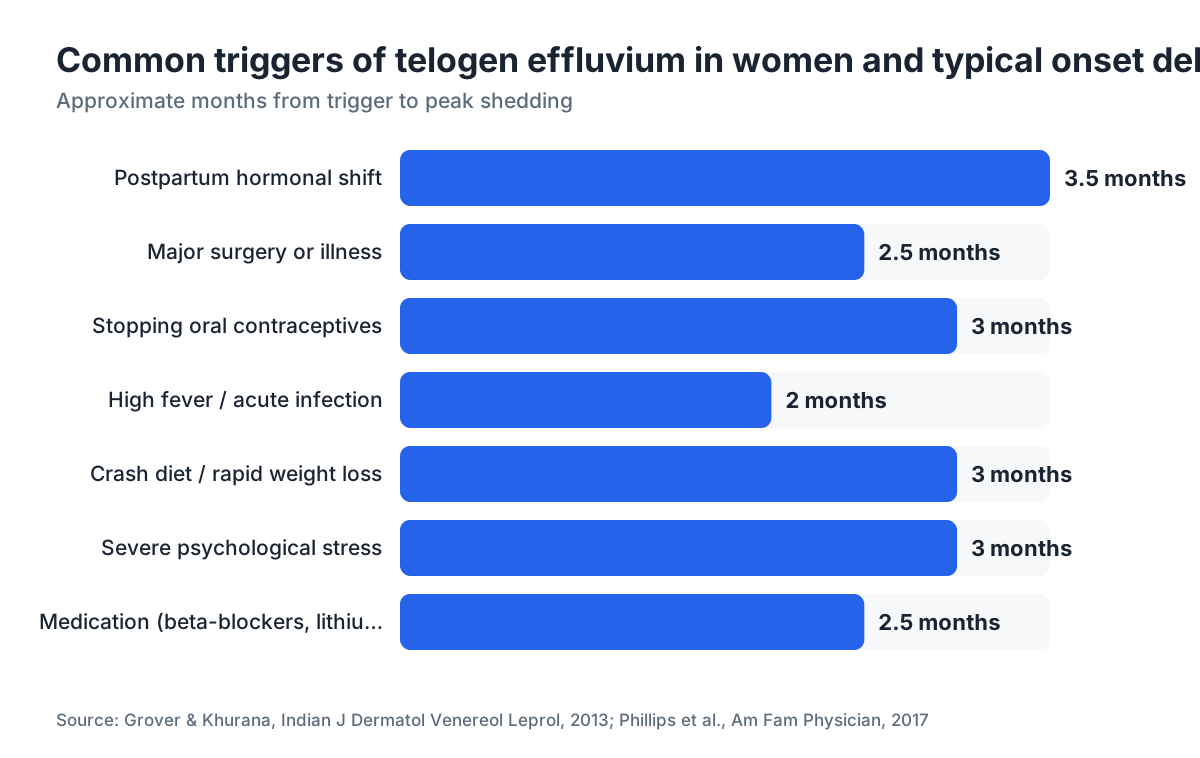
The trigger is almost always something that happened 2-3 months before the shedding starts. That delay trips people up constantly. You're standing in the shower watching hair come out in clumps in April, and the cause was a bout of the flu in February.
The most documented triggers in women:
Postpartum shedding. During pregnancy, high estrogen prolongs anagen, so less hair falls than normal. After delivery, estrogen drops sharply. The hairs held in extended anagen all enter telogen together, and the shed hits around 3-4 months postpartum [2]. This is the single most common form of acute telogen effluvium in women. It almost always resolves without treatment by 6-12 months.
Iron deficiency. Ferritin (the body's stored iron) below roughly 30 ng/mL has been linked to diffuse hair shedding in multiple studies, though the exact threshold is debated [3]. Serum iron alone is not enough to test. You need ferritin specifically. This is fixable, but fixing it takes time. Hair responds slowly to repletion, usually 4-6 months after ferritin normalizes.
Thyroid dysfunction. Both hypothyroidism and hyperthyroidism can cause diffuse shedding. The American Thyroid Association lists hair loss as a recognized symptom of thyroid disease, and treating the underlying thyroid condition usually reverses the effluvium [4].
Crash dieting and caloric restriction. Severe caloric restriction below roughly 1,000 calories a day, or rapid weight loss of more than 15-20 lbs in a short period, starves follicles of the protein and micronutrients that sustain anagen [5]. Bariatric surgery is a potent trigger because the caloric deficit is abrupt and deep.
Psychological stress. Major life stressors, grief, prolonged anxiety, and severe illness all activate the hypothalamic-pituitary-adrenal axis. Elevated cortisol has a documented inhibitory effect on hair follicle cycling in animal and in-vitro studies, though the direct human data is harder to isolate [1].
Medications and hormonal changes. Stopping oral contraceptives can trigger a withdrawal shed by the same mechanism as postpartum shedding. Beta-blockers, lithium, retinoids, and anticoagulants are documented causes [6]. Starting or stopping hormone therapy around menopause is another common trigger in midlife women.
Surgery and high fever. Any physical trauma big enough to trigger a systemic stress response qualifies. General anesthesia and high fevers above 103°F (39.4°C) are classic acute triggers.
How does telogen effluvium actually feel and what does the shedding look like?
The main symptom is a sudden, noticeable jump in hair fall across the whole scalp. Not in patches. more than at the temples. Everywhere, more or less evenly.
Women usually notice it first in the shower drain, on pillowcases, or in the brush. Normal daily shedding is roughly 50-100 hairs [1]. In active telogen effluvium, that can climb past 300 a day. Some women describe a brief period of scalp tenderness (called trichodynia) just before or during heavy shedding, though this is less consistent.
Scalp density visibly decreases, but the pattern stays diffuse rather than patterned. You won't typically see a well-defined hairline recession or a widening part limited to the crown, which points more toward female-pattern hair loss (androgenetic alopecia). The part may look slightly wider all over, and the ponytail may feel thinner.
On exam, a positive "pull test" is classic. You grasp a small bunch of 40-60 hairs between thumb and forefinger and pull gently. Extracting more than 10% of the grasped hairs (so more than 4-6 hairs from a 40-hair grab) suggests active shedding, though the test has variable reliability between examiners [7].
Hair shed in telogen effluvium has a small white bulb at the root end. That bulb is the telogen root. If you're losing hairs with a dark, tapered anagen root, that points toward a different process, like traction alopecia or an inflammatory condition.
How long does telogen effluvium last in women?
Acute telogen effluvium, meaning a single identifiable trigger that then resolves, usually runs its course in 3-6 months. Shedding peaks, then tapers as new anagen hairs grow in. Full visible recovery, where the hair looks like it did before, often takes 6-12 months, because new hairs start short and need time to reach their old length.
Chronic telogen effluvium is defined as diffuse shedding lasting more than 6 months. It affects mainly women and tends to show up in middle age. The cause is often multifactorial or never identified despite a full workup. Some cases fluctuate for years. Chronic telogen effluvium rarely causes real permanent thinning, because the follicles themselves are not miniaturizing, but the constant shedding wears on people.
If shedding has not slowed by 6 months, or if you notice progressive thinning that outpaces the shedding, that warrants a closer look. Telogen effluvium and androgenetic alopecia can coexist, and a heavy shed can uncover an underlying female-pattern hair loss that was previously hard to see.
How is telogen effluvium diagnosed, and what blood tests do you need?
Telogen effluvium is mostly a clinical diagnosis. A dermatologist or trichologist takes a careful history to find the trigger, examines the scalp, and may do a pull test or dermoscopy. Lab work rules out correctable systemic causes. It does not confirm the diagnosis by itself.
A standard workup for diffuse hair shedding in women usually includes:
| Test | Why it matters |
|---|---|
| Ferritin (more than serum iron) | Low ferritin linked to diffuse shedding even when hemoglobin is normal |
| TSH (thyroid-stimulating hormone) | Rules out hypo- and hyperthyroidism |
| CBC (complete blood count) | Screens for anemia |
| Zinc | Deficiency associated with hair loss |
| Vitamin D (25-OH) | Low levels correlated with diffuse shedding in some studies |
| DHEA-S and free testosterone | Rules out androgen excess in women with additional signs |
| ANA (antinuclear antibody) | Screens for lupus if clinical picture suggests it |
A scalp biopsy is not usually needed for straightforward cases, but it helps when the picture is ambiguous, especially to tell telogen effluvium apart from early androgenetic alopecia or from primary scalp disorders. Trichoscopy (dermoscopy of the scalp) can show an increased share of short regrowing hairs, which is a reassuring sign that recovery is underway [7].
If you want a quick first look before seeing a provider, the free AI analysis at MyHairline can map your shedding pattern and help you describe it to a dermatologist more precisely.
Can telogen effluvium become permanent hair loss?
In most cases, no. The follicle in telogen effluvium is intact and able to cycle back into anagen. That is the core difference between telogen effluvium and scarring alopecias, where follicles are destroyed and replaced by fibrous tissue.
There are two caveats.
First, if the trigger is never resolved and the effluvium turns chronic, prolonged telogen cycling may subtly affect follicle health over time. This is not well-characterized in the literature, so the honest answer is nobody has strong data on it.
Second, female-pattern hair loss involves follicle miniaturization driven by androgens, and it can look like telogen effluvium on the surface. Many women have both at once. The telogen effluvium component recovers. The androgenetic component will not reverse on its own. Blaming everything on a stressor means you can miss the androgenetic process and lose a window for treatment.
Persistent thinning at the crown and midpart that does not improve after the acute shedding settles should prompt an evaluation for what causes hair loss in the androgenetic category.
What treatments actually help telogen effluvium in women?
The honest answer: the most effective treatment is fixing the trigger. Everything else is supportive.
Correct the identifiable deficiency. Iron supplementation when ferritin is confirmed low is the clearest evidence-backed step. A 2006 study in the Journal of the American Academy of Dermatology by Trost and colleagues found an association between low ferritin and non-scarring hair loss in premenopausal women, which supports repletion as a reasonable move [3]. Thyroid treatment normalizes hair cycling. Adequate protein intake (at least 1.2 g/kg of body weight per day) supports anagen maintenance.
Minoxidil. Topical minoxidil (2% or 5%) is FDA-approved for female-pattern hair loss, not specifically for telogen effluvium, but it does prolong anagen and can shorten the visible shed. The AAD recognizes minoxidil as the primary topical treatment for diffuse hair loss in women [8]. It does not fix the underlying trigger, but it can make the shedding phase feel less severe. Some women use it short-term during recovery and then taper off. If you go that route, know that stopping minoxidil can itself trigger a brief shed. See our page on minoxidil side effects for the full picture.
Oral minoxidil at low doses (0.25-1.25 mg/day) is increasingly used off-label and appears well-tolerated in women, with growing evidence from trials in 2020-2022 [9]. The oral minoxidil guide covers dosing and what to expect.
Nutritional supplements. Hair loss supplements are a crowded, mostly low-evidence space. Biotin is the most marketed, but biotin deficiency is genuinely rare, and supplementing people who are not deficient has not been shown to improve hair loss in good clinical trials. Zinc, vitamin D, and iron are worth supplementing if bloodwork confirms deficiency. Nutrafol and similar products have small industry-funded trials showing modest benefit, but the data is not strong enough to be confident.
What does not work. No treatment reverses the trigger phase or forces follicles back into anagen at any meaningful population level. Keratin treatments, scalp massages, and specialized shampoos may improve how hair looks or how the scalp feels, but they do not change the biology of the effluvium. A hair transplant is not appropriate for telogen effluvium, because the follicles are not permanently lost.
Finasteride. Finasteride is FDA-approved for male-pattern hair loss, not for female-pattern hair loss, and certainly not for telogen effluvium [10]. It is sometimes used off-label in postmenopausal women with androgenetic alopecia. It is contraindicated in women who are or may become pregnant, because of the risk of fetal harm. It is not a telogen effluvium treatment. If you're curious about where finasteride fits for women, that article covers the evidence and safety in detail.
Is postpartum hair loss the same thing as telogen effluvium?
Yes. Postpartum hair loss is telogen effluvium. The mechanism is the same. Only the trigger is specific.
During pregnancy, high circulating estrogen extends anagen. A larger share of hairs than normal stays on the scalp. After delivery, estrogen falls abruptly, and those hairs enter telogen together. The shedding wave hits about 3-4 months after birth, which is why new mothers get blindsided. They're focused on an infant, then suddenly losing alarming amounts of hair.
The reassuring part: postpartum telogen effluvium is one of the most predictably self-limiting forms. By 12 months postpartum, the great majority of women recover to their pre-pregnancy density [2]. Treatment is rarely needed beyond keeping iron and nutritional status adequate, which matters postpartum anyway.
It gets more complicated if the woman had underlying female-pattern hair loss before pregnancy, which the estrogen surge may have been suppressing. In that case, the post-delivery shed can feel more severe and recovery can be incomplete.
How is telogen effluvium different from female-pattern hair loss?
These two get confused constantly, and they can coexist, which makes the distinction harder but more important.
| Feature | Telogen effluvium | Female-pattern hair loss |
|---|---|---|
| Pattern | Diffuse, all-over | Crown and midpart widening |
| Shedding | Acute, heavy, episodic | Gradual, often less dramatic |
| Follicle fate | Intact, returns to anagen | Progressive miniaturization |
| Pull test | Often positive | Often negative in stable phase |
| Course | Usually reversible | Progressive without treatment |
| Main treatment | Fix the trigger | Minoxidil, antiandrogens |
Female-pattern hair loss involves follicles that are sensitive to dihydrotestosterone (DHT), which shrinks them over years. The hairs they make get finer and shorter. If you want the mechanism, the DHT blocker article explains it. Telogen effluvium does not involve follicle miniaturization. The follicles are structurally fine, just temporarily cycling in the wrong phase.
The clinical overlap is real. A biopsy in telogen effluvium shows an increased ratio of telogen to anagen follicles with normal-diameter hairs. A biopsy in female-pattern hair loss shows a spectrum of follicle sizes, many of them miniaturized. When both are present, you see both findings.
What can women do right now to help their hair recover?
Get bloodwork first. Before spending money on supplements or treatments, know whether you're iron-deficient, hypothyroid, or zinc-deficient. Treating a deficiency that isn't there does nothing for your hair and drains your wallet.
If bloodwork comes back normal and you've had an obvious trigger (surgery, illness, major stressor), the honest recommendation is patience. The hair will very likely come back. Making peace with a 6-12 month timeline is the most accurate prognosis for most women with acute telogen effluvium.
Keep protein intake adequate. Hair is almost entirely keratin protein, and dropping below roughly 50 grams of dietary protein a day stresses follicles. Crash diets during recovery work against you.
Avoid mechanical and heat trauma while you recover. Tight hairstyles, aggressive brushing on wet hair, and high-heat styling do not cause telogen effluvium, but they break already-vulnerable new growth, which is discouraging to watch.
If you want a structured look at your scalp and shedding pattern without a full dermatology appointment, the free AI scan at MyHairline maps your hair density and can show you where new growth is coming in, which is often the first visible sign of recovery.
If shedding has not improved in 6 months, or if you notice patterned thinning (widening part, visible crown thinning), see a board-certified dermatologist. The American Academy of Dermatology's find-a-dermatologist tool is a reliable way to find someone with hair loss experience [8].
Does diet cause or worsen telogen effluvium in women?
Diet is one of the most directly controllable risk factors for telogen effluvium in women, and people underestimate it constantly.
Crash dieting is a well-established trigger. The follicle is a metabolically active structure. When total caloric intake drops sharply, the body treats hair growth as non-essential and pulls resources away from follicles. This is especially true for protein. A 2002 review in Clinical and Experimental Dermatology by Rushton confirmed that protein deficiency (including kwashiorkor) produces diffuse effluvium, and that adequate dietary protein is required for normal anagen maintenance [5].
Iron is the other big one. Vegetarian and vegan diets, heavy menstrual periods, and gastrointestinal conditions that impair absorption (like celiac disease) all raise iron deficiency risk. Ferritin below 30 ng/mL is consistently associated with hair shedding in multiple observational studies, even when the woman isn't clinically anemic [3].
Zinc deficiency produces diffuse hair loss, seen most often in women on severely restricted diets or with malabsorptive conditions. Vitamin D insufficiency has been associated with alopecia areata and non-scarring hair loss in some studies, though the causal direction is not settled.
The practical takeaway: if you are dieting, aim for at least 1.2-1.6 grams of protein per kilogram of body weight daily, keep ferritin checked if you have heavy periods, and do not stay below 1,200 calories a day for long stretches if you want to protect your hair. Rapid weight loss of more than 1-1.5 lbs a week sharply raises telogen effluvium risk.
When should women see a doctor about hair shedding?
Not every shed needs a doctor visit. Some signs do warrant prompt attention.
See a dermatologist if: shedding is severe and has lasted more than 6 months; you notice patterned thinning (crown, midpart) on top of diffuse shedding; you have other symptoms of systemic illness (fatigue, cold intolerance, weight changes, joint pain); a pull test is still strongly positive after 4-5 months; or hair loss comes with eyebrow or eyelash loss (which raises concern for alopecia areata or thyroid disease).
Get prompt bloodwork if you've had sudden severe shedding after extreme dieting, bariatric surgery, or prolonged illness, since these are situations where nutritional deficiencies can be profound and quickly correctable.
The AAD recommends evaluation by a board-certified dermatologist for any hair loss that is causing distress or that has no obvious, resolving trigger [8]. A good clinician can tell telogen effluvium apart from other causes, run the right tests, and spare you the anxiety of watching hair fall with no plan.
You do not need to wait 6 months if the shedding is severe. Seeing someone at the 2-3 month mark, when shedding peaks, gives a dermatologist the best snapshot of the active process.
Sources
- Grover C, Khurana A. Telogen effluvium. Indian J Dermatol Venereol Leprol. 2013
- Mirallas O, Grimalt R. Postpartum Effluvium. Skin Appendage Disord. 2016
- Trost LB, Bergfeld WF, Calogeras E. The diagnosis and treatment of iron deficiency and its potential relationship to hair loss. J Am Acad Dermatol. 2006
- American Thyroid Association. Hypothyroidism brochure
- Rushton DH. Nutritional factors and hair loss. Clin Exp Dermatol. 2002
- Phillips TG, Slomiany WP, Allison R. Hair Loss: Common Causes and Treatment. Am Fam Physician. 2017
- Mubki T, Rudnicka L, Olszewska M, Shapiro J. Evaluation and diagnosis of the hair loss patient: part I. History and clinical examination. J Am Acad Dermatol. 2014
- American Academy of Dermatology. Hair loss: diagnosis and treatment
- Vañó-Galván S et al. Oral minoxidil treatment for hair loss: A review of efficacy and safety. J Am Acad Dermatol. 2021
- U.S. Food and Drug Administration. Drugs
- Headington JT. Telogen effluvium. New concepts and review. Arch Dermatol. 1993
- Sinclair R. Chronic telogen effluvium: a study of 5 patients over 7 years. J Am Acad Dermatol. 2005