TL;DR: Topical finasteride is a liquid or spray you apply to the scalp to block DHT right where hair loss happens. Trials show it cuts scalp DHT by roughly 50% and grows hair about as well as 1 mg oral finasteride, but with much less blood DHT suppression. That's why men who fear sexual side effects choose it. It's not FDA-approved on its own; most formulas are compounded.
What is topical finasteride and how does it work?
Topical finasteride is the same active molecule found in Propecia, put onto the scalp as a solution, gel, or spray instead of swallowed as a pill. The idea is simple. Get finasteride to the dermal papilla cells in your follicles, where it needs to act, and keep as little of it as possible in your bloodstream.
Finasteride blocks Type II 5-alpha reductase, the enzyme that converts testosterone into dihydrotestosterone (DHT) [1]. DHT is the androgen that shrinks hair follicles in men and women with androgenetic alopecia. Oral finasteride at 1 mg blocks roughly 60 to 70 percent of serum DHT [1]. Topical versions try to do the same thing at the scalp without those systemic levels.
The pharmacology holds up. Skin acts as a partial barrier. A well-built topical formula, especially one using a vehicle like ethanol or propylene glycol, can push high drug concentrations into the follicle while limiting how much crosses into the blood. The tricky part for formulation chemists is getting the molecule deep enough into the follicle, but not so efficiently that it circulates at meaningful levels.
For a fuller look at how finasteride works and its oral track record, that article covers the mechanism, trials, and side effect profile in detail.
Does topical finasteride actually reduce hair loss?
Yes. The evidence is genuinely positive, though the trial base is smaller than what exists for oral finasteride after three decades of use.
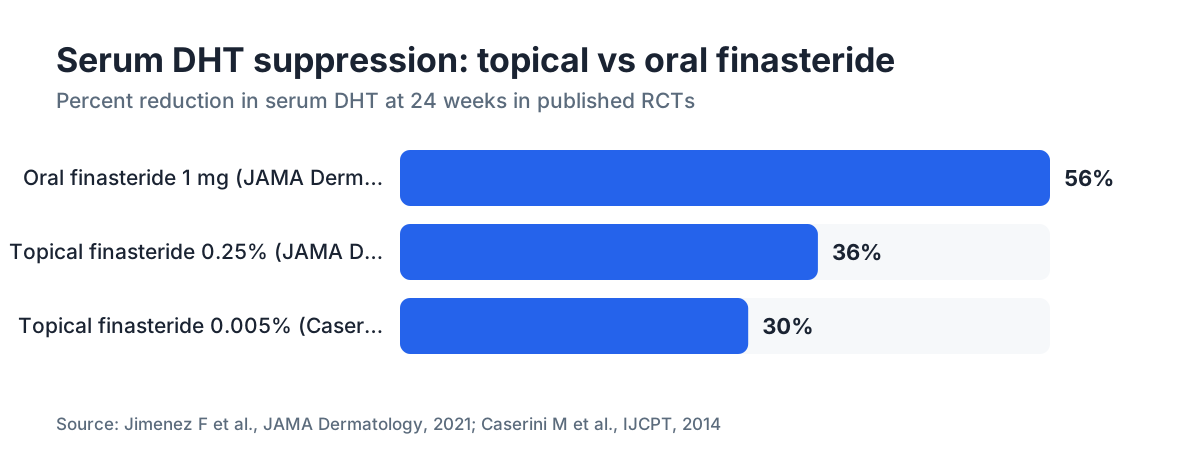
The most-cited head-to-head trial is Caserini et al. (2014), in the International Journal of Clinical Pharmacology and Therapeutics. Forty-five men with androgenetic alopecia applied a 0.005% topical finasteride solution once daily for 24 weeks. Vertex hair count improved by roughly 17% from baseline [2]. Scalp DHT dropped by about 50%, while serum DHT fell only about 30%, compared to roughly 70% suppression with 1 mg oral finasteride [2]. The authors concluded that topical delivery achieved "comparable efficacy to oral finasteride with a significantly lower systemic DHT suppression."
A 2021 randomized controlled trial in JAMA Dermatology compared a 0.25% topical finasteride solution applied once daily against 1 mg oral finasteride in 302 men over 24 weeks. Both groups saw similar improvements in target area hair count, but the topical group had about 20% less serum DHT suppression than the oral group [3]. That gap in systemic exposure is exactly what men worried about side effects are hoping for.
Know what the studies don't show, too. Most trials run 24 weeks. Data past two years is sparse. Nobody has published a properly powered trial confirming that lower systemic DHT actually translates into fewer cases of sexual dysfunction, though the biology points that way. Here's the honest position. Topical finasteride almost certainly works for hair retention. Whether it's truly safer in real-world use is plausible but not proven.
For context on the DHT mechanism and why suppressing it keeps follicles alive, that piece explains the androgen pathway in plain language.
How does topical finasteride compare to oral finasteride?
| Feature | Oral finasteride 1 mg | Topical finasteride (0.1 to 0.25%) |
|---|---|---|
| FDA approval for hair loss | Yes (Propecia) [1] | No (compounded only in US) |
| Serum DHT suppression | ~60 to 70% [1] | ~15 to 35% [2][3] |
| Scalp DHT suppression | Not directly measured | ~50% [2] |
| Hair count improvement (24 weeks) | Comparable | Comparable [3] |
| Sexual side effect risk | Reported in ~3.8% in trials [4] | Hypothesized lower; not yet confirmed in large trials |
| Cost (monthly, US) | $10, $35 generic [5] | $40, $90 compounded [5] |
| Availability | Prescription, widely available | Compounded pharmacy, prescription required |
| Evidence base | 30+ years, multiple large RCTs | ~10 years, smaller trials |
The practical comparison comes down to this. Oral finasteride has more data behind it and costs less. Topical finasteride has a coherent biological case for a better systemic safety profile and appears to grow hair about as well, but you pay more for a product with a thinner evidence trail and no FDA approval. Tried oral and had side effects? Topical is a reasonable next step to raise with a dermatologist. Starting fresh with no particular anxiety about systemic exposure? Oral is defensible too.
Men who want an overview of finasteride and minoxidil used together, oral or topical, will find that article useful for understanding how the two drugs complement each other.
What is a topical finasteride and minoxidil combination, and does it work better?
Combining finasteride with minoxidil is one of the most studied strategies in androgenetic alopecia treatment. Oral versions of both are routinely prescribed together, and the compounding world has predictably produced topical finasteride and minoxidil sprays and solutions.
The rationale is strong. Finasteride (or topical finasteride) attacks the hormonal cause of follicle shrinkage by blocking DHT. Minoxidil works through a completely different pathway, boosting follicle blood supply and stretching out the anagen (growth) phase. Using both hits two separate biological problems at once.
A 2021 study in Dermatology and Therapy compared a topical combination of 0.1% finasteride plus 5% minoxidil against each drug alone in men with androgenetic alopecia over 24 weeks. The combination group showed statistically greater improvements in hair count and hair diameter than either monotherapy [6]. It also showed lower systemic DHT suppression than oral finasteride alone.
Minoxidil topical solution on its own (the familiar 5% liquid or foam) has FDA-approval backing for men's hair loss and has been over-the-counter since 1996 [7]. Combine that proven base with topical finasteride in a single compounded product and you get what many physicians now treat as their preferred first-line prescription for moderate androgenetic alopecia.
The most common commercial formats are a minoxidil finasteride solution applied twice daily, or a combined spray applied once daily. Concentrations vary by pharmacy. Finasteride usually runs 0.1% to 0.25%, and minoxidil runs 2.5% to 6%. Ask your prescriber or pharmacist exactly what you're getting.
Side effects from the minoxidil component are still possible no matter the format. Scalp irritation, unwanted facial hair in women, and initial shedding (telogen effluvium) are the ones to know. See the minoxidil side effects article for what to watch for and what clears up on its own.
Is topical finasteride FDA-approved?
No. As of 2025, no topical finasteride product has FDA approval for any indication. The FDA has approved oral finasteride at 1 mg (Propecia) for male-pattern hair loss and at 5 mg (Proscar) for benign prostatic hyperplasia [1]. There's no approved topical counterpart.
What that means in practice: topical finasteride in the United States is available only through compounding pharmacies working under Section 503A or 503B of the Federal Food, Drug, and Cosmetic Act [8]. Those pharmacies can legally prepare patient-specific formulas when a licensed prescriber writes a prescription for a specific patient. They cannot mass-produce it or sell it over the counter.
The FDA has flagged compounded finasteride products for quality-control scrutiny in the past. If you go the compounding route, check that your pharmacy holds PCAB (Pharmacy Compounding Accreditation Board) accreditation, which signals it follows USP standards for sterile and non-sterile compounding.
Outside the US, the picture differs. In some countries, topical finasteride is approved or sold as a named product. In Spain, a 0.005% topical solution called Kinreste got regulatory approval in 2019. That's the product used in several published trials, which is why you'll see that concentration mentioned in the research.
What are the side effects of topical finasteride?
The most important thing to grasp is that topical finasteride is not side-effect-free. It still absorbs into the blood to some degree, and for some men that's enough to cause the same effects as the pill.
The main reported side effects fall into two categories.
Local (scalp) effects are mild and common: itching, dryness, and occasional flaking. These usually settle within two to four weeks as the scalp adjusts. Switching vehicles (say, from an ethanol base to a propylene glycol base) sometimes helps.
Systemic effects are the ones people actually worry about: lower libido, erectile dysfunction, and reduced ejaculate volume. These are well-documented with oral finasteride at a rate of around 3.8% in the main Phase III trials [4]. For topical finasteride, the published data suggest a lower rate, but most studies are too small and too short to give a reliable number. The JAMA Dermatology trial found fewer sexual dysfunction reports in the topical group than the oral group [3], which is encouraging, but that wasn't the primary endpoint and wasn't powered to detect the difference reliably.
There's also the less-discussed issue of post-finasteride syndrome, a contested condition where some men report lasting sexual, cognitive, and psychological symptoms after stopping the drug. The evidence here is genuinely hard to interpret. The FDA updated finasteride labeling in 2012 to include persistent sexual dysfunction as a risk [1], and that applies to any formulation, including topical ones that absorb systemically.
Women of childbearing potential should not handle crushed or broken finasteride tablets, and the same caution applies to topical finasteride. Finasteride is FDA Pregnancy Category X because it causes abnormalities in male fetal genitalia in animal studies [1]. Topical finasteride at lower concentrations is sometimes prescribed off-label for female pattern hair loss, but only after a careful discussion of pregnancy status and contraception.
Trying to figure out why your hair is falling out before you commit to any treatment? What causes hair loss is a useful starting point.
How do you use topical finasteride correctly?
Application technique matters more than most people realize. Getting the drug into the follicle needs skin contact, more than surface coverage.
For most compounded solutions and sprays, the protocol runs like this. Apply to a dry scalp, not wet hair. Part your hair to expose scalp in the thinning areas. Use the dropper or spray nozzle to apply directly to the skin. Massage gently with your fingertips for 30 to 60 seconds. Wash your hands thoroughly afterward, every single time, so you don't transfer the drug to mucous membranes or a pregnant partner.
Timing. Most once-daily formulas go on in the evening, so the drug gets maximum contact time before your morning wash. If the formula contains minoxidil, let it dry completely (usually 15 to 20 minutes) before lying down or touching anything, because minoxidil transfers to pillowcases and then to facial skin. That's how some users end up with unwanted beard or cheek growth.
Frequency depends on the compounded formula. A 0.25% topical finasteride solution might be prescribed once daily, while a lower 0.005% concentration (like Kinreste) was used twice daily in trials. Follow your prescriber's instructions, not generic advice from forums.
The results timeline mirrors oral finasteride closely. You won't see changes before three to four months. Meaningful improvement in hair count usually shows up around six months. Full assessment comes at 12 months. Stop the medication and, as with oral finasteride, the effect reverses within 12 months for most people.
Who is a good candidate for topical finasteride?
Men with androgenetic alopecia, especially those in Norwood stages 2 through 5, who want finasteride's DHT-blocking effect but have specific worries about systemic side effects, are the most logical candidates. That includes men who tried oral finasteride and hit sexual side effects, men who are anxious about that risk before starting, and men who prefer the psychological comfort of a localized treatment.
Women are a more complicated case. Female pattern hair loss does involve DHT in many cases, and small studies and clinical practice show topical finasteride can help. But pregnancy risk makes this a firm prescription-only, specialist-supervised decision. Women who are pregnant, trying to conceive, or not using reliable contraception should not use it.
Poor candidates: anyone with significant scalp barrier damage (severe psoriasis, active eczema, or open wounds), because a broken barrier sharply increases systemic absorption. Also anyone with a history of liver disease, since finasteride is metabolized in the liver.
If your hair loss pattern points to something other than androgenetics, finasteride (topical or oral) probably won't help. Telogen effluvium from stress, nutritional deficiency, or thyroid problems needs a different approach entirely. Getting the diagnosis right before picking a treatment saves money and months of time.
Tools like the free AI hair loss analysis at MyHairline can help you map your pattern against Norwood stages and get a clearer picture before you book a dermatology appointment.
How much does topical finasteride cost and where can you get it?
Cost is one of topical finasteride's real disadvantages next to the oral generic.
Generic oral finasteride 1 mg runs roughly $10 to $35 per month at most US pharmacies with a GoodRx coupon or through a telehealth service [5]. Compounded topical finasteride usually costs $40 to $90 per month depending on concentration, volume, and whether minoxidil is in the mix. Some telehealth hair loss platforms charge a flat monthly fee that bundles the consultation and the compounded formula.
Where to get it: you need a prescription from a licensed US prescriber, whether that's a dermatologist, a primary care physician, or a telehealth provider. The prescription then goes to a compounding pharmacy. Some telehealth platforms handle the whole chain internally and ship the product to your door.
Things to verify before you commit to a compounding pharmacy: PCAB accreditation, a certificate of analysis (COA) for each batch confirming the stated drug concentration, and a clear policy on how they handle quality failures. Compounded products aren't held to the same manufacturing standards as FDA-approved drugs, which is a genuine limitation.
If cost is a real factor, oral generic finasteride plus over-the-counter 5% minoxidil is the most evidence-backed affordable combination out there. The compounded topical combination is more convenient (one product instead of two) and hypothetically safer systemically, but you pay for both of those.
How does topical finasteride compare to a hair transplant?
These aren't really alternatives in the same category. They solve different parts of the same problem.
Topical finasteride (or any finasteride formulation) is a maintenance drug. It slows or stops further shrinkage. It does not restore follicles that are already gone. Lost most of the hair in a zone? Finasteride alone won't bring it back. What it does is protect the hair you still have, which is exactly why dermatologists prescribe it before and after hair transplants.
A hair transplant moves DHT-resistant follicles from the back and sides of the scalp to areas of loss. Those transplanted hairs generally keep growing because they keep their genetic resistance to DHT. But the native hairs around them are still vulnerable. Without a DHT blocker like finasteride, you can get a good transplant result at 35 and still look noticeably thin at 45 because the surrounding native hair kept shrinking.
The practical advice most transplant surgeons give: stabilize loss with medication first, transplant once the pattern has matured enough to plan for, then keep taking the medication afterward to protect the investment. Topical finasteride fits neatly into that framework for patients who want the DHT suppression without the systemic exposure.
For men earlier on, with a receding hairline but not yet major density loss, topical finasteride started early gives the best chance of holding the line.
What does the latest research say about topical finasteride?
The research base is growing but stays thin next to oral finasteride's decades of large RCTs.
The most important recent data point is the 2021 JAMA Dermatology RCT. In 302 men randomized to either 0.25% topical finasteride once daily or 1 mg oral finasteride once daily over 24 weeks, the two groups did about the same on hair count. Serum DHT dropped 35.7% in the topical group versus 56.2% in the oral group, a statistically significant difference [3]. Sexual adverse events were numerically lower in the topical group, though the study wasn't powered to confirm that.
A 2022 systematic review in the Journal of the American Academy of Dermatology looked at seven RCTs of topical finasteride and concluded that the formulation "shows comparable hair growth efficacy to oral finasteride with a more favorable systemic safety profile" while noting that "larger and longer-term studies are needed to confirm these findings" [9].
Research on women is earlier-stage. A handful of small trials using concentrations between 0.005% and 0.1% in women with female pattern hair loss showed positive hair density changes, but none are large enough to draw firm conclusions.
The direction of evidence is consistently positive. The gap is confidence, not signal. If you want strong long-term data before starting, the honest answer is that topical finasteride probably won't have it for another five to seven years. Oral finasteride has it now.
Sources
- Caserini M et al., International Journal of Clinical Pharmacology and Therapeutics, 2014
- Jimenez F et al., JAMA Dermatology, 2021
- Kaufman KD et al., Journal of the American Academy of Dermatology, 1998 (pivotal Propecia trial)
- GoodRx, finasteride price estimates
- Rafi AW & Katz RM, Dermatology and Therapy, 2021
- FDA, Compounding Laws and Policies (Section 503A and 503B)
- Piraccini BM et al., Journal of the American Academy of Dermatology, 2022 (systematic review)
- American Academy of Dermatology, hair loss information