TL;DR: Topical finasteride does work for androgenetic alopecia. Clinical trials show it reduces scalp DHT by roughly 79-90% and improves hair counts about as well as oral finasteride 1mg, while cutting blood DHT by only 10-30% versus 60-70% with the pill. That lower systemic exposure is why many men now choose it over the oral version.
What is topical finasteride and how does it work?
Topical finasteride is a solution or gel you rub directly onto your scalp, usually once a day. It contains the same active molecule as the oral 1mg tablet used for male pattern baldness, but it's formulated to stay local rather than flood your bloodstream.
Finasteride blocks an enzyme called 5-alpha reductase, which converts testosterone into dihydrotestosterone (DHT). DHT is the hormone that shrinks hair follicles in people who are genetically susceptible. Less DHT at the follicle means the miniaturization process slows or stops, and in many cases reverses enough for thicker, longer hairs to regrow. You can read more about exactly how this works in our article on DHT blockers.
The topical version targets that same enzyme inside the scalp skin itself. Because the drug doesn't need to pass through your gut and liver to reach the follicle, researchers guessed you could use a smaller dose and get equivalent follicle-level results with less systemic absorption. That guess has now been tested in several randomized controlled trials. The short answer: it holds up.
What does the clinical evidence actually show?
The best evidence comes from a 2021 randomized controlled trial published in JAMA Dermatology by Jimenez-Cauhe et al. [1]. The trial compared topical finasteride 0.25% twice daily against oral finasteride 1mg once daily in 103 men with androgenetic alopecia over 24 weeks. Both groups saw similar increases in total hair count, with no statistically significant difference between them. The study concluded that "topical finasteride was non-inferior to oral finasteride for hair regrowth."
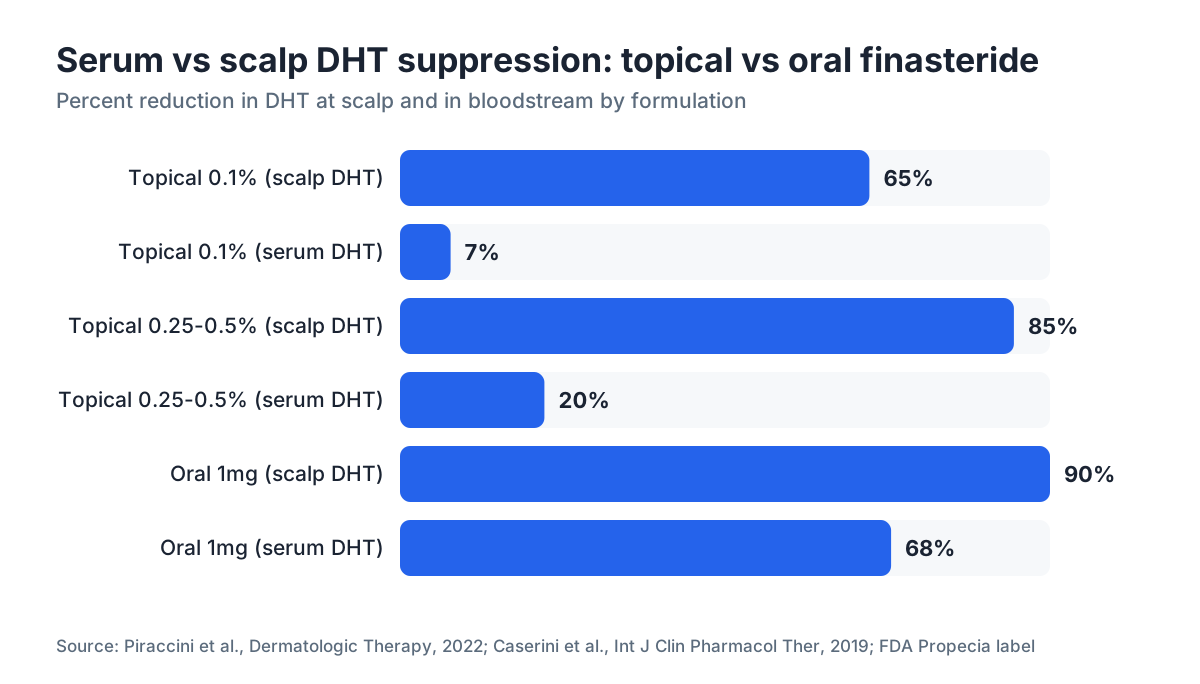
A 2019 study by Caserini et al. published in the International Journal of Clinical Pharmacology and Therapeutics tested a patented nanoemulsion formulation (0.5mg topical once daily) against 1mg oral finasteride in 49 men [2]. After 12 months, hair count improvements were comparable between groups. The topical group showed a mean reduction in serum DHT of about 10-30%, versus 60-70% for the oral group. That gap is the point of the whole approach.
A 2022 systematic review and meta-analysis in Dermatologic Therapy pooled data from multiple trials and found topical finasteride consistently lowered scalp DHT by 79-90% while keeping systemic DHT suppression much lower than the oral pill [3]. Men want the hair benefit without as much hormonal disruption in the rest of the body, and that is exactly what the numbers describe.
One honest caveat. Most trials run 6-12 months and use small sample sizes. Long-term data comparing topical to oral finasteride over 3-5 years simply doesn't exist yet. The oral pill has a 30-year track record. Topical doesn't.
How much does topical finasteride reduce DHT compared to the oral pill?
This is the number that matters most for anyone choosing between the two. Oral finasteride 1mg suppresses serum (blood) DHT by roughly 65-70% on average, a figure confirmed in the original FDA approval studies [4]. That systemic suppression drives most of the sexual and mood side effects some men report.
Topical finasteride, across multiple formulations, suppresses serum DHT by roughly 10-30% depending on the dose and vehicle used [2][3]. Scalp DHT suppression sits at 79-90%, which is where you actually need it.
Put plainly: topical gets you nearly the same local effect with a fraction of the whole-body hormonal impact. Whether that translates to fewer side effects in practice is the next logical question, and the data there is early but encouraging.
Are the side effects lower with topical finasteride?
Lower systemic DHT suppression does appear to mean fewer systemic side effects, though the evidence base is still limited and you should not treat "fewer" as "none."
In the Jimenez-Cauhe 2021 trial, sexual side effects (decreased libido, erectile difficulty) occurred in about 3% of the topical group versus 12% in the oral group, though the study was not powered to detect side effect differences statistically [1]. Other small trials report similar patterns.
The most common side effects actually reported with topical finasteride are local: mild scalp irritation, itching, or redness at the application site, affecting roughly 5-10% of users depending on the formulation [3]. These are usually mild and pass on their own.
Persistent sexual side effects after stopping finasteride, sometimes called post-finasteride syndrome, have been reported with the oral form. Whether topical carries the same risk is unknown, because no long-term pharmacovigilance data exists. The FDA label for oral finasteride notes that sexual dysfunction may persist after discontinuation [4]. No equivalent label exists for topical formulations in the U.S., because the topical version has not been approved by the FDA as a standalone drug product.
If you're already weighing finasteride against other options, understanding the side effect profile of both forms is worth doing before you start either one.
Is topical finasteride FDA-approved?
No. As of mid-2025, the FDA has not approved a topical finasteride product. The oral 1mg tablet (Propecia, plus generics) is FDA-approved for male pattern hair loss. The 5mg tablet (Proscar) is FDA-approved for enlarged prostate [4].
Topical finasteride is available in the United States through compounding pharmacies. Compounded drugs are made by licensed pharmacies under physician prescription and are regulated by state pharmacy boards and, to a degree, the FDA under sections 503A and 503B of the Food, Drug, and Cosmetic Act [5]. They are not individually FDA-approved for safety and efficacy.
Telehealth platforms prescribe compounded topical finasteride legally, but the compounded product itself hasn't gone through the same approval process as the oral pill. That's not automatically a reason to avoid it. It's a real distinction you should understand before you spend money.
In Europe, some topical finasteride formulations have been available, and studies on those products have driven much of the peer-reviewed data. The versions you can get in the U.S. through compounders may or may not match the exact vehicles used in those trials.
What concentration and dose is most effective?
There's no single consensus dose, because topical finasteride hasn't completed the standard FDA drug development pathway that would normally settle this. The trials still give a reasonable roadmap.
The most-studied concentrations range from 0.1% to 1%, applied once or twice daily. Here's what the data looks like:
| Formulation | Dose | Scalp DHT reduction | Serum DHT reduction | Hair count improvement |
|---|---|---|---|---|
| Topical 0.005% | Once daily | ~46% | Minimal | Modest |
| Topical 0.1% | Once daily | ~65% | ~5-8% | Moderate |
| Topical 0.25% | Twice daily | ~82% | ~15-20% | Comparable to oral 1mg |
| Topical 0.5% nanoemulsion | Once daily | ~88% | ~10-30% | Comparable to oral 1mg |
| Oral 1mg | Once daily | ~90% | ~65-70% | Reference standard |
Sources: Jimenez-Cauhe 2021 [1], Caserini 2019 [2], Piraccini 2022 meta-analysis [3].
Most compounding prescriptions in the U.S. currently run 0.25% to 0.5%. The vehicle matters too. Nanoemulsions, liposomal carriers, and hydroalcoholic gels all penetrate the scalp differently, which is one reason comparing formulations across studies is messy.
If you're considering combining topical finasteride with minoxidil, our piece on finasteride and minoxidil together covers what the combination data shows.
How long does it take to see results?
Roughly the same timeline as oral finasteride: don't expect much in the first three months. Hair growth cycles are slow. Follicles that have been miniaturizing don't snap back overnight.
Most trials measuring hair count see statistically significant improvement by month 6, with further improvement at month 12 [1][2]. The practical rule dermatologists use for oral finasteride applies here too: give it 12 months before deciding if it's working for you.
Some men notice less shedding first, then stabilization, then gradual thickening. Others see no obvious change until they compare photos at the 6-month mark. If you're losing a lot of hair fast right now, read about telogen effluvium first, because that condition calls for a different approach and can mimic or complicate pattern hair loss.
Stop topical finasteride and DHT levels recover at the scalp, so the hair loss process resumes, usually within 6-12 months. It's a maintenance drug, not a one-time fix.
Can women use topical finasteride?
Oral finasteride is not approved for women with hair loss and is contraindicated in women who are or may become pregnant, because it causes genital birth defects in male fetuses [4]. The FDA label is explicit about this.
Topical finasteride is being studied in women for female pattern hair loss (FPHL) as a possible workaround, using the same logic: lower systemic absorption might make it safer even in reproductive-age women if DHT reduction stays local. A few small trials have shown benefit in postmenopausal women, but the evidence is very early and the safety data in premenopausal women is essentially nonexistent.
Women who are pregnant, may become pregnant, or are breastfeeding should not handle crushed oral finasteride, and should approach compounded topical versions with extreme caution, if at all, and only under close dermatologist supervision. No compounded or commercial topical finasteride product is FDA-approved for women.
For women researching their own hair loss, understanding what causes hair loss in female patients first is a better starting point than jumping to finasteride in any form.
How does topical finasteride compare to minoxidil?
They work differently and aren't really competitors. Minoxidil (topical or oral) extends the growth phase of the hair cycle and improves blood flow to follicles. Finasteride (topical or oral) reduces the DHT signal that causes follicle miniaturization. They can be used together, and most evidence suggests the combination outperforms either alone [8].
Topical minoxidil is FDA-approved for both men (5%) and women (2% and 5%), has decades of safety data, and costs a few dollars a month for generic versions. You can read the full breakdown of minoxidil for men, including what the evidence actually shows.
Topical finasteride is not FDA-approved, costs more (typically $40-100/month through compounders depending on formulation and pharmacy), and has far less long-term data.
If you're choosing a starting point and worried about DHT-driven baldness, the honest answer is that most hair loss specialists start with oral finasteride when there are no contraindications, because the evidence base is much deeper. Topical finasteride makes sense as an alternative for men who had side effects on the oral pill or want to minimize systemic exposure from the start.
What does topical finasteride cost and how do you get it?
You need a prescription in the United States. You can get one from a dermatologist, general practitioner, or a telehealth platform that operates in your state. The prescription goes to a 503A compounding pharmacy.
Cost ranges from roughly $40 to $100 per month depending on the pharmacy, concentration, vehicle, and whether the telehealth consult fee is bundled [6]. That's more than oral generic finasteride, which runs $15-25/month at most major pharmacies, sometimes less with GoodRx.
There's no single widely available branded topical finasteride product in the U.S. market yet (as of mid-2025), so pricing has no competitive floor beyond what compounders set. Shop around.
If you want a clearer picture of where you are in the hair loss progression before starting any treatment, MyHairline's free AI hair scan at myhairline.ai/scan can map your Norwood stage from photos and flag which zones are most affected, which is useful context to have before your first prescription conversation.
Men whose hair loss has already advanced should also be realistic: neither form of finasteride regrows hair in completely bald areas. It works on thinning, miniaturized follicles, not dead ones. That's when a hair transplant conversation with a surgeon becomes relevant.
Who is a good candidate for topical finasteride?
The strongest candidates are men with early to moderate androgenetic alopecia (typically Norwood stages 2-4) who have active, thinning follicles rather than completely bald patches. The drug needs something to work with.
Topical finasteride is also a reasonable choice for men who tried oral finasteride and had sexual side effects, since the lower systemic exposure may reduce recurrence of those effects. That said, anyone who had persistent side effects after stopping oral finasteride should discuss the topical option carefully with a physician before restarting any form of the drug.
Men who are borderline about treating their receding hairline and haven't tried anything yet might be better served starting with the better-documented oral form unless they have a specific reason to avoid it. The topical version's advantage is its side effect profile, not its efficacy, which looks equivalent.
People with only scalp shedding and no clear DHT-pattern hair loss should rule out other causes first. A lot of shedding is telogen effluvium triggered by stress, illness, or nutritional deficiency, and finasteride does nothing for that.
What should you watch out for when starting topical finasteride?
A few practical things worth knowing before you start.
First, initial shedding. Some men see increased shedding in the first 6-12 weeks. This is the same phenomenon documented with oral finasteride and oral minoxidil: the drug disrupts the synchronized hair cycle and pushes a wave of hairs into the shedding phase before the growth phase kicks in. It almost always resolves. If it doesn't resolve by month 3-4, see a dermatologist.
Second, application technique matters. You're not shampooing. Apply it directly to the scalp skin, not to hair shafts, let it dry before lying down or putting on a hat, and wash your hands after application so you don't transfer the drug to other areas.
Third, watch your formulation's alcohol content. Many compounded topical finasteride solutions are hydroalcoholic and can dry out or irritate the scalp, especially if you're also using a leave-on minoxidil solution. Some people do better switching to a gel or cream vehicle.
Finally, do not assume topical means zero systemic effect. Even at 10-30% serum DHT suppression, there is still systemic absorption. Men considering fatherhood should discuss this with a physician, since even partial DHT suppression could in theory affect fertility, though the evidence for oral finasteride's effect on fertility is mixed and generally reassuring at 1mg doses [7].
If you use any hair loss supplements alongside finasteride, be aware that some contain ingredients with weak anti-androgen properties, and combining them with finasteride hasn't been formally studied.
Sources
- JAMA Dermatology, Jimenez-Cauhe et al. 2021, Randomized controlled trial of topical vs oral finasteride
- International Journal of Clinical Pharmacology and Therapeutics, Caserini et al. 2019, topical finasteride nanoemulsion vs oral
- Dermatologic Therapy, Piraccini et al. 2022, systematic review and meta-analysis of topical finasteride
- FDA, Drugs@FDA database, Propecia (finasteride 1mg) approval and label information
- FDA, Compounding page (Drugs section)
- GoodRx, finasteride price and coupon data
- Journal of Urology, Overstreet et al. 1999, finasteride and male fertility study
- American Academy of Dermatology, hair loss types and treatments overview
- National Library of Medicine, ClinicalTrials.gov, topical finasteride trial registry
- FDA, Drugs@FDA database, Proscar (finasteride 5mg) approval information