
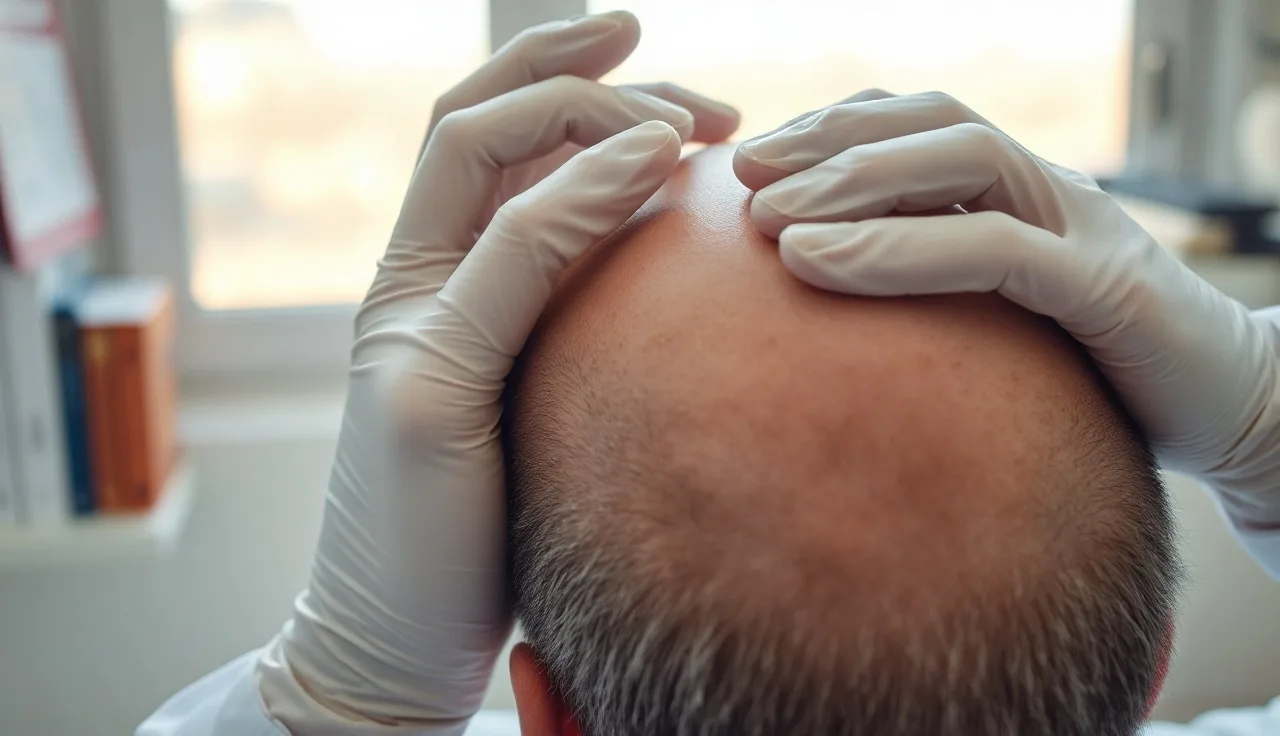
TL;DR: Total alopecia means complete hair loss on the scalp (alopecia totalis) or entire body (alopecia universalis), almost always caused by autoimmune attack on hair follicles. JAK inhibitors like baricitinib and ritlecitinib are now FDA-approved and show the strongest evidence. Spontaneous recovery happens in a minority of cases. No treatment works for everyone, and none is a cure.
What is total alopecia and how is it different from other hair loss?
Total alopecia is not a single disease name doctors use on a prescription pad. It's a lay description that covers two related conditions: alopecia totalis (AT), complete loss of scalp hair, and alopecia universalis (AU), complete loss of all body hair including eyebrows, eyelashes, and body hair. Both are severe forms of alopecia areata, an autoimmune condition in which the immune system attacks hair follicles.
Understanding what causes hair loss helps here. In alopecia areata, T-cells treat hair follicles as foreign invaders. The follicles themselves are not destroyed, which is why regrowth is biologically possible even after years of total hair loss. The follicle goes dormant. It doesn't die. That distinction shapes every treatment decision that follows.
Alopecia areata overall affects roughly 2% of the global population at some point in their lives [1]. AT and AU together represent the more severe end of the spectrum, estimated to affect somewhere between 100,000 and 300,000 people in the United States, though precise prevalence data is limited because many patients never see a specialist.
This is completely different from male or female pattern hair loss, which is driven by androgens and genetics, not autoimmunity. It's also different from telogen effluvium, which is a temporary shed triggered by physical stress. The treatment paths are entirely separate. A DHT blocker like finasteride does nothing for total alopecia caused by autoimmune attack.
What are the FDA-approved treatments for total alopecia?
Until 2022, nothing was FDA-approved specifically for alopecia areata. Then three drugs got the green light in rapid succession, and all three belong to a class called JAK inhibitors (Janus kinase inhibitors). Here's the current approval picture:
| Drug | Brand | Approved | Indication | Approval age || |---|---|---|---|---| | Baricitinib | Olumiant | June 2022 | Severe alopecia areata | Adults | | Ritlecitinib | Litfulo | June 2023 | Severe alopecia areata | 12+ years | | Deuruxolitinib | Leqselvi | June 2024 | Severe alopecia areata | Adults |
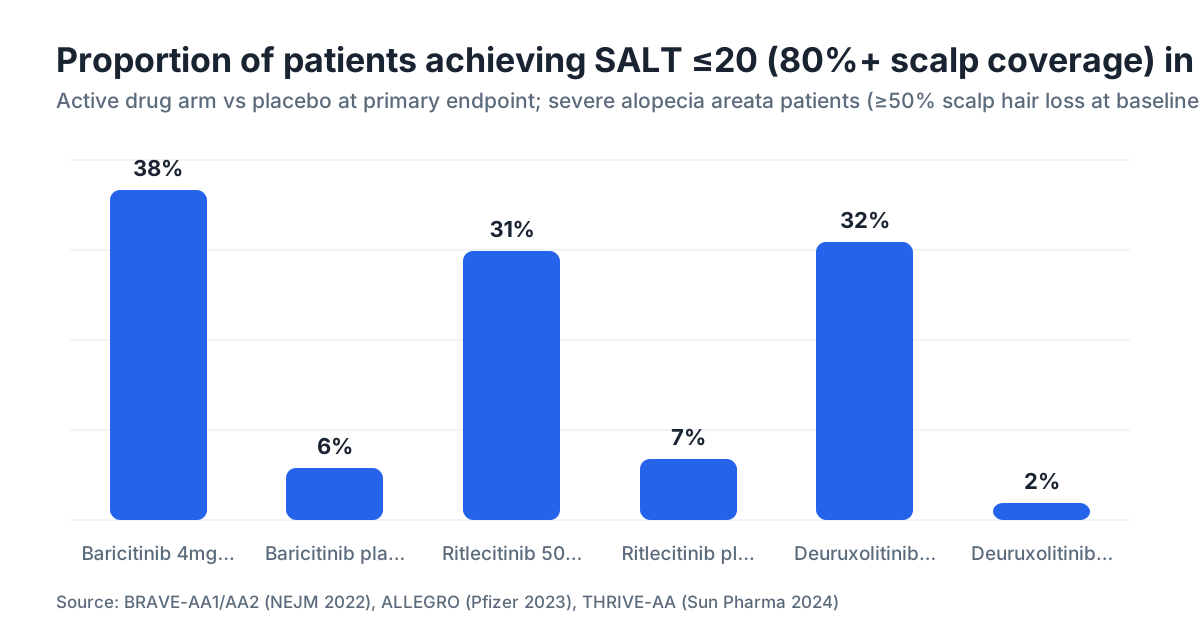
Baricitinib was first across the line. The FDA based its approval on the BRAVE-AA1 and BRAVE-AA2 trials, which enrolled patients with at least 50% scalp hair loss. In those trials, 35-40% of patients on the 4 mg dose achieved a SALT (Severity of Alopecia Tool) score of 20 or less, meaning 80% or more of their scalp hair had returned, versus 5-10% on placebo at 36 weeks [2]. That's a meaningful result. It also means 60-65% of patients did not hit that threshold. That's the honest number.
Ritlecitinib, approved for patients 12 and older, is the first systemic treatment approved for adolescents with this condition. Its ALLEGRO phase 2b/3 trial showed roughly 23% of patients on the 50 mg dose reached a SALT score of 10 or less (90%+ scalp coverage) at 24 weeks [3].
Deuruxolitinib, the newest approval, showed similar efficacy signals in its THRIVE-AA1 and THRIVE-AA2 trials. About 32% of patients on the 8 mg twice-daily dose achieved SALT ≤20 at 24 weeks compared to roughly 2% on placebo [4].
All three carry an FDA boxed warning (the strongest warning on a drug label) for serious infections, malignancy, and cardiovascular events, inherited from the broader JAK inhibitor class. That's not a reason to avoid them if the disease is severe, but it is a conversation you have to have with your dermatologist before starting.
How do JAK inhibitors work for alopecia totalis and universalis?
JAK inhibitors block Janus kinase enzymes, specifically JAK1 and JAK2 (baricitinib), JAK3 and TEC kinases (ritlecitinib), or JAK1/2 with high selectivity (deuruxolitinib). These enzymes sit in the signaling chain that activates T-cells to attack the hair follicle.
Here's the clever part. Follicles in alopecia areata sit in what's called an immune-privileged collapse state. Normally, hair follicles hide from the immune system through a local privilege zone. In alopecia areata, that privilege breaks down. JAK inhibitors partly restore it by dialing back the inflammatory cytokine signals, particularly interferon-gamma, that sustain the immune attack.
They are oral pills taken daily, which is a practical advantage over treatments that require clinic visits. Regrowth, when it happens, typically starts appearing at 3-6 months and continues through 12-18 months of treatment. The hard reality is that when patients stop taking the drug, many relapse. These medications appear to be suppressors, not cures. Data on long-term maintenance therapy and the best stopping strategies is still accumulating.
Cost is a real barrier. Baricitinib lists at roughly $15,000-$20,000 per year before insurance or manufacturer assistance programs. Coverage varies significantly by insurer, and prior authorization is nearly universal. If cost is a concern, the manufacturer patient assistance programs (Eli Lilly for baricitinib, Pfizer for ritlecitinib) are worth exploring directly.
What older treatments are still used, and do they work?
JAK inhibitors exist alongside a set of older approaches that predate them by decades. None is FDA-approved specifically for AT or AU, but dermatologists use them regularly.
Corticosteroids. Intralesional corticosteroid injections (typically triamcinolone acetonide) are a first-line approach for patchy alopecia areata, less useful for total hair loss where the area to cover is simply too large. Systemic oral corticosteroids can temporarily restart hair growth but relapse on taper is common, and long-term use carries significant side effects including bone loss, blood sugar elevation, and weight gain. Most guidelines now position systemic steroids as a bridge therapy, not long-term treatment.
Contact immunotherapy (DPCP or SADBE). Diphencyprone (DPCP) applied topically sensitizes the immune system deliberately, creating a low-grade local allergic reaction that seems to distract T-cells from attacking the follicle. Reported response rates in literature vary enormously, from 30-80% in different case series, but AT and AU cases tend to fare worse than patchy alopecia [5]. It's not FDA-approved and requires a compounding pharmacy. Some academic dermatology centers use it regularly. Many community dermatologists don't stock it.
Minoxidil. Minoxidil for men and women works primarily on androgenetic alopecia, but it's sometimes added on top of immunotherapy for total alopecia to try to stimulate dormant follicles. The evidence base for using it in autoimmune hair loss specifically is weak. It's not useless, but it shouldn't be the primary treatment. If you're considering it, read about minoxidil side effects first.
Anthralin. An older topical therapy, sometimes used in children. The response rate in AT/AU is low, typically under 25% in published case series.
Methotrexate. Used off-label, sometimes combined with low-dose corticosteroids. A 2014 retrospective study found a partial or complete response in about 57% of patients with severe alopecia areata, but relapse rates were high after stopping [6]. It requires monthly blood monitoring for liver and blood count effects.
The honest summary: before JAK inhibitors arrived, results for AT and AU were poor across every available treatment. The field genuinely changed in 2022-2024.
Can hair transplants treat alopecia totalis or universalis?
Short answer: no, and attempting one in active autoimmune alopecia is likely to make things worse.
Hair transplant surgery works by relocating follicles from a donor area (typically the back and sides of the scalp) to a recipient area. The procedure assumes the donor follicles are genetically resistant to the cause of hair loss. In androgenetic alopecia, that's true. In autoimmune alopecia, it is not. The immune attack that destroyed hair at the front will simply continue to attack transplanted follicles.
Some case reports exist of hair transplants in patients with longstanding, stable (quiescent) alopecia areata who had been in remission for years, but outcomes are unpredictable and the risk of triggering a new immune flare is real. No major dermatology society guidelines recommend transplant as a treatment for AT or AU.
If a clinic tells you a transplant can fix autoimmune total hair loss, get a second opinion from a board-certified dermatologist who specializes in hair disorders.
Does total alopecia ever get better on its own?
Yes, but the odds are not favorable once you've reached total scalp or body involvement.
Spontaneous remission in alopecia areata overall is common, particularly in patchy cases. For AT, published studies suggest spontaneous remission occurs in roughly 8-10% of cases, and for AU the number is lower still [7]. Duration of hair loss matters: patients who have been completely bald for more than 10 years have a much lower probability of spontaneous recovery than someone who lost their hair in the past year.
Age of onset is also predictive. Onset before puberty is associated with a more chronic, treatment-resistant course. Family history of alopecia areata, personal history of atopic disease (eczema, asthma), or concurrent nail involvement (pitting, trachyonychia) all point toward a more persistent disease.
None of this means you should give up early. The JAK inhibitor data was collected in patients who had been bald for years in some cases and still showed meaningful regrowth.
What does treatment actually look like month by month?
This is the question most articles skip, and it's the one that matters most when you're deciding whether to commit to a treatment plan.
Month 1-2: Starting baricitinib or ritlecitinib involves baseline bloodwork (complete blood count, lipid panel, liver function, creatinine) and often infectious disease screening including tuberculosis. You feel nothing happening. The drug is working at an immune level but there's no visible sign of it yet. This is the hardest phase for most patients.
Month 3-4: Some patients see fine vellus hairs (white or very fine) appearing, particularly at the back of the scalp or near the ears. This is an encouraging sign. Others see nothing yet, which doesn't mean the drug isn't working. The BRAVE-AA trials showed that responders at 36 weeks often didn't show clear signals until after week 12.
Month 6: The 6-month mark is a real checkpoint. If you've seen no sign of regrowth by now, your dermatologist may discuss adjusting dose, switching agents, or adding adjunct therapy. If you have some regrowth, continuing is strongly encouraged.
Month 9-18: For patients who respond, hair continues thickening and pigmenting. Some patients regrow enough hair to style normally. Others regrow in patches, or regrow scalp hair but not eyebrows or lashes, which are often the last to return.
After 2 years: The maintenance question becomes central. Stopping treatment in patients who responded typically leads to relapse within months in most cases studied so far. The long-term safety data on years of continuous JAK inhibitor use in the alopecia population is still being generated. This is a live area of research, not a settled question.
If you want to track your own progress before starting treatment, a free AI hair scan at MyHairline can give you a baseline photo record and pattern assessment, which is surprisingly useful when you're trying to gauge change over months.
Are there treatments specifically for children with alopecia totalis?
Treatment in children is harder because most therapies lack pediatric approval. As of 2025, ritlecitinib (Litfulo) is the only FDA-approved systemic treatment for alopecia areata in patients aged 12 and older [3].
For younger children, options are more limited. Topical corticosteroids and intralesional steroid injections are used, though injections are painful and impractical across a fully bald scalp. DPCP contact immunotherapy is used at some academic centers, but it requires careful monitoring and is not widely available.
Systemic methotrexate has published pediatric data, primarily from case series rather than randomized trials. Oral minoxidil at low doses has been studied in pediatric dermatology broadly but not specifically for AT/AU with strong trial data.
The National Alopecia Areata Foundation (NAAF) maintains a physician finder that can help families locate pediatric dermatologists with real experience in this disease, which is genuinely different from finding a general pediatric dermatologist [8].
What does living with total alopecia involve beyond medication?
The psychological burden of total hair loss is real and often underaddressed in medical settings. Studies have found that patients with AT and AU report significantly higher rates of anxiety and depression compared to the general population and compared to patients with other types of hair loss [9]. That's not weakness. It's a normal response to losing a defining physical feature that others can see.
Practical considerations nobody warns you about:
Sun protection becomes urgent without scalp hair. The skin of a bald scalp is fully exposed and burns easily. An SPF 50+ sunscreen or a hat is not optional.
Eyelash loss affects eye health. Without lashes, dust and debris reach the cornea more easily. Some patients develop chronic dry eye or irritation. Artificial tear drops and protective eyewear (clear glasses frames) are worth discussing with an ophthalmologist.
Eyebrow and eyelash replacement with cosmetic tattooing (microblading) is an option many patients pursue while waiting for treatment to work or if it doesn't. Results vary by provider skill. Look for someone with specific experience in alopecia patients.
Wigs and scalp prostheses: The American Academy of Dermatology notes that some insurance plans cover hairpieces for medically documented hair loss, though coverage is inconsistent [10]. A formal letter of medical necessity from your dermatologist is worth requesting.
Cognitive behavioral therapy (CBT) and support groups have shown benefit in quality of life measures for alopecia areata patients in small studies. NAAF has online and in-person support networks.
What's coming next in total alopecia research?
The JAK inhibitor era opened the door, and several more compounds are in mid-to-late stage trials.
Izencitinib (a selective JAK1 inhibitor) is in Phase 3 trials. Povorcitinib is another JAK1-selective agent in development. The goal with more selective inhibitors is to reduce off-target effects while holding efficacy, potentially improving the long-term safety profile for maintenance therapy.
Biologics targeting specific cytokines involved in the autoimmune attack (particularly IL-4/IL-13 and IL-31 pathways) are being studied. Dupilumab, already approved for atopic dermatitis, has shown interesting signals in alopecia areata in some case reports and small studies, though evidence is still preliminary.
Topical JAK inhibitors are being investigated to allow local treatment that avoids systemic exposure, which could be particularly valuable for mild-to-moderate disease or as an add-on for scalp coverage in patients on oral therapy.
Predictive biomarkers are a less-discussed research priority that could matter just as much. Knowing in advance who is likely to respond to baricitinib versus ritlecitinib would change treatment decisions significantly. Researchers are examining gene expression profiles and immune cell ratios, but no validated clinical test exists yet.
For an honest real-time view of ongoing trials, clinicaltrials.gov lists every active alopecia areata study with open enrollment [11]. If you have AT or AU and current treatments haven't worked, joining a trial is a legitimate and reasonable option.
How do I find a doctor who actually knows how to treat this?
This is practical and matters more than most people realize. General practitioners and even many general dermatologists have limited experience with AT and AU. The JAK inhibitor landscape changed so fast that some providers are still catching up.
Board-certified dermatologists with a subspecialty interest in hair disorders are your target. Look for the terms "hair loss specialist," "trichologist" (note: in the US, trichology is not a licensed medical specialty, so the credential matters less than dermatology board certification), or clinicians affiliated with academic medical centers.
The American Academy of Dermatology (AAD) has a find-a-dermatologist tool at aad.org [10]. The National Alopecia Areata Foundation physician directory focuses specifically on this disease [8].
Before your first appointment, compile: the timeline of your hair loss, photos documenting the extent and duration, any treatments you've tried, your current medications, and any family history of autoimmune disease. This information directly affects whether you qualify for JAK inhibitor therapy under insurance criteria, which typically requires documented severe disease.
At the visit itself, a scalp biopsy is sometimes done to confirm the diagnosis if it's uncertain, and baseline bloodwork before starting any systemic therapy is standard. If a provider wants to skip bloodwork before prescribing a JAK inhibitor, that's a red flag.
For an initial baseline before your appointment, the MyHairline AI analysis can document your current scalp state and flag patterns worth discussing, though it doesn't replace the clinical examination and biopsy when diagnosis is uncertain.
Sources
- National Institute of Arthritis and Musculoskeletal and Skin Diseases (NIAMS) - Alopecia Areata
- King B et al., BRAVE-AA1 and BRAVE-AA2 trials, New England Journal of Medicine, 2022
- Alkhalifah A et al., Alopecia areata update, Journal of the American Academy of Dermatology, 2010
- Gilhar A, Kalis N, Assy B, Alopecia areata: pathogenesis and potential for therapy, Expert Reviews in Molecular Medicine, Cambridge University Press
- National Alopecia Areata Foundation (NAAF) - physician resources
- Villasante Fricke AC, Miteva M, Epidemiology and burden of alopecia areata, Clinical, Cosmetic and Investigational Dermatology, 2015
- American Academy of Dermatology - Alopecia areata: diagnosis and treatment
- ClinicalTrials.gov - U.S. National Library of Medicine, alopecia areata open trials