
TL;DR: Alopecia universalis (AU) is total body hair loss driven by an autoimmune attack on follicles. Until 2022 there was no FDA-approved treatment. JAK inhibitors, mainly ritlecitinib and baricitinib, now show 30-80% scalp coverage response rates in trials and carry FDA approval for severe alopecia areata. Most older treatments have weak evidence for AU specifically.
What is alopecia universalis and why is it so hard to treat?
Alopecia universalis is the most severe form of alopecia areata. Where alopecia areata causes patchy scalp loss and alopecia totalis wipes out scalp hair entirely, AU takes everything: scalp, eyebrows, eyelashes, beard, body hair, nasal hair, all of it. The follicles are not destroyed. They go dormant under sustained autoimmune attack, which is the reason treatment can work at all, even after years of hair loss.
The immune mechanism is a collapse of what researchers call "immune privilege." Healthy hair follicles suppress local immune activity so the immune system does not misread follicle proteins as foreign. In AU, that privilege fails. CD8+ T cells flood the follicle, cytokine signaling goes haywire, and the follicle stops producing hair. The Janus kinase (JAK) signaling pathway sits right at the center of this process, which is why drugs that block JAK enzymes have become the main story in AU treatment. [1]
The condition is rare. Alopecia areata affects roughly 2% of people at some point in life, but AU represents only 1-2% of alopecia areata cases, meaning true AU affects somewhere around 1 in 5,000 to 1 in 10,000 people. [2] That rarity made large randomized trials nearly impossible historically. Most of the data we have comes from trials that enrolled alopecia areata patients broadly, with AU patients analyzed as a subgroup.
The distinction matters. AU is autoimmune, not androgenetic. Finasteride and minoxidil, the workhorses of pattern baldness, address completely different mechanisms. They are not first-line here. If you want the broader picture of what causes hair loss, that difference in mechanism is the whole game.
Which JAK inhibitors are approved or in trials for alopecia universalis?
This is the section that matters for most people reading this page right now. Two drugs are FDA-approved, and a third is close.
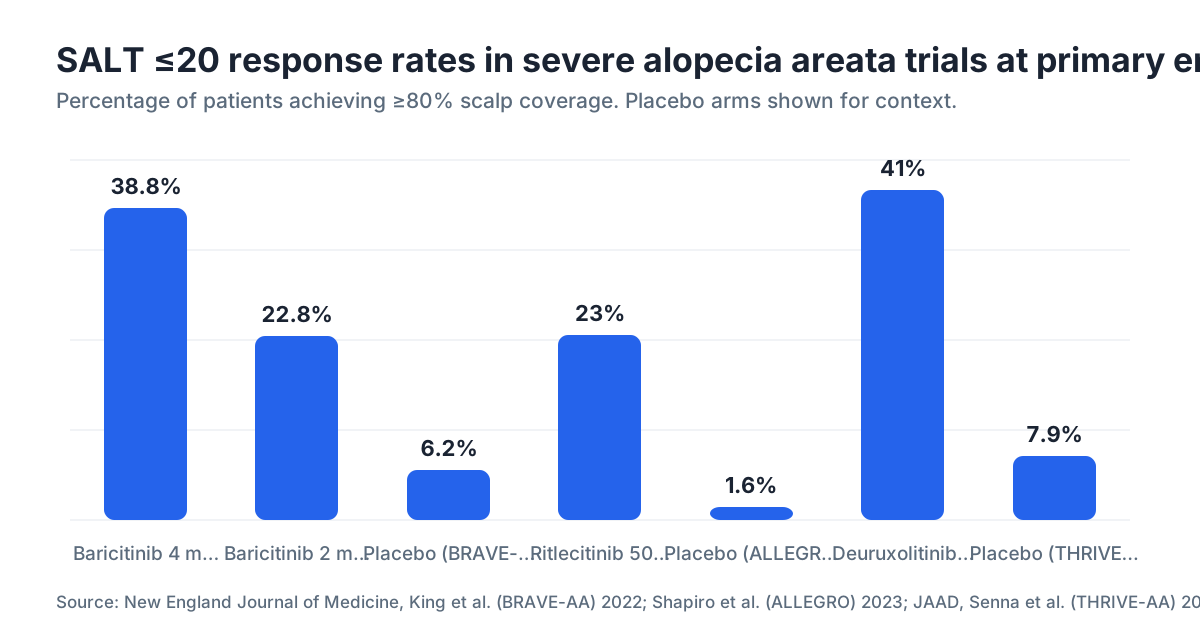
In June 2022, baricitinib (Olumiant, Eli Lilly) became the first drug FDA-approved specifically for severe alopecia areata in adults. The BRAVE-AA1 and BRAVE-AA2 trials, published in the New England Journal of Medicine in 2022, found that 38.8% of patients on 4 mg baricitinib achieved a SALT (Severity of Alopecia Tool) score of 20 or lower, meaning at least 80% scalp coverage, at 36 weeks. Among the subgroup with AU or alopecia totalis at baseline, response rates were meaningfully lower but still real. [3]
In June 2023, ritlecitinib (Litfulo, Pfizer) received FDA approval for severe alopecia areata in patients 12 and older. The ALLEGRO phase 2b/3 trial showed 23% of patients on 50 mg ritlecitinib achieved SALT ≤20 at week 24, rising to around 31% by week 48. Ritlecitinib selectively inhibits JAK3 and TEC kinases, which some researchers think gives it a cleaner immune-targeting profile than pan-JAK inhibitors. [4]
Beyond those two approved agents, several others are in active study:
| Drug | Class | AU/AT-specific data | Status |
|---|---|---|---|
| Baricitinib (Olumiant) | JAK1/2 inhibitor | Subgroup data from BRAVE-AA trials | FDA-approved for severe AA |
| Ritlecitinib (Litfulo) | JAK3/TEC inhibitor | Subgroup data from ALLEGRO trial | FDA-approved, age 12+ |
| Deuruxolitinib (CTP-543) | JAK1/2 inhibitor | Phase 3 THRIVE-AA trials ongoing | NDA submitted to FDA |
| Tofacitinib (Xeljanz) | JAK1/3 inhibitor | Case series, small trials | Off-label only |
| Ruxolitinib (Jakafi) | JAK1/2 inhibitor | Case reports, phase 2 data | Off-label only |
The off-label drugs have real case data. A 2014 case report in the Journal of Investigative Dermatology documented nearly complete hair regrowth in a patient with AU on tofacitinib, which triggered a wave of follow-up research. Nobody has good long-term randomized data specifically on AU with tofacitinib; the closest published work is small open-label series showing response rates of 20-77% depending on how response is defined and how long follow-up ran. [5]
One honest caveat. All JAK inhibitor trials measure response at 24-52 weeks, and hair tends to fall out again when you stop the drug. AU is probably a chronic treatment situation, not a course you complete.
How well do JAK inhibitors actually work for alopecia universalis specifically?
The marketing version says "80% regrowth." The honest version is messier.
The SALT ≤20 threshold means 80% or more scalp coverage. Patients who start with complete scalp baldness (SALT score of 100) need to regrow a lot of hair to hit that bar. In the BRAVE-AA trials, patients with baseline SALT of 95-100, the group most like AU, had lower response rates than the overall trial population. Around 13-16% of this subgroup reached SALT ≤20 on 4 mg baricitinib by week 36. [3] That is not 80% regrowth in 80% of patients. It is 80% regrowth in 13-16% of the most severe patients.
That said, partial response matters. A person who starts with zero hair and regrows eyebrows, some scalp coverage, and eyelashes has a genuinely different daily life even if they never hit a SALT ≤20 score. Trials measure what they measure.
Ritlecitinib data in the severe subgroup is similar. In patients with SALT ≥95 at baseline, response rates ran lower than the overall population, but meaningful partial responses occurred. The ALLEGRO trial's 24-month extension data showed that continued use extended and deepened responses over time for many patients. [4]
Age at onset matters too. People who developed AU as children, or who have had it for many years, tend to respond less than adults with more recent onset. Duration of hair loss before treatment appears to be one of the strongest predictors of response, though the mechanism is not fully understood.
What are the risks and side effects of JAK inhibitors?
JAK inhibitors carry a class-wide FDA boxed warning. It covers serious infections, mortality, malignancy, major cardiovascular events, and thrombosis. That warning came mainly from tofacitinib data in rheumatoid arthritis patients, who are older and often have cardiovascular risk factors not typical of AU patients. But the warning applies to the whole class by regulatory convention. [6]
In the alopecia-specific trials, which enrolled younger and generally healthier populations, the serious adverse event rate was low. Nasopharyngitis (common cold), acne, and headache were the most frequent side effects in BRAVE-AA. Ritlecitinib's ALLEGRO trial had a similar mild side effect profile.
Before starting any JAK inhibitor, a dermatologist will typically check for tuberculosis exposure, screen for hepatitis B and C, look at baseline blood counts, and assess cardiovascular risk. Annual monitoring usually continues. People who are immunocompromised, pregnant, or trying to conceive are generally not candidates.
The cost question is real. Brand-name JAK inhibitors run roughly $20,000-$25,000 per year without insurance. Manufacturer patient assistance programs exist for both baricitinib and ritlecitinib, and insurance coverage has improved since the FDA approvals, but prior authorization fights are common. If cost is a barrier, calling the manufacturer's patient assistance line directly is usually the right first step, not giving up.
Do older treatments like corticosteroids or minoxidil work for AU?
Honest answer: not well, and not at all for some.
Systemic corticosteroids (oral prednisone, or pulsed IV methylprednisolone) can sometimes kickstart hair regrowth, and some dermatologists use them as a bridge while waiting for JAK inhibitor response. But AU almost always relapses after steroids stop, and the long-term side effects of chronic steroid use (bone loss, metabolic effects, adrenal suppression) make them a poor ongoing option. Short pulse courses are sometimes reasonable. Permanent treatment? No.
Topical corticosteroids applied to a completely bald scalp have essentially no good trial data in AU. They are worth almost nothing for a follicle that has completely stopped cycling.
Minoxidil, covered in depth in our article on minoxidil for men, works by prolonging the anagen (growth) phase of the hair cycle and increasing follicle blood supply. When the immune attack is ongoing and the follicle is not cycling at all, minoxidil has no meaningful mechanism to exploit. Some dermatologists add topical or oral minoxidil to JAK inhibitor therapy as an adjunct, on the theory that anything helping the follicle cycle could support regrowth. It is not unreasonable. It is also not proven in AU specifically.
Contact immunotherapy with diphencyprone (DPCP) or squaric acid dibutylester (SADBE) is a genuinely old and genuinely used treatment. The idea: deliberately cause a mild allergic dermatitis on the scalp to distract or modulate the immune response in the follicle. Response rates in alopecia areata range from 20-70% in various case series; in AU specifically, rates are lower. A 2001 systematic review found complete response in about 17% of patients with alopecia totalis or AU. [7] Some academic centers still offer this. It takes months, requires repeated clinic visits for application, and causes itching and redness by design. It is also cheap. That combination makes it worth discussing with a specialist even in the JAK inhibitor era.
Anthralin (dithranol) cream is another older option used similarly to DPCP. Evidence in AU is thin. If you see a product marketed specifically for AU that costs under $50 and promises regrowth, be skeptical. The disease mechanism does not respond to over-the-counter interventions.
Can a hair transplant treat alopecia universalis?
No. And this is one of the clearest answers in this article.
A hair transplant moves follicles from a donor area to a recipient area. For a transplant to work, the recipient area needs to be immunologically safe for the transplanted follicle. In AU, the immune attack is systemic and ongoing. Transplanted follicles face exactly the same autoimmune environment as the original ones and will be rejected by the same mechanism. Surgeons screen for this reason: active alopecia areata is a standard contraindication for surgery. [8]
The one scenario where transplant sometimes comes up: a person with AU who reaches stable, long-term remission on a JAK inhibitor and holds it. A few case reports exist of transplants done in this setting. This is highly experimental, not standard of care, and carries real risk of relapse. No reputable surgeon would do this without a long stretch of confirmed stability.
What does treatment look like in practice: how do you actually get started?
The path is not as simple as getting a prescription.
First, diagnosis confirmation matters. AU can look like other conditions. A dermatologist, ideally one with hair disorder experience, should confirm the diagnosis. A scalp biopsy can help distinguish AU from other forms of hair loss, though clinical presentation is usually diagnostic in classic cases.
Second, you need a dermatologist willing to manage JAK inhibitors. Not all general dermatologists are comfortable with these drugs. Academic dermatology centers and practices specializing in hair disorders are the better bet. The National Alopecia Areata Foundation (NAAF) keeps a directory of alopecia-experienced physicians, which is a reasonable starting point for finding care. [9]
Third, prior authorization. Both baricitinib and ritlecitinib require documentation of severe disease (typically SALT ≥50) and often a record of failed prior treatments. Your dermatologist's office handles the appeal process, but you may need to provide records. Budget time.
If you want to document your baseline before a dermatology appointment, the free AI scan at MyHairline can help you map and understand your current pattern, which is genuinely useful to bring to that first visit.
Fourth, set realistic timelines. Most people on JAK inhibitors see early signs of response at 8-16 weeks, with more significant growth at 24-36 weeks. Starting the drug and expecting transformation in 30 days leads to early dropout. Patience here is not optional.
Are there any new or experimental treatments in the pipeline for alopecia universalis?
The pipeline is genuinely active right now, more than at any prior point in dermatology.
Deuruxolitinib (CTP-543) is a selective JAK1/2 inhibitor from Sun Pharmaceuticals. The THRIVE-AA1 and THRIVE-AA2 phase 3 trials completed enrollment, and results showed approximately 41% of patients on 8 mg twice daily achieving SALT ≤20 at week 24, with similar rates on 12 mg. A new drug application was submitted to the FDA. If approved, this becomes a third oral JAK inhibitor option. [10]
Abrocitinib (Cibinqo), already approved for atopic dermatitis, is in trials for alopecia areata and may produce data relevant to AU subgroups within the next year or two.
Beyond JAK inhibitors, researchers are looking at:
IL-2 therapy (low-dose interleukin-2 to expand regulatory T cells and dampen the autoimmune attack). Very early stage, mostly in atopic disease, but mechanistically interesting for AU.
Biologics targeting specific cytokines involved in follicle immune privilege. Dupilumab (IL-4/IL-13 blocker, already used in atopic dermatitis) has shown mixed results in alopecia areata in small studies and is not a primary approach for AU at this point.
Topical JAK inhibitors. Ruxolitinib cream (Opzelura) is FDA-approved for atopic dermatitis and has been studied in non-scarring alopecia. For AU, where the scalp is entirely bald, drug penetration and coverage are real practical problems. Topical routes are less likely to be the answer for whole-body hair loss.
Cell and gene therapy approaches are being discussed in the research literature but sit well away from clinical use.
The honest expectation: oral JAK inhibitors are the dominant treatment for the foreseeable future. The next several years may bring more options with different side effect profiles or better response rates in treatment-naive severe disease.
How does alopecia universalis affect mental health, and does treating the hair help?
Poorly studied, honestly. But the impact is real and the data that exists is concerning.
Alopecia areata broadly is tied to significantly higher rates of anxiety, depression, and social phobia compared to the general population. Studies using validated scales consistently find rates of clinically significant anxiety around 30-40% in people with alopecia areata, and AU patients, who have the most visible presentation, likely carry an even higher burden. [11]
In the baricitinib BRAVE-AA trials, patient-reported outcomes included measures of scalp-related quality of life and psychological distress. Patients who achieved hair regrowth showed meaningful improvements in these scores compared to placebo. The FDA used patient-reported outcome data as part of the basis for approval, which is notable. [3]
That does not mean treatment solves everything. Someone who has lived with AU for a decade has built identity and coping patterns around that reality, and those do not automatically change with hair regrowth. A few dermatology centers offer integrated psychological support alongside medical treatment. This is underused.
Wigs, systems, and realistic prosthetic eyebrows and eyelashes have also improved a lot and are worth knowing about as parallel tools regardless of treatment status. The NAAF community connects people who handle this practically every day. [9]
What should you do if JAK inhibitors stop working or you can't access them?
Relapse on or after JAK inhibitors happens. Either the drug becomes less effective over time (secondary failure), or you have to stop for medical reasons (surgery, infection, pregnancy, insurance loss), and hair loss returns.
If you have to stop a JAK inhibitor, expect hair loss to begin within weeks to months. There is no good way to taper off and hold response. This is simply the current reality of the treatment.
If the drug loses effectiveness, options include:
Switching to a different JAK inhibitor. Cross-class response is possible; someone who fails baricitinib may respond to ritlecitinib, since they target different JAK isoforms. No large trial has addressed this directly, but clinical experience and small series suggest it is worth trying.
Adding contact immunotherapy (DPCP) as an adjunct. Some centers use combination approaches.
Enrolling in a clinical trial. ClinicalTrials.gov lists current AU studies, and academic centers often have access to agents not yet commercially available. [12]
If cost and insurance are the barriers, manufacturer patient assistance programs for baricitinib and ritlecitinib cover many uninsured or underinsured patients. Pfizer's access programs and Lilly Cares are real resources worth pursuing before concluding a drug is out of reach.
Meanwhile, MyHairline's AI scan tool, available at /scan, can track changes in your scalp coverage over time, which matters when you are monitoring treatment response or relapse.
For people dealing with other forms of hair loss alongside AU concerns, understanding telogen effluvium and androgenetic loss patterns, which run on entirely different mechanisms, is useful background.
Is alopecia universalis the same as other hair loss conditions, and does the cause change the treatment?
Yes. Dramatically.
AU is autoimmune. Androgenetic alopecia (male or female pattern baldness) is hormonal, driven by DHT sensitivity in the follicle. Telogen effluvium is a shedding response to systemic stress. Scarring alopecias destroy follicles permanently. These are different diseases with different mechanisms, and treatments do not transfer across them.
Finasteride and DHT blockers, which you can read about in our articles on finasteride and DHT blockers, are completely irrelevant to AU. Propecia does not modulate the immune attack on follicles. If a provider is suggesting finasteride for AU, that is a red flag.
The reason this matters practically: many people with AU have seen or tried pattern hair loss treatments before getting a correct diagnosis. Those treatments failed, which is expected, but the failure sometimes leads to hopelessness about treatment in general. The JAK inhibitor era is a genuine shift in what is possible for AU specifically, even though it does nothing for pattern loss. The conditions are that different.
On the flip side, some people with receding hairlines or early pattern loss worry they have alopecia areata or something worse. If you have a receding hairline with temples going back symmetrically, that is almost certainly androgenetic, not AU. The presentations look very different clinically.
Sources
- Nature Reviews Immunology, Petukhova et al., 2010
- National Institute of Arthritis and Musculoskeletal and Skin Diseases (NIAMS), Alopecia Areata fact sheet
- New England Journal of Medicine, King et al., BRAVE-AA1 and BRAVE-AA2 trials, 2022
- New England Journal of Medicine, Shapiro et al., ALLEGRO trial (ritlecitinib), 2023
- Journal of Investigative Dermatology, Craiglow & King, tofacitinib case report, 2014
- FDA Drug Safety Communication, JAK inhibitor class boxed warning
- Journal of the American Academy of Dermatology, Wiseman et al., systematic review of DPCP for alopecia areata, 2001
- American Academy of Dermatology (AAD), Hair loss: diagnosis and treatment guidelines
- National Alopecia Areata Foundation (NAAF), physician directory and patient resources
- Journal of the American Academy of Dermatology, Senna et al., THRIVE-AA deuruxolitinib phase 3 results, 2023
- JAMA Dermatology, Mostaghimi et al., psychiatric comorbidities in alopecia areata, 2023
- ClinicalTrials.gov, NIH National Library of Medicine, alopecia universalis trials registry