
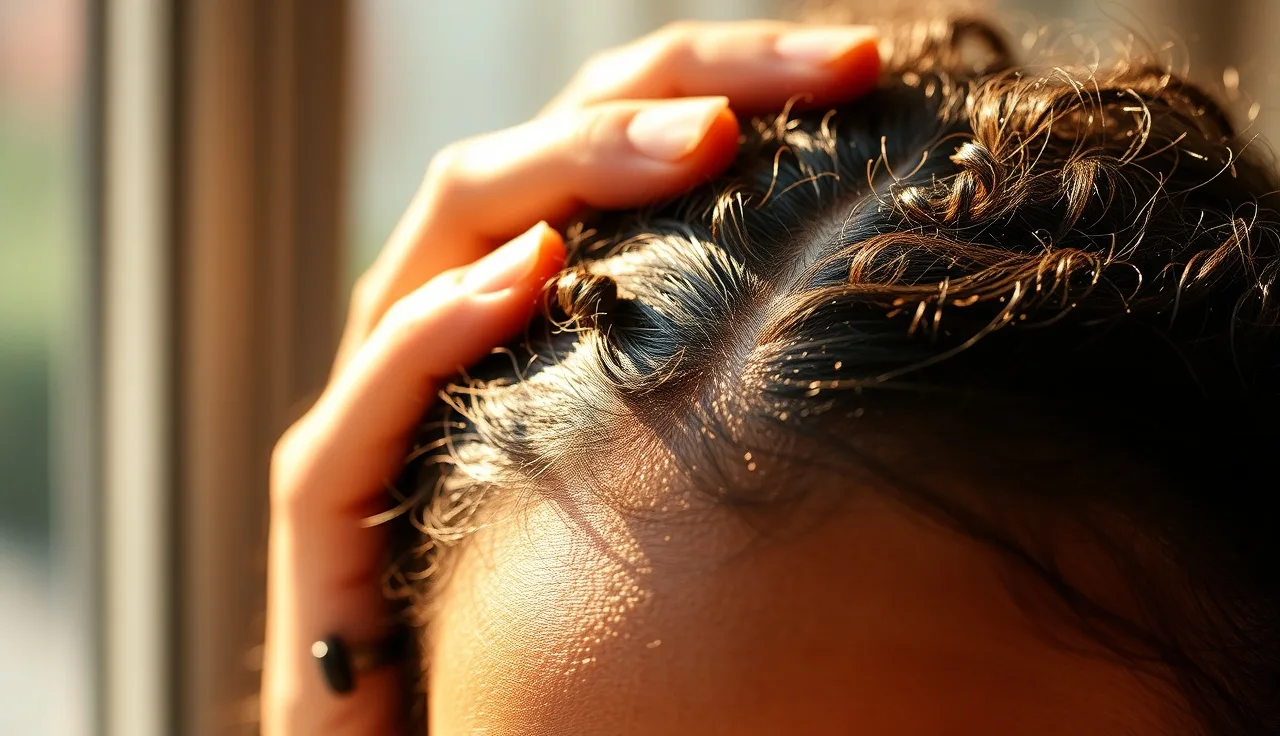
TL;DR: Traction alopecia is hair loss from repeated pulling on the follicle. Caught early, removing the tension often restores full growth in 3 to 6 months. Caught late, once follicles scar over, no topical or oral treatment regrows hair reliably and a transplant becomes the main option. The most effective treatment is stopping the hairstyle that causes the damage.
What is traction alopecia and how does it differ from other hair loss?
Traction alopecia is mechanical hair loss. Repeated or sustained tension on the hair shaft damages the follicle, first causing inflammation, then progressive scarring if the stress continues. It is not an autoimmune condition like alopecia areata, and it is not driven by DHT like male or female pattern baldness. The mechanism is physical, not hormonal or immune.
The pattern gives it away. Hair loss concentrates at the hairline edges and temples, often with a band of surviving fine hairs inside the bare zone, called the "fringe sign." You may also see loss at the part line or crown depending on the style. Folliculitis (small pimples or pustules around follicles) often shows up in affected areas and signals active inflammatory damage. [1]
Common causes include tight braids, cornrows, locs, weaves with bonded extensions, tight daily ponytails, and heavy hair additions that pull down constantly. The AAD notes that traction alopecia is among the most common causes of hair loss in Black women, but it affects anyone whose styling involves sustained pulling. [1]
Here is the difference from what causes hair loss patterns driven by genetics or hormones. Remove the cause early enough and traction alopecia is reversible. That single fact matters more than everything else in this article.
How do you know if your traction alopecia is still reversible?
Reversibility depends almost entirely on whether follicular scarring has set in. That is the fork in the road, and it decides your whole treatment path. Below is how each stage actually looks so you can place yourself before spending a dollar.
Early-stage traction alopecia looks like this: thinning or short broken hairs at the hairline, mild scalp tenderness or itching after wearing the style, small follicular papules or pustules, and loss that crept in over months or years of styling. Pull the style out and within a few weeks you may see tiny regrowth hairs. Early-stage loss is genuinely reversible.
Late-stage traction alopecia looks different. Smooth, shiny scalp skin with no visible follicular openings (the tiny pores hair grows from), no tenderness because the nerves have also been affected, and a history of years or decades of tight styling. Look at the bare patch under good light. See no pore texture? Scarring has almost certainly happened. [2]
A dermatologist can confirm the stage with a dermoscopy exam or a scalp biopsy. Dermoscopy takes about five minutes and is non-invasive. A biopsy is more definitive but leaves a small scar. If you are unsure which stage you are at, see a board-certified dermatologist before spending money on treatments, because late-stage follicular fibrosis will not respond to minoxidil or any topical no matter how consistently you apply it. [2]
One honest caveat. The boundary between reversible and irreversible is not a sharp line. Some dermatologists describe a gray zone where partial regrowth is possible if tension is removed and treatment starts, even with some scarring present. Nobody has good longitudinal data on exactly what percentage of follicles survive at intermediate stages.
What is the most effective treatment for traction alopecia?
Stop the pulling. That is not a hedge or a throwaway disclaimer, it is the actual answer, and every dermatologist who works with this condition says the same thing. No topical or oral medication beats removing sustained tension from the follicle, especially in early to moderate stages.
The American Academy of Dermatology recommends a clear first step: immediately change hairstyles to eliminate tension, avoid extensions and weaves, and let hair air-dry loosely. [1] If the cause stays, no other treatment can outrun the ongoing damage.
After removing tension, the treatment ladder looks like this:
| Stage | Primary treatment | Supportive options | Expected outcome |
|---|---|---|---|
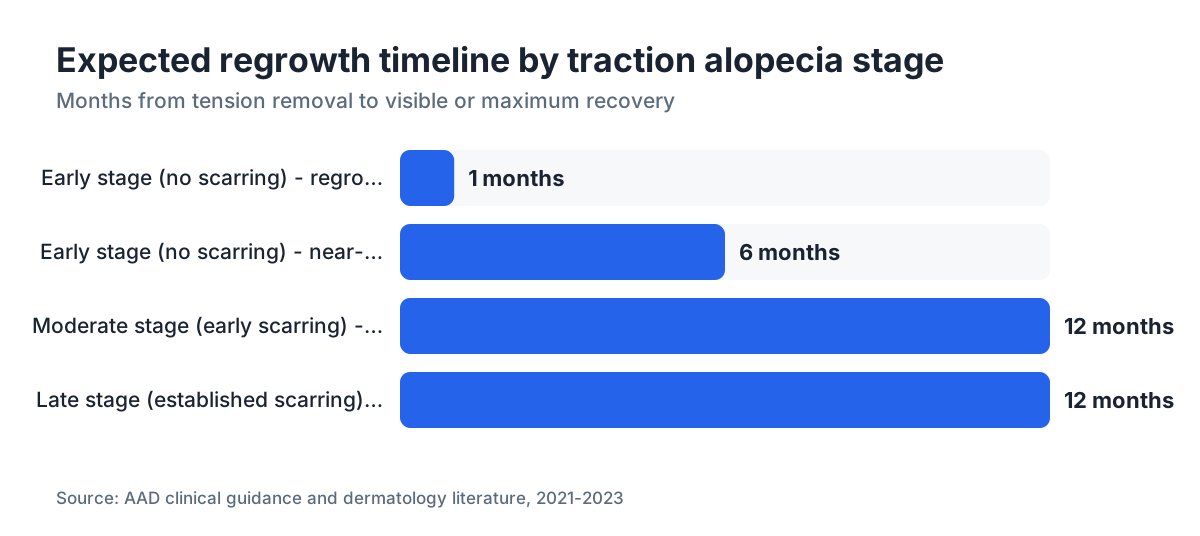
| Early (no scarring) | Remove tight styles | Topical minoxidil, gentle scalp care | Full to near-full regrowth in 3-6 months |
| Moderate (early scarring) | Remove tension + dermatologist care | Topical minoxidil, intralesional steroids, antibiotics if infected | Partial regrowth possible |
| Late (established scarring) | Discontinue damaging styles | Hair transplant (if donor site is adequate) | No spontaneous regrowth; transplant may restore coverage |
For early-stage cases, switching to looser protective styles or wearing hair down is often the only treatment needed. The follicle is alive. It just needs the mechanical stress gone to restart its growth cycle.
Does minoxidil work for traction alopecia?
Minoxidil is the most commonly recommended medication for early to moderate traction alopecia. The evidence is reasonable but not backed by large randomized trials specific to this condition. Most support comes from its known mechanism (it prolongs the anagen, or growth, phase of the hair cycle and increases blood flow to the follicle) plus case series and clinical experience. [3]
The FDA has approved topical minoxidil 2% for women and 5% for men over the counter for androgenetic alopecia. Its use in traction alopecia is off-label, meaning dermatologists recommend it on clinical judgment rather than a dedicated approval. [3]
For traction alopecia, minoxidil makes the most sense on areas where live follicles still exist, confirmed by visible follicular openings. Applied to fully scarred scalp it does nothing, because there is no follicle left to stimulate. The typical protocol is 1 ml of 5% solution or half a capful of 5% foam on the affected area once or twice daily. You can read more about how it works and its side effect profile in the minoxidil for men guide and the minoxidil side effects breakdown.
Give it at least four to six months before you judge results. Hair grows slowly by biology, not by product quality. A shed in the first four to eight weeks is a known effect and does not mean the treatment is failing. [3]
What about corticosteroids, antibiotics, and other clinic treatments?
Intralesional corticosteroid injections (triamcinolone acetonide, typically 5 to 10 mg/mL injected directly into the scalp) are a standard dermatology tool for early scarring alopecia. They calm the local inflammation that drives follicular fibrosis. In traction alopecia they help most when there is active folliculitis or early inflammatory scarring. Injections run every four to six weeks and are done in-office. [2]
Topical corticosteroids (clobetasol propionate 0.05% solution or foam, for example) are sometimes prescribed for home use between injections. They lower scalp inflammation without a needle, though they are weaker than intralesional delivery.
Antibiotics enter the picture when folliculitis is present. Doxycycline 100 mg twice daily for four to eight weeks is a common choice because it works as both an antibiotic and an anti-inflammatory. This does not treat the traction alopecia itself. It treats the secondary infection that can speed up scarring.
Platelet-rich plasma (PRP) injections get attention for various alopecia types. The evidence for traction alopecia is thin. A 2018 review in the Journal of the American Academy of Dermatology found PRP showed promise for androgenetic alopecia but flagged major gaps in methodology and standardization across studies. [4] Stretching those results to traction alopecia is exactly that, a stretch.
Low-level laser therapy (LLLT) devices are FDA-cleared for hair growth in androgenetic alopecia. Their effect in traction alopecia has not been studied in meaningful trials. They are unlikely to harm you, but the evidence to recommend them for this specific condition does not exist yet.
What traction alopecia treatments can you do at home?
Home treatment fits early-stage cases where you have already changed your styling habits. These steps support the follicle while it recovers. None of them replace removing the source of tension.
Topical minoxidil 2% (women) or 5% (men, or women under a dermatologist's guidance) is available without a prescription and is the most evidence-backed home option. Apply it consistently. Skipping days is the most common reason it fails. [3]
Scalp massage has modest support. A small 2016 study in ePlasty found that nine minutes of daily scalp massage increased hair thickness in 9 men over 24 weeks, with the proposed mechanism being mechanical stretching of dermal papilla cells. [5] Small study, and the population differs from traction alopecia patients, but it is free and carries no risk. Use fingertips, not nails, on affected areas.
Keep the scalp clean and calm, because folliculitis worsens scarring. Use a gentle, sulfate-free shampoo. Skip heavy oils or occlusive products directly on the scalp if you break out in folliculitis.
Adequate protein and anti-inflammatory foods support the hair cycle. The growing hair shaft is roughly 95% keratin, a protein, and a caloric or protein deficit measurably shortens the anagen phase. That does not mean a supplement will regrow your hair. Most hair loss supplements have no evidence behind them for traction alopecia.
Keep heat tools off recovering areas. Heat on inflamed follicles drags out the recovery.
If you want a preliminary read on whether your hairline looks like early or established traction alopecia before booking a dermatology appointment, the free AI scan at MyHairline can help you understand what you are looking at and whether it needs urgent in-person evaluation.
Can alopecia areata treatments help traction alopecia?
This comes up because both conditions cause patchy loss and the names sound related. They are different conditions that need different approaches, with a little overlap in supportive care.
Alopecia areata is autoimmune. The immune system attacks the follicles. Its treatments target the immune system: intralesional and topical corticosteroids, JAK inhibitors like baricitinib (FDA-approved in 2022 for severe alopecia areata), and immunotherapy agents like diphenylcyclopropenone. [6] None of these make sense for traction alopecia, where the damage is mechanical, not immune. [10]
Here is the overlap. Topical minoxidil and corticosteroids appear in both, but for different reasons. In alopecia areata, steroids suppress the autoimmune attack. In traction alopecia, they reduce mechanical inflammation and fibrosis.
Home remedies people float for alopecia areata, including onion juice, rosemary oil, and castor oil, have very limited or no controlled evidence for either condition. A small 2015 study in the Journal of Dermatology found rosemary oil comparable to 2% minoxidil for androgenetic alopecia over six months. [7] Interesting, but not directly applicable to traction alopecia, and the study had real methodological limits. Rosemary oil costs little and carries low risk, but it should not replace minoxidil or medical evaluation if you are in a moderate or late stage.
If you are not sure which type of hair loss you have, a dermatologist can tell you fast. The treatments differ enough that a wrong guess can cost you months of recovery.
When is a hair transplant the right option for traction alopecia?
A transplant becomes a real option once follicular scarring is established and there is no prospect of spontaneous regrowth. The surgery moves healthy follicles from a donor area (usually the back and sides of the scalp) into the scarred recipient zone.
In traction alopecia the hairline and temples take the most damage, and those are also the areas that respond best aesthetically to transplant work. Two techniques are used: follicular unit transplantation (FUT, the strip method) and follicular unit extraction (FUE, individual follicle removal). FUE is far more common now because it leaves no linear scar.
Some preconditions matter. The damaging hairstyle has to be permanently stopped before a transplant. Transplanted follicles can be pulled out by traction too. A surgeon will also check whether the scarred recipient scalp has enough blood supply to keep grafts alive, which varies with how extensive the fibrosis is. [8]
Costs in the United States for a hairline transplant typically run $3,000 to $15,000 depending on graft count, technique, and clinic. Insurance does not cover it because it is classified as cosmetic. The full breakdown is in the hair transplant guide.
Timelines: transplanted hairs shed within two to four weeks after surgery (normal and expected), then regrow over six to twelve months. Final results show at around twelve months. Pick a surgeon with documented experience in hairline repair for traction alopecia specifically, because the recipient zone behaves differently than a standard androgenetic case.
How long does traction alopecia take to grow back?
For early-stage cases where tension comes off promptly and follicles are intact, regrowth usually begins within one to three months and reaches near-complete recovery by six months. Some people see meaningful regrowth faster, some slower, depending on how long the damage ran and plain biological variation.
The hair growth cycle runs in phases: anagen (growth, two to seven years), catagen (transition, two to four weeks), and telogen (resting and shedding, three to four months). A chronically stressed follicle can get stuck in a prolonged telogen phase. Once tension is removed, it needs one full cycle to swing back into anagen before you see visible growth. That biology is why recovery is measured in months, not weeks. [11]
Moderate cases with early scarring may see partial regrowth over six to twelve months with active treatment, including minoxidil and corticosteroid injections. How much comes back depends on the share of surviving follicles.
Late-stage cases with established scarring do not regrow on their own. If you have waited a year after stopping tight styles and see no new growth in the affected area, those follicles are likely no longer viable. That is the clinical picture that warrants a transplant consultation.
One thing that trips people up. Even with good regrowth, new hairs often come in finer and shorter before they reach normal diameter. Give any treatment twelve months before you call it a failure.
What hairstyle changes actually prevent traction alopecia from getting worse?
Prevention and early treatment are the same thing here. The most effective intervention is mechanical, not pharmaceutical.
The AAD recommends rotating hairstyles every few weeks to keep sustained tension off the same follicles, keeping braids, twists, or locs loose enough that they do not cause scalp pain or leave marks when removed, avoiding sleeping in tight styles or switching to a silk or satin pillowcase and bonnet to cut friction, and limiting chemical relaxers on hair that is also heat-styled or kept in tight styles, since chemically weakened hair breaks under less tension. [1]
Specific style tweaks: braid thickness matters. Thicker, heavier braids pull down harder than thin ones. Extensions add weight. If you wear extensions, keep them shorter (four to six weeks rather than three months) to reduce cumulative tension. Crochet styles and twist-outs generally pull less than sewn-in weaves or micro braids.
For anyone with an early receding hairline that may or may not be traction-related, the receding hairline article covers how to tell pattern baldness from mechanical loss. This matters because the treatments split apart: if DHT is driving your hairline recession alongside or instead of traction, adding a DHT blocker to your regimen may be appropriate in a way it never would be for pure traction alopecia.
Accessories matter too. Tight elastic bands cut into the shaft and cause breakage right at the point of tension. Spiral or coil hair ties, silk scrunchies, and claw clips spread tension more evenly. Small changes held over years prevent the slow buildup of follicular damage.
Are there other hair loss types that can look like traction alopecia?
Yes, and getting the diagnosis right matters because the treatments diverge.
Central centrifugal cicatricial alopecia (CCCA) is a scarring alopecia that starts at the crown and spreads outward. It disproportionately affects Black women, overlaps demographically with traction alopecia, and can coexist with it. CCCA carries an immune and inflammatory component on top of any traction contribution, so treatment has to address both. A biopsy is often needed to separate them. [9] [12]
Frontal fibrosing alopecia (FFA) is another scarring alopecia that attacks the frontal hairline, producing a band of loss that can look almost identical to traction alopecia. FFA is driven by immune-mediated follicular destruction, is more common in post-menopausal women, and needs different treatments including hydroxychloroquine, 5-alpha reductase inhibitors, and JAK inhibitors in some cases. [2]
Androgenetic alopecia (pattern baldness) can cause frontal and temporal recession that mimics traction alopecia. The tell: pattern loss follows Norwood or Ludwig grading, is driven by DHT, and responds to finasteride and minoxidil. Traction alopecia sits precisely at tension points. Someone with both (common enough) needs both addressed.
Telogen effluvium causes diffuse shedding across the whole scalp rather than localized loss, though it can make existing traction-related thinning look worse by dropping overall density.
If you have treated what you believe is traction alopecia for six months with no response, see a dermatologist for a biopsy. The four conditions above each demand different strategies, and the overlap in appearance is real enough to fool experienced clinicians without histology.
What does a dermatologist actually do at a traction alopecia appointment?
Knowing what to expect makes the appointment more useful. Here is the sequence, start to finish.
The dermatologist takes a detailed hair history: how long you have worn tight styles, which styles, how often, and how long the loss has been present. They examine the distribution of the loss and look for the fringe sign, follicular openings, and any active inflammation or folliculitis.
Dermoscopy is almost always used. A handheld device with a magnifying lens and light lets the clinician see follicular structure in detail. In early traction alopecia you see hair casts (protein tubes wrapped around the shaft near the scalp), peripilar discoloration, and broken hairs. In advanced cases you see white fibrotic areas with no follicular openings. [2]
If scarring is suspected, a 4mm punch biopsy from an active area gives a tissue sample that pathology reads for follicular dropout, fibrosis, and inflammatory infiltrate. Results take one to two weeks.
From the findings, the dermatologist stages the condition and builds a plan. For early cases the conversation is mostly hairstyle change and maybe topical minoxidil. For moderate cases they may add intralesional steroids and a short antibiotic course. For late cases they refer to or discuss transplant options.
Want to walk in with a clearer picture of your own hairline? The free AI scan at MyHairline can give you a baseline map of where thinning is concentrated. It is not a diagnosis and does not replace a biopsy.
Bring photos from earlier years if you have them. Documenting the progression rate helps the dermatologist judge how fast the scarring is advancing.
Sources
- American Academy of Dermatology (AAD), Hairstyles that pull can lead to hair loss
- Khumalo NP et al., Journal of the American Academy of Dermatology, dermoscopic and histological features of traction alopecia
- U.S. Food and Drug Administration (FDA), minoxidil topical labeling and OTC drug information
- Hausauer AK, Jones DH, Journal of the American Academy of Dermatology 2018, evaluating the efficacy of different platelet-rich plasma regimens for management of androgenetic alopecia
- Koyama T et al., ePlasty 2016, standardized scalp massage results in increased hair thickness
- U.S. Food and Drug Administration (FDA), FDA approves first systemic treatment for alopecia areata (June 2022)
- Panahi Y et al., Skinmed / Journal of Dermatology 2015, rosemary oil vs minoxidil 2% for the treatment of androgenetic alopecia
- International Society of Hair Restoration Surgery (ISHRS), hair transplantation guidance
- Aguh C, Okoye GA, fundamentals of ethnic hair: the dermatologist's perspective, chapter on CCCA and traction alopecia overlap
- National Institute of Arthritis and Musculoskeletal and Skin Diseases (NIAMS), alopecia areata
- Shapiro J, Journal of the American Academy of Dermatology, current treatment approaches for androgenetic alopecia
- Callender VD et al., Journal of the American Academy of Dermatology 2021, central centrifugal cicatricial alopecia: translating fibroproliferative pathobiology into clinical practice