

TL;DR: Acute telogen effluvium is a sudden, diffuse hair shed set off by physical or emotional stress, illness, crash dieting, or hormonal shifts. It usually starts 6-12 weeks after the triggering event and clears on its own within 3-6 months. No drug reverses it faster. Treating the underlying cause and correcting nutritional deficiencies are the steps with actual evidence behind them.
What is acute telogen effluvium?
Telogen effluvium is hair loss caused by a disruption to the normal hair growth cycle. In a healthy scalp, roughly 85-90% of follicles are actively growing at any time (anagen phase), and around 10-15% are resting (telogen phase) before they shed [1]. When the body hits a significant stressor, a large batch of follicles can shift prematurely from anagen into telogen all at once. Two to three months later, those follicles shed their hairs together, producing the dramatic, diffuse loss that defines the condition.
The "acute" label matters. Acute telogen effluvium lasts less than six months from onset. If shedding continues past six months without a clear ongoing trigger, it crosses into chronic telogen effluvium, which has a different workup and somewhat different management. Most people dealing with a single identifiable stressor are dealing with the acute form.
The condition affects women more often than men in clinical settings, largely because hormonal triggers (postpartum, discontinuing oral contraceptives) are more common in women. But men absolutely get it too, particularly after illness, surgery, or rapid weight loss. Neither sex is immune.
What causes acute telogen effluvium?
The trigger is almost always something that happened 6-12 weeks before the shedding started, not something happening now. That delay is the single biggest reason people miss the cause. They're panicking about their hair in week 10 and can't remember the flu they had in week 1.
The most common triggers documented across dermatology literature fall into these categories [9]:
| Trigger category | Common examples |
|---|---|
| Physical illness or fever | High fever, COVID-19, influenza, sepsis |
| Surgery or hospitalization | General anesthesia, major procedures |
| Childbirth (postpartum) | Estrogen drop after delivery, typically peaks 3-4 months postpartum |
| Rapid weight loss or crash dieting | Very low calorie diets, bariatric surgery |
| Nutritional deficiency | Iron, ferritin, zinc, protein, vitamin D |
| Psychological stress | Grief, trauma, prolonged anxiety |
| Hormonal shifts | Stopping oral contraceptives, thyroid disease |
| Medications | Retinoids, anticoagulants, beta-blockers, some antidepressants |
Postpartum hair loss is essentially guaranteed telogen effluvium. During pregnancy, elevated estrogen keeps more follicles in anagen than usual, and the estrogen crash after delivery triggers a synchronized shift into telogen. Around 40-50% of women report noticeable postpartum shedding [9].
Nutritional causes deserve attention because they're correctable and often missed. Low serum ferritin is the most studied. A 2013 review in the Journal of the American Academy of Dermatology found an association between iron deficiency and hair loss, though the authors noted the evidence wasn't yet strong enough to make universal supplementation a firm recommendation [3]. The working consensus among most dermatologists is to treat ferritin below 30-40 ng/mL in a patient with active shedding. Zinc and protein deficiency, common in people who've crash-dieted, can prolong or worsen the shed [7].
Medications are an underappreciated trigger. If you started a new drug 8-12 weeks before your shedding began, that timing matters. Common culprits include isotretinoin (Accutane), warfarin, heparin, lithium, and high-dose vitamin A [10]. Tell your dermatologist every medication you're on, more than the new ones.
For a broader look at the full spectrum of causes, what causes hair loss covers the differential in detail.
How do you know if it's telogen effluvium and not something else?
The pattern of loss is the first clue. Telogen effluvium causes diffuse thinning across the whole scalp. No receding hairline, no patchy bald spots, no single zone of loss. You'll notice it most when you brush, shower, or run your hands through your hair. People describe finding hair on the pillow, on their clothes, clogging the shower drain far more than usual.
A normal daily shed is roughly 50-150 hairs [1]. In acute telogen effluvium, daily shedding can jump to 300-500 hairs or more during the peak weeks. That's alarming to live through, but it's actually evidence the condition is time-limited. You can only shed so many hairs before the triggered batch is gone.
The pull test is the most basic clinical tool. A dermatologist gently pulls 20-60 hairs from different scalp regions. Extracting more than 10% (roughly 6 or more hairs from a 60-hair pull) counts as a positive result consistent with active telogen effluvium [9]. The shed hairs have a white bulb at the root, the telogen club hair, which sets them apart from broken hairs.
Differential diagnosis is where you really need a clinician. Conditions that look similar and need different treatment include:
- Androgenetic alopecia (female pattern or male pattern hair loss): shows a defined distribution and is permanent without treatment
- Alopecia areata: often patchy, autoimmune, has a distinct biopsy appearance
- Thyroid disease-related hair loss: sometimes identical in presentation, which is why thyroid labs are standard in the workup
- Anagen effluvium: loss from chemotherapy or radiation, different mechanistically and far more abrupt in onset
Bloodwork most dermatologists order when telogen effluvium is suspected: CBC, ferritin, thyroid-stimulating hormone (TSH), free T4, zinc, vitamin D, and often a metabolic panel. This isn't optional. It's how you find the correctable underlying cause.
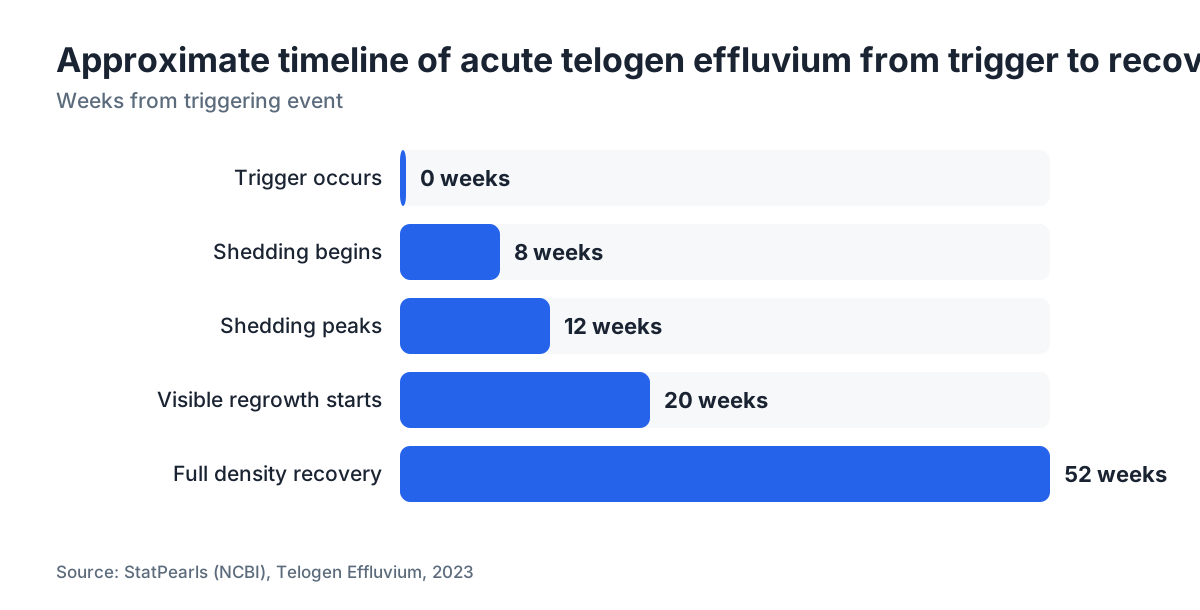
What does the timeline of recovery actually look like?
This is the question people most want answered, and the honest answer needs some nuance.
After the triggering event there's a latent period of roughly 6-12 weeks before shedding begins. Shedding then peaks somewhere between weeks 8 and 16 after the trigger. Once the triggered cohort of follicles has shed, regrowth begins, because telogen effluvium doesn't damage follicles. The follicle is still there and alive. It just needs to re-enter anagen.
Regrowth usually shows up as fine, short hairs across the scalp within 3-6 months of the peak shed. Full-density recovery can take 6-12 months from the time shedding stops, because each hair grows roughly 6 inches per year (about half an inch per month). You'll feel the density improving before you see it.
Remove the trigger, correct any deficiency, and the prognosis for full recovery is excellent. Most cases of acute telogen effluvium resolve completely with no drug treatment at all [9]. That's genuinely reassuring, but it takes patience that most people find brutal to sustain while they're watching hair fall out every day.
If shedding continues past six months from onset, or if you can't pin down a trigger, go back to a dermatologist. At that point the diagnosis may shift to chronic telogen effluvium, or an underlying androgenetic alopecia may be surfacing.
Does telogen effluvium cause permanent hair loss?
In the pure acute form triggered by a single identifiable event, no. Telogen effluvium is not a scarring alopecia. The follicle structure stays intact. Once the stressor resolves and any nutritional gaps are corrected, follicles re-enter the growth cycle.
The complication shows up in two situations. First, if you have an underlying genetic predisposition to androgenetic alopecia, a telogen effluvium episode can unmask thinning that was creeping along slowly and is now suddenly obvious. The telogen effluvium itself will recover. The androgenetic component won't. Some people who thought they just had a temporary shed discover they also have early pattern hair loss.
Second, repeated stressors or chronic nutritional deficiency can stretch the effluvium into a chronic pattern, and chronic telogen effluvium lasting years can theoretically cause some miniaturization over time, though this is debated in the literature.
The practical takeaway: if your hair hasn't returned to baseline density 12 months after the shedding stopped, see a board-certified dermatologist. At that point you want to assess whether androgenetic alopecia is co-occurring. Options like minoxidil for men or finasteride may become relevant depending on the diagnosis.
What treatments actually help acute telogen effluvium?
I'll be direct with you: no drug speeds recovery from a self-limiting telogen effluvium once the trigger is gone. No pill pushes the hair cycle back to normal in an otherwise healthy person who's fixed the underlying cause. Anyone selling a "shed stopper" is selling you confidence, not chemistry.
What does help:
Remove or treat the trigger. This is the whole intervention for most people. If the trigger was a high fever that resolved, you wait. If it's iron deficiency, you correct it. If it's a medication, you talk alternatives with your prescriber. If it's thyroid disease, you treat the thyroid disease.
Correct nutritional deficiencies. Iron supplementation, when ferritin is genuinely low, is the dietary intervention with the most evidence behind it [3][8]. Zinc is worth testing [7]. Protein intake matters. The recommended dietary allowance is 0.8g per kilogram of body weight per day, but dermatologists often suggest hair patients aim higher (1.0-1.2g/kg) while recovering, especially after a crash diet.
Minoxidil. FDA-approved for androgenetic alopecia, not specifically for telogen effluvium [4]. Some dermatologists still use it off-label during telogen effluvium to support follicles re-entering anagen and to treat any co-occurring androgenetic alopecia. There's a catch: minoxidil itself can trigger an initial shed when you start it. This is well-documented and temporary, but it's disorienting when you're already shedding. Read minoxidil side effects before you start.
Hair loss supplements. Biotin is the most marketed supplement for hair loss. There's good evidence it helps in true biotin deficiency, which is rare. There's essentially no evidence it speeds recovery from telogen effluvium in biotin-sufficient people [5]. Viviscal, Nutrafol, and similar products have limited, manufacturer-funded trial data. I wouldn't spend money here before sorting out ferritin and protein first. For a full breakdown, hair loss supplements covers the evidence on the popular options.
What doesn't help: most topical serums, laser combs (low-level laser therapy has some randomized trial data for androgenetic alopecia but not for telogen effluvium), and scalp micro-needling on its own. Stress reduction is real and worthwhile for your overall health, but it won't move the 3-month timeline once the follicles have already shifted to telogen.
If you're unsure whether you're dealing with pure telogen effluvium or something mixed, the free AI analysis at MyHairline can help you document your shedding pattern and get a clearer picture before your dermatology appointment.
How is acute telogen effluvium diagnosed?
Diagnosis is mostly clinical, meaning a well-trained dermatologist can often make the call from your history and a scalp exam. The timeline is everything: when did the shedding start, and what happened 2-3 months before that?
A scalp biopsy isn't routinely needed for straightforward cases. When the diagnosis is uncertain, a 4mm punch biopsy from an affected area can be read by a dermatopathologist. In telogen effluvium, biopsy typically shows an elevated ratio of telogen-to-anagen follicles (normal is roughly 1:9; in telogen effluvium it can shift toward 1:5 or worse) without scarring or miniaturization [9].
Dermoscopy (a handheld magnifying device dermatologists use) shows an increased number of empty follicular units and telogen hairs. Again, this is a tool in a clinician's hands, not something you can replicate at home.
The bloodwork panel from earlier is not optional when the cause isn't obvious. The American Academy of Dermatology recommends thyroid function tests as part of the standard hair loss workup, because thyroid disease-related hair loss is both common and correctable [1].
One useful at-home data point: a wash count. Before you shower, comb your hair forward and count the shed hairs after washing. Do this on the same day of the week for four weeks. If counts are trending down, recovery is underway. If they're flat or rising after month three with no new trigger, book a follow-up.
Can stress alone cause acute telogen effluvium?
Yes. Psychological stress is a real, documented trigger, not a soft answer doctors give when they can't find anything else.
The mechanism is thought to involve the hypothalamic-pituitary-adrenal axis. Elevated cortisol and catecholamines during prolonged stress can disrupt signaling at the hair follicle, pushing follicles prematurely into telogen [9]. There's also evidence from animal models that substance P, a neuropeptide released under stress, acts directly on follicles to induce premature catagen.
In practice, purely psychological telogen effluvium is real but probably less common than the mixed cases where stress also drives poor nutrition, wrecked sleep, and hormonal changes that all pile up together. If you're hunting for your trigger and the timeline fits a stretch of significant emotional stress, that's a legitimate answer even when every blood test comes back normal.
The corollary: stress management isn't self-care theater if you've had one episode. Repeated stress-induced sheds are a pattern worth addressing. Nothing about your hair justifies ignoring the underlying mental health picture.
What's the difference between acute telogen effluvium and male or female pattern hair loss?
Pattern hair loss (androgenetic alopecia) is permanent without treatment. Acute telogen effluvium is temporary. That's the distinction that matters most.
Androgenetic alopecia is driven by dihydrotestosterone (DHT) miniaturizing susceptible follicles over years. It follows predictable patterns: in men, a receding hairline and crown thinning (the Norwood scale); in women, a widening part with a preserved frontal hairline (the Ludwig scale). Read more about receding hairline patterns if you're trying to map your own loss.
Telogen effluvium shows no pattern. Loss is diffuse. The frontal hairline is usually preserved even in severe cases, which is a meaningful clinical clue.
Here's the tricky part: both conditions can coexist. A 35-year-old man with early androgenetic alopecia has a baseline slow miniaturization already running. Then he gets COVID, and three months later he has a dramatic diffuse shed on top of his pattern loss. The telogen effluvium will recover. The androgenetic alopecia won't, and now that it's been unmasked it may be more visible than before. This is the scenario where a dermatologist's distinction really matters, because the androgenetic component may warrant finasteride and minoxidil or other long-term therapy even after the effluvium resolves.
DHT blockers like finasteride don't treat telogen effluvium directly, but if you have co-occurring androgenetic alopecia, they're the pharmacological option with the most evidence. DHT blockers explains the mechanism and options in detail.
Can COVID-19 cause acute telogen effluvium?
Yes, and it became one of the most visible parts of post-COVID recovery. COVID-19-associated hair loss is telogen effluvium set off by the physiological stress of the infection itself, not the virus directly attacking follicles.
A 2021 study published in the Lancet found hair loss among the most common persistent symptoms reported by COVID-19 survivors, affecting roughly 22% of patients in their cohort at six months after infection [6]. The timing follows the standard telogen effluvium pattern: shedding usually peaks 2-3 months after the acute illness.
The recovery arc is the same as any other acute telogen effluvium. Most people see real improvement within 6-9 months of the shed's peak. The fever, systemic inflammation, and in some cases the psychological trauma of hospitalization all add to the trigger load.
If you had post-COVID hair loss, check ferritin. COVID-related inflammation can deplete iron stores, which may both prolong the shed and slow regrowth [8]. Getting ferritin above 40 ng/mL is a reasonable target while recovering.
Should you see a dermatologist, or wait it out?
Wait it out if: you have a clear trigger from the right timeline (6-12 weeks ago), your bloodwork is normal, the shedding is diffuse, your hairline is intact, and you're already past the shed's peak. Most acute telogen effluvium cases in young, otherwise healthy people with an obvious trigger need nothing more than time and reassurance.
See a dermatologist promptly if: you can't identify any trigger, shedding is still climbing at month three or beyond, there's patchiness or scalp changes (redness, scaling, tenderness), you have a family history of significant pattern hair loss and this looks like it's following a pattern rather than staying diffuse, or you're losing eyebrows and eyelashes (which points to a different diagnosis entirely).
See a dermatologist eventually even in straightforward cases if the hair hasn't substantially recovered within 9-12 months of the peak shed. At that point you need to reassess.
If you want to document your current state before an appointment, the free AI hair scan at MyHairline lets you photograph your scalp and get an initial pattern assessment. It won't replace a clinical exam, but a baseline photo with a timestamp is genuinely useful when you're tracking whether you're improving.
One practical note on cost: dermatology appointments for hair loss in the US often run $150-400 out of pocket without insurance, and specialists in hair disorders (trichologists or hair-focused dermatologists) can run higher. The bloodwork panel typically costs $100-300 depending on your coverage. These are real costs worth planning for.
Sources
- American Academy of Dermatology, Hair Loss: Diagnosis and Treatment
- Journal of the American Academy of Dermatology, 2013: The role of iron in hair loss
- FDA, Drug Label: Minoxidil Topical Solution
- NIH, Office of Dietary Supplements: Biotin Fact Sheet for Health Professionals
- The Lancet, 2021: 6-month consequences of COVID-19 in patients discharged from hospital (Huang et al.)
- National Institutes of Health, Office of Dietary Supplements: Zinc Fact Sheet
- NIH, Office of Dietary Supplements: Iron Fact Sheet for Health Professionals
- StatPearls (NCBI Bookshelf): Telogen Effluvium
- American Academy of Dermatology, Hair Loss: Who Gets It and Causes